Complete Nutrition Review & Feeding Guide
Is puppy Taste of the Wild dog food right for your growing pup?
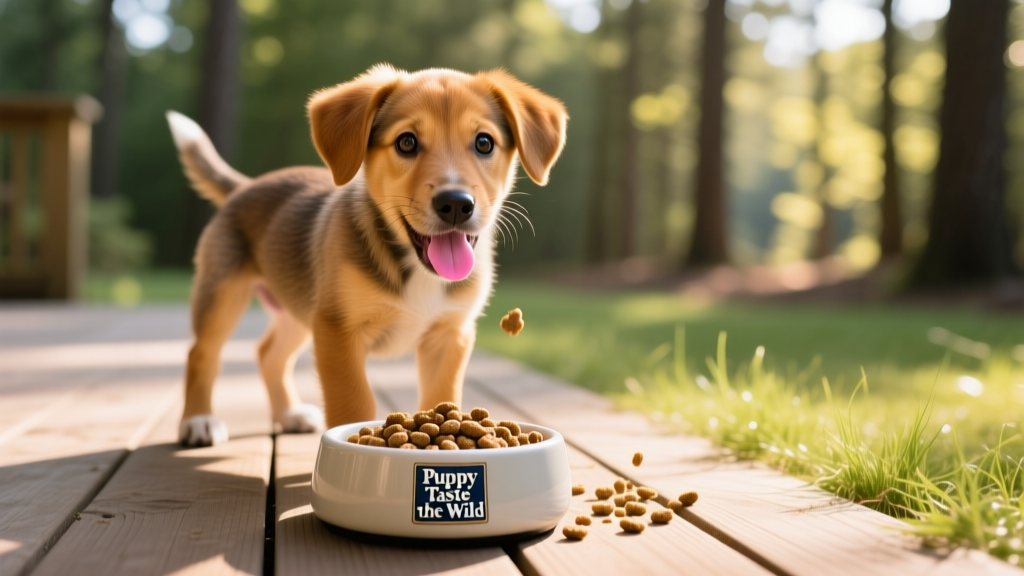
Is Taste of the Wild Puppy Formula the Right Choice for Your Growing Dog?
If you've been researching grain-free, high-protein diets for your puppy, you've almost certainly encountered Taste of the Wild's puppy formulas. The brand's High Prairie Puppy and Pacific Streams Puppy recipes are among the most-searched puppy foods on the market, and for understandable reasons: novel proteins like bison and salmon, roasted meats as first ingredients, and a price point that undercuts premium competitors by 30-40%.
But does the nutritional profile actually match what growing puppies need? And how does it compare to alternatives when you look past the marketing? I've spent years helping dog owners navigate puppy nutrition — from first-day-home feeding jitters to managing food sensitivities in large-breed pups — so let's break down exactly what's in these formulas, who they work for, and where you might want to look elsewhere.
Nutritional Requirements for Growing Puppies: The Numbers That Matter
Puppy nutrition isn't just "more of everything." Growing dogs have precise requirements that shift dramatically between 8 weeks and 18 months. Getting these numbers wrong — especially for large breeds — can lead to developmental orthopedic diseases like hip dysplasia or hypertrophic osteodystrophy.
| Nutrient | Minimum (Puppy) | Minimum (Adult) | Why It Matters for Puppies |
|---|---|---|---|
| Crude Protein | 22.0% dry matter | 18.0% dry matter | Muscle, organ, and immune system development |
| Crude Fat | 8.5% dry matter | 5.5% dry matter | Brain development, energy density, fat-soluble vitamin absorption |
| Calcium | 1.2% DM (max 1.8% for large breeds) | 0.5% DM | Skeletal mineralization; excess causes growth abnormalities |
| Phosphorus | 1.0% DM | 0.4% DM | Bone formation; must be balanced with calcium (1:1 to 1.8:1 ratio) |
| DHA (Omega-3) | 0.05% DM | Not required | Retinal and brain development through 16 weeks |
| Calories (typical) | 3,000-4,500 kcal/kg | 2,500-4,000 kcal/kg | Puppies need 2-3x adult energy per pound of body weight |
For context, here's what daily caloric needs look like by puppy weight and age:
| Current Weight | 8-12 Weeks | 3-6 Months | 6-12 Months |
|---|---|---|---|
| 5 lb / 2.3 kg | 240-300 | 200-250 | 180-220 |
| 10 lb / 4.5 kg | 400-500 | 340-420 | 300-370 |
| 20 lb / 9.1 kg | 660-830 | 570-700 | 500-620 |
| 40 lb / 18.1 kg | 1,100-1,380 | 950-1,170 | 830-1,030 |
| 60 lb / 27.2 kg | 1,500-1,870 | 1,280-1,580 | 1,120-1,390 |
These are starting estimates. Adjust based on body condition score (see monitoring section below), activity level, and whether your puppy is spayed/neutered (reduce by roughly 10-15% after the procedure due to metabolic slowdown).
Taste of the Wild Puppy Formulas: Ingredient-by-Ingredient Analysis
Taste of the Wild offers two puppy-specific recipes. Here's what's actually in each bag and what those ingredients mean for your puppy's development.
High Prairie Puppy Recipe (Bison & Roasted Venison)
Guaranteed Analysis: 28% crude protein, 17% crude fat, 5% crude fiber, 10% moisture, 375 kcal/cup
First 10 Ingredients: Water Buffalo, Lamb Meal, Sweet Potatoes, Egg Product, Pea Protein, Peas, Potatoes, Canola Oil, Tomato Pomace, Roasted Bison
- Water Buffalo (1st ingredient): Novel protein — good for pups with chicken/beef sensitivities. However, fresh meat is ~70% water, so actual protein contribution is lower than the position suggests.
- Lamb Meal (2nd): Concentrated protein source (~300% more protein by weight than fresh lamb). Solid choice.
- Sweet Potatoes & Potatoes (3rd, 7th): Carbohydrate sources that replace grains. Provide fiber and vitamins but contribute to the glycemic load.
- Pea Protein (5th): Plant-based protein concentrate. Boosts the overall protein percentage but lacks the complete amino acid profile of animal proteins. This is a common tactic in grain-free foods.
- Canola Oil (8th): Provides omega-6 fatty acids. Controversial among some owners but recognized as safe by the FDA and AAFCO.
Pacific Streams Puppy Recipe (Salmon)
Guaranteed Analysis: 27% crude protein, 15% crude fat, 5% crude fiber, 10% moisture, 360 kcal/cup
Key Difference: Salmon and fish meal are the primary proteins. This formula provides higher omega-3 (DHA/EPA) levels, which support cognitive and retinal development. If your puppy shows skin sensitivity or you want to prioritize brain development in the first 16 weeks, this formula has a slight edge.
Large Breed Consideration: Calcium-to-Phosphorus Ratio
For large and giant breed puppies (expected adult weight over 70 lb / 32 kg), the calcium-to-phosphorus ratio is critical. The Merck Veterinary Manual notes that excess calcium in large-breed puppies disrupts normal bone remodeling and increases risk of osteochondrosis and hip dysplasia.
Taste of the Wild puppy formulas list calcium at approximately 1.4% and phosphorus at 1.0% on a dry matter basis. This 1.4:1 ratio falls within AAFCO's acceptable range. However, for large breeds, many veterinary nutritionists recommend keeping calcium closer to 1.2% with a controlled calorie density to prevent rapid growth. If you have a Great Dane, Mastiff, Saint Bernard, or similar giant breed, discuss this formula with your veterinarian before committing to it long-term.
How Much Taste of the Wild Puppy Food Should You Feed?
The feeding chart on the bag is a starting point — not a prescription. Here's Taste of the Wild's recommended daily amounts for their High Prairie Puppy formula, along with adjustment factors:
| Puppy Weight | 6-12 Weeks | 3-4 Months | 5-7 Months | 8-12 Months |
|---|---|---|---|---|
| 3-5 lb | ½ – ¾ | ½ – ⅔ | ½ – ⅔ | Adult portions |
| 5-10 lb | ¾ – 1¼ | ⅔ – 1 | ⅔ – 1 | Adult portions |
| 10-20 lb | 1¼ – 2 | 1 – 1¾ | 1 – 1½ | Adult portions |
| 20-40 lb | 2 – 3¼ | 1¾ – 2½ | 1½ – 2⅓ | 1½ – 2 |
| 40-60 lb | 3¼ – 4⅓ | 2½ – 3⅓ | 2⅓ – 3 | 2 – 2½ |
| 60-80 lb | 4⅓ – 5¾ | 3⅓ – 4⅓ | 3 – 3⅔ | 2½ – 3 |
| 80-100 lb | 5¾ – 7 | 4⅓ – 5¼ | 3⅔ – 4½ | 3 – 3⅔ |
Adjustment factors to apply:
- High activity (working breed puppies, agility training, 2+ hours outdoor play): Add 10-20%
- Low activity (apartment living, small yard, minimal structured exercise): Reduce 10-15%
- Post-spay/neuter: Reduce 10-15% within 2-4 weeks of surgery
- Cold weather (below 40°F / 4°C for extended outdoor time): Add 10-25%
- Multiple small meals vs. two meals: Total daily amount stays the same; divide by meal count
Feed puppies under 6 months in 3-4 meals per day. From 6-12 months, transition to 2 meals. This prevents hypoglycemia in small breeds and reduces bloat risk in large breeds.
Top Puppy Food Alternatives: How Taste of the Wild Compares
Taste of the Wild isn't the only option, and depending on your puppy's needs, another formula might serve them better. Here's how it stacks up against competitors across the same price tier and nutritional philosophy:
Taste of the Wild High Prairie Puppy
Price: $48-55 per 28 lb bag ($1.71-1.96/lb)
Protein: 28% | Fat: 17%
Best for: Puppies with chicken/beef sensitivities who need novel protein on a moderate budget
Watch out: Pea protein inflates protein percentage; FDA DCM investigation included this brand
Purina Pro Plan Puppy Savor
Price: $52-60 per 34 lb bag ($1.53-1.76/lb)
Protein: 28% | Fat: 18%
Best for: Most puppies — backed by extensive feeding trials and WSAVA-compliant nutritional research
Watch out: Contains corn and wheat (not ideal for grain-sensitive pups)
Royal Canin Puppy (Breed-Specific)
Price: $55-68 per 25 lb bag ($2.20-2.72/lb)
Protein: 26-29% (varies by breed formula) | Fat: 16-20%
Best for: Owners of specific breeds (Labrador, Golden Retriever, German Shepherd) who want kibble shape and nutrient profiles tailored to breed predispositions
Watch out: Higher price; by-product meal as a primary ingredient concerns some owners
Orijen Puppy
Price: $75-90 per 25 lb bag ($3.00-3.60/lb)
Protein: 38% | Fat: 20%
Best for: Active, athletic breed puppies where maximum animal-based protein supports high muscle development
Watch out: Very high protein may be excessive for less active puppies; can cause loose stools during transition
Hill's Science Diet Puppy Healthy Development
Price: $45-55 per 27.5 lb bag ($1.64-2.00/lb)
Protein: 24.5% | Fat: 16.2%
Best for: Puppies with sensitive stomachs; clinically tested formula with consistent quality control
Watch out: Lower protein than competitors; contains corn meal
Acana Puppy Recipe
Price: $60-72 per 25 lb bag ($2.40-2.88/lb)
Protein: 33% | Fat: 20%
Best for: Owners who want high animal-protein content without Orijen's extreme levels; free-run chicken and turkey
Watch out: Also included in FDA DCM investigation; legume-heavy ingredient list
What to Look for on Any Puppy Food Label
Regardless of brand, every puppy food you consider should meet these criteria:
- AAFCO Statement: Look for "formulated to meet the nutritional levels established by the AAFCO Dog Food Nutrient Profiles for growth" or "all life stages." If it says "intended for intermittent or supplemental feeding only," it is NOT a complete diet for puppies.
- Named Animal Protein First: "Chicken," "Salmon," "Lamb meal" — not "meat meal" or "animal by-products" (which are undefined sources).
- DHA Listed: Essential for puppy brain development. Should be present at minimum 0.05% dry matter basis.
- Calcium Controlled: Especially for large breeds — between 1.0-1.5% DM, with a Ca:P ratio of 1:1 to 1.5:1.
- No Artificial Preservatives: Avoid BHA, BHT, and ethoxyquin. Mixed tocopherols (vitamin E) are the safer standard.
Ingredients to Avoid in Puppy Food
Not all ingredients are created equal. Here's what to flag when reading puppy food labels:
| Ingredient | Why Avoid It | Common In |
|---|---|---|
| Unnamed meat meals ("meat meal," "animal meal") | Could include rendered roadkill, euthanized animals, or diseased livestock per FDA rendering regulations | Low-budget grocery brands |
| BHA/BHT (butylated hydroxyanisole/toluene) | Synthetic preservatives classified as potential carcinogens in animal studies | Shelf-stable budget kibbles |
| Propylene Glycol | Used as a moistening agent; can cause Heinz body anemia in dogs at high exposure | Semi-moist foods, some treats |
| Artificial dyes (Red 40, Yellow 5, Yellow 6) | No nutritional purpose; linked to behavioral sensitivities in some dogs | Colorful multi-shaped kibbles |
| Corn syrup or sucrose | Added sugars spike blood glucose and contribute to obesity; puppies don't need palatability enhancers beyond fat | Budget and semi-moist foods |
| Excessive legumes (peas, lentils, chickpeas in top 5) | Associated with diet-associated DCM per FDA investigation; may inhibit taurine absorption | Most grain-free formulas |
Can You Feed a Puppy a Homemade or Raw Diet?
This is one of the most common questions I hear from new puppy owners. The short answer: you can, but the margin for error is razor-thin, and the consequences of getting it wrong during growth phases are often irreversible.
Homemade Cooked Diets
A homemade diet for a puppy requires formulation by a board-certified veterinary nutritionist (DACVN). Puppies need precise calcium-to-phosphorus ratios, and a common homemade mistake — feeding too much meat without adequate calcium supplementation — leads to nutritional secondary hyperparathyroidism. This causes the puppy's body to pull calcium from its own bones, resulting in fractures and deformities.
If you're committed to homemade feeding:
- Consult a veterinary nutritionist (services like Balance IT or PetDiets.com provide formulated recipes for $30-80).
- Use a complete supplement blend designed for puppies — not adult dogs.
- Re-evaluate the recipe every 4-8 weeks as the puppy grows and caloric needs shift.
- Run bloodwork every 3 months during growth to confirm nutritional adequacy.
Raw Diets (BARF/Prey Model)
Raw diets for puppies carry two significant risks beyond those of adult dogs:
- Pathogen exposure: Puppies have immature immune systems. Salmonella, E. coli, and Campylobacter contamination in raw meat can cause severe gastroenteritis or systemic infection. The AVMA's position on raw diets discourages feeding raw protein due to documented public health risks.
- Nutritional imbalance: Raw diets frequently test deficient in calcium, vitamin D, iodine, and trace minerals when analyzed in laboratory settings. For growing puppies, these deficiencies compound rapidly.
If you choose raw despite these risks: source from USDA-inspected suppliers who test for pathogens, use a veterinary nutritionist-formulated recipe, and practice strict kitchen hygiene (separate prep surfaces, immediate sanitization). Understand that you are accepting risk that veterinary organizations do not endorse.
How to Transition Your Puppy to a New Food (7-10 Day Protocol)
Switching puppy foods too quickly is the number one cause of diet-related diarrhea in young dogs. A puppy's gut microbiome needs time to adapt to new protein sources, fiber types, and fat levels. Here's the protocol I recommend:
| Days | Old Food | New Food | What to Watch For |
|---|---|---|---|
| Days 1-2 | 75% | 25% | Normal stools, appetite maintained |
| Days 3-4 | 50% | 50% | Slightly softer stools are normal; contact vet if watery or bloody |
| Days 5-6 | 25% | 75% | Stools should be firming; energy and coat should remain stable |
| Days 7-10 | 0% | 100% | Full transition complete; monitor for 2 more weeks |
Extend the transition to 14 days if:
- Your puppy has a history of GI sensitivity
- You're switching between drastically different protein sources (e.g., chicken-based to fish-based)
- You're moving from a low-fat to high-fat formula or vice versa
Slow down and hold the current ratio for 2-3 extra days if: stools become loose (not watery — just unformed), appetite drops, or you notice increased gas. If you see vomiting, watery diarrhea lasting more than 24 hours, or lethargy, stop the transition and consult your veterinarian.
Does Your Puppy Need Supplements?
If you're feeding a complete and balanced commercial puppy food that meets AAFCO growth standards, your puppy likely does not need additional supplements. In fact, over-supplementation — especially calcium and vitamin D — can be harmful during growth.
However, there are specific situations where targeted supplementation makes sense:
| Supplement | When to Consider | Typical Dosage | Notes |
|---|---|---|---|
| Fish Oil (Omega-3 EPA/DHA) | Dry skin, dull coat, or food not rich in omega-3s | 20-55 mg EPA+DHA per kg body weight daily | Use dog-specific fish oil; human supplements may contain xylitol or excessive vitamin A |
| Probiotics | During food transitions, post-antibiotic recovery, or stress (boarding, travel) | 1-5 billion CFU daily (species-specific strains) | Look for Enterococcus faecium or Lactobacillus acidophilus; products like Purina FortiFlora or Proviable |
| Glucosamine/Chondroitin | Large/giant breed puppies from 12 months onward as joint support | 500-1,000 mg glucosamine daily depending on projected adult size | Not typically needed before 12 months; discuss with your vet for breeds predisposed to dysplasia |
| Vitamin E | Puppies on homemade diets or those with confirmed deficiency | Per veterinary nutritionist recommendation | Do NOT supplement without bloodwork confirmation; fat-soluble vitamins accumulate to toxic levels |
The general rule: supplements should address a documented deficiency or a breed-specific predisposition — not act as a general "insurance policy" on top of a complete diet. Always discuss supplementation with your veterinarian before adding anything to your puppy's regimen.
Monitoring Success: How to Know Your Puppy's Diet Is Working
You can't manage what you don't measure. Here are the four indicators I have puppy owners track during the first 6 months on any diet:
1. Body Condition Score (BCS)
Use the WSAVA 9-point Body Condition Score scale. For growing puppies, you want a score of 4-5 out of 9:
- Ribs: Easily felt with light pressure but not visibly prominent
- Waist: Visible when viewed from above — an hourglass shape behind the ribcage
- Abdominal tuck: Belly tucks up behind the ribcage when viewed from the side
A puppy at BCS 6+ is carrying excess weight that stresses developing joints. A puppy at BCS 3 or below isn't getting enough calories for growth.
2. Stool Quality
Ideally, stools should be firm, well-formed, and easy to pick up. Use this scale:
- Score 1 (ideal): Firm, holds shape, easy to pick up, minimal residue
- Score 2 (acceptable): Slightly soft but still formed
- Score 3 (concern): Soft, loses shape, leaves residue when picked up
- Score 4 (problem): Unformed, pudding-like
- Score 5 (urgent): Watery diarrhea — contact your vet if lasting more than 24 hours
Consistent Score 3+ stools on Taste of the Wild may indicate the fiber level or protein source doesn't agree with your puppy's gut. Consider a lower-protein or different-protein formula.
3. Coat Quality and Skin Health
Within 4-6 weeks of starting a diet, you should see a shiny, soft coat with minimal flaking. Dull, brittle fur or excessive shedding (beyond normal puppy coat transition at 4-6 months) can signal omega fatty acid deficiency or protein quality issues.
4. Energy and Growth Rate
Puppies should be energetic, playful, and gaining weight steadily. Use your vet's growth curve projections as a guide. If your puppy seems consistently lethargic or is falling behind expected growth milestones, the caloric density of the food may be insufficient, or there may be an underlying absorption issue that warrants veterinary investigation.
Frequently Asked Questions
Is Taste of the Wild puppy food linked to heart disease (DCM)?
Taste of the Wild was named in the FDA's investigation into grain-free diets and dilated cardiomyopathy (DCM). The investigation found a statistical association between legume-rich, grain-free diets and DCM cases, but a definitive causal mechanism has not been established. The FDA's ongoing research suggests the issue may involve taurine metabolism interference from high legume content rather than grain-free status alone. If you feed a grain-free diet, discuss taurine level monitoring with your veterinarian, especially for breeds predisposed to DCM (Dobermans, Boxers, Cocker Spaniels, Golden Retrievers).
Can I mix Taste of the Wild puppy food with wet food or toppers?
Yes, but account for the additional calories. A typical 3 oz can of puppy wet food adds 80-120 calories. Reduce the kibble portion proportionally. If using bone broth, plain pumpkin, or yogurt as a topper, keep additions under 10% of total daily caloric intake to avoid unbalancing the complete diet.
At what age should I switch from puppy food to adult food?
Small breeds (under 25 lb adult weight) typically transition at 10-12 months. Medium breeds at 12-14 months. Large and giant breeds should remain on puppy or "all life stages" formulas until 18-24 months, as their skeletal development continues longer. Switch too early, and you risk nutrient deficiencies during the final growth phase.
My puppy gets diarrhea on Taste of the Wild. Should I switch foods?
If diarrhea persists beyond the initial 7-10 day transition period, the formula may not suit your puppy's digestive system. Common culprits include the high fat content (17% in High Prairie) or the legume-based fiber sources. Try a more digestible, moderate-fat formula like Hill's Science Diet Puppy or Purina Pro Plan Puppy. If diarrhea is watery, contains blood, or is accompanied by vomiting or lethargy, contact your veterinarian immediately — this may indicate infection rather than food intolerance.
How does Taste of the Wild compare to Blue Buffalo Wilderness Puppy?
Both are grain-free, high-protein formulas at similar price points ($1.60-2.00/lb). Taste of the Wild uses more novel proteins (bison, venison, salmon) while Blue Buffalo Wilderness relies on deboned chicken and chicken meal. Blue Buffalo includes their "LifeSource Bits" (antioxidant blend), while Taste of the Wild uses fermented fermentation products for probiotic support. Both were named in the FDA DCM investigation. Nutritional profiles are comparable; choice often comes down to which protein source your puppy tolerates better.
Where is Taste of the Wild puppy food manufactured?
Taste of the Wild is manufactured in the United States by Diamond Pet Foods, with facilities in South Carolina, California, Missouri, and Arkansas. Diamond has had recalls in the past (most notably aflatoxin contamination in 2005-2006 and salmonella in 2012), which is worth noting when evaluating quality control, though the brand has since implemented additional testing protocols.
Dr. Hannah Wickes
All our authors care for dogs every day — read more of their work on the authors page.


