Complete Oral Care Guide
Using Petlab Co. ProBright Dental Powder for large dogs, plus a full canine dental health guide covering exams, cleaning routines, and vet red flags.
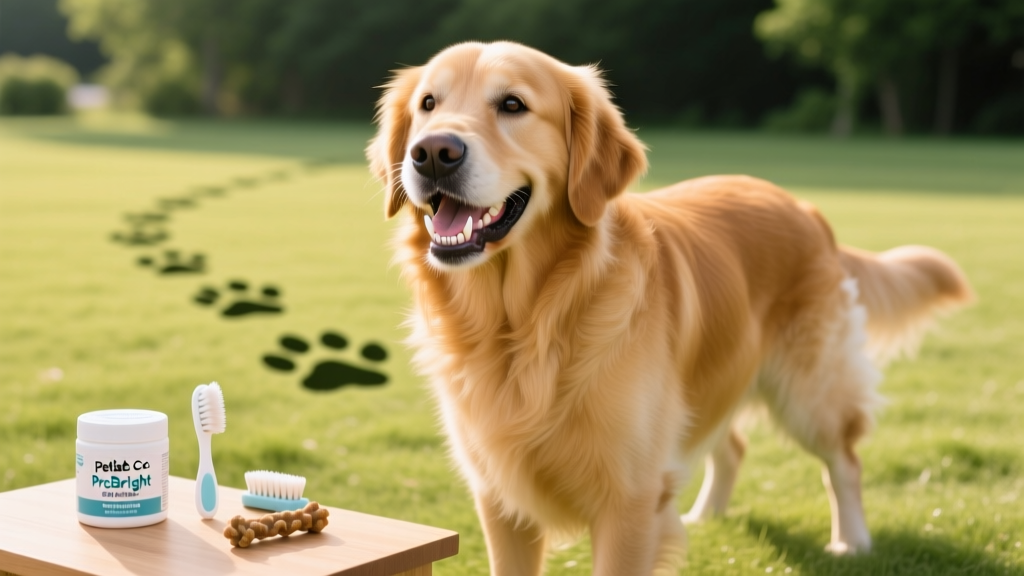
Canine Dental Anatomy: How Your Dog's Mouth Differs From Yours
Key anatomical differences between dog and human teeth:
- Tooth count: Adult dogs have 42 teeth (humans have 32). Puppies have 28 deciduous teeth.
- Tooth structure: Dog teeth have thinner enamel (approximately 0.1–0.6 mm) compared to human enamel (1–2 mm), making them more susceptible to fracture but less prone to cavity formation.
- pH environment: Canine oral pH averages 7.5–8.0 (more alkaline), which is why dogs rarely get traditional dental caries but are highly susceptible to periodontal disease.
- Carnassial teeth: The upper fourth premolar and lower first molar form a shearing pair unique to carnivores — these are the teeth most commonly affected by slab fractures in large dogs.
- Saliva composition: Dog saliva contains less amylase (starch-digesting enzyme) than human saliva, meaning food particles persist differently on tooth surfaces.
Understanding these differences matters because products formulated for canine oral health — like Petlab Co. ProBright Dental Powder for large dogs — are designed around the specific bacterial environment, enamel thickness, and disease patterns of the canine mouth. Human dental products often contain xylitol or fluoride concentrations that are toxic to dogs, so species-specific care is non-negotiable.
The periodontal ligament in dogs attaches the tooth root to the alveolar bone. When plaque mineralizes into tartar (calculus) within 24–72 hours, it migrates beneath the gumline, triggering inflammation (gingivitis) that can progress to bone loss (periodontitis). According to the Merck Veterinary Manual, over 80% of dogs show signs of periodontal disease by age three.
Common Dental Problems in Large Dogs
| Condition | Primary Symptoms | Typical Onset | Severity |
|---|---|---|---|
| Periodontal Disease (Gingivitis → Periodontitis) | Red/swollen gums, bad breath, tartar buildup, bleeding when chewing | Progressive; often visible by age 2–3 | Moderate to severe (can lead to organ damage) |
| Tooth Fractures (Slab Fractures) | Sudden reluctance to chew hard items, visible crack, pink/red spot on tooth surface (pulp exposure) | Acute; common in large dogs chewing antlers, bones, hard nylon | High (exposed pulp = infection risk) |
| Oral Tumors (Melanoma, Epulis, SCC) | Visible mass, loose teeth without tartar, facial swelling, difficulty swallowing | Usually age 8+; varies by type | High (malignant types metastasize) |
| Tooth Root Abscess | Facial swelling below eye, pawing at mouth, nasal discharge on one side | Acute swelling; underlying infection may build over weeks | Moderate to high |
| Retained Deciduous Teeth | Baby tooth persists alongside adult tooth, crowding, misalignment | Visible by 6–7 months of age | Moderate (causes malocclusion) |
Large breeds are disproportionately affected by tooth fractures because of their bite force and tendency to chew harder objects. A 2023 study published in the Journal of Veterinary Dentistry found that dogs over 50 lb (23 kg) had a 1.7x higher incidence of complicated crown fractures (those exposing the pulp chamber) compared to smaller dogs.
How to Check Your Dog's Teeth and Gums at Home
Perform this exam monthly, or weekly if your dog has a history of dental issues. Choose a calm moment — after a walk or meal, not during play.
- Position your dog comfortably. Have your dog sit or stand on a non-slip surface. For large dogs, sitting beside them on the floor works better than trying to lift their head onto a table. Use treats to create a positive association — give one before you start, not as a bribe during.
- Lift the upper lip (lateral approach). With one hand gently holding the muzzle, use your other hand to lift the upper lip on one side. You should see the canine tooth, premolars, and the gumline above them. Check both sides.
- Inspect the gumline color and texture. Healthy gums are coral pink (some breeds have natural pigmentation — dark patches are normal if they've always been there). Look for redness, swelling, recession (gums pulling away from teeth), or a visible line of tartar where tooth meets gum.
- Check the carnassial teeth specifically. Gently open the mouth by pressing down on the lower jaw while lifting the upper lip. The large upper premolars (fourth premolar) are the most fracture-prone teeth in large dogs. Look for chips, cracks, or asymmetry between left and right sides.
- Examine the incisors and canines. Lift the front lip to see the six upper and six lower incisors. Check for wear patterns, fractures, or gaps where a tooth may have been lost. The four canine teeth should be intact with smooth enamel.
- Assess breath odor. While some "dog breath" is normal, a distinctly foul, putrid, or metallic smell indicates active bacterial infection or tissue necrosis. This is not something that improves with dental powder alone — it warrants a vet visit.
- Palpate the jaw and face. Run your hands along both sides of the jaw, under the chin, and below the eyes. Feel for asymmetrical swelling, firm lumps, or tenderness (your dog flinching or pulling away).
Normal vs. Abnormal: What Healthy Dog Teeth Look Like
| Feature | ✅ Normal (Healthy) | ⚠️ Abnormal (Needs Attention) |
|---|---|---|
| Gum color | Coral pink; breed-typical dark pigmentation in patches | Bright red, purple, pale/white, or yellow-tinged |
| Gum texture | Smooth, stippled (like orange peel), firmly attached at gumline | Puffy, spongy, bleeding on touch, receding from tooth |
| Tooth surface | Smooth, white to off-white enamel; no visible cracks | Brown/yellow tartar coating, chips, dark spots, visible pink/red pulp |
| Breath odor | Mild, neutral, or slightly food-scented | Foul, rotting, metallic, or suddenly changed |
| Tooth stability | Firm, no visible movement when dog chews | Loose, wiggling, or shifted position |
| Chewing behavior | Chews confidently on both sides, eats at normal pace | Drops food, chews on one side, yelps, avoids hard kibble |
| Facial symmetry | Equal swelling/contour on both sides of jaw | One-sided swelling, visible mass, draining tract below eye |
One frequently overlooked sign in large dogs is quilling — when a dog chews on one side consistently. Owners often assume a side preference, but unilateral chewing usually signals pain on the opposite side. If you notice this pattern lasting more than 2–3 days, schedule a veterinary dental exam.
Where Petlab Co. ProBright Dental Powder Fits Into Your Routine
Petlab Co. ProBright Dental Powder for large dogs is a supplemental oral care product designed to be mixed into your dog's food. It contains ingredients aimed at reducing plaque accumulation, freshening breath, and supporting gum health through daily use. Here's how it fits into a broader dental care strategy — and where its limitations lie.
What it does well:
- Provides a low-stress daily intervention for dogs who resist toothbrushing
- Can help slow plaque-to-tartar conversion when used consistently
- Convenient dosing — typically one scoop per meal for large dogs (check the specific product label for the exact serving size based on your dog's weight)
- Palatable for most dogs; designed to blend into wet or dry food without detection
What it does NOT replace:
- Mechanical cleaning: No powder, water additive, or chew can fully substitute the physical disruption of plaque biofilm that brushing or professional scaling provides. Think of it as a supplement to — not a replacement for — mechanical cleaning.
- Professional dental cleanings: Once tartar has calcified below the gumline, no at-home product can remove it. Only a veterinary dental scaling under anesthesia can address subgingival calculus.
- Diagnosis: Dental powder won't reveal or treat fractures, abscesses, oral tumors, or resorptive lesions. These require veterinary examination and dental radiographs.
Current pricing for Petlab Co. ProBright Dental Powder typically ranges from $25–$35 for a 30-day supply for a large dog, making the annual cost approximately $300–$420. Compare this to a professional veterinary dental cleaning (scaling, polishing, and dental radiographs) which typically costs $500–$1,200 depending on your region and whether extractions are needed. The powder is best viewed as a cost-effective daily maintenance layer between professional cleanings.
Complete Dental Care Routine for Large Dogs
Daily (5–10 minutes):
- Add Petlab Co. ProBright Dental Powder (or equivalent VOHC-accepted supplement) to food at the recommended dosage for your dog's weight class
- Provide a VOHC (Veterinary Oral Health Council) accepted dental chew if tolerated — look for the VOHC seal on packaging, which indicates the product met standardized plaque/tartar reduction criteria in clinical trials
- Offer fresh water in a clean bowl; consider a water additive with chlorhexidine or zinc gluconate if your dog accepts it
Weekly (10–15 minutes):
- Brush teeth using a dog-specific enzymatic toothpaste (poultry or beef flavored — never human toothpaste containing fluoride or xylitol) and a dual-head or finger brush
- Focus on the outer surfaces of the upper premolars and canines — these are the highest-plaque-accumulation zones
- Use gentle circular motions at a 45-degree angle where tooth meets gum; 2–3 seconds per tooth is sufficient
- Perform the 7-step home examination described above
Monthly:
- Inspect all chew toys and replace any that have become small enough to swallow, have sharp edges, or show deep cracking
- Avoid antlers, hooves, and hard nylon bones — the AVMA and veterinary dentists consistently warn that items harder than a dog's tooth enamel cause slab fractures. A good rule: if you can't indent the toy with your thumbnail, it's too hard.
Annually (or every 6 months for breeds with known predispositions):
- Professional veterinary dental examination with full-mouth assessment
- Dental radiographs (X-rays) — essential because 60% of each tooth sits below the gumline and is invisible to visual inspection
- Professional scaling and polishing under general anesthesia when tartar accumulation reaches moderate levels
When to See the Vet: Dental Red Flags
🚨 Call your veterinarian promptly if you observe any of the following:
- Visible tooth fracture with a pink/red dot on the tooth surface (pulp exposure) — this is a dental emergency; bacteria can enter the root canal within hours
- Facial swelling, especially one-sided swelling below the eye (classic sign of carnassial tooth root abscess)
- Sudden refusal to eat or dropping food from the mouth
- Bleeding from the mouth that doesn't stop within 5 minutes of applying gentle pressure
- Loose tooth in an adult dog (not a puppy losing baby teeth)
- Visible mass or growth anywhere in the mouth — oral melanoma is the most common oral malignancy in dogs and early detection significantly affects prognosis
- Persistent foul breath that doesn't improve after 2 weeks of consistent dental care
- Pawing at the mouth combined with yelping or behavioral changes
- Nasal discharge from one nostril (can indicate tooth root infection penetrating the sinus cavity)
Do not attempt to extract a loose tooth at home, apply human oral gels, or give human pain medications (ibuprofen and acetaminophen are toxic to dogs). If you suspect poisoning or accidental ingestion of a toxic substance, contact the ASPCA Animal Poison Control Center at (888) 426-4435 (24/7, consultation fee applies).
Always consult your veterinarian before starting any new dental supplement, including Petlab Co. ProBright, especially if your dog has kidney disease, is on prescription medications, or has known food allergies. Your vet can assess whether the product's ingredient profile is appropriate for your individual dog.
Breed Predispositions: Which Large Dogs Are at Higher Risk
| Breed | Common Dental Issues | Why They're at Risk |
|---|---|---|
| Boxer | Periodontal disease, gingival hyperplasia (gum overgrowth), oral tumors | Brachycephalic jaw structure causes tooth crowding and abnormal angulation; genetic predisposition to epulis-type tumors |
| Greyhound | Severe periodontal disease (often disproportionate to tartar visible), tooth resorption | Unknown genetic immune-mediated component; many Greyhounds develop advanced bone loss with minimal calculus |
| Labrador Retriever | Tooth fractures, oral masses | High chew drive and tendency to pick up hard objects; large carnassial teeth under heavy load |
| German Shepherd | Periodontal disease, fractured canines | Deep bite and scissor occlusion can create abnormal wear patterns; working-line dogs often chew with high force |
| Great Dane / Mastiff breeds | Gingival hyperplasia, lip-fold dermatitis leading to secondary oral bacteria | Excessive gum tissue creates pockets for bacterial colonization; heavy lip folds trap moisture and debris |
| Rottweiler | Tooth fractures, periodontal disease | Powerful bite force (one of the highest among domestic breeds); strong chewing instinct |
If your large dog falls into one of these breeds, increase your home examination frequency to weekly and discuss a preventive dental plan with your veterinarian at every wellness visit. The American Kennel Club recommends that owners of predisposed breeds begin dental care routines as early as 8–10 weeks of age to build handling tolerance.
Prevention Strategies: Keeping Large Dog Teeth Healthy Long-Term
1. Start early and build tolerance. Begin handling your puppy's mouth at 8 weeks. Touch their lips, lift their gums, and reward with high-value treats. By 12 weeks, introduce a finger brush without toothpaste. By 16 weeks, add enzymatic toothpaste. Dogs who are comfortable with mouth handling by 6 months are significantly easier to maintain throughout life.
2. Use the VOHC as your product filter. The Veterinary Oral Health Council maintains a list of products that have met standardized efficacy criteria for plaque and/or tartar reduction. Products bearing the VOHC Accepted seal have undergone controlled feeding trials. Check vohc.org for the current accepted product list — it's updated regularly and includes chews, diets, water additives, and toothpastes.
3. Choose chews wisely. For large dogs, select dental chews sized for their weight class (many brands offer 50+ lb options). Rawhide alternatives like compressed vegetable chews or collagen-based chews are generally safer than traditional rawhide, which can cause GI obstruction if large pieces are swallowed. Supervise all chew sessions.
4. Feed a dental-formulated diet if recommended. Some prescription and over-the-counter diets use kibble with a larger size and a fiber matrix designed to scrub the tooth surface before breaking. These diets carry the VOHC seal for tartar control. Discuss with your vet whether a dental diet is appropriate — they are not suitable for dogs with certain GI conditions or food allergies.
5. Budget for professional cleanings. Plan for at least one professional dental cleaning under anesthesia during your large dog's lifetime, and likely two to four depending on their individual plaque accumulation rate. Set aside $500–$1,200 in an emergency/pet care fund specifically for dental work. Pet insurance policies vary widely in dental coverage — some cover only accident-related dental (fractures), while comprehensive plans may include periodontal disease treatment. Read your policy's dental section carefully.
6. Combine products in layers. The most effective at-home strategy uses multiple mechanisms: a daily powder or water additive to alter the oral environment, a dental chew for mechanical abrasion, and periodic brushing for direct biofilm disruption. Petlab Co. ProBright Dental Powder for large dogs works best as one layer in this multi-pronged approach, not as a standalone solution.
Frequently Asked Questions
How do I check my dog's teeth at home?
Lift the upper lip on each side to inspect the gumline and tooth surfaces, check the large premolars (carnassial teeth) for cracks, examine the front incisors and canines, assess breath odor, and palpate along the jawline for swelling. Perform this monthly at minimum, weekly for breeds with dental predispositions. See the 7-step home examination guide above for detailed instructions.
What are the most common dental problems in large dogs?
The most prevalent issues are periodontal disease (affecting over 80% of dogs by age 3), tooth fractures (especially slab fractures of the carnassial teeth from chewing hard objects), tooth root abscesses, and oral tumors. Large dogs are at higher risk for fractures due to their bite force and chewing habits.
Can Petlab Co. ProBright Dental Powder replace brushing my dog's teeth?
No. Dental powders like ProBright can supplement your routine by helping to slow plaque accumulation and freshen breath, but they do not mechanically disrupt the plaque biofilm the way brushing does. The most effective at-home protocol combines a daily supplement, periodic brushing with enzymatic toothpaste, VOHC-accepted dental chews, and annual professional cleanings.
When should I see a vet about my dog's dental health?
Schedule a prompt veterinary visit if you notice facial swelling, a visible tooth fracture (especially with a pink spot indicating pulp exposure), sudden refusal to eat, loose adult teeth, oral masses, persistent foul breath that doesn't improve with home care, or unilateral nasal discharge. Annual dental exams with radiographs are recommended for all dogs, and semi-annual exams for predisposed breeds.
Which large dog breeds are most prone to dental problems?
Boxers, Greyhounds, Labrador Retrievers, German Shepherds, Great Danes, Mastiff-type breeds, and Rottweilers all carry elevated risk for specific dental conditions ranging from severe periodontal disease to tooth fractures and oral tumors. Breed-specific risk factors include jaw structure, bite force, genetic immune factors, and chewing behavior patterns.
How much does professional dog dental cleaning cost?
A professional veterinary dental cleaning with scaling, polishing, and dental radiographs typically costs $500–$1,200 in the United States, depending on your region and the clinic. Additional costs apply if extractions or oral surgery are needed — individual tooth extractions can range from $50 to $300+ per tooth depending on complexity (multi-rooted teeth like carnassials are more expensive). Pre-anesthetic bloodwork adds $75–$150.
How can I prevent dental disease in my large dog?
Combine daily dental supplements (like Petlab Co. ProBright or VOHC-accepted alternatives), regular brushing with dog-specific enzymatic toothpaste, appropriate dental chews, avoidance of overly hard chew toys (antlers, hooves, hard nylon), and annual professional dental examinations with radiographs. Start mouth handling in puppyhood to build lifelong tolerance for home care.
Jonas Cole
All our authors care for dogs every day — read more of their work on the authors page.


