Luxating Patella in Small Cute Dogs: Symptoms, Treatment & Costs
Complete guide to luxating patella in small cute dogs — symptoms by grade, diagnosis costs, surgical vs conservative treatment, recovery timelines, and prognosis.
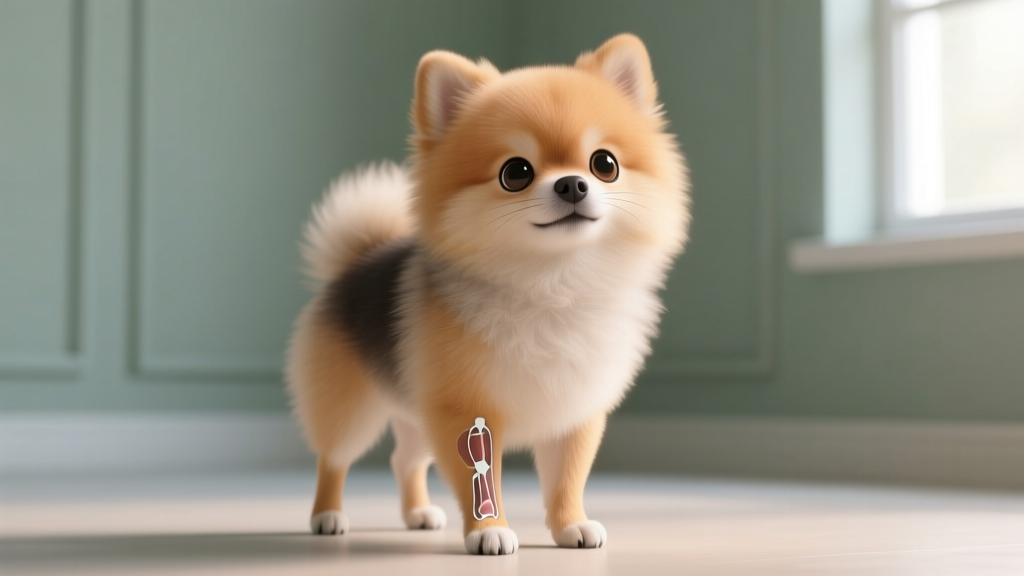
If you've ever watched your Chihuahua, Pomeranian, or toy poodle suddenly skip a step on a walk, hold up a hind leg for a few seconds, then resume trotting as if nothing happened, you've likely witnessed a luxating patella — one of the most common orthopedic conditions affecting small cute dogs. This condition, where the kneecap (patella) slides out of its normal groove on the femur, affects an estimated 7% of all dogs but occurs at dramatically higher rates in toy and miniature breeds. According to the Merck Veterinary Manual, small-breed dogs are 10 to 12 times more likely to develop patellar luxation than large breeds.
A luxating patella is graded on a scale from I to IV based on severity. In Grade I, the kneecap can be manually displaced but returns to position on its own. By Grade IV, the patella is permanently out of place and cannot be repositioned without surgery. The condition is primarily congenital (present from birth due to genetic skeletal malformations), though trauma can also cause it. Without intervention, progressive luxation leads to arthritis, chronic pain, and reduced mobility — making early identification critical for your dog's long-term quality of life.
Recognizing Luxating Patella: Symptoms Organized by Severity
Patellar luxation symptoms can be subtle at first, especially in Grade I and II cases where the kneecap pops in and out spontaneously. Many owners of small cute dogs dismiss early signs as "quirky" behavior, not realizing they indicate an orthopedic problem. Here's what to watch for, organized from early warning signs to advanced-stage symptoms.
| Severity | Symptoms | What You'll Observe |
|---|---|---|
| Early (Grade I-II) | Occasional skipping or hopping | Dog holds up one hind leg for 2-5 steps during walks, then resumes normally |
| Early (Grade I-II) | Intermittent "locking" of the knee | Dog pauses mid-stride, extends the leg stiffly, then continues |
| Early (Grade I-II) | Reluctance to jump onto furniture | Dog hesitates before jumping up or down from couches, beds, or car seats |
| Early (Grade I-II) | Occasional yelping during play | Brief vocalization when the kneecap displaces, followed by normal behavior |
| Moderate (Grade II-III) | Frequent skipping episodes | Multiple episodes per walk; dog may walk on three legs for longer stretches |
| Moderate (Grade II-III) | Visible bowlegged stance | Hind legs appear to turn inward; hocks (ankles) point outward when standing |
| Moderate (Grade II-III) | Decreased activity level | Dog tires faster on walks, avoids stairs, prefers lying down over playing |
| Moderate (Grade II-III) | Muscle atrophy in affected leg | Noticeable thinning of the thigh muscles on the affected side compared to the other |
| Advanced (Grade III-IV) | Constant lameness | Dog cannot fully extend the knee; walks with a persistent crouch or crouched gait |
| Advanced (Grade III-IV) | Permanent kneecap displacement | Kneecap is palpably outside the groove at all times; leg remains partially bent |
| Advanced (Grade III-IV) | Severe arthritis development | Stiffness after rest, pain on manipulation of the knee, grinding sensation (crepitus) |
| Advanced (Grade III-IV) | Bilateral involvement | Both hind legs affected; dog may adopt a "frog-like" sitting position |
Which Small Cute Dogs Are Most at Risk?
Patellar luxation has a strong genetic component, and decades of selective breeding for smaller size in toy breeds has inadvertently concentrated the skeletal traits that predispose dogs to this condition. The shallow femoral groove, malaligned quadriceps mechanism, and overall skeletal proportions of many small breeds create the mechanical conditions for luxation.
- Breed predisposition: Pomeranians, Chihuahuas, Yorkshire Terriers, toy and miniature Poodles, Pekingese, Papillons, Boston Terriers, Cavalier King Charles Spaniels, Bichon Frises, and Maltese
- Size: Dogs under 20 lb (9 kg) are at highest risk; the smaller the dog, the higher the prevalence
- Age: Congenital cases present as early as 8-12 weeks; acquired cases from trauma can occur at any age
- Weight: Overweight dogs place additional stress on an already compromised knee joint
- Genetics: Medial patellar luxation (MPL) is heritable; dogs with affected parents are significantly more likely to develop the condition
- Concurrent conditions: Dogs with hip dysplasia or cranial cruciate ligament (CCL) disease show higher rates of patellar luxation
- Gender: Female small-breed dogs are approximately 1.5 times more likely to be affected than males, according to breed registry data
It's worth noting that while lateral patellar luxation (where the kneecap displaces outward) is more common in large breeds, medial patellar luxation (displacement toward the inside of the leg) accounts for the vast majority of cases in small cute dogs. The American Kennel Club recommends that breeders of toy and small breeds perform patellar evaluations through the Orthopedic Foundation for Animals (OFA) before breeding.
How Veterinarians Diagnose Patellar Luxation
Diagnosing a luxating patella involves a combination of physical examination, orthopedic manipulation, and diagnostic imaging. Here's what to expect during the diagnostic process and associated costs.
- 1Orthopedic Physical Exam ($50-$120)
Your veterinarian will manually palpate the knee joint, attempting to luxate the patella medially and laterally. They assess the grade based on how easily the patella displaces and whether it returns spontaneously. Sedation may be needed for tense or painful dogs. - 2Stifle (Knee) Radiographs ($150-$350)
X-rays of the knee joint, taken under sedation, reveal the depth of the femoral groove, the degree of tibial rotation, and any existing arthritic changes. Bilateral views (both knees) are standard since many small dogs have bilateral involvement. - 3Pre-Surgical Blood Work ($80-$200)
If surgery is being considered, a complete blood count (CBC) and chemistry panel confirm the dog is healthy enough for anesthesia. This is especially important for senior small dogs who may have concurrent kidney or liver issues. - 4Advanced Imaging — CT or Surgical Planning ($400-$900)
For complex Grade III-IV cases or dogs with concurrent cruciate ligament tears, a CT scan provides 3D visualization of the skeletal deformity. This is typically performed at a specialty center and is not always necessary for straightforward cases.
Total diagnostic costs typically range from $280 to $670 for a standard workup, or up to $1,500+ if advanced imaging or specialist referral is needed.
Treatment Options: Conservative Management vs. Surgery
Treatment for luxating patella in small cute dogs depends primarily on the grade of luxation, the dog's age, activity level, and the presence of secondary arthritis. Not every case requires surgery, but understanding the full range of options helps you make an informed decision with your veterinarian.
| Approach | Best For | Procedure Details | Success Rate | Estimated Cost |
|---|---|---|---|---|
| Conservative Management | Grade I, occasional Grade II in older/sedentary dogs | Weight management, joint supplements (glucosamine/chondroitin, omega-3 fatty acids), controlled low-impact exercise, NSAIDs for flare-ups | Manages symptoms but does not correct the underlying defect; progression to higher grades is common over 2-5 years | $30-$80/month ongoing |
| Trochleoplasty (Groove Deepening) | Grade II-III with a shallow femoral groove | Surgeon deepens the femoral groove using a chondroplasty or recession sulcoplasty technique so the patella seats more securely | 90-95% success for Grade II-III when combined with soft tissue correction | $1,500-$3,500 per knee |
| Tibial Tuberosity Transposition (TTT) | Grade III-IV with tibial rotation or malalignment | The tibial crest is surgically cut, repositioned to realign the quadriceps mechanism, and pinned back into place | 85-92% success; higher complication rate than groove deepening alone | $2,000-$4,500 per knee |
| Soft Tissue Reconstruction | All grades (used in combination with bony procedures) | Tightening of the lateral retinaculum and release of the medial retinaculum to rebalance forces on the patella | Rarely performed alone; enhances success of bony procedures by 5-10% | Included in total surgical cost |
| Patellectomy (Patella Removal) | Severe Grade IV with irreparable groove damage (rare) | Complete removal of the patella; the quadriceps tendon functions without the kneecap | Variable; dogs can ambulate but with altered gait and reduced knee extension strength | $1,800-$3,000 per knee |
Recovery and Home Care After Surgery
Post-operative management is where many owners of small cute dogs underestimate the commitment required. Recovery from patellar luxation surgery typically takes 8 to 12 weeks, and your dog's outcome depends heavily on how well you manage the recovery period at home.
Week-by-Week Recovery Timeline
Weeks 1-2 (Strict Confinement): Your dog must be confined to a crate or small pen — no jumping, no stairs, no off-leash activity. Leash-only bathroom breaks. The incision site needs daily inspection for redness, swelling, or discharge. An Elizabethan collar (cone) or recovery suit is mandatory to prevent licking. Pain management typically includes gabapentin (10-20 mg/kg every 8-12 hours) and carprofen (2 mg/kg every 12 hours), both prescribed by your veterinarian.
Weeks 3-4 (Controlled Movement): Short, slow leash walks of 5-10 minutes on flat, non-slip surfaces begin. Underwater treadmill therapy may be recommended at a rehabilitation facility ($75-$150 per session). Continue strict confinement when unsupervised.
Weeks 5-8 (Gradual Increase): Walks increase to 15-20 minutes. Controlled sit-to-stand exercises (5-10 repetitions, twice daily) help rebuild quadriceps strength. Follow-up radiographs at 6-8 weeks confirm bone healing if TTT was performed.
Weeks 9-12 (Return to Normal): Gradual return to normal activity. Most small dogs resume full activity by week 12, though high-impact activities (agility, jumping for frisbees) should be reintroduced cautiously.
Long-Term Home Management
Whether your dog has had surgery or is being managed conservatively, these daily practices help protect the knees:
- Weight control: Keep your dog at a body condition score (BCS) of 4-5 out of 9. Even 1-2 extra pounds on a 10 lb (4.5 kg) dog represents a 10-20% excess load on the knees.
- Non-slip surfaces: Place rubber-backed rugs or yoga mats on hardwood and tile floors. Small dogs with patellar luxation are prone to slipping, which can trigger luxation episodes.
- Ramps and steps: Use pet stairs or ramps for couch and bed access. The AVMA notes that repeated jumping from heights accelerates joint degeneration in predisposed breeds.
- Joint supplements: Products containing glucosamine HCl (500 mg for dogs under 25 lb), chondroitin sulfate (400 mg), and MSM (250 mg) support cartilage health. Omega-3 fatty acids from fish oil (EPA/DHA at 30-50 mg/kg combined daily) provide anti-inflammatory benefits.
- Regular vet check-ups: Biannual orthopedic exams allow your vet to monitor progression and adjust the treatment plan.
Prognosis and Life Expectancy by Grade
The prognosis for small cute dogs with luxating patella varies significantly based on the grade at diagnosis, whether surgery is performed, and how well post-operative or conservative care is managed. Importantly, patellar luxation itself is not a life-limiting condition — dogs can live full lifespans with appropriate management.
| Grade | Without Treatment | With Surgery | Long-Term Outlook |
|---|---|---|---|
| Grade I | May remain stable for years; some progress to Grade II within 2-4 years | Rarely requires surgery; conservative management usually sufficient | Excellent; normal lifespan and activity level expected |
| Grade II | Progressive worsening in 60-70% of cases over 3-5 years; arthritis develops | 90-95% excellent to good outcome; return to full function | Very good with surgery; fair to good with conservative management alone |
| Grade III | Significant arthritis within 1-2 years; chronic pain and reduced mobility | 85-92% good to excellent outcome; some residual stiffness possible | Good with surgery; poor without — quality of life declines steadily |
| Grade IV | Severe disability; dog may be unable to bear weight on affected leg(s) | 70-85% fair to good outcome; may require revision surgery in 10-15% of cases | Fair to good with surgery; guarded without — significant quality of life impact |
Bilateral cases (both knees affected) carry a slightly more guarded prognosis because recovery is more challenging when neither hind leg provides full support. Staged surgeries — operating on the worse knee first, then the second knee 8-12 weeks later — are the standard approach.
How Much Does Luxating Patella Treatment Cost?
Budgeting for patellar luxation care is a practical concern, especially since many small cute dog owners face the possibility of bilateral surgery. Here's a realistic breakdown of costs you can expect in 2026.
| Service | Low Estimate | High Estimate | Notes |
|---|---|---|---|
| Initial exam and orthopedic assessment | $50 | $120 | General practice vet; specialist consult adds $150-$250 |
| Radiographs (bilateral, with sedation) | $150 | $350 | Required for surgical planning |
| Pre-surgical blood work | $80 | $200 | CBC, chemistry panel, sometimes coagulation profile |
| Surgery — one knee (general practice) | $1,500 | $2,500 | Includes anesthesia, procedure, hospitalization |
| Surgery — one knee (specialist/ACVS) | $2,500 | $4,500 | Board-certified surgeon; higher success rates for complex cases |
| Post-op medications (2-4 weeks) | $60 | $150 | Pain meds, antibiotics, anti-inflammatories |
| Rehabilitation therapy (6-8 sessions) | $450 | $1,200 | Underwater treadmill, therapeutic exercises |
| Follow-up rechecks and radiographs | $100 | $300 | Typically 2-3 post-op visits |
| Total — unilateral surgery | $2,390 | $5,820 | One knee, full treatment course |
| Total — bilateral surgery (staged) | $4,280 | $9,640 | Both knees, operated 8-12 weeks apart |
| Conservative management (annual) | $360 | $960 | Supplements, NSAIDs as needed, biannual exams |
Pet insurance can significantly offset surgical costs if the condition is not pre-existing. Most major pet insurance providers (Trupanion, Healthy Paws, Nationwide) cover patellar luxation surgery with typical reimbursement of 70-90% after deductible. However, many insurers impose a 14-day to 12-month waiting period for orthopedic conditions, and some require a veterinary exam within the first 30 days of the policy to confirm the patellas were normal at enrollment.
When to See the Vet Immediately
- The affected leg is completely non-weight-bearing and the dog cannot put any weight on it for more than 24 hours
- The knee joint is visibly swollen, hot to the touch, or the dog cries out when the area is approached
- Your dog is holding the leg at an abnormal angle that doesn't resolve within minutes
- Sudden inability to walk or stand on the hind legs (could indicate concurrent cruciate ligament rupture or spinal issue)
- Signs of severe pain: panting, trembling, refusal to eat, hiding, or aggression when touched
- Post-surgical complications: incision opens, persistent bleeding, foul odor from the wound, fever above 103.5°F (39.7°C)
For non-emergency concerns — occasional skipping, mild reluctance to jump, or questions about your small dog's gait — schedule a routine veterinary appointment within 1-2 weeks. Early-grade luxation is not an emergency, but early assessment leads to better treatment outcomes and lower overall costs.
Prevention: Can You Reduce the Risk?
Because medial patellar luxation in small cute dogs is primarily congenital and genetic, complete prevention is not possible. However, you can reduce severity, delay onset, and lower the risk of progression:
- Choose a responsible breeder: Reputable breeders of toy and small breeds screen breeding stock through OFA patellar evaluations. Ask for OFA certificates showing both parents have normal patellas (rated "Normal" or Grade 0). Avoid breeders who cannot provide orthopedic screening documentation.
- Maintain ideal weight: Excess body weight is the single most modifiable risk factor. A dog at ideal BCS puts significantly less mechanical stress on a shallow femoral groove.
- Limit high-impact activities on hard surfaces: Repeated jumping from furniture, sprinting on tile or hardwood, and abrupt direction changes stress the knee joint. Provide ramps and use non-slip flooring.
- Build hindquarter muscle: Strong quadriceps and hamstring muscles stabilize the knee. Controlled exercises like slow uphill walks, sit-to-stand repetitions, and balance work on a stability disc help build supportive musculature.
- Early screening: Ask your veterinarian to evaluate your small-breed puppy's patellas at the 12-week and 6-month wellness visits. Early detection of Grade I luxation allows proactive management before symptoms worsen.
Frequently Asked Questions
What is luxating patella in small cute dogs?
Luxating patella is a condition where the kneecap slides out of its normal groove on the femur bone. In small breeds, it most commonly displaces medially (toward the inside of the leg). It is primarily a congenital condition caused by genetic skeletal malformations, though trauma can also cause it. It affects an estimated 7% of all dogs but is 10-12 times more prevalent in toy and small breeds.
Can luxating patella be cured without surgery?
Surgery is the only way to correct the underlying structural defect. Conservative management (weight control, supplements, NSAIDs) can manage symptoms in mild Grade I cases, but the kneecap will not stay in place permanently without surgical correction of the groove and soft tissues. Grade II-IV cases almost always benefit from surgery.
How much does luxating patella surgery cost for a small dog?
Unilateral surgery (one knee) costs between $1,500 and $4,500 depending on whether a general practitioner or board-certified surgeon performs it. Bilateral cases (both knees) can total $4,280 to $9,640 including diagnostics, surgery, medications, and rehabilitation. Pet insurance may cover 70-90% if the condition is not pre-existing.
What is the life expectancy of a dog with luxating patella?
Patellar luxation itself does not shorten a dog's lifespan. With appropriate treatment — whether surgical or conservative — small dogs with this condition typically live their full breed-typical lifespan (12-16+ years for most toy breeds). The primary impact is on quality of life and mobility, not longevity.
Which breeds are most prone to luxating patella?
The highest prevalence is in Pomeranians, Chihuahuas, Yorkshire Terriers, toy and miniature Poodles, Pekingese, Papillons, Boston Terriers, Cavalier King Charles Spaniels, Bichon Frises, and Maltese. Any dog under 20 lb (9 kg) is at elevated risk.
Is luxating patella painful for dogs?
Yes, though dogs often mask the pain well. The moment of luxation causes acute discomfort (the skipping or yelping you observe), and chronic luxation leads to secondary osteoarthritis, which causes persistent low-grade pain. Dogs with Grade III-IV luxation are typically in chronic pain even if they don't vocalize it — they show it through reduced activity, reluctance to jump, and muscle loss.
Should I get pet insurance before my small dog develops patellar luxation?
Yes — enrolling in pet insurance while your dog is young and before any orthopedic symptoms appear is the most effective way to manage potential surgical costs. Once patellar luxation is noted in your dog's medical records, it becomes a pre-existing condition that most insurers will not cover. Look for policies with orthopedic coverage and short waiting periods.
Aaron Whyte
All our authors care for dogs every day — read more of their work on the authors page.


