Is Parsley Good for Dogs? Safety, Serving Sizes & Benefits
Is parsley good for dogs? Yes, in small amounts. Learn safe serving sizes by weight, nutritional benefits, risks of spring parsley, and how to prepare it.
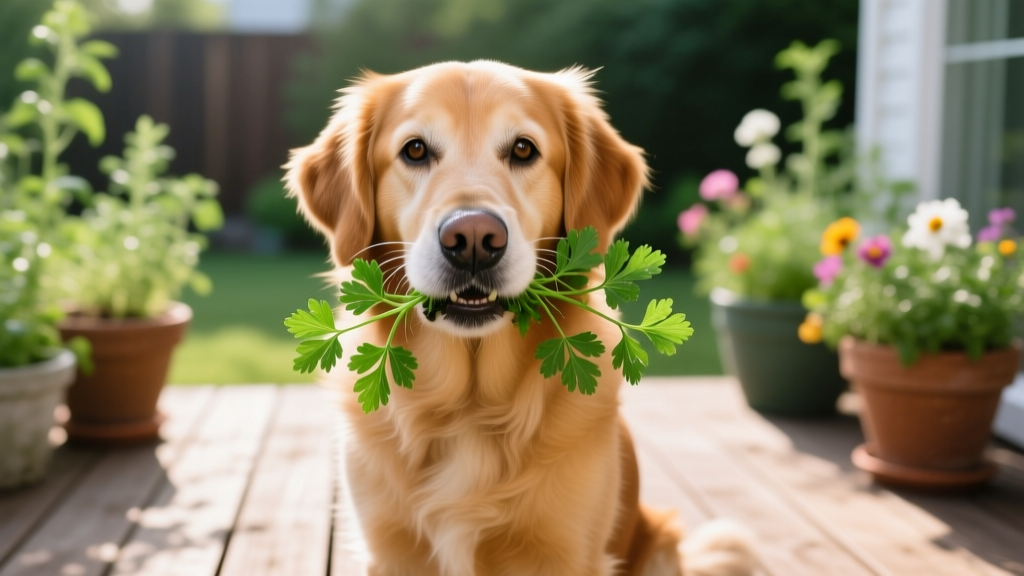
If you've ever caught your dog snacking on a sprig of parsley that fell to the kitchen floor, you probably wondered whether you should worry. The short answer: yes, parsley is safe for dogs in small, controlled amounts — but the type of parsley matters enormously, and overfeeding it can cause real problems.
Curly-leaf parsley (Petroselinum crispum) is non-toxic and safe for most adult dogs when served in small portions. Spring parsley (also called "Italian parsley" lookalike, scientifically Aethusa cynapium or fool's parsley) and large quantities of any parsley containing furanocoumarins pose toxicity risks. Always confirm the variety before feeding, and stick to the serving sizes outlined below.
Can Dogs Eat Parsley? What You Need to Know First
Curly-leaf parsley — the most common variety found in US grocery stores — is recognized as safe for canine consumption by the ASPCA's non-toxic plant database. It appears on the non-toxic list for dogs, cats, and horses. That said, "non-toxic" does not mean "feed freely." Parsley contains compounds called furanocoumarins, which in concentrated amounts can cause photosensitivity and, in extreme cases, liver stress.
The bigger concern is variety confusion. Spring parsley (Aethusa cynapium), sometimes called fool's parsley, is a different plant entirely and is genuinely toxic. It resembles flat-leaf (Italian) parsley but belongs to the same family as poison hemlock. If you're foraging or buying from a farmers' market where labeling may be loose, stick with curly-leaf parsley from a trusted grocery source.
Flat-leaf (Italian) parsley (Petroselinum crispum var. neapolitanum) is the same species as curly-leaf and is safe in the same quantities. The difference is texture and flavor intensity — flat-leaf has a stronger, slightly more bitter profile that some dogs reject.
How Much Parsley Can I Give My Dog?
Dosing parsley correctly is where most owners go wrong. A common mistake is tossing a whole sprig into a food bowl without considering the dog's body weight. Parsley should be treated like a supplement, not a salad base.
| Dog Weight | Example Breeds | Safe Serving | Max Frequency |
|---|---|---|---|
| Under 15 lb / 7 kg | Chihuahua, Pomeranian, Yorkie | ½ teaspoon finely minced | 2–3 times per week |
| 15–35 lb / 7–16 kg | Beagle, Cocker Spaniel, French Bulldog | 1 teaspoon finely minced | 2–3 times per week |
| 35–70 lb / 16–32 kg | Labrador, Border Collie, Boxer | 1 tablespoon finely minced | 2–3 times per week |
| Over 70 lb / 32 kg | Great Dane, Mastiff, Saint Bernard | 1½ tablespoons finely minced | 2–3 times per week |
Important: These amounts refer to fresh, finely chopped parsley. Dried parsley is more concentrated — reduce portions by roughly two-thirds if using dried (for example, a 50 lb dog would get about 1 teaspoon dried instead of 1 tablespoon fresh).
Is Parsley Good for Dogs Nutritionally?
Parsley does carry genuine nutritional value for dogs, though it should supplement — never replace — a complete and balanced diet that meets AAFCO nutrient profiles. Here's what a single tablespoon (about 4 grams) of fresh parsley provides, based on USDA FoodData Central values:
| Nutrient | Amount | Relevance for Dogs |
|---|---|---|
| Vitamin K | 62.3 mcg (52% human DV) | Supports blood clotting and bone metabolism; dogs synthesize some via gut bacteria, but dietary K is beneficial |
| Vitamin C | 5.3 mg | Antioxidant; dogs produce their own vitamin C, so supplemental amounts offer mild immune support |
| Vitamin A (beta-carotene) | 169 IU | Supports vision, skin health, and immune function |
| Folate (B9) | 6.1 mcg | Important for cell division and red blood cell formation |
| Iron | 0.25 mg | Supports oxygen transport; plant-based iron has lower bioavailability than heme iron |
| Potassium | 22 mg | Electrolyte balance and muscle function |
| Fiber | 0.13 g | Minimal at serving size; not a meaningful fiber source |
| Calories | ~1.4 kcal | Negligible — won't impact weight management |
The standout nutrient is vitamin K. Parsley is one of the richest dietary sources of phylloquinone (vitamin K1). This is the same vitamin that veterinarians administer therapeutically in cases of rodenticide poisoning (which depletes clotting factors). However, the amount in a safe serving of parsley is nowhere near therapeutic dose — think of it as general nutritional support, not medical treatment.
The popular claim that parsley "freshens dog breath" has some basis: parsley contains volatile oils (myristicin, apiol) with mild antimicrobial properties. If your dog's halitosis stems from oral bacteria, a small amount of parsley may help temporarily. But persistent bad breath usually signals dental disease, and parsley won't fix tartar buildup or gingivitis — a veterinary dental exam will.
How to Prepare Parsley for Your Dog
Preparation matters more than most owners realize. Whole sprigs are a choking risk for small dogs, and unwashed parsley may carry pesticide residues or soil-borne pathogens.
- Choose curly-leaf parsley from a reputable grocery store. Organic is preferable to minimize pesticide exposure, though not strictly required if washed thoroughly.
- Wash under cold running water for at least 20 seconds, separating the leaves to rinse between stems. Pat dry with a clean paper towel or use a salad spinner.
- Remove the tough stems. Stems are fibrous, harder to digest, and pose a higher choking risk — especially for dogs under 20 lb / 9 kg.
- Finely mince the leaves with a sharp knife or pulse 3–4 times in a food processor. The goal is a confetti-like texture that mixes easily into food. Large pieces may be regurgitated or pass through undigested.
- Serve raw and unseasoned. No salt, garlic, onion powder, butter, or olive oil. Cooked parsley loses some vitamin C and volatile oils, though vitamin K is relatively heat-stable. Raw is preferred for maximum nutrient retention.
- Mix into your dog's regular meal or sprinkle on top of kibble. You can also freeze minced parsley in ice cube trays with a little low-sodium bone broth (no onion or garlic) for a treat topper.
Storage tip: Fresh parsley keeps for 5–7 days in the refrigerator if stored upright in a glass of water with a loose plastic bag over the leaves. You can also freeze minced parsley in airtight containers for up to 6 months without meaningful nutrient loss.
What Happens if My Dog Eats Too Much Parsley?
A dog that grabs a fallen sprig off the floor will almost certainly be fine. The risk escalates with repeated overfeeding or a single large ingestion relative to body size.
Parsley contains furanocoumarins — natural plant compounds that, in high concentrations, cause photosensitivity (exaggerated sunburn reactions) and have been associated with liver enzyme elevation in animal studies. The toxic threshold is difficult to pin down for dogs specifically, but the general veterinary guidance is to keep parsley well below 1% of total daily food intake by weight.
Signs that your dog may have eaten too much parsley include:
- Mild GI upset: Soft stool, vomiting, or decreased appetite within 6–12 hours of ingestion — the most common reaction
- Photosensitivity: Redness or irritation on sparsely haired areas (nose, ear tips, belly) after sun exposure — rare but documented with large amounts
- Lethargy or unusual behavior: If combined with GI symptoms, this warrants veterinary attention
For a 30 lb dog, consuming an entire bunch of parsley (roughly 60–80 grams) would likely trigger noticeable GI distress. For a 10 lb dog, even 20–30 grams could cause vomiting and diarrhea.
Dogs Who Should Not Eat Parsley
Not every dog is a candidate for parsley supplementation, even at safe serving sizes. The following groups should avoid it or only receive it under direct veterinary supervision:
- Pregnant dogs: Parsley contains apiol, a compound historically used as an abortifacient in human medicine. While the amount in a safe serving is very low, there is no benefit to risking uterine stimulation. Skip parsley entirely during pregnancy and whelping.
- Dogs with kidney disease: Parsley has mild diuretic properties and contains oxalates. For dogs with chronic kidney disease (CKD) or a history of calcium oxalate bladder stones, the added oxalate load is unnecessary and potentially harmful.
- Dogs on anticoagulant medication: Because vitamin K directly affects blood clotting, dogs receiving warfarin or other anticoagulants should not have their vitamin K intake fluctuate. Consistency matters more than the absolute amount — talk to your vet before adding parsley to their diet.
- Puppies under 6 months: Their digestive systems are still developing, and introducing non-essential plant matter can cause unnecessary GI disruption. Focus on a complete puppy diet instead.
- Dogs with known herb sensitivities: If your dog has reacted poorly to cilantro, dill, or other Apiaceae family herbs, parsley may trigger a similar response.
Foods to Avoid: The Parsley Adjacency Problem
The Apiaceae (umbellifer) plant family includes both safe culinary herbs and some of the most dangerous plants in North America. Understanding the family tree helps you avoid costly mistakes:
| Plant | Safe for Dogs? | Key Identification Notes |
|---|---|---|
| Curly-leaf parsley | ✓ Yes | Tightly curled, ruffled leaves; bright green; widely available in grocery stores |
| Flat-leaf (Italian) parsley | ✓ Yes | Flat, serrated leaves resembling cilantro; same species as curly-leaf; stronger flavor |
| Cilantro (coriander) | ✓ Yes | Very similar appearance to flat-leaf parsley; milder scent; safe in similar amounts |
| Spring parsley (fool's parsley) | ✗ TOXIC | Resembles flat-leaf parsley; shiny undersides to leaves; acrid taste; contains coniine-like alkaloids |
| Poison hemlock | ✗ LETHAL | Tall (up to 8 ft), purple-spotted hollow stems, fern-like leaves; found along roadsides and ditches; any ingestion is an emergency |
| Wild carrot (Queen Anne's lace) | ⚠ Caution | Root is edible (ancestor of domestic carrot), but easily confused with poison hemlock; do not forage without expert ID |
If your dog ingests any plant you cannot positively identify, treat it as a potential emergency. Call the ASPCA Animal Poison Control Center at (888) 426-4435 (available 24/7, consultation fee applies) or the Pet Poison Helpline at (855) 764-7661.
How to Introduce Parsley Safely
Any new food deserves a cautious introduction, even one as generally safe as parsley. Here's a practical protocol:
- Day 1: Offer one-quarter of the recommended serving size for your dog's weight. Mix it thoroughly into their regular meal. Observe for the next 24 hours.
- Watch for: Vomiting, diarrhea, excessive drooling, lip-licking (a nausea sign in dogs), scratching or hives (rare allergic response), or refusal to eat the next meal.
- Day 3 (if no reaction): Increase to half the recommended serving. Monitor for another 24 hours.
- Day 5 (if still no reaction): Move to the full recommended serving size. You can now offer parsley 2–3 times per week as part of a rotation of safe vegetable/herb additions.
If at any stage your dog shows GI upset, stop feeding parsley and wait at least 2 weeks before trying again at the previous tolerated dose. Some dogs simply don't enjoy the taste or can't tolerate it — that's perfectly normal and not a cause for concern.
Contact your vet or an emergency clinic immediately if your dog shows any of the following after eating parsley or an unidentified plant:
- Vomiting more than twice within 6 hours
- Bloody diarrhea or black, tarry stools
- Difficulty breathing, swelling of the face or throat
- Seizures, tremors, or collapse
- Known ingestion of spring parsley, poison hemlock, or any unidentified wild plant
- Skin redness or blistering after sun exposure following large parsley ingestion
ASPCA Poison Control: (888) 426-4435 (24/7, fee applies)
Frequently Asked Questions
Can puppies eat parsley?
It's best to wait until your puppy is at least 6 months old before introducing parsley. Young puppies have sensitive, still-developing digestive tracts, and their nutritional needs are best met through a complete, AAFCO-formulated puppy diet. Once they're older, you can introduce parsley using the gradual protocol above, starting at the smallest serving size for their weight.
Can I use dried parsley instead of fresh?
Yes, dried parsley is safe, but it's more concentrated. Use roughly one-third the amount you would with fresh — for example, if the fresh serving for your dog is 1 tablespoon, use 1 teaspoon of dried. Avoid dried parsley blends that contain added salt, garlic powder, or onion powder, as garlic and onion are toxic to dogs. Check the ingredient label carefully.
Does parsley really help with dog breath?
Partially. The volatile oils in parsley (particularly myristicin and apiol) have mild antimicrobial activity that may temporarily reduce oral odor-causing bacteria. However, if your dog has persistent bad breath, it's far more likely caused by periodontal disease — which affects an estimated 80% of dogs over age 3, according to the AVMA. Parsley is a cosmetic band-aid at best. Schedule a dental exam with your veterinarian for a real solution.
Is parsley safe for dogs with kidney disease?
Generally, no. Parsley contains oxalates and has mild diuretic properties, both of which can complicate kidney disease management. Dogs with chronic kidney disease (CKD) or a history of calcium oxalate uroliths (bladder stones) should avoid parsley. Always consult your veterinarian before adding any new food to a therapeutic diet.
Can dogs eat parsley every day?
Daily feeding isn't recommended. Sticking to 2–3 times per week keeps furanocoumarin exposure low and reduces the risk of cumulative GI irritation. Variety is better than repetition — rotate parsley with other safe herbs and vegetables like cilantro, green beans, or small amounts of carrot to provide a broader nutrient spectrum.
My dog ate a whole bunch of parsley from the garden — what now?
First, confirm it's actually parsley and not fool's parsley or another Apiaceae plant. If you're confident it's culinary parsley, estimate how much was eaten relative to your dog's body weight. A 50 lb dog eating a standard grocery-store bunch (about 60g) will likely experience vomiting and diarrhea but is unlikely to face serious complications. Offer fresh water, withhold food for 6–8 hours, and monitor closely. Call your vet if vomiting persists beyond 12 hours, if you see blood in vomit or stool, or if your dog becomes lethargic.
This article is for informational purposes only and does not replace professional veterinary advice. Always consult your veterinarian before making changes to your dog's diet, especially if your dog has pre-existing health conditions or is on medication.
Priya Sutaria
All our authors care for dogs every day — read more of their work on the authors page.


