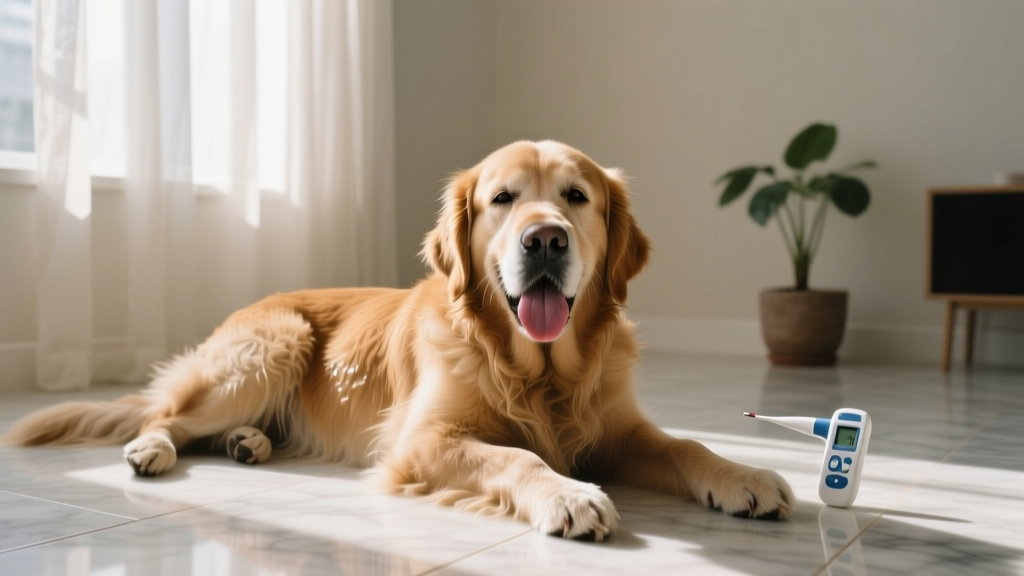
Hysterical Pregnancy in Dogs: Symptoms, Causes, and Care Guide
Learn about hysterical pregnancy in dogs (pseudocyesis): symptoms, causes, treatment options, and how to support your intact female through this life stage event.

What Is Hysterical Pregnancy in Dogs?
Hysterical pregnancy in dogs — clinically known as pseudocyesis or false pregnancy — is a condition where an intact (unspayed) female dog displays physical and behavioral signs of pregnancy despite not carrying puppies. It typically occurs 6 to 12 weeks after an estrus (heat) cycle and is driven by normal hormonal fluctuations, specifically a prolonged elevation of progesterone followed by a rise in prolactin.
According to the Merck Veterinary Manual, pseudocyesis is remarkably common: an estimated 50–75% of intact female dogs will experience at least one episode during their lifetime. While it is not a disease in the traditional sense, the physical manifestations — mammary development, lactation, nesting behavior, and even maternal attachment to inanimate objects — can be distressing for both the dog and her owner.
Recognizing the Symptoms of False Pregnancy in Dogs
Signs of pseudocyesis typically emerge 6 to 12 weeks after the end of estrus, which corresponds to the diestrus phase when progesterone levels naturally decline and prolactin rises. The American Kennel Club notes that symptoms can range from barely noticeable to profoundly dramatic, depending on the individual dog's hormonal sensitivity.
| Category | Physical Signs | Behavioral Signs |
|---|---|---|
| Mild | Slight mammary enlargement, minor weight gain (1–3 lb / 0.5–1.4 kg) | Increased clinginess, mild restlessness |
| Moderate | Noticeable mammary swelling, clear or milky discharge, abdominal distension | Nesting behavior, mothering toys or objects, decreased appetite |
| Severe | Profuse lactation, mammary gland engorgement or mastitis, significant weight gain (5+ lb / 2.3+ kg) | Aggression when "puppies" (toys) are approached, depression, lethargy, refusal to eat for 24+ hours |
When Symptoms Signal Something More Serious
Several conditions can mimic pseudocyesis, and distinguishing between them is critical:
- True pregnancy: Only an ultrasound (accurate after day 25–30 post-breeding) or abdominal radiographs (after day 45) can confirm or rule out actual puppies.
- Pyometra (open or closed): A bacterial uterine infection that occurs during diestrus. Watch for foul-smelling vaginal discharge, fever (above 103°F / 39.4°C), excessive thirst, vomiting, or a distended, painful abdomen. This is a surgical emergency.
- Mammary tumors: Firm, irregular masses in the mammary chain that do not fluctuate with hormonal cycles. Approximately 50% of canine mammary tumors are malignant.
• Fever above 103°F (39.4°C)
• Foul-smelling or bloody vaginal discharge
• Refusal to eat or drink for more than 24 hours
• Hard, painful, or hot mammary glands (possible mastitis)
• Signs of abdominal pain (hunched posture, guarding, whining when touched)
• Lethargy or collapse
What Causes Hysterical Pregnancy in Dogs?
Understanding pseudocyesis requires a brief look at canine reproductive endocrinology. During a normal estrus cycle, the corpus luteum (a structure on the ovary) produces progesterone to prepare the uterus for potential pregnancy. In dogs — unlike most mammals — the corpus luteum persists for roughly 60 to 70 days regardless of whether fertilization occurred. This means progesterone levels in pregnant and non-pregnant dogs follow nearly identical curves during diestrus.
When progesterone finally declines, the pituitary gland responds by releasing prolactin, the hormone responsible for milk production and maternal behaviors. In some dogs, this prolactin surge is exaggerated, triggering the full spectrum of false pregnancy symptoms. Research published in the Journal of the American Veterinary Medical Association (JAVMA) suggests that certain breeds — particularly Beagles, Dachshunds, and smaller terrier breeds — may have a genetic predisposition to more pronounced pseudocyesis episodes.
Risk Factors
- Intact status: Only unspayed females are affected. Spaying eliminates the hormonal cycle entirely.
- Breed predisposition: Small-to-medium breeds appear overrepresented in clinical reports.
- Age: While pseudocyesis can occur at any reproductive age, episodes often become more pronounced in dogs aged 4–8 years.
- Previous episodes: Dogs that have experienced one false pregnancy are more likely to have recurring episodes after subsequent heat cycles.
- Early spaying during diestrus: Spaying a dog during the diestrus phase (while progesterone is still elevated) can paradoxically trigger pseudocyesis due to the abrupt removal of the progesterone source. Most veterinarians recommend waiting until anestrus (the hormonally quiet phase, typically 2–3 months after heat ends) to perform an ovariohysterectomy.
How Long Does Hysterical Pregnancy in Dogs Last?
In most cases, symptoms of pseudocyesis resolve spontaneously within 2 to 3 weeks as prolactin levels naturally decline. The timeline typically follows this pattern:
- Week 1 (onset): Mammary glands begin to enlarge; dog may start nesting or showing increased attachment to owners.
- Week 2 (peak): Lactation may begin; behavioral changes are most pronounced — mothering of toys, decreased activity, possible appetite changes.
- Week 3 (resolution): Mammary glands gradually shrink; milk production ceases; behavior returns to baseline.
If symptoms persist beyond 3 weeks, worsen over time, or if the dog shows signs of illness (fever, anorexia, abnormal discharge), veterinary evaluation is essential. Prolonged pseudocyesis can occasionally indicate an underlying endocrine disorder such as hypothyroidism, which elevates TRH (thyrotropin-releasing hormone) and can secondarily stimulate prolactin release.
Treatment Options: From Home Management to Medical Intervention
Because pseudocyesis is self-limiting, treatment decisions depend on symptom severity and the dog's overall comfort. Always consult your veterinarian before administering any medication or making significant changes to your dog's care.
Home Management Strategies (Mild Cases)
- ☐ Remove toys or objects the dog is "mothering" — this reduces prolactin stimulation from nursing behavior
- ☐ Increase structured exercise: 30–45 minutes of leash walking twice daily to redirect energy and reduce nesting fixation
- ☐ Avoid manually expressing milk from mammary glands — stimulation promotes further production
- ☐ Apply warm compresses to engorged mammary glands for 10–15 minutes, 2–3 times daily, to ease discomfort
- ☐ Consider a fitted dog shirt or recovery suit to prevent self-nursing
- ☐ Temporarily reduce caloric intake by 10–15% if the dog is not lactating heavily (excess calories support milk production)
- ☐ Provide mental enrichment: puzzle feeders, scent work games, or short training sessions to redirect maternal focus
Veterinary Medical Treatment (Moderate to Severe Cases)
When symptoms are severe, prolonged, or causing significant distress, veterinarians may prescribe medications to suppress prolactin:
| Medication | Mechanism | Typical Course | Estimated Cost (2026) | Notes |
|---|---|---|---|---|
| Cabergoline (Galastop®) | Dopamine agonist — suppresses prolactin secretion | 5 µg/kg orally, once daily for 4–6 days | $45–$90 per course | First-line treatment in most veterinary practices. Rapid onset — symptoms often improve within 48 hours. |
| Metergoline | Dopamine agonist / serotonin antagonist | 0.1 mg/kg orally, twice daily for 5–7 days | $30–$60 per course | Less commonly used in the US; more available in Europe. |
| Antibiotics (if mastitis present) | Treats secondary bacterial infection of mammary tissue | Amoxicillin-clavulanate 12.5–25 mg/kg, twice daily for 7–14 days | $15–$40 per course | Only prescribed if mastitis is confirmed. Culture and sensitivity testing may be recommended ($80–$150). |
What about hormone injections? Older protocols sometimes used estrogen or androgen injections to suppress pseudocyesis, but these carry significant side-effect risks (bone marrow suppression, reproductive tract damage) and are no longer recommended by most veterinary endocrinologists.
The Role of Spaying in Prevention
Ovariohysterectomy (spaying) is the only permanent prevention for hysterical pregnancy in dogs. By removing the ovaries and uterus, the hormonal cycles that drive pseudocyesis are eliminated entirely. However, timing matters:
- Optimal timing: Schedule spaying during anestrus — typically 8 to 12 weeks after the heat cycle ends, when progesterone levels are at their baseline low.
- Avoid spaying during diestrus: Removing the corpus luteum during the progesterone-dominant phase can trigger an acute pseudocyesis episode post-surgery.
- Cost range (2026): $300–$800 depending on dog size, geographic region, and whether pre-surgical bloodwork ($80–$150) is included.
Supporting Your Dog Through False Pregnancy: Diet, Exercise, and Environment
While pseudocyesis is resolving, targeted adjustments to your dog's routine can ease her discomfort and speed recovery.
Nutritional Adjustments
| Dog Size Class | Daily Calories (Maintenance) | Adjustment During False Pregnancy | Key Considerations |
|---|---|---|---|
| Small (under 20 lb / 9 kg) | 300–500 kcal | Reduce by 10% if not lactating; maintain if actively producing milk | Small breeds are more prone to pseudocyesis; monitor for hypoglycemia if appetite drops |
| Medium (20–50 lb / 9–23 kg) | 500–900 kcal | Reduce by 10–15% if sedentary and not lactating | Ensure adequate protein (minimum 22% DM) to support tissue recovery |
| Large (50–90 lb / 23–41 kg) | 900–1,400 kcal | Reduce by 10% if activity level drops significantly | Watch for rapid weight gain — large breeds already predisposed to joint stress |
| Giant (90+ lb / 41+ kg) | 1,400–2,000+ kcal | Maintain or reduce by 5–10% depending on activity | Giant breeds have shorter reproductive lifespans; discuss spaying timeline with your vet |
Important: Do not switch to a puppy or "growth" formula during false pregnancy. These higher-calorie diets are designed for actual gestation and lactation and will promote unnecessary weight gain and potentially prolong milk production in a pseudocyesis scenario.
Exercise Modifications
Maintain your dog's regular exercise routine with these adjustments:
- Increase structured walks: Two 30-minute leash walks per day help redirect nesting energy and stimulate endorphin release.
- Avoid high-intensity exercise if mammary glands are engorged — jarring movement can cause discomfort or increase mastitis risk.
- Introduce scent work or puzzle toys: Mental stimulation is particularly effective at breaking the fixation on "mothering" behaviors.
- Limit access to nesting areas: If your dog has claimed a specific closet, laundry pile, or corner, gently restrict access and redirect to a comfortable bed in a common area.
Home Environment Adjustments
- Remove "surrogate puppies": Stuffed toys, blankets, or shoes that the dog is nursing or guarding should be removed. Replace with interactive toys (Kong® stuffed with frozen peanut butter, snuffle mats) that engage different instincts.
- Provide a cooling mat: If mammary glands are warm and engorged, a cooling mat (such as the Green Pet Shop Cool Pet Pad, $25–$45) can provide comfort without the risks of direct ice application.
- Maintain a calm, predictable routine: Hormonal fluctuations already cause emotional instability — inconsistent schedules or environmental stress can worsen behavioral symptoms.
- Consider a canine calming supplement: Products containing L-theanine (e.g., Solliquin® or Composure® chews, $25–$40 for a 30-day supply) may help ease anxiety during peak symptoms. Discuss with your veterinarian before starting any supplement.
When to See the Vet: Screening and Follow-Up
Even mild cases of hysterical pregnancy in dogs warrant at least one veterinary visit to confirm the diagnosis and rule out more serious conditions.
Diagnostic Workup Your Veterinarian May Recommend
- Physical examination ($50–$90): Palpation of mammary chain, abdominal palpation, assessment of vaginal discharge.
- Abdominal ultrasound ($250–$500): Definitively rules out true pregnancy and evaluates uterine health (checking for pyometra). Most informative after day 25–30 post-estrus.
- Abdominal radiographs ($150–$350): Useful after day 45 post-breeding to confirm or rule out fetal skeletons.
- Complete blood count and chemistry panel ($120–$250): Checks for signs of infection (elevated white blood cells), organ function, and rules out hypothyroidism.
- Progesterone level testing ($80–$150): Can help determine the dog's current cycle phase and predict when symptoms will resolve.
Follow-Up Schedule
For a confirmed, uncomplicated pseudocyesis:
- Mild cases: Recheck in 2–3 weeks to confirm resolution. No further visits needed if symptoms clear.
- Medicated cases: Recheck within 5–7 days of starting cabergoline to assess response and check mammary glands for mastitis.
- Recurring episodes: If pseudocyesis occurs after multiple consecutive heat cycles, discuss spaying or endocrine evaluation for underlying thyroid or pituitary disorders.
Recurring False Pregnancies and Long-Term Health Considerations
Dogs that experience repeated episodes of pseudocyesis face several long-term health considerations that owners should discuss with their veterinarian:
Mammary Tumor Risk
Each heat cycle a dog experiences increases her lifetime risk of mammary tumors. According to data widely cited in veterinary oncology literature, the risk breaks down as follows:
- Spayed before first heat: 0.5% lifetime risk of mammary tumors
- Spayed after one heat: 8% risk
- Spayed after two heats: 26% risk
- Intact (never spayed): Risk continues to climb with each cycle, with approximately 50% of mammary tumors being malignant
While pseudocyesis itself does not directly cause mammary cancer, the repeated hormonal cycling that enables it is the primary risk factor.
Pyometra Risk
Intact female dogs have a 23–24% lifetime risk of developing pyometra by age 10, according to epidemiological studies. Pyometra is a life-threatening uterine infection that requires emergency surgery (ovariohysterectomy) and has a mortality rate of 3–10% even with treatment. The cost of emergency pyometra surgery in 2026 ranges from $1,500 to $4,000+ depending on severity, hospitalization needs, and geographic location.
Behavioral Impact
Repeated false pregnancies can lead to chronic behavioral changes including:
- Increased anxiety and clinginess between heat cycles
- Resource guarding of nesting areas or surrogate objects
- Pseudo-aggression (growling, snapping) when owners approach "puppies"
- Depression-like behaviors (lethargy, withdrawal, decreased play drive)
These behaviors typically resolve as the hormonal episode passes but can become more entrenched with each recurrence. Positive reinforcement training and counter-conditioning can help manage these behaviors, but addressing the underlying hormonal trigger through spaying is the most effective long-term solution.
Frequently Asked Questions About Hysterical Pregnancy in Dogs
Can a spayed dog get a false pregnancy?
In rare cases, yes. If ovarian tissue was not completely removed during spaying (a condition called ovarian remnant syndrome), residual tissue can produce enough hormones to trigger pseudocyesis. Signs include recurring heat cycles or false pregnancy symptoms months to years after spaying. Diagnosis requires hormone testing (AMH or progesterone stimulation test, $150–$300) and possibly exploratory surgery to locate and remove the remnant tissue.
Can I give my dog human pregnancy tests?
No. Human pregnancy tests detect hCG (human chorionic gonadotropin), a hormone that dogs do not produce during pregnancy. Canine pregnancy requires veterinary diagnostics — specifically, relaxin hormone testing (Witness® Relaxin test, $50–$100), ultrasound, or radiographs.
Will false pregnancy affect my dog's ability to have puppies later?
Pseudocyesis itself does not impair fertility. However, the hormonal patterns that cause it may indicate an underlying endocrine sensitivity. Dogs with recurrent, severe false pregnancies should have a reproductive evaluation by a veterinary theriogenologist before being considered for a breeding program. Responsible breeding requires comprehensive health testing (OFA hips, cardiac, eye certifications, genetic panels — typically $500–$1,500 total) and should only be undertaken with veterinary guidance.
How can I tell the difference between false pregnancy and true pregnancy?
At home, you cannot reliably distinguish between the two. Both conditions share identical hormonal profiles during diestrus, and physical signs (mammary development, abdominal enlargement, nesting) overlap completely. The only definitive methods are veterinary diagnostics: ultrasound (from day 25–30), radiographs (from day 45), or a relaxin blood test (accurate from day 22–28 post-breeding).
Is pseudocyesis painful for my dog?
Mild cases are generally not painful, though engorged mammary glands can cause discomfort. If the mammary tissue becomes hot, hard, or discolored, this suggests mastitis — a bacterial infection that is painful and requires antibiotic treatment. Gentle warm compresses and a fitted recovery suit can help manage mild discomfort at home.
My dog is grieving her "puppies" after I removed her toys — is this normal?
Temporary searching behavior, whining, or restlessness after removing surrogate objects is expected and usually lasts 24–72 hours. Redirect with structured walks, training sessions, and interactive toys. If the dog shows signs of prolonged distress (refusing to eat for more than 24 hours, persistent vocalization, self-harm behaviors), contact your veterinarian — medical intervention with cabergoline can accelerate hormonal resolution and shorten the behavioral episode.
• ASPCA Animal Poison Control: (888) 426-4435 (if your dog ingests any medication not prescribed for her)
• Merck Veterinary Manual — False Pregnancy in Dogs
• AKC Canine Health Resources
• Your local veterinary emergency clinic for after-hours concerns about pyometra or mastitis
Marcus Aldridge
All our authors care for dogs every day — read more of their work on the authors page.