How to Tell If My Dog Is in Heat: Signs, Stages & Care by Life Stage
Learn how to tell if your dog is in heat with this complete guide covering estrus signs, the four cycle stages, age-based timelines, and life stage care tips.
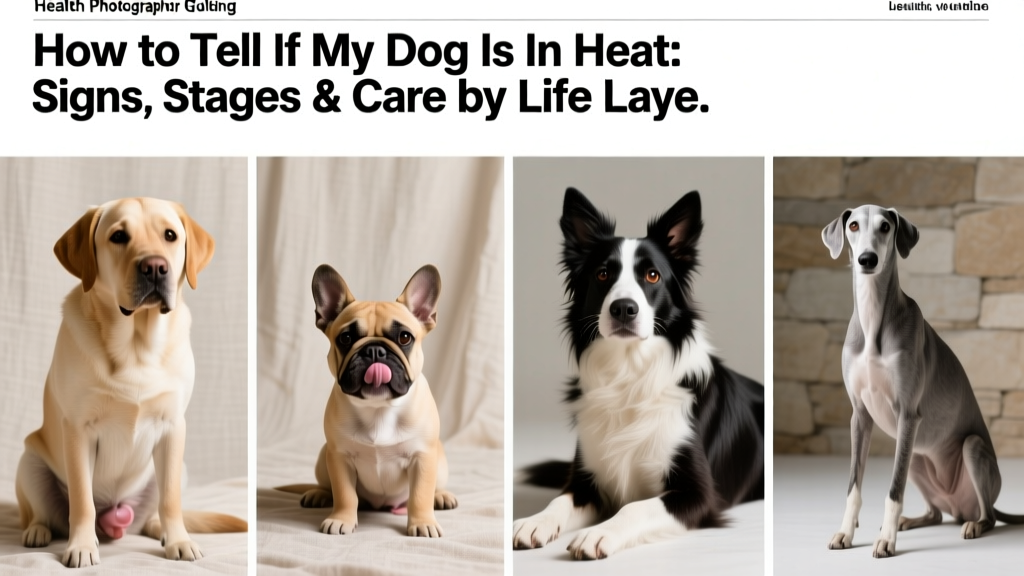
If you've noticed your intact female dog acting clingy, licking herself more than usual, or leaving small blood spots on the furniture, you may be wondering: how do I know if my dog is in heat? The canine estrous cycle is a natural reproductive process, but recognizing its signs — and knowing how to support your dog through each life stage — is essential for her health and your peace of mind.
This guide walks you through every stage of the heat cycle, how those signs change as your dog ages from puppy to senior, and exactly what adjustments to make in nutrition, exercise, and veterinary care at each life stage. Whether you're managing a first heat in a young puppy or navigating recurring cycles in an older intact female, you'll find specific, actionable guidance below.
Understanding the Canine Estrous Cycle: The Four Stages
The canine reproductive cycle consists of four distinct phases. Only one — estrus — is what most people refer to as "being in heat," but understanding all four helps you track exactly where your dog is in her cycle.
| Stage | Duration | Key Signs | Fertility |
|---|---|---|---|
| Proestrus | 7–10 days (avg. 9) | Swollen vulva, bloody discharge, attracts males but refuses mating | Not fertile |
| Estrus | 5–14 days (avg. 9) | Discharge lightens to straw/pink, "flagging" tail, accepts males | Fertile — ovulation occurs |
| Diestrus | 60–90 days | Discharge stops, vulva returns to normal, possible false pregnancy | Not fertile |
| Anestrus | 2–5 months | No visible signs, reproductive rest period | Not fertile |
According to the Merck Veterinary Manual, the complete cycle typically lasts 5–8 months, meaning most intact females experience two heat cycles per year. However, this varies significantly by breed size and individual dog.
How to Tell If Your Dog Is in Heat: 12 Definitive Signs
Here's a comprehensive symptom checklist organized by how early each sign typically appears. Not every dog shows every sign, but most will display at least 3–4 of these indicators.
| Sign | Typical Onset | What You'll Notice |
|---|---|---|
| Swollen vulva | Day 1–2 of proestrus | External swelling 2–3× normal size; often the first visible indicator |
| Bloody vaginal discharge | Day 1–3 of proestrus | Ranges from light spotting to heavy flow; color shifts from bright red to straw during estrus |
| Excessive licking of genital area | Day 1 onward | Self-grooming increases significantly; may appear obsessive |
| Increased urination | Day 2–5 of proestrus | More frequent potty breaks; urine contains pheromones signaling availability |
| Behavioral changes — clinginess | Day 3–7 of proestrus | Follows you room to room, seeks more physical contact, whines for attention |
| Nervousness or restlessness | Day 5–10 of proestrus | Pacing, difficulty settling, alertness to sounds and smells outside |
| Tail flagging | Estrus onset | Holds tail to the side when touched near the hindquarters — a mating invitation |
| Attracting male dogs | Proestrus through estrus | Intact males may gather near your home, yard, or on walks |
| Appetite changes | Variable | Some dogs eat less during proestrus; others show increased appetite during estrus |
| Mounting behavior | Estrus | May hump toys, pillows, or other dogs — hormonal-driven, not necessarily dominance |
| Discharge color change | Transition to estrus | Bloody discharge lightens to pinkish, straw-colored, or almost clear |
| Softening of vulvar swelling | Estrus onset | Swelling becomes less firm — signals ovulation readiness |
🚨 When to Call Your Vet During Heat:Pyometra is a veterinary emergency. If you notice these signs, contact your vet or an emergency clinic immediately.
- Discharge becomes foul-smelling, green, or pus-like (possible pyometra — a life-threatening uterine infection)
- Lethargy, vomiting, or refusal to drink water during or within 8 weeks after heat
- Excessive bleeding that soaks through bedding within hours
- Heat cycle lasting longer than 28 days total (proestrus + estrus)
- Signs of pain — yelping, trembling, or hunched posture
First Heat by Breed Size: Life Stage Timeline
A dog's first heat (puberty) arrives at very different ages depending on her adult size. Smaller breeds mature faster reproductively than larger breeds. Here's what to expect:
| Breed Size Category | Adult Weight Range | First Heat (Typical Age) | Cycle Frequency | Senior Threshold |
|---|---|---|---|---|
| Small breeds (Chihuahua, Pomeranian, Toy Poodle) | Under 20 lb / 9 kg | 6–8 months | Every 4–6 months (2–3× per year) | 10–12 years |
| Medium breeds (Beagle, Cocker Spaniel, Border Collie) | 20–50 lb / 9–23 kg | 8–12 months | Every 6–8 months (about 2× per year) | 8–10 years |
| Large breeds (Labrador, German Shepherd, Golden Retriever) | 50–90 lb / 23–41 kg | 12–18 months | Every 6–10 months (1–2× per year) | 7–9 years |
| Giant breeds (Great Dane, Saint Bernard, Mastiff) | Over 90 lb / 41 kg | 18–24 months | Every 8–12 months (often 1× per year) | 6–7 years |
The American Kennel Club notes that a dog's first heat may be "silent" — with minimal visible signs — particularly in large and giant breeds. If you know your intact female is reaching the expected age range but you haven't noticed obvious symptoms, your vet can confirm cycling status through vaginal cytology or progesterone blood tests.
Caring for Your Dog in Heat: A Life Stage Approach
How you manage your dog's heat cycle should evolve as she moves through life stages. A young puppy experiencing her first heat has different needs than a mature adult or a senior intact female.
Adolescent Dogs (First 1–3 Heat Cycles)
- Supervision intensity: Maximum. Adolescent females are unpredictable — they may attempt to escape fences, dig under gates, or bolt through open doors to reach males.
- Diapers/belly bands: Introduce washable dog diapers (e.g., Pet Parents Washable Dog Diapers, $18–$25 for a 3-pack) to manage discharge and protect furniture.
- Walk protocol: Switch to leash-only walks in low-traffic areas. Avoid dog parks entirely. Walk at off-peak hours (early morning, late evening) to minimize encounters with intact males.
- Training note: Expect regression in obedience. Hormonal surges can override training — use high-value treats (real chicken, freeze-dried liver) and keep sessions under 5 minutes.
- Spay discussion: If you do not plan to breed, discuss spay timing with your vet. For small breeds, spaying before the first heat reduces mammary cancer risk to less than 0.5%. For large breeds, many veterinarians now recommend waiting until skeletal maturity (12–18 months) to reduce orthopedic risks.
Adult Dogs (Prime Reproductive Years, Ages 2–6)
- Cycle tracking: Keep a log (date, duration, discharge characteristics, behavioral notes). This helps predict future cycles and detect abnormalities early.
- Exercise: Maintain regular exercise but avoid off-leash activity. Mental enrichment (snuffle mats, frozen Kongs, puzzle feeders) becomes critical since physical exercise options are limited.
- Male dog management: If you have intact males in the household, complete physical separation is required — closed doors are not sufficient. Use baby gates, crate rotation, or board one dog with a trusted friend for 3–4 weeks.
- Hygiene: Wipe the vulvar area with unscented pet wipes 1–2× daily. Wash bedding every 2–3 days in hot water (minimum 130°F / 54°C) to manage odor and bacteria.
Senior Intact Femals (7+ Years, Varies by Size)
- Increased health risk: Every heat cycle an intact female experiences increases cumulative risk for pyometra (uterine infection) and mammary tumors. By age 7, an intact female who has never been spayed has a 23–24% lifetime risk of developing mammary tumors, according to AVMA data.
- Pyometra screening: Request a senior wellness blood panel and abdominal ultrasound within 4–8 weeks after each heat cycle ends. Cost: $200–$400 depending on your region.
- Emergency spay consideration: If your senior dog develops pyometra, emergency spay (ovariohysterectomy) is the treatment of choice. This surgery costs $1,500–$5,000 and carries higher risk in older dogs. Discuss elective spay with your vet as a preventive measure.
- Comfort measures: Senior dogs in heat may show amplified lethargy and joint stiffness. Provide orthopedic bedding (memory foam, minimum 4 inches thick) and consider a washable waterproof bed liner ($25–$45) for easy cleanup.
Nutritional Adjustments During Heat and Across Life Stages
While a dog in heat doesn't require a fundamentally different diet, hormonal fluctuations do affect appetite and metabolism. Pair these heat-cycle adjustments with broader life stage nutritional needs:
| Life Stage | Base Diet Type | Heat Cycle Adjustments | Key Nutrients to Monitor |
|---|---|---|---|
| Adolescent (6–18 months) | AAFCO-approved puppy or all-life-stages formula; minimum 22% protein, 8.5% fat | Offer smaller, more frequent meals if appetite drops during proestrus. Add warm water or low-sodium bone broth to kibble for palatability. | Calcium:phosphorus ratio (1.2:1), DHA for brain development, controlled calories to prevent excess growth rate in large breeds |
| Adult (1–7 years, size-dependent) | AAFCO adult maintenance formula; minimum 18% protein, 5.5% fat | Monitor calorie intake — some dogs eat 10–15% less during proestrus. Don't overcompensate with treats. Maintain consistent feeding schedule. | Omega-3 fatty acids (EPA/DHA) for anti-inflammatory support; iron if heavy discharge occurs |
| Senior (7+ years, size-dependent) | Senior or mature formula with joint support; moderate protein (20–25%), controlled phosphorus | Appetite may decrease further during heat. Offer warmed food, rotate protein sources. Consider adding a veterinary-recommended appetite stimulant if weight loss exceeds 5% body weight. | Glucosamine/chondroitin (500–1000 mg/day for medium dogs), antioxidants (vitamin E, C), reduced sodium for cardiac support |
Important: Never supplement iron or any mineral without veterinary bloodwork confirming a deficiency. Excess iron causes organ damage in dogs.
Exercise Modifications: Keeping Your Dog Safe and Stimulated
Exercise during heat requires balancing physical needs with reproductive safety. Here's how to adjust by life stage:
Adolescent Dogs in Heat
- Replace off-leash park time with 20–30 minute structured leash walks, twice daily
- Indoor enrichment: hide-and-seek with treats, tug sessions (keep arousal moderate), flirt pole in a fenced garage or basement
- Swimming in a controlled, private environment (e.g., a canine hydrotherapy pool) provides excellent exercise without mating risk — but avoid public water areas where intact males may be present
Adult Dogs in Heat
- Maintain 45–60 minutes of daily exercise, split into 2–3 sessions
- Use a secure, double-clip harness (e.g., Ruffwear Front Range, $40–$45) for added escape security
- Consider treadmill training (dog-specific treadmills like the DogPACER LF 3.1, $500–$700) for high-energy breeds during the 3–4 week confinement period
- Mental exercise counts: 15 minutes of scent work or puzzle feeding equals roughly 30 minutes of physical exercise in terms of energy expenditure
Senior Dogs in Heat
- Reduce walk duration to 15–20 minutes, 2–3× daily, at a comfortable pace
- Watch for heat-related fatigue more closely — older dogs regulate body temperature less efficiently
- Gentle indoor activities: slow sniffing games on a snuffle mat, lick mats with frozen yogurt or peanut butter (xylitol-free)
- Post-walk joint care: apply warm compresses to hips and knees for 5 minutes if your dog shows stiffness
Health Risks at Each Life Stage for Intact Females
Remaining intact carries specific health risks that compound over a dog's lifetime. Understanding these helps you make informed decisions and recognize early warning signs.
| Health Condition | Risk Factor | Early Warning Signs | Most Common Life Stage |
|---|---|---|---|
| Pyometra (uterine infection) | 23–25% of intact females by age 10; risk increases with each cycle | Lethargy, excessive thirst/urination, vaginal discharge (pus or blood) 4–8 weeks after heat, abdominal distension | Senior (7+ years), but can occur at any age |
| Mammary tumors | 26% lifetime risk in intact females; ~50% are malignant | Small firm lumps along mammary chain (5 pairs of glands), skin ulceration over mass, rapid growth | Adult to senior (5+ years) |
| Ovarian/uterine tumors | Less common but documented in older intact females | Abdominal swelling, irregular cycles, persistent discharge | Senior (8+ years) |
| Vaginal hyperplasia/prolapse | Genetic predisposition; more common in brachycephalic breeds (Boxers, Bulldogs) | Pink/red tissue protruding from vulva during proestrus/estrus, difficulty urinating | Adolescent to adult (any heat cycle) |
| False pregnancy (pseudocyesis) | Occurs in 50–75% of intact females after diestrus | Mammary enlargement, milk production, nesting behavior, "adopting" toys, decreased appetite | Any life stage, 6–12 weeks after heat |
Recommended Health Screening Schedule for Intact Females
| Age / Life Stage | Screening Test | Frequency | Estimated Cost |
|---|---|---|---|
| Adolescent (before first heat) | Baseline wellness exam, brucellosis test if breeding planned | Once before puberty | $80–$150 |
| Adult (2–6 years) | Annual wellness bloodwork, mammary chain palpation at every visit | Annually; within 8 weeks post-heat | $120–$250 |
| Senior (7+ years) | Biannual wellness bloodwork, abdominal ultrasound, vaginal cytology if cycle irregularities noted | Every 6 months; ultrasound post-heat | $250–$500 per visit |
Home Environment Adjustments for Dogs in Heat
Managing a dog in heat requires some temporary — and in the case of senior dogs, permanent — modifications to your home. Here's a practical guide:
For All Dogs in Heat (Temporary Adjustments)
- Door and gate security: Install self-closing hinges on exterior doors ($15–$25 per hinge). Add a secondary latch or carabiner clip to screen doors — intact males can push through standard screens.
- Yard perimeter check: Inspect fencing for gaps wider than 2 inches. Bury hardware cloth 12 inches deep along fence lines to prevent digging escapes. Cost: $30–$60 for a 50-foot roll.
- Furniture protection: Use waterproof furniture throws (e.g., Gorilla Grip Waterproof Sofa Cover, $30–$45) on couches and beds. Machine-washable options save time and protect upholstery from discharge.
- Scent management: Clean areas where your dog rests with enzymatic cleaners (Nature's Miracle, $10–$15) to break down pheromones that attract male dogs to your property.
- Separation setup: If you have an intact male, invest in a tall pet gate (minimum 36 inches, e.g., Carlson Extra Tall Walk-Thru, $55–$70) or use a crate rotation schedule.
For Senior Intact Females (Permanent Adjustments)
- Orthopedic bedding: Memory foam dog beds (minimum 4 inches thick, e.g., Big Barker 7" Pillow Top, $240–$340 for large breeds) reduce joint pressure during heat-related lethargy periods.
- Temperature control: Senior dogs in heat are more prone to overheating. Keep ambient temperature at 68–72°F (20–22°C). Consider a cooling mat ($25–$50) during summer heat cycles.
- Ramps and steps: Foam or wooden pet ramps ($35–$80) for couch and bed access reduce hip strain, especially during diestrus when false pregnancy can cause abdominal tenderness.
- Easy-clean flooring: If possible, confine your senior dog to rooms with tile, vinyl, or laminate flooring during heat cycles for easier cleanup.
Quality of Life Considerations: Senior Intact Females
Caring for an older intact female requires honest conversations about quality of life and risk management. Here's how to assess whether your senior dog is thriving — and when to consider difficult decisions.
Adapted HHHHHMM Scale for Senior Intact Females
This quality-of-life framework, adapted from the HHHHHMM scale developed by veterinarian Alice Villalobos, helps you objectively evaluate your dog's wellbeing. Score each category 1–5 (1 = poor, 5 = excellent):
| Category | What to Evaluate | Red Flag (Score 1–2) |
|---|---|---|
| Hurt | Pain level, including post-heat discomfort | Whining, trembling, unable to settle, pain despite medication |
| Hunger | Appetite and ability to eat | Refusing food for 48+ hours, weight loss >10% body weight |
| Hydration | Water intake and skin elasticity | Excessive drinking (possible pyometra or kidney disease), skin tent >2 seconds |
| Hygiene | Ability to stay clean, manage discharge | Cannot self-groom, persistent soiling, skin infections from discharge |
| Happiness | Interest in family, toys, activities | Withdrawn, hiding, no tail wagging, no interest in walks or treats |
| Mobility | Ability to move, stand, navigate stairs | Cannot stand without assistance, falls frequently, refuses to move |
| More good days than bad | Overall day-to-day experience | More bad days than good in a 7-day tracking period |
Total score interpretation: A combined score above 25 generally indicates acceptable quality of life. Below 20 warrants a serious conversation with your veterinarian about palliative care or humane euthanasia. Keep a daily journal — emotional decisions are harder to make without data.
The emotional toll of caring for a senior intact female — especially one who develops pyometra or mammary tumors — is significant. Many owners describe feelings of guilt, particularly if they chose not to spay earlier. These feelings are normal. Seek support from your veterinary team, pet loss support hotlines (the ASPCA Pet Loss Support Program offers resources), or online communities of owners navigating similar decisions.
When to See the Vet More Frequently
Veterinary visit frequency should increase as your intact female ages and as cumulative reproductive risk grows:
- Adolescent (first 2 years): Annual wellness visits; discuss spay timing if not breeding. If first heat seems abnormal (excessive bleeding, prolonged duration >28 days), schedule an exam.
- Adult (2–6 years): Annual visits with mammary chain palpation. Schedule a post-heat checkup (within 8 weeks of cycle end) if your dog shows any lethargy, discharge changes, or behavioral shifts.
- Senior (7+ years): Every 6 months minimum. Each visit should include: complete blood count (CBC), chemistry panel, urinalysis, abdominal palpation, and mammary chain exam. Request an abdominal ultrasound annually or after any heat cycle with unusual symptoms.
Always consult your veterinarian before making decisions about spaying, managing heat cycles, or treating any reproductive condition. This guide provides educational information — it does not replace professional veterinary assessment and care.
Frequently Asked Questions
How long does a dog stay in heat?
The visible portion of the heat cycle (proestrus + estrus) typically lasts 2–4 weeks, with an average of 21 days. However, the full reproductive cycle including diestrus and anestrus spans 5–8 months. Discharge usually stops by the end of estrus (around day 14–21), but your dog remains hormonally active through diestrus.
Can I spay my dog while she's in heat?
Technically yes, but most veterinarians prefer to wait until 8–12 weeks after the heat cycle ends. During heat, increased blood flow to the reproductive organs raises surgical risk and cost (expect $200–$400 more for an in-heat spay). Emergency situations like pyometra override this preference — your vet will operate when necessary regardless of cycle stage.
How do I know if my senior dog is suffering during heat?
Key indicators include: persistent lethargy lasting more than 48 hours, refusal to eat or drink, vocalizing (whining, groaning) when lying down or standing, a hunched or "prayer" posture (front legs extended, rear elevated), and any pus-like or foul-smelling discharge. Senior dogs mask pain instinctively — if you notice even subtle changes, schedule a veterinary exam promptly.
Do dogs go through menopause?
No. Unlike humans, intact female dogs do not experience menopause. They continue to cycle throughout their lives, although cycles may become irregular, lighter, or farther apart in senior years. This is why pyometra and mammary tumor risk persist — and even increase — in older intact females.
When is my dog considered a senior?
Senior status depends on breed size: small breeds (under 20 lb / 9 kg) are considered senior at 10–12 years, medium breeds at 8–10 years, large breeds at 7–9 years, and giant breeds at 6–7 years. These thresholds matter for heat cycle management because reproductive risks compound with age, and older dogs recover more slowly from heat-related stress.
What should I do if a male dog mates with my female during heat?
If an unplanned mating occurs, contact your veterinarian within 24–48 hours. Options include a mismating injection (prostaglandin or aglepristone, available in some countries) or scheduling a spay after pregnancy confirmation via ultrasound (day 25–35 post-mating). Never attempt home remedies to prevent pregnancy — these can cause serious harm.
Aaron Whyte
All our authors care for dogs every day — read more of their work on the authors page.


