How to Stop Diarrhoea in a Dog: A Complete Vet-Guided Treatment Plan
Learn how to stop diarrhoea in a dog safely. Covers causes, symptoms by severity, vet diagnosis costs, treatment options, home care, and when to seek emergency help.

If your dog is suffering from loose, watery, or frequent stools, you are likely searching for fast answers. Diarrhoea in dogs is one of the most common reasons pet owners visit veterinary clinics, accounting for an estimated 20–30% of all general practice appointments according to data published in the Merck Veterinary Manual. It is not a disease itself but a clinical sign — a symptom pointing to an underlying disruption somewhere in the gastrointestinal (GI) tract. The disruption may be as simple as a dietary indiscretion (your dog ate something they should not have) or as serious as a parasitic infection, inflammatory bowel disease, or even a systemic illness like parvovirus.
Understanding how to stop diarrhoea in a dog begins with recognising what type of diarrhoea your dog has, how severe it is, and when professional veterinary intervention is non-negotiable. This guide walks you through every stage — from early warning signs and at-home supportive care to advanced diagnostics and long-term management — so you can make informed decisions about your dog's health.
What Is Diarrhoea in Dogs and What Causes It?
Diarrhoea is defined as the passage of abnormally loose, watery, or unformed stools, typically occurring more frequently than a dog's normal bowel movement pattern. In a healthy adult dog, stool should be firm, moist, and hold its shape — often rated as a 2 or 3 on the Purina Faecal Scoring System (where 1 is very hard and 7 is watery liquid).
The underlying mechanism involves one or more of the following GI disruptions:
- Osmotic diarrhoea: Poorly absorbed nutrients or substances draw excess water into the intestinal lumen. Common with sudden diet changes or ingestion of rich, fatty foods.
- Secretory diarrhoea: The intestinal lining actively secretes water and electrolytes, often triggered by bacterial toxins (e.g., Clostridium perfringens enterotoxin).
- Exudative diarrhoea: Inflammation or ulceration of the intestinal mucosa causes blood, mucus, and protein to leak into the stool. Seen with inflammatory bowel disease (IBD) and certain infections.
- Altered motility: The intestines move contents too quickly (hypermotility) for adequate water absorption, or too slowly, allowing bacterial overgrowth.
Common triggers include dietary indiscretion, food allergies or intolerances, intestinal parasites (giardia, coccidia, hookworms), bacterial or viral infections, stress, medication side effects, pancreatitis, and chronic conditions like IBD or exocrine pancreatic insufficiency (EPI).
Symptoms Checklist: Recognising Severity Early
Not all diarrhoea is created equal. The following checklist helps you categorise your dog's symptoms by severity level, which directly informs whether you can manage the situation at home or need immediate veterinary attention.
| Severity Level | Symptoms | Typical Onset |
|---|---|---|
| Mild (Monitor at Home) |
|
Acute, within 24 hours |
| Moderate (Vet Visit Recommended) |
|
24–48 hours or recurring |
| Severe (Emergency Vet Now) |
|
Rapid onset, any timeframe |
A useful at-home hydration check: gently pinch the skin between your dog's shoulder blades and release. In a well-hydrated dog, the skin snaps back immediately. If it takes more than 1–2 seconds to return to position, your dog is likely dehydrated and needs veterinary evaluation.
Risk Factors: Which Dogs Are Most Vulnerable?
Key Risk Factors for Canine Diarrhoea
- Age: Puppies under 6 months and senior dogs over 10 years are at highest risk. Puppies have immature immune systems and smaller body reserves, making dehydration dangerous within hours. Seniors often have comorbidities like kidney disease or reduced GI motility.
- Breed Predisposition: German Shepherds are predisposed to IBD and EPI. Yorkshire Terriers and Miniature Schnauzers are prone to pancreatitis. Boxers frequently develop histiocytic ulcerative colitis. Great Danes and other giant breeds have higher risk of GDV-related GI signs.
- Weight: Overweight dogs (body condition score 7–9/9) have higher rates of pancreatitis-triggered diarrhoea. Underweight dogs may have malabsorption syndromes.
- Environment: Dogs in boarding facilities, dog daycares, shelters, or multi-dog households face elevated exposure to infectious agents like giardia, clostridium, and canine enteric coronavirus.
- Diet History: Dogs on raw diets, table-scrap-heavy diets, or those with frequent treat/food changes have more GI upset episodes. Dogs with known food allergies (most commonly chicken, beef, or dairy proteins) are recurring cases.
- Medication Use: NSAIDs (carprofen, meloxicam), antibiotics (especially amoxicillin-clavulanate), and chemotherapy agents commonly cause diarrhoea as a side effect.
- Stress Events: Travel, rehoming, new household members, fireworks/thunderstorm events, and veterinary visits can trigger stress colitis in susceptible dogs.
How Vets Diagnose the Cause of Diarrhoea
Because diarrhoea is a symptom rather than a diagnosis, your veterinarian will follow a systematic diagnostic process to identify the underlying cause. The extent of testing depends on symptom severity, duration, and your dog's history.
- Step 1 — Physical Examination & History ($50–$95): Your vet will palpate the abdomen for pain, masses, or foreign bodies; check mucous membrane colour and capillary refill time; assess hydration status via skin turgor; and take a detailed dietary and exposure history. Bring a fresh stool sample if possible.
- Step 2 — Faecal Testing ($35–$120):
- Faecal flotation and direct smear ($35–$55) to detect parasite eggs and protozoa
- Giardia ELISA antigen test ($40–$60)
- Faecal PCR panel ($80–$120) — screens for salmonella, campylobacter, clostridium perfringens, clostridium difficile, parvovirus, and other pathogens simultaneously
- Step 3 — Blood Work ($80–$200):
- Complete blood count (CBC) — evaluates white blood cells for infection, red blood cells for anaemia from GI bleeding
- Biochemistry panel — checks liver enzymes, kidney values (BUN, creatinine), electrolytes, albumin, and pancreatic lipase (Spec cPL test, $75–$120)
- Step 4 — Imaging (if indicated, $150–$600):
- Abdominal radiographs ($150–$250) — screens for foreign bodies, intussusception, or gas patterns suggesting obstruction
- Abdominal ultrasound ($300–$600) — evaluates intestinal wall thickness, layering, lymph nodes, and organ architecture; more sensitive for IBD, neoplasia, and pancreatitis
- Step 5 — Advanced Diagnostics (if chronic or unresponsive, $200–$800+):
- Endoscopy with intestinal biopsy ($500–$1,200) — gold standard for diagnosing IBD vs lymphoma
- Cobalamin and folate levels ($60–$100) — assesses small intestinal bacterial overgrowth and malabsorption
- TLI (trypsin-like immunoreactivity) test ($80–$120) — confirms or rules out EPI
Treatment Options: Medical, Supportive, and Home Care
Treatment for canine diarrhoea depends entirely on the underlying cause and severity. Below is a comparison of common treatment approaches with typical outcomes.
| Treatment Type | Examples | Indication | Typical Outcome | Cost Range |
|---|---|---|---|---|
| Dietary Management | Bland diet (boiled chicken breast + white rice), prescription GI diets (Hill's i/d, Royal Canin GI Low Fat, Purina EN) | Acute uncomplicated diarrhoea, dietary indiscretion | 70–85% resolution within 48–72 hours | $5–$50 (home-prepared); $35–$65/bag (prescription) |
| Probiotics | Purina FortiFlora, Proviable-DC (Nutramax), Visbiome Vet | Antibiotic-associated diarrhoea, stress colitis, general GI support | Moderate evidence for reducing duration by 1–2 days; best as adjunct therapy | $15–$40 per 30-day supply |
| Anti-Diarrhoeal Medications | Metronidazole (10–15 mg/kg BID), tylosin (10–20 mg/kg BID), maropitant (Cerenia) for nausea | Bacterial overgrowth, protozoal infections, concurrent vomiting | Effective when bacterial/protozoal cause confirmed; not appropriate for all cases | $15–$60 per course |
| Deworming | Fenbendazole (Panacur, 50 mg/kg SID × 3–5 days), ponazuril for coccidia | Confirmed parasitic infection via faecal testing | 90%+ cure rate for common parasites; giardia may require repeat treatment | $15–$45 per course |
| Fluid Therapy | Subcutaneous (SQ) fluids, intravenous (IV) crystalloid fluids (LRS or Normosol-R) | Moderate to severe dehydration, electrolyte imbalances | Critical supportive measure; does not treat cause but prevents shock and organ damage | $50–$150 (SQ); $200–$600+ (IV hospitalisation) |
| Immunosuppressive Therapy | Prednisone (1–2 mg/kg tapering), budesonide, cyclosporine | Confirmed IBD via biopsy | 60–70% achieve clinical remission; requires long-term management | $20–$80/month ongoing |
| Surgical Intervention | Foreign body removal, intussusception reduction, tumour resection | Mechanical obstruction, neoplasia, severe intussusception | Variable — 80–90% survival for foreign body; lower for malignant tumours | $1,500–$7,000+ |
At-Home Bland Diet Protocol
For mild, acute diarrhoea in an otherwise healthy adult dog, a short-term bland diet is the most widely recommended first-line approach. Here is a specific protocol:
- Fast for 12–24 hours (water only). This gives the GI tract time to rest. Do NOT fast puppies under 6 months, toy breeds under 10 lb, or diabetic dogs — risk of hypoglycaemia is too high.
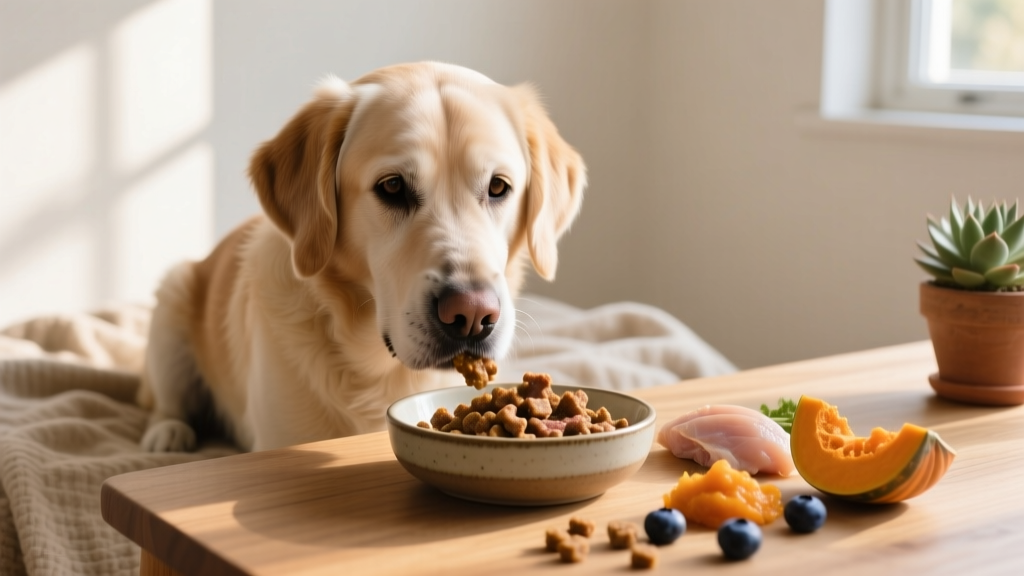
- Prepare a bland diet: 2 parts cooked white rice to 1 part lean protein. Acceptable proteins include boiled skinless chicken breast, boiled lean ground turkey (drain fat), or boiled extra-lean ground beef (93/7 or leaner, drained). Avoid all seasoning, oils, and butter.
- Feed small, frequent meals: Divide the daily portion into 4–6 small feedings over 24 hours. Approximate daily amount: 1 cup of the rice-protein mixture per 15 lb of body weight, adjusted to your dog's normal caloric needs.
- Transition back over 3–5 days: Gradually mix increasing proportions of your dog's regular food into the bland diet. Day 1–2: 75% bland / 25% regular. Day 3–4: 50/50. Day 5: 25% bland / 75% regular. Day 6: full regular diet.
- Add a canine-specific probiotic: Purina FortiFlora (one packet daily) or Nutramax Proviable-DC (one capsule daily) during and for 5–7 days after the episode to support gut microbiome recovery.
When to Call the Vet: Emergency Red Flags
🚨 Seek Immediate Veterinary Care If Your Dog Shows ANY of the Following:
- Bloody diarrhoea — especially large volumes of fresh red blood (haematochezia) or dark, tarry stools (melaena indicating upper GI bleeding)
- Diarrhoea combined with vomiting — particularly if your dog cannot keep water down for more than 4–6 hours
- Signs of severe dehydration: sunken eyes, tacky/dry gums, skin tenting lasting more than 2 seconds, rapid heart rate
- Lethargy, weakness, or collapse — your dog is unresponsive, unable to stand, or unusually still
- Fever above 103.5°F (39.7°C) or hypothermia below 99°F (37.2°C)
- Abdominal distension or obvious pain — hunched posture, whining when touched, praying position (front end down, rear end up)
- Puppy under 6 months with diarrhoea lasting more than 12 hours — puppies dehydrate dangerously fast
- Known or suspected parvovirus exposure — especially in unvaccinated or partially vaccinated puppies
- Known or suspected toxin ingestion — contact ASPCA Animal Poison Control at (888) 426-4435 (24/7, consultation fee applies) or Pet Poison Helpline at (855) 764-7661
- Diarrhoea persisting beyond 48 hours despite home management in an adult dog
- Weight loss or chronic intermittent diarrhoea lasting more than 2–3 weeks — indicates an underlying chronic condition requiring workup
Cost of Treating Diarrhoea in Dogs
Treatment costs vary dramatically depending on the underlying cause and severity. Here is a realistic breakdown based on 2025–2026 US veterinary pricing data:
| Scenario | What's Included | Estimated Cost |
|---|---|---|
| Mild acute case (simple dietary indiscretion) | Office visit, faecal float, probiotic recommendation, bland diet guidance | $100–$200 |
| Moderate case with diagnostics | Office visit, CBC/chemistry, faecal PCR panel, metronidazole, SQ fluids | $350–$650 |
| Severe case requiring hospitalisation | Emergency visit, full bloodwork, imaging, IV fluids (1–3 days), injectable medications, monitoring | $1,000–$3,500 |
| Parvovirus treatment (puppy) | Emergency care, parvo test, 3–7 days hospitalisation, IV fluids, antibiotics, anti-nausea meds, isolation | $1,500–$5,000+ |
| Chronic diarrhoea workup (IBD/EPI) | Multiple visits, comprehensive bloodwork, abdominal ultrasound, cobalamin/folate/TLI tests, possible endoscopy with biopsy | $800–$2,500 (diagnostics) + $50–$200/month ongoing |
| Surgical case (foreign body/obstruction) | Emergency visit, imaging, surgery, 1–3 days post-op hospitalisation, medications | $2,000–$7,000+ |
Pet insurance can significantly offset these costs. Most comprehensive policies (Trupanion, Healthy Paws, Nationwide) cover 70–90% of eligible expenses after deductible for illness-related diarrhoea, though pre-existing conditions are excluded. Average monthly premiums for accident-and-illness plans range from $30–$70/month depending on breed, age, and location.
Prognosis and Recovery Timelines
| Cause | Typical Recovery Time | Prognosis | Recurrence Risk |
|---|---|---|---|
| Dietary indiscretion | 1–3 days | Excellent — full recovery expected | Low with consistent diet management |
| Parasitic infection (giardia, worms) | 5–14 days after treatment begins | Excellent with appropriate deworming | Moderate — reinfection possible in high-exposure environments |
| Bacterial enteritis | 5–10 days with antibiotics | Good to excellent | Low |
| Parvovirus (treated) | 5–10 days hospitalised; 2–4 weeks full recovery | 68–90% survival with aggressive treatment; under 10% survival without treatment (AVMA) | Very low — survivors develop lasting immunity |
| Pancreatitis (acute) | 3–7 days (mild); 1–3 weeks (severe) | Good for mild cases; guarded for severe necrotising pancreatitis | High — 30–50% of dogs experience recurrence; lifelong low-fat diet recommended |
| IBD (chronic) | 2–8 weeks to achieve remission | Fair to good — manageable but rarely cured; requires lifelong dietary and/or medication management | High — flare-ups common with dietary lapses or stress |
| Intestinal lymphoma | Variable | Guarded — small-cell lymphoma: 18–24 month median survival with chemotherapy; large-cell: 6–9 months | N/A — progressive disease |
Prevention: Reducing Diarrhoea Risk Long-Term
While not all causes of diarrhoea are preventable, many of the most common triggers can be significantly reduced through consistent management practices:
- Maintain a consistent diet: Avoid sudden food changes. When transitioning to a new food, follow a 7–10 day gradual transition (25% new food for days 1–3, 50% for days 4–6, 75% for days 7–9, 100% by day 10).
- Restrict scavenging and table scraps: Keep trash cans secured with lids. Avoid feeding fatty human foods — even a small amount of bacon grease or a chicken wing bone can trigger pancreatitis or an obstruction.
- Stay current on parasite prevention: Administer monthly heartworm/intestinal parasite preventives (Heartgard Plus, Interceptor Plus, or Simparica Trio). Have faecal testing performed 1–2 times annually during wellness exams.
- Complete the puppy vaccination series: The DHPP vaccine series (typically given at 6–8 weeks, 10–12 weeks, and 14–16 weeks) protects against parvovirus and distemper — both of which cause severe, potentially fatal diarrhoea. The AKC recommends following your vet's specific vaccination schedule.
- Manage stress proactively: For dogs prone to stress colitis, begin counter-conditioning and desensitisation training for known triggers (thunderstorms, travel, vet visits). Consider calming supplements containing L-theanine or casein hydrolysate (e.g., Virgil Anxitane, Zylkene) during anticipated stress events.
- Use food puzzles and slow feeders: Dogs that eat too rapidly are more prone to GI upset. Slow-feeder bowls and food-dispensing toys reduce gulping and improve digestion.
- Keep a food and symptom diary: If your dog has recurrent episodes, log everything they eat (including treats and scavenged items) alongside stool quality. This data is invaluable for your vet in identifying patterns and potential food allergens.
Frequently Asked Questions
Can I give my dog rice to stop diarrhoea?
Yes, plain cooked white rice is a key component of a bland diet for dogs with acute diarrhoea. White rice is easily digestible and low in fibre, which helps firm stools. Combine it with a lean protein source (boiled skinless chicken breast) at a ratio of 2 parts rice to 1 part protein. Feed small, frequent meals for 2–3 days before gradually transitioning back to regular food. Brown rice is not recommended during acute episodes — its higher fibre content can worsen loose stools.
How long should diarrhoea last before I worry?
In a healthy adult dog, a single episode of mild diarrhoea that resolves within 12–24 hours with a bland diet is generally not a cause for concern. Contact your veterinarian if diarrhoea persists beyond 24–48 hours in an adult dog, or beyond 12 hours in a puppy under 6 months. Seek immediate emergency care if diarrhoea is accompanied by blood, vomiting, lethargy, or signs of dehydration at any point.
Is pumpkin good for dogs with diarrhoea?
Canned plain pumpkin (not pumpkin pie filling, which contains spices and xylitol — toxic to dogs) can help firm stools due to its soluble fibre content. The recommended dose is 1–4 tablespoons per meal depending on your dog's size: 1 tablespoon for dogs under 15 lb, 2 tablespoons for 15–35 lb, 3–4 tablespoons for dogs over 35 lb. However, pumpkin is a supportive measure, not a treatment for underlying causes. If diarrhoea persists beyond 24–48 hours, veterinary evaluation is needed.
Should I fast my dog when they have diarrhoea?
A 12–24 hour fast (water only) can help rest the GI tract in healthy adult dogs with acute diarrhoea. However, fasting is NOT appropriate for puppies under 6 months, toy breeds (Chihuahuas, Yorkshire Terriers, Pomeranians) due to hypoglycaemia risk, diabetic dogs, or dogs with certain metabolic conditions. Always ensure free access to fresh water during any fasting period. If you are unsure whether fasting is safe for your dog, consult your veterinarian first.
Can stress cause diarrhoea in dogs?
Yes. Stress colitis is a well-documented condition in dogs. Events like boarding, travel, moving homes, introduction of new pets, loud noises (fireworks, thunderstorms), and veterinary visits can trigger acute large-bowel diarrhoea, often with mucus and occasionally small amounts of fresh blood. Stress causes changes in gut motility and the intestinal microbiome, leading to inflammation. Management includes identifying and reducing stressors, using calming supplements or pheromone products (Adaptil), and positive reinforcement-based counter-conditioning training for predictable stress events.
What breeds are most prone to chronic diarrhoea?
Breeds with known predispositions to chronic GI conditions include: German Shepherds (IBD, EPI, and food sensitivities), Boxers (histiocytic ulcerative colitis), Yorkshire Terriers and Miniature Schnauzers (pancreatitis), Soft-Coated Wheaten Terriers (protein-losing enteropathy), Basenjis (immunoproliferative enteropathy), and Irish Setters (gluten-sensitive enteropathy). If you own one of these breeds, work with your veterinarian on proactive GI monitoring and early dietary intervention at the first sign of chronic loose stools.
Robin Maitland
All our authors care for dogs every day — read more of their work on the authors page.