How Can Dogs Get Heartworm? Transmission, Symptoms & Prevention Guide
Learn how can dogs get heartworm from mosquitoes, recognize early symptoms, compare prevention products, and understand treatment protocols with expert guidance.

Understanding Heartworm Disease: What Every Dog Owner Needs to Know
Heartworm disease (Dirofilaria immitis) is one of the most serious parasitic threats facing dogs across the United States. Unlike intestinal worms you might spot in your dog's stool, heartworms live inside your dog's heart and pulmonary arteries — making them invisible until significant damage has already occurred. The American Heartworm Society estimates that over one million dogs in the U.S. are currently infected, and every state has documented cases.
If you're searching for answers about how can dogs get heartworm, the short answer is: through the bite of an infected mosquito. But the full picture — involving a complex life cycle, months of silent development, and potentially fatal consequences — is what makes prevention so critical. This guide breaks down everything from transmission mechanics to the latest prevention products available in 2026.
Parasite Identification: What Heartworms Look Like
Adult heartworms are rarely seen by dog owners because they reside inside the cardiovascular system. Here's what you need to know about their physical characteristics:
Heartworm Visual Identification Guide
| Characteristic | Details |
|---|---|
| Adult Length | Males: 4–6 inches (10–15 cm); Females: 10–12 inches (25–30 cm) |
| Appearance | Thin, white, thread-like or spaghetti-like worms with tapered ends |
| Location in Body | Pulmonary arteries and right side of the heart |
| Microfilariae (Offspring) | Microscopic, circulating in bloodstream — not visible to the naked eye |
| Lifespan in Dog | 5–7 years per adult worm |
| Worm Burden Range | 1 to 250+ adult worms per infected dog |
Most dog owners never see a heartworm unless their veterinarian discovers them during an echocardiogram, surgical extraction, or unfortunately, during necropsy. In severe cases, worms may be found in the vena cava during a condition called caval syndrome, where a mass of worms physically blocks blood flow — a true medical emergency.
The Heartworm Life Cycle: From Mosquito to Heart
Understanding how can dogs get heartworm requires following the parasite through its multi-stage life cycle. This process involves three key players: the definitive host (your dog), the intermediate host (mosquitoes), and the environment.
Heartworm Life Cycle — 7 Critical Stages
- Stage 1 — Microfilariae in Infected Dog: Adult female heartworms release thousands of microscopic baby worms called microfilariae into the bloodstream of an infected dog.
- Stage 2 — Mosquito Blood Meal: A mosquito bites the infected dog and ingests microfilariae along with the blood meal.
- Stage 3 — Development in Mosquito (10–14 days): Inside the mosquito, microfilariae develop through two larval stages (L1 → L2 → L3). This requires temperatures consistently above 57°F (14°C). The infective L3 larvae migrate to the mosquito's mouthparts.
- Stage 4 — Transmission to New Host: The mosquito bites a new dog, depositing L3 larvae onto the skin. The larvae enter through the bite wound.
- Stage 5 — Tissue Migration (3–4 months): L3 larvae molt to L4 and then L5 stages while migrating through the dog's subcutaneous tissues and muscle.
- Stage 6 — Arrival in Pulmonary Arteries (5–7 months post-infection): Immature adults reach the pulmonary arteries and heart, where they mature and grow to full adult size.
- Stage 7 — Reproduction Begins (6–7 months post-infection): Adult worms mate and females release microfilariae into the bloodstream, ready to infect the next mosquito and restart the cycle.
The critical takeaway: there is a 6–7 month gap between the initial mosquito bite and when adult worms begin producing offspring. This window is exactly why monthly preventives work so effectively — they kill the larval stages before they can mature into dangerous adults.
Transmission Routes: How Dogs Get Infected
The single answer to "how can dogs get heartworm?" is through the bite of an infected mosquito. There are no other natural transmission routes. Specifically:
- Direct dog-to-dog contact: NOT a transmission route. Your dog cannot catch heartworm from playing with, sniffing, or being near an infected dog.
- Mosquito vector (ONLY route): Over 70 mosquito species can transmit heartworm, including Aedes, Culex, Anopheles, and Ochlerotatus genera. These mosquitoes are found in every U.S. state.
- Indoor dogs are NOT safe: Mosquitoes easily enter homes through doors, windows, and gaps. Studies show that indoor-only dogs still carry a 25–30% infection rate compared to outdoor dogs in endemic areas.
- Mother to puppies: Microfilariae can cross the placenta, but this results only in circulating microfilariae in puppies — not adult worm infections. Puppies still need preventive medication.
According to the American Heartworm Society, heartworm disease has been diagnosed in all 50 states, with the highest prevalence in the Gulf Coast, Southeast, and Mississippi River Valley regions. However, climate shifts and urban heat islands have expanded mosquito seasons significantly, making year-round prevention the standard recommendation nationwide.
Symptoms by Severity: Recognizing Heartworm Disease
Heartworm symptoms are notoriously deceptive because they don't appear until months or even years after infection. The severity of clinical signs correlates with worm burden, duration of infection, and your dog's activity level.
| Class | Worm Burden | Symptoms | Clinical Findings |
|---|---|---|---|
| Class I — Mild/Asymptomatic | 1–10 worms | No symptoms or occasional mild cough | Normal X-rays, positive antigen test possible |
| Class II — Moderate | 10–30 worms | Persistent cough, fatigue after moderate exercise, weight loss | Mild pulmonary artery enlargement on X-ray, possible anemia |
| Class III — Severe | 30–100+ worms | Chronic cough, exercise intolerance, difficulty breathing, fainting episodes, fluid accumulation in abdomen (ascites) | Right heart enlargement, pulmonary hypertension, abnormal lung fields on X-ray |
| Class IV — Caval Syndrome | 100+ worms | Sudden collapse, dark/cola-colored urine, labored breathing, pale gums — life-threatening emergency | Mass of worms blocking vena cava, hemoglobinuria, shock |
- Sudden collapse or inability to stand
- Dark brown or cola-colored urine
- Severe difficulty breathing or open-mouth breathing
- Pale or white gums
- Rapid, irregular heartbeat
Caval syndrome requires emergency surgical extraction of worms. Without intervention, most dogs die within 24–72 hours.
Diagnosis: How Your Vet Confirms Heartworm
Because symptoms overlap with many other conditions (kennel cough, heart disease, pneumonia), definitive diagnosis requires veterinary testing. Here's what to expect:
- Antigen test (primary screening): Detects proteins released by adult female worms. Results in 5–10 minutes at the clinic. Cost: $35–$75. May produce false negatives in early infections (under 7 months) or all-male infections.
- Microfilariae test (Knott's test or filter test): Microscopic examination of blood for baby worms. Confirms active infection with reproducing adults. Cost: $25–$50.
- Chest X-rays (radiographs): Assess pulmonary artery enlargement, lung inflammation, and heart size. Critical for staging disease severity. Cost: $150–$350.
- Echocardiogram (ultrasound of heart): Visualizes adult worms in the heart and pulmonary arteries. Used in advanced cases or before treatment planning. Cost: $300–$600.
- Blood work (CBC, chemistry panel): Evaluates kidney and liver function before starting treatment. Cost: $80–$200.
The Merck Veterinary Manual recommends annual heartworm testing for all dogs, even those on year-round prevention, because no preventive is 100% effective and missed doses leave gaps in protection.
Treatment Protocol: What Happens If Your Dog Tests Positive
Heartworm treatment is a serious, expensive, and physically demanding process for your dog. It requires strict veterinary supervision and months of restricted activity. The current gold standard treatment follows the American Heartworm Society's protocol:
Heartworm Treatment Protocol — Step by Step
Phase 1: Pre-Treatment Stabilization (Weeks 1–4)
- Begin doxycycline antibiotic (10 mg/kg twice daily for 30 days) to kill Wolbachia, a bacterium living inside heartworms that contributes to inflammatory reactions when worms die
- Start monthly heartworm preventive to eliminate any new larvae and prevent reinfection
- Strict exercise restriction begins — leash walks only, no running, jumping, or playing
- Prednisone may be prescribed if significant lung inflammation is present
Phase 2: Adulticide Injections (Weeks 5–9)
- Melarsomine dihydrochloride (Immiticide®) — the only FDA-approved adulticide for dogs
- Three-injection protocol: one injection on Day 1, followed by two injections 24 hours apart on Day 30–31
- Injections administered deep into the lumbar (lower back) muscles — can be painful
- Strict cage rest and exercise restriction continue; this is when dead worms can cause pulmonary thromboembolism (blood clots from decaying worms blocking lung arteries)
Phase 3: Recovery and Monitoring (Weeks 9–24)
- Continue exercise restriction for 6–8 weeks after final injection
- Monitor for complications: coughing, fever, lethargy, loss of appetite, difficulty breathing
- Retest with antigen test at 6 months post-treatment to confirm all adult worms are dead
- Continue monthly preventive for life
Treatment cost range: $1,000–$3,500+ depending on disease severity, number of diagnostic tests, and complications. Caval syndrome treatment with surgical worm extraction can exceed $5,000–$8,000.
There is no safe, approved OTC or home remedy treatment for heartworm. Any product claiming to treat heartworm without veterinary supervision should be avoided. The only FDA-approved adulticide is melarsomine, available exclusively through veterinarians. Attempting "slow kill" methods (using only monthly ivermectin preventives to gradually kill adults over 2–3 years) is no longer recommended by the AHS because worms continue damaging the heart and lungs during that extended period.
Prevention Products Comparison: Your Best Defense
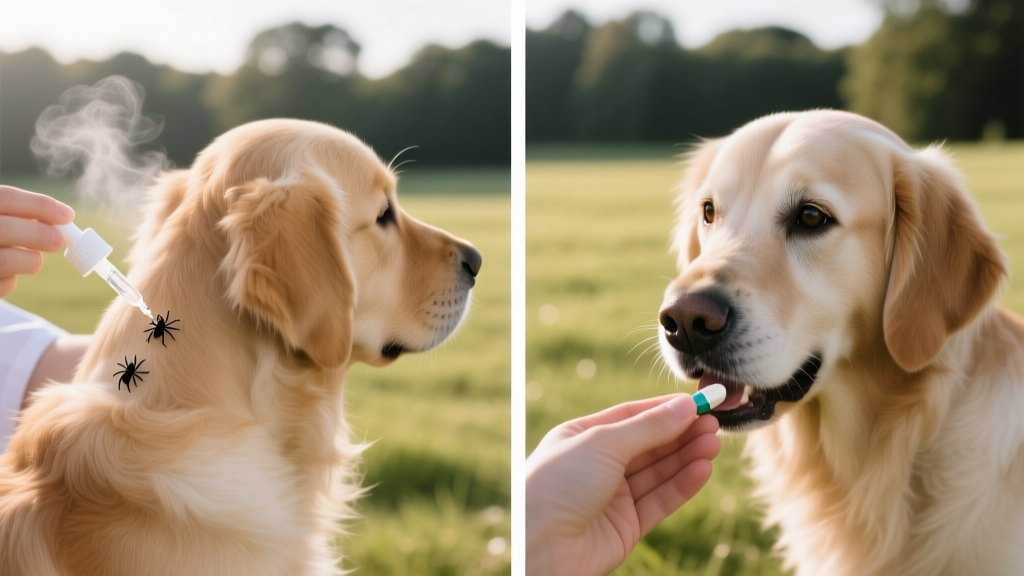
Prevention is dramatically safer, cheaper, and easier than treatment. Monthly preventives cost $5–$20 per month — compared to $1,000+ for treatment. These products work by killing the L3 and L4 larval stages before they can develop into adults.
| Product Type | Brand Examples | Active Ingredient | Frequency | Additional Coverage | Est. Monthly Cost |
|---|---|---|---|---|---|
| Oral Chewable | Heartgard Plus, Iverhart Plus, Tri-Heart Plus | Ivermectin + Pyrantel Pamoate | Monthly | Roundworms, hookworms | $8–$15 |
| Oral Chewable (Broad Spectrum) | Simparica Trio, NexGard PLUS | Sarolaner + Moxidectin + Pyrantel (Simparica); Afoxolaner + Moxidectin + Pyrantel (NexGard) | Monthly | Fleas, ticks, roundworms, hookworms | $18–$28 |
| Topical Spot-On | Revolution Plus, Advantage Multi | Selamectin + Sarolaner (Revolution Plus); Imidacloprid + Moxidectin (Advantage Multi) | Monthly | Fleas, ticks, ear mites, sarcoptic mange, roundworms, hookworms | $15–$25 |
| Injectable (ProHeart) | ProHeart 6, ProHeart 12 | Moxidectin (sustained-release microspheres) | Every 6 or 12 months (vet-administered) | Heartworm only (ProHeart 6); hookworms (ProHeart 12) | $10–$18/mo equivalent ($60–$108 per injection) |
Key selection considerations:
- MDR1 gene mutation: Herding breeds (Collies, Australian Shepherds, Shelties) with the MDR1 gene mutation may be sensitive to ivermectin at higher doses. At preventive doses, ivermectin-based products are generally safe, but consult your veterinarian. Moxidectin-based products are an alternative.
- Missed dose protocol: If you miss a monthly dose, administer the preventive immediately and test for heartworm 6–7 months later. Missing even one month during peak mosquito season creates a vulnerability window.
- Heartworm-positive dogs: Never start a preventive on a heartworm-positive dog without veterinary guidance — rapid microfilariae death can cause anaphylactic shock.
Environmental Control and Seasonal Risk
While you can't eliminate mosquitoes entirely, reducing your dog's exposure adds an extra layer of protection alongside preventive medication:
- Eliminate standing water: Empty birdbaths, flower pot saucers, clogged gutters, and any containers holding water for more than 5 days. Mosquitoes breed in as little as a bottle cap of water.
- Yard treatment: Apply mosquito larvicides (BTI — Bacillus thuringiensis israelensis, sold as Mosquito Dunks) to ponds, rain barrels, and standing water. These are safe for pets and wildlife.
- Keep dogs indoors during peak mosquito hours: Dawn and dusk are peak feeding times for many heartworm-vector mosquito species.
- Window and door screens: Repair tears and ensure tight seals to reduce indoor mosquito entry.
- Pet-safe repellents: Some veterinary-approved topical products (like certain permethrin-based spot-ons for dogs only — NEVER use permethrin on cats) provide mosquito repellency in addition to preventive medication.
Seasonal Heartworm Risk Calendar by U.S. Region
| Region | Peak Transmission Months | Risk Level | Prevention Recommendation |
|---|---|---|---|
| Gulf Coast / Deep South (FL, LA, MS, AL, TX coast) | Year-round | Very High | 12 months/year — no break |
| Southeast / Mid-Atlantic (GA, SC, NC, VA, MD) | April – November | High | 12 months/year recommended |
| Midwest / Mississippi Valley (IL, MO, AR, TN, KY, IN) | May – October | High | 12 months/year recommended |
| Northeast (NY, PA, NJ, CT, MA) | June – October | Moderate-High | Year-round (urban heat islands extend season) |
| Mountain West / Southwest (CO, UT, AZ, NM) | June – September (varies by elevation) | Moderate | Year-round (irrigated areas increase risk) |
| Pacific Northwest (WA, OR) | June – October | Moderate | Year-round recommended by AHS |
The American Heartworm Society recommends year-round prevention for all dogs in the U.S., regardless of region, due to unpredictable weather patterns and the consequences of missed doses.
Zoonotic Potential: Can Humans Get Heartworm?
Heartworm is technically a zoonotic parasite — meaning it can be transmitted to humans — but the risk is extremely low and the outcome is very different from canine infection:
- In humans: If an infected mosquito bites a person, the larvae typically cannot complete their life cycle. The worm usually dies and forms a small granuloma (nodule) in the lung, known as a "coin lesion."
- Symptoms in humans: Most cases are asymptomatic and discovered incidentally on chest X-rays, where they may be mistaken for lung tumors, prompting unnecessary biopsies.
- Human cases are rare: Fewer than 100 cases have been reported in the medical literature in the U.S.
- No human-to-human or dog-to-human direct transmission is possible.
Other pets in the household — particularly cats and ferrets — can also be infected by the same mosquitoes. Cats develop a different form of the disease (HARD — Heartworm Associated Respiratory Disease) with even fewer worms causing severe respiratory symptoms. Ferrets are highly susceptible and should receive feline-dosed preventive medication. Consult your veterinarian about protecting all household pets.
Frequently Asked Questions
How do I know if my dog has heartworm?
In early stages, you likely won't know — that's why annual testing is critical. As the disease progresses, watch for a persistent mild cough, reluctance to exercise, tiring easily after moderate activity, weight loss, and decreased appetite. In advanced stages, you may see labored breathing, a swollen belly from fluid accumulation, or fainting episodes. A simple blood test at your veterinarian's office can detect infection before symptoms appear.
How do dogs get heartworm?
Dogs get heartworm exclusively through the bite of a mosquito carrying infective L3 larvae. The mosquito must have previously bitten an infected animal (dog, coyote, fox, or other canid) and the larvae must have developed inside the mosquito for 10–14 days at temperatures above 57°F (14°C). Direct contact with infected dogs does not transmit heartworm.
What are the best prevention products?
The best product is one you'll administer consistently every month. Oral chewables like Heartgard Plus (ivermectin/pyrantel) and Simparica Trio (sarolaner/moxidectin/pyrantel) are among the most widely prescribed. Topical options like Revolution Plus work well for dogs who resist oral medications. ProHeart 12 injectable is ideal for owners who worry about missing monthly doses, providing 12 months of protection with a single vet visit. Your veterinarian can recommend the best option based on your dog's breed, health status, and lifestyle.
How do I treat a heartworm infestation?
Heartworm treatment must be managed by a licensed veterinarian. The standard protocol involves 30 days of doxycycline antibiotics, followed by three deep-muscle injections of melarsomine (Immiticide®) over a one-month period, with strict exercise restriction throughout the entire process. Total treatment takes 3–6 months and costs $1,000–$3,500+. There are no safe OTC or home remedy alternatives.
Can heartworm spread to humans or other pets?
Heartworm cannot spread directly from dog to dog, dog to human, or human to dog. The only transmission route is through an infected mosquito bite. Humans are dead-end hosts — the worm cannot mature or reproduce. However, cats, ferrets, and other canids (coyotes, foxes) in the same environment are at risk from the same mosquitoes and should be on preventive medication.
How often should I treat my dog for heartworm?
Monthly oral and topical preventives should be given every 30 days without interruption. The American Heartworm Society and the AVMA recommend year-round prevention regardless of geography. Injectable ProHeart 6 is administered every 6 months, and ProHeart 12 every 12 months, by your veterinarian. Annual antigen testing is recommended even for dogs on consistent prevention to catch any breakthrough infections early.
If you suspect your dog has been exposed to heartworm or has missed preventive doses, contact your veterinarian immediately. For questions about accidental ingestion of prevention products or suspected toxicity, call the ASPCA Animal Poison Control Center at (888) 426-4435 (24/7, consultation fee applies).
Anouk Beaumont
All our authors care for dogs every day — read more of their work on the authors page.