Home Remedy for Fleas on Dogs: What Works, What Doesn't,
Searching for a home remedy for fleas on dogs? Learn which DIY treatments actually work, which are dangerous, and how vet-recommended preventives compare in 2026.
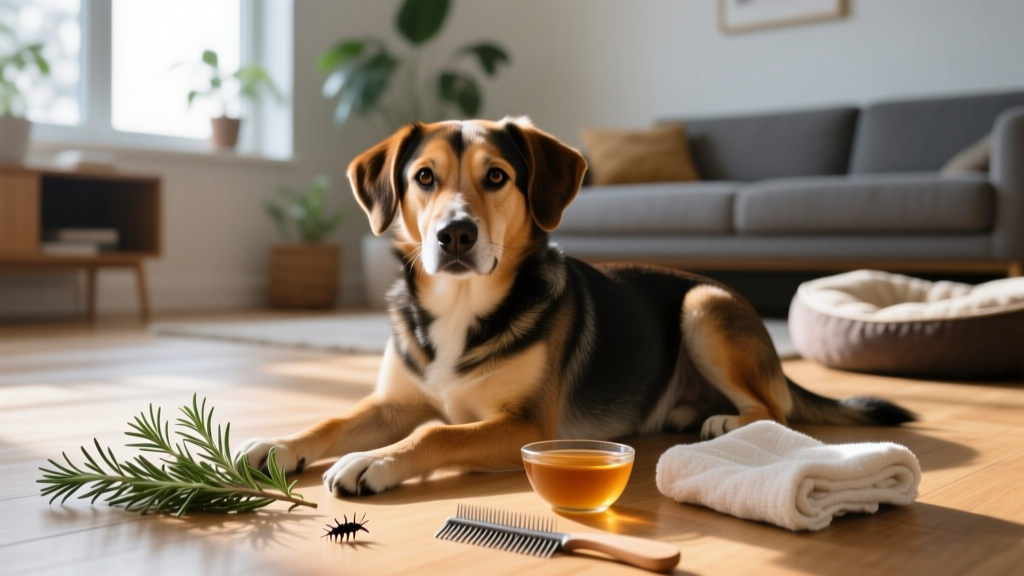
If you're Googling home remedy for fleas dogs at 2 a.m. while your pup scratches relentlessly, you're not alone. Flea infestations drive millions of dog owners to the kitchen pantry every year, hoping apple cider vinegar or coconut oil will solve the problem. Some home approaches offer mild support. Others are outright dangerous. This guide separates evidence-based facts from internet myths, then shows you exactly how to eliminate fleas — on your dog, in your home, and across your yard.
Identifying Fleas on Your Dog: A Visual Guide
Before treating anything, confirm you're actually dealing with fleas — not ticks, mites, or allergic dermatitis. Here's what to look for:
Ctenocephalides canis (Dog Flea) — Quick ID
- Size: 1.5–3.25 mm (about the size of a pinhead or small sesame seed)
- Color: Dark reddish-brown to nearly black; appears lighter after feeding
- Shape: Laterally flattened (sideways), wingless, with powerful hind legs for jumping
- Where to find them: Base of the tail, groin, armpits, belly, and around the neck — warm, less-hairy areas
- Movement: Fast, darting through fur; jumps up to 6 inches vertically
- Flea dirt: Small black specks (digested blood) that turn reddish-brown when placed on a wet paper towel
The most reliable detection method is a flea comb test: use a fine-toothed metal flea comb (teeth spaced 0.2–0.3 mm apart) across your dog's lower back and tail base. Dip the comb in soapy water between strokes to trap anything caught. You're looking for live adult fleas, flea dirt, or flea eggs (tiny white ovals, ~0.5 mm).
How Dogs Get Fleas: Transmission Routes
Understanding transmission is critical because treating your dog without addressing the source guarantees reinfestation. Fleas reach your dog through three primary routes:
- Environmental exposure: Flea eggs and larvae persist in carpets, bedding, upholstery, and shaded outdoor areas for weeks to months. Your dog picks them up simply by walking through an infested area — your own backyard, a dog park, or a friend's home.
- Contact with infested animals: Wild animals (raccoons, opossums, feral cats, squirrels) carry fleas into yards. Dog-to-dog transmission occurs during play, at grooming facilities, boarding kennels, or veterinary offices.
- Passive transport (hitchhiker fleas): Adult fleas can ride into your home on your clothing, shoes, or other pets — including indoor cats. A single gravid female lays 20–50 eggs per day, so one hitchhiker can launch a full infestation within 2–3 weeks.
The Flea Life Cycle: Why Home Remedies Rarely Work
The 4-Stage Flea Life Cycle
Stage 1 — Eggs (2–12 days): The female lays eggs on your dog, but they fall off within hours into carpet, bedding, and yard soil. A single female produces 20–50 eggs daily, up to 2,000+ over her lifetime.
Stage 2 — Larvae (4–18 days): Maggot-like, 2–5 mm, light-colored, and light-averse. They hide deep in carpet fibers and feed on flea dirt (adult flea feces) and organic debris. This stage is nearly impossible to see with the naked eye.
Stage 3 — Pupae (5–14 days, up to 5 months dormant): Larvae spin a sticky, debris-covered cocoon. The pupa is resistant to most insecticides, vacuuming, and environmental changes. It can remain dormant for up to 150 days, emerging only when it detects vibrations, heat, or CO₂ — signaling a host is near.
Stage 4 — Adults (2–3 months lifespan): The adults you see on your dog represent only 5% of the total flea population. The remaining 95% exists as eggs (50%), larvae (35%), and pupae (10%) in the environment.
This is why most home remedies fail: they target only adult fleas on the dog while ignoring the 95% in your environment. Even if a remedy kills adults, eggs and pupae will produce a new wave within 2–4 weeks.
Symptoms by Severity: Mild vs. Heavy Infestation
| Severity | Symptoms | Flea Burden Estimate |
|---|---|---|
| Mild | Occasional scratching (especially tail base); few flea dirt specks on comb; 1–5 adult fleas spotted | 1–10 adults on dog; hundreds in environment |
| Moderate | Frequent scratching/biting; hair loss at tail base or hindquarters; visible flea dirt clusters; red, irritated skin (flea allergy dermatitis) | 10–50 adults on dog; thousands in environment |
| Severe | Constant scratching/chewing; open sores and hot spots; pale gums (anemia risk in puppies/small dogs); lethargy; tapeworm segments (rice-like) in stool or around anus | 50+ adults on dog; tens of thousands in environment |
Flea allergy dermatitis (FAD) is the most common skin disease in dogs. Even a single flea bite can trigger a severe allergic reaction in sensitized dogs, causing intense itching that lasts days after the flea is gone. According to the Merck Veterinary Manual, FAD affects an estimated 40% of dogs with flea exposure.
Health Risks: Diseases Fleas Transmit to Dogs
Fleas aren't just annoying — they're disease vectors. Here's what's at stake:
- Dipylidium caninum (tapeworms): Dogs ingest infected fleas while grooming. Tapeworm segments appear as rice-like grains around the anus or in stool. Requires prescription dewormer (praziquantel).
- Bartonella henselae (cat scratch disease): Fleas transmit this bacterium, which can cause endocarditis, granulomatous hepatitis, and fever in dogs. Also zoonotic — transmissible to humans.
- Mycoplasma haemocanis: A blood parasite causing anemia, especially dangerous in splenectomized or immunocompromised dogs.
- Anemia: Severe infestations can cause life-threatening blood loss, particularly in puppies under 6 months and toy breeds under 10 lb (4.5 kg). Signs include pale gums, weakness, and rapid breathing.
- Flea allergy dermatitis (FAD): Chronic itching leads to secondary bacterial and yeast skin infections requiring antibiotic treatment.
Home Remedies for Fleas on Dogs: What the Evidence Shows
Here's an honest, evidence-based evaluation of the most popular home remedies you'll find online:
| Home Remedy | Efficacy | Safety | Verdict |
|---|---|---|---|
| Dish soap bath (Dawn) | Kills adults on contact via surfactant action; no residual effect | Generally safe; can dry skin with frequent use | ✅ Useful as immediate relief; not a complete solution |
| Flea combing | Physically removes adults and flea dirt; no chemical needed | Completely safe for all ages | ✅ Excellent monitoring and supplementary tool |
| Apple cider vinegar (ACV) spray | No peer-reviewed evidence of flea-killing or repellent effect | Can irritate open sores; GI upset if ingested in quantity | ❌ Ineffective; not recommended |
| Essential oils (tea tree, eucalyptus, citrus, pennyroyal) | Some oils have mild insecticidal properties in lab settings | DANGEROUS — tea tree oil causes neurotoxicity, liver damage, and death in dogs at concentrations as low as 5% | 🚫 TOXIC — avoid entirely |
| Garlic (oral or topical) | No evidence of flea repellent effect | TOXIC — causes Heinz body hemolytic anemia; toxic dose is ~5 g/kg (as little as 1–2 cloves for a medium dog) | 🚫 TOXIC — never give garlic to dogs |
| Diatomaceous earth (food grade) | Kills fleas on contact by desiccation; only works when dry; no residual effect once wet | Inhalation risk — fine silica dust can cause respiratory irritation in dogs and humans | ⚠️ Limited use for environmental treatment only; do not apply directly to dogs |
| Coconut oil (topical) | Lauric acid may impair flea mobility; no kill rate data | Safe topically; high calorie if ingested (pancreatitis risk in prone breeds) | ⚠️ Minimal benefit; not a standalone treatment |
Proven Treatment Protocol: OTC vs. Prescription Options
Step-by-Step Flea Elimination Protocol
Step 1 — Immediate adulticide (Day 1): Apply a fast-acting oral adulticide. Capstar (nitenpyram, OTC) kills adult fleas within 30 minutes but lasts only 24 hours. Cost: $30–$40 for a 6-count box. Use this to knock down the population immediately.
Step 2 — Start a long-acting preventive (Day 1–2): Begin a monthly or quarterly prescription preventive that kills adults and disrupts the life cycle (see comparison table below). Your veterinarian will select the best option based on your dog's weight, age, and health status.
Step 3 — Environmental treatment (Day 1–7): Wash all bedding at 140°F (60°C) minimum. Vacuum all carpets, furniture, and baseboards daily for 7 days (discard vacuum bag/canister contents immediately in sealed outdoor trash). Apply an IGR (insect growth regulator) spray such as pyriproxyfen or methoprene to carpets and upholstery — these prevent eggs and larvae from developing for 7 months.
Step 4 — Yard treatment (Day 3–14): Treat shaded areas (under decks, along fences, beneath shrubs) with a permethrin-based yard spray or beneficial nematodes (Steinernema carpocapsae). Keep dogs off treated areas until dry. Cost: $15–$40 for yard sprays.
Step 5 — Monitor and repeat (Weeks 2–12): Continue flea combing weekly. Expect to see fleas for 3–8 weeks as pupae hatch. Do NOT stop preventive treatment — the emerging fleas will die on contact with treated dogs, breaking the cycle.
Prevention Products Comparison: Topical, Oral, and Collar Options
| Product Type | Active Ingredient(s) | Duration | Kills Adults | IGR (Breaks Life Cycle) | RX/OTC | Avg. Cost (2026) |
|---|---|---|---|---|---|---|
| Oral chewable | Afoxolaner (NexGard) | Monthly | ✅ Yes | ❌ No IGR | RX | $60–$90 / 6-pack |
| Oral chewable | Fluralaner (Bravecto) | 12 weeks | ✅ Yes | ❌ No IGR | RX | $50–$75 / dose |
| Oral chewable | Spinosad (Comfortis) | Monthly | ✅ Yes (fast — 30 min) | ❌ No IGR | RX | $55–$80 / 6-pack |
| Topical spot-on | Imidacloprid + Permethrin (K9 Advantix II) | Monthly | ✅ Yes + repellent | ✅ Yes (pyriproxyfen IGR) | OTC | $45–$70 / 6-pack |
| Topical spot-on | Selamectin (Revolution) | Monthly | ✅ Yes | ✅ Yes | RX | $65–$95 / 6-pack |
| Collar | Imidacloprid + Flumethrin (Seresto) | 8 months | ✅ Yes + repellent | Partial (kills larvae) | OTC | $55–$70 / collar |
| Oral (Capstar) | Nitenpyram | 24 hours only | ✅ Yes (30 min onset) | ❌ No | OTC | $30–$40 / 6-pack |
Key insight: Products with an IGR component (K9 Advantix II, Revolution) break the flea life cycle, meaning fewer environmental treatments are needed. Pure adulticides (Capstar, Comfortis, NexGard) kill adults but allow eggs to continue hatching — making environmental control even more critical. Consult your veterinarian to determine which product is safest for your dog's specific health profile.
Environmental Control: Treating Your Home and Yard
Skipping environmental treatment is the #1 reason flea infestations persist. Here's a room-by-room protocol:
Indoor Treatment
- Bedding and soft furnishings: Wash all dog beds, blankets, crate pads, and removable cushion covers in hot water (minimum 140°F / 60°C) for at least 10 minutes. Dry on high heat for 30+ minutes. Repeat weekly for 4 weeks.
- Carpets and rugs: Vacuum thoroughly — including under furniture, along baseboards, and in corners. Vacuuming removes up to 96% of adult fleas and stimulates pupae to hatch (making them vulnerable). Use an IGR spray (pyriproxyfen, effective for 7 months) on carpets after vacuuming. Cost: $15–$25 per can, covers ~2,000 sq ft.
- Hard floors: Sweep and mop with standard cleaner. Flea larvae can survive in floor cracks — IGR spray is recommended if infestation is heavy.
- Professional extermination: For severe infestations (visible fleas throughout the home), professional treatment costs $200–$400 for a 2,000 sq ft home and typically requires 2 visits spaced 2–3 weeks apart.
Yard Treatment
- Focus areas: Fleas thrive in shaded, humid spots — under decks, along fence lines, beneath shrubs, and in doghouses. Sunny, open lawn areas rarely harbor fleas.
- Chemical treatment: Permethrin-based yard sprays (0.5% concentration) applied with a hose-end sprayer. Keep dogs and cats off treated areas until completely dry (typically 2–4 hours). Cost: $15–$40 per application, treat every 2–3 weeks during peak season.
- Biological control: Beneficial nematodes (Steinernema carpocapsae) are applied via hose sprayer and consume flea larvae in soil. Non-toxic to dogs, cats, and humans. Cost: $25–$45 per application. Effective when soil temperature is above 55°F (13°C).
- Wildlife exclusion: Seal gaps under decks and porches. Remove brush piles. Use motion-activated sprinklers to deter opossums, raccoons, and feral cats that bring fleas into your yard.
Seasonal Risk Calendar: When Fleas Peak by Region
U.S. Flea Risk by Region
| Region | Peak Season | Year-Round Risk? | Prevention Recommendation |
|---|---|---|---|
| Southeast (FL, GA, AL, MS, LA, TX Gulf) | March–November (peak Aug–Oct) | ✅ Yes — mild winters sustain populations | Year-round preventive essential |
| Pacific Coast (CA, OR, WA coastal) | April–October (peak Jul–Sep) | ✅ Yes — coastal humidity sustains indoor fleas | Year-round preventive recommended |
| Midwest (IL, IN, OH, MI, WI, MN) | May–October (peak Aug–Sep) | Partial — indoor heating sustains winter infestations | Year-round preventive recommended |
| Northeast (NY, MA, PA, NJ, CT) | June–October (peak Aug–Sep) | Partial — heated homes can sustain indoor fleas | Year-round preventive recommended |
| Mountain West (CO, UT, WY, MT) | June–September | Lower — dry climate and cold winters limit outdoor populations | Seasonal preventive (Apr–Oct); year-round if indoor infestation history |
| Southwest Desert (AZ, NM, NV) | March–May, Sep–Nov | Moderate — extreme summer heat suppresses; monsoon season boosts | Year-round preventive recommended |
The Companion Animal Parasite Council (CAPC) recommends year-round flea prevention for all dogs regardless of region, as indoor environments maintain temperatures ideal for flea survival.
Zoonotic Potential: Can Fleas Spread to Humans and Other Pets?
Yes — fleas are zoonotic. Dog fleas (Ctenocephalides canis) and cat fleas (Ctenocephalides felis — which actually infest dogs more commonly than dog fleas do) will bite humans when populations are high. Human flea bites appear as small, itchy red bumps, often clustered in groups of three ("breakfast, lunch, and dinner" pattern), typically on ankles and lower legs.
Human health risks from dog fleas include:
- Dipylidium caninum: Children can accidentally ingest infected fleas and develop intestinal tapeworms. Symptoms include abdominal discomfort, anal itching, and visible segments in stool.
- Bartonella henselae: The bacterium that causes cat scratch disease can be transmitted by fleas to humans, causing fever, swollen lymph nodes, and fatigue.
- Murine typhus (Rickettsia typhi): Rare but documented in the southern U.S., transmitted by flea feces entering bite wounds or scratches.
Other pets at risk: Fleas readily transfer between dogs, cats, ferrets, and rabbits in the same household. All pets must be treated simultaneously — using species-appropriate products. Never use dog flea products on cats — permethrin is lethal to cats even in small doses.
Frequently Asked Questions
How do I know if my dog has fleas?
Look for excessive scratching (especially at the tail base and belly), tiny dark specks (flea dirt) in the fur, and small fast-moving brown insects. The definitive test: comb the lower back and tail base with a fine-toothed flea comb over a white surface. If black specks appear, place them on a wet paper towel — if they dissolve into reddish-brown streaks, that's flea dirt (digested blood), confirming an active infestation.
How do dogs get fleas?
Dogs pick up fleas from infested environments (your yard, dog parks, kennels, other homes), direct contact with infested animals (including wildlife like raccoons and opossums that visit your yard), or passive transport — fleas can hitch a ride on your clothing or shoes. A single pregnant female flea can establish an infestation of thousands within 3–4 weeks.
What are the best prevention products?
The most effective prevention products are veterinarian-prescribed oral isoxazolines (NexGard, Bravecto, Simparica) and topicals with IGR components (K9 Advantix II, Revolution). For budget-conscious owners, Seresto collars offer 8 months of protection at roughly $7–$9/month. The "best" product depends on your dog's weight, age, breed sensitivities (e.g., MDR1 gene mutation in herding breeds), and whether you need tick coverage as well. Your veterinarian can recommend the optimal choice.
How do I treat a flea infestation?
Effective treatment requires a three-front approach: (1) Kill adult fleas on your dog using a fast-acting adulticide like Capstar (nitenpyram) for immediate relief, then start a monthly preventive. (2) Treat your home with IGR sprays and daily vacuuming for 1–2 weeks. (3) Treat your yard's shaded areas with permethrin spray or beneficial nematodes. Expect the full elimination process to take 6–8 weeks as dormant pupae hatch and die on contact with treated pets.
Can fleas spread to humans or other pets?
Yes. Fleas are zoonotic and will bite humans, especially during heavy infestations. They also transmit tapeworms (Dipylidium caninum) and Bartonella to both humans and pets. All household pets — dogs, cats, ferrets, rabbits — must be treated simultaneously with species-appropriate products. Never use permethrin-based dog products on cats.
How often should I treat my dog for fleas?
Prevention should be administered year-round on the schedule specified by the product: monthly for most oral and topical products (NexGard, K9 Advantix II, Revolution), every 12 weeks for Bravecto, or via collar replacement every 8 months for Seresto. During an active infestation, do not miss a single dose — even a 2–3 day gap allows new adults to lay eggs. The American Kennel Club recommends maintaining prevention even in winter months, as heated indoor environments sustain flea populations.
Is there any safe home remedy for fleas on dogs?
The only home approaches with reasonable safety and some efficacy are dish soap baths (to kill adults currently on the dog) and diligent flea combing. These are supplementary measures — they provide temporary relief but will not eliminate an infestation because they don't address eggs, larvae, or pupae in the environment. For complete elimination, veterinary-recommended preventives are significantly more effective, safer, and more cost-efficient over time than repeated home remedy attempts.
Sources consulted: Merck Veterinary Manual (Ctenocephalides biology and FAD), Companion Animal Parasite Council (CAPC) prevention guidelines, ASPCA Animal Poison Control (essential oil and garlic toxicity data), American Kennel Club flea prevention recommendations, FDA isoxazoline safety communications.
Aaron Whyte
All our authors care for dogs every day — read more of their work on the authors page.