Healthy Homemade Dog Treat Recipes: A Vet-Approved Nutrition Guide
Discover vet-approved healthy homemade dog treat recipes with exact nutritional breakdowns, safe ingredients, and feeding guidelines for every life stage.
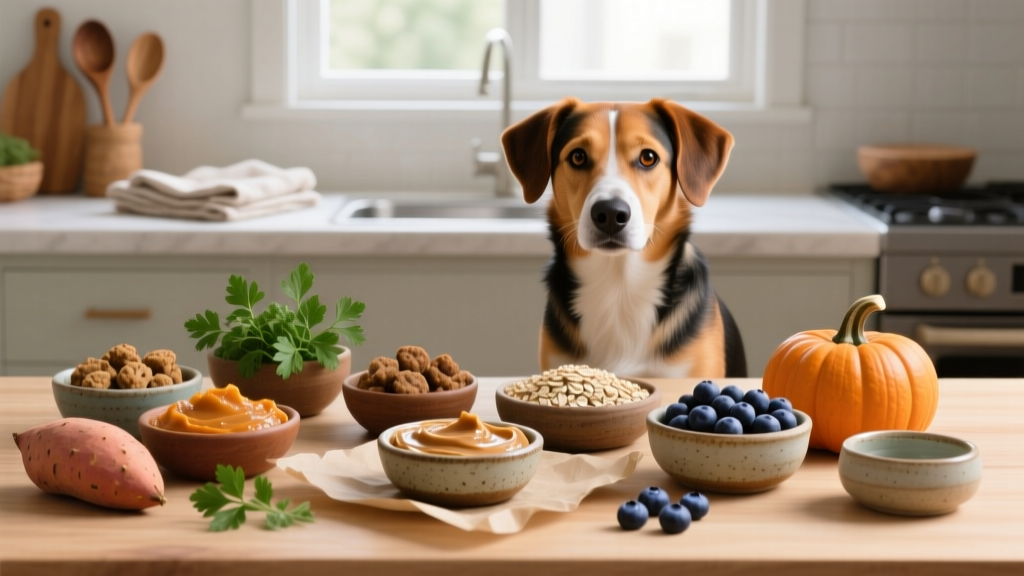
Why Homemade Dog Treats Need a Nutritional Strategy
Making treats at home gives you complete control over what your dog consumes — no mystery preservatives, no hidden fillers. But here's what most recipe blogs skip: treats should never exceed 10% of your dog's daily caloric intake, and even "healthy" homemade options can unbalance a carefully formulated diet if you're not strategic about ingredients and portions.
A 30 lb (13.6 kg) dog needs roughly 600-700 calories per day depending on activity level. That means treats — homemade or commercial — should contribute no more than 60-70 calories daily. The recipes below are designed with this math in mind, providing specific per-treat calorie counts so you can budget accordingly.
Veterinary Disclaimer: These recipes are intended as supplemental treats only, not complete meal replacements. If you're considering a fully homemade diet, consult a board-certified veterinary nutritionist (ACVN or equivalent). Always discuss dietary changes with your veterinarian, especially for dogs with medical conditions.
Nutritional Requirements: What Your Dog Actually Needs
Before mixing ingredients, understand the baseline nutritional targets for your dog's life stage. The Association of American Feed Control Officials (AAFCO) sets minimum nutrient profiles that all complete diets must meet. While treats don't need to be "complete and balanced" on their own, their ingredients should complement — not contradict — your dog's primary diet.
| Life Stage | Min. Protein (DM%) | Min. Fat (DM%) | Calories/Day (30 lb dog) | Calories/Day (60 lb dog) |
|---|---|---|---|---|
| Puppy (2-12 months) | 28% | 17% | 800-1000 | 1200-1600 |
| Adult (maintenance) | 22% | 8.5% | 600-750 | 900-1100 |
| Senior (7+ years) | 25% | 8.5% | 500-650 | 800-950 |
| Active/Working | 28% | 20% | 900-1200 | 1400-1800 |
| Weight Loss | 25% | 7% | 400-500 | 650-800 |
DM% = Dry Matter basis. Calorie ranges assume moderate activity; adjust ±15% based on body condition score and metabolism. Source: Merck Veterinary Manual.
Six Healthy Homemade Dog Treat Recipes (With Calorie Counts)
Each recipe below yields approximately 30-40 bite-sized treats. Per-treat calories are calculated using USDA FoodData Central ingredient values. Store treats in an airtight container in the refrigerator for up to 7 days, or freeze for up to 3 months.
1. Pumpkin & Oat Digestive Bites
Best for: Dogs with sensitive stomachs, weight management, senior dogs needing fiber.
- 1 cup (245g) pure pumpkin purée (not pie filling)
- 2 cups (160g) rolled oats
- 1 large egg
- 1 tbsp ground flaxseed
Method: Mix all ingredients. Roll into 1-inch balls, flatten slightly. Bake at 325°F (163°C) for 25-30 minutes until firm. Cool completely.
Per treat (1 ball): ~18 calories | Protein: 0.6g | Fat: 0.5g | Fiber: 0.4g
2. Sweet Potato & Peanut Butter Chews
Best for: Active dogs, high-value training rewards, dogs needing palatable motivation.
- 1 medium sweet potato (150g), baked and mashed
- 1/3 cup (85g) xylitol-free peanut butter (verify label — xylitol is lethal to dogs)
- 1.5 cups (190g) whole wheat flour (substitute rice flour for grain-sensitive dogs)
- 1 egg
Method: Combine mashed sweet potato, peanut butter, and egg. Gradually add flour until dough forms. Roll to 1/4-inch thickness, cut into strips. Bake at 350°F (177°C) for 20 minutes, flip, bake 10 more minutes for chewy texture.
Per treat (1 strip): ~25 calories | Protein: 1.0g | Fat: 1.2g | Carbs: 3.0g
3. Blueberry & Yogurt Frozen Drops
Best for: Summer enrichment, small breeds, senior dogs with dental sensitivity.
- 1 cup (148g) fresh blueberries
- 1 cup (245g) plain, unsweetened Greek yogurt (full-fat for puppies, non-fat for weight management)
- 1 tbsp honey (omit for diabetic dogs)
Method: Blend all ingredients until smooth. Pour into silicone molds or ice cube trays. Freeze for 4+ hours.
Per treat (1 cube): ~12 calories | Protein: 0.8g | Fat: 0.3g | Antioxidants: high anthocyanin content
4. Liver Training Bits (Single-Ingredient)
Best for: High-value recall training, reactive dogs needing focus, scent work rewards.
- 1 lb (454g) beef or chicken liver, sliced into 1/2-inch cubes
Method: Place liver cubes on parchment-lined baking sheet. Bake at 250°F (121°C) for 2 hours until fully dehydrated and crumbly. Store in refrigerator.
Per treat (1 cube): ~8 calories | Protein: 1.2g | Fat: 0.3g | Iron: high
Caution: Liver is extremely rich in vitamin A. Limit to 5% of daily calories to avoid hypervitaminosis A over time.
5. Salmon & Sweet Potato Skin-Health Bites
Best for: Dogs with dry skin, dull coats, allergies, or omega-3 needs.
- 1 can (14.75 oz / 418g) wild-caught salmon in water, drained and deboned
- 1 cup (200g) cooked, mashed sweet potato
- 1 cup (120g) oat flour
- 1 tbsp coconut oil
Method: Flake salmon, mix with sweet potato and coconut oil. Add oat flour gradually. Form into small patties. Bake at 350°F (177°C) for 20 minutes.
Per treat (1 patty): ~22 calories | Protein: 1.8g | Fat: 0.9g | Omega-3: ~85mg EPA/DHA
6. Carrot & Apple Crunch Biscuits
Best for: Dental health support, low-calorie training, overweight dogs.
- 1 cup (110g) finely grated carrot
- 1/2 cup (55g) finely diced apple (no seeds or core — apple seeds contain amygdalin, a cyanide precursor)
- 2 cups (250g) whole wheat flour
- 1/4 cup (60ml) low-sodium chicken broth
- 1 egg
Method: Combine all ingredients into stiff dough. Roll to 1/4-inch, cut with cookie cutter. Bake at 350°F (177°C) for 25-30 minutes until crisp.
Per treat (1 biscuit): ~20 calories | Protein: 0.7g | Fat: 0.4g | Fiber: 0.6g
Ingredients to Avoid: The Toxic and the Troublesome
Not every "human healthy" ingredient is safe for dogs. The ASPCA Animal Poison Control maintains a comprehensive database, but here are the most common offenders in homemade treat recipes:
| Ingredient | Risk Level | Why It's Dangerous |
|---|---|---|
| Xylitol (birch sugar) | ☠️ LETHAL | Causes rapid insulin release → hypoglycemia → liver failure. Toxic dose: 0.05g/kg body weight. |
| Macadamia nuts | 🔴 HIGH | Causes weakness, tremors, hyperthermia. Toxic dose: 2.4g/kg. |
| Grapes & raisins | ☠️ LETHAL | Acute kidney failure. No established safe dose — avoid entirely. |
| Onion/garlic powder | 🔴 HIGH | Destroys red blood cells (Heinz body anemia). Garlic is 5x more toxic than onion. |
| Chocolate/cocoa | 🔴 HIGH | Theobromine toxicity → cardiac arrhythmia, seizures. Dark chocolate most dangerous. |
| Nutmeg | 🟡 MODERATE | Myristicin causes hallucinations, tachycardia, seizures in large doses. |
| Apple seeds | 🟡 MODERATE | Amygdalin releases cyanide when chewed. Remove core and seeds completely. |
| Raw yeast dough | 🔴 HIGH | Expands in stomach → bloat risk. Ethanol production → alcohol poisoning. |
If your dog consumes any toxic ingredient, call ASPCA Animal Poison Control: (888) 426-4435 (24/7, consultation fee applies) or the Pet Poison Helpline: (855) 764-7661 immediately. Do not wait for symptoms to appear.
Commercial Treat Selection: What to Look for on Labels
Sometimes you need the convenience of commercial treats — especially for travel, training classes, or when your schedule doesn't allow baking. Here's how to evaluate options using the same standards you'd apply to your dog's main food.
AAFCO Statement: While treats aren't required to carry an AAFCO "complete and balanced" statement (they're supplemental by definition), reputable brands will still list a guaranteed analysis showing crude protein, crude fat, crude fiber, and moisture percentages. Avoid treats with no nutritional disclosure whatsoever.
Ingredient Order: Ingredients are listed by weight. The first ingredient should be a named protein source ("chicken," "salmon," "beef liver") — not a vague category like "meat by-products" or "animal fat." For limited-ingredient treats, look for single-protein sourcing to minimize allergy risk.
Top 7 Recommended Commercial Treats (2026)
Best for training — tiny size, ~3 calories each
Protein: min 12% | Fat: min 3% | First ingredient: Chicken, rice, or salmon depending on variety.
Price: $6-9 per 6 oz bag (approximately $1.00-1.50/oz)
Best for dental support — VOHC-accepted for tartar control
Protein: min 30% | Fat: min 4% | Available in size-specific formulations (Teenies to Regular).
Price: $12-18 per 27 oz tub ($0.44-0.67/oz)
Best for high-value rewards — single-protein options available
Protein: min 40% | Fat: min 25% | Varieties: Beef, Chicken, Duck, Lamb, Salmon.
Price: $14-20 per 8 oz bag ($1.75-2.50/oz)
Best for weight management — ~3 calories per treat
Protein: min 8% | Fat: min 2.5% | Flavors: Pumpkin & Berry, Apple & Banana.
Price: $4-6 per 5 oz bag ($0.80-1.20/oz)
Best for skin/coat health — wild Alaskan salmon, DHA-rich
Protein: min 30% | Fat: min 12% | Made in USA, limited ingredient.
Price: $9-13 per 6 oz bag ($1.50-2.17/oz)
Best long-lasting chew alternative to rawhide — digestible formula
Protein: min 70% | Fat: min 2% | Varieties: Beef, Chicken, Salmon, Venison.
Price: $10-16 per 4-pack ($2.50-4.00/chew depending on size)
Best for aggressive chewers — single ingredient (yak milk), extremely hard
Protein: min 59% | Fat: min 0.2% | No preservatives, grain-free.
Price: $15-25 per 4-pack ($3.75-6.25/chew)
Feeding Amounts: How Many Treats Can Your Dog Have?
The 10% rule is your anchor: treats (all treats combined — homemade, commercial, table scraps, dental chews) should never exceed 10% of total daily caloric intake. Here's what that looks like in practice:
| Dog Weight | Daily Calories (Maintenance) | Max Treat Calories/Day | Example: Pumpkin Bites (18 cal each) | Example: Liver Bits (8 cal each) |
|---|---|---|---|---|
| 10 lb (4.5 kg) | 250-300 | 25-30 | 1-2 treats | 3-4 treats |
| 25 lb (11.3 kg) | 500-600 | 50-60 | 3 treats | 6-7 treats |
| 50 lb (22.7 kg) | 800-950 | 80-95 | 4-5 treats | 10-12 treats |
| 75 lb (34 kg) | 1100-1300 | 110-130 | 6-7 treats | 14-16 treats |
| 100 lb (45.4 kg) | 1400-1600 | 140-160 | 8-9 treats | 18-20 treats |
Adjustment factors: Reduce treat allowance by 20% for dogs with a body condition score (BCS) above 6/9. Increase by 10-15% for working dogs, agility competitors, or dogs in active training programs where treats are consumed rapidly during sessions. Senior dogs with reduced activity should stay at the lower end of their weight-class range.
Life Stage & Condition-Specific Treat Modifications
Puppies (2-12 months)
Puppies need higher protein and fat for growth, but their digestive systems are still developing. Stick to simple, single-protein recipes. Avoid high-fiber ingredients (excess pumpkin, flax) that can cause loose stools. The Blueberry & Yogurt Frozen Drops and Liver Training Bits work well — keep portions tiny (pea-sized for small breeds) and use primarily during training sessions.
Senior Dogs (7+ years)
Softer textures accommodate dental wear. The Pumpkin & Oat Digestive Bites provide gentle fiber for age-related digestive slowdown. If your senior dog has kidney disease, avoid high-protein treats (liver, salmon) and instead use carbohydrate-based options like the Carrot & Apple Crunch Biscuits. Always check with your vet — renal diets require strict phosphorus and protein limits that even occasional treats can disrupt.
Dogs with Food Allergies
If your dog is on an elimination diet or has confirmed protein allergies, adapt recipes using their safe proteins. The FDA's ongoing investigation into grain-free diets and dilated cardiomyopathy (DCM) means you should not default to grain-free treat recipes without veterinary guidance. If your dog tolerates grains, whole wheat flour and oats are nutritionally superior and lower-risk alternatives to legume-heavy binders.
Overweight Dogs (BCS 7-9/9)
Replace calorie-dense treats with the lowest-calorie options: Blueberry Frozen Drops (12 cal) or Carrot & Apple Biscuits (20 cal). Use the smallest possible treat size — break larger biscuits into halves or quarters. Consider using your dog's regular kibble as training rewards during active sessions to avoid adding any extra calories.
Supplements: Do Homemade Treats Need Them?
For occasional treats (under 10% of daily intake), additional supplements are generally unnecessary if your dog's primary diet is AAFCO-complete. However, if you're making treats specifically to support a health condition, targeted additions can help:
- Omega-3 fatty acids (fish oil): 75-100mg EPA+DHA per 10 lb body weight daily for skin/coat/joint support. Add to salmon treat recipes.
- Probiotics: 1-5 billion CFU per day for digestive health. Stir into yogurt-based frozen treats after blending (heat kills live cultures).
- Glucosamine/Chondroitin: 500mg glucosamine per 25 lb body weight for joint support in large breeds and seniors. Can be mixed into any dough-based recipe before baking.
- Turmeric (curcumin): 15-20mg per lb body weight for anti-inflammatory support. Add 1/2 tsp to any recipe batch. Combine with a pinch of black pepper to increase bioavailability by up to 2000%.
Important: Never add calcium supplements to homemade treats without veterinary guidance. Excess calcium, especially in large-breed puppies, causes skeletal development abnormalities. Your dog's complete diet should already provide adequate calcium.
Monitoring Success: Is Your Treat Routine Working?
Treats are part of your dog's overall nutrition picture. Track these indicators monthly to ensure your homemade treat habit isn't causing unintended consequences:
| Indicator | Healthy Range | Warning Sign | Adjustment |
|---|---|---|---|
| Body Condition Score | 4-5/9 (ribs easily felt, visible waist) | BCS rising above 6 (ribs difficult to feel, waist disappearing) | Reduce treat frequency by 50%, switch to lowest-calorie options |
| Coat Quality | Shiny, soft, minimal shedding beyond breed norm | Dry, flaky, dull coat, excessive shedding | Increase omega-3 treats (salmon bites), check primary diet fat content |
| Stool Quality | Firm, formed, easy to pick up (Purina fecal score 2-3) | Loose, mucous-covered, or excessively voluminous | Reduce fiber-rich treats, eliminate new ingredients one at a time |
| Energy Level | Consistent, breed-appropriate activity and enthusiasm | Lethargy, reluctance to exercise, post-treat GI discomfort | Evaluate treat timing, reduce rich ingredients (liver, peanut butter) |
Frequently Asked Questions
Can I feed my dog a fully homemade diet instead of commercial food?
A fully homemade diet is possible but carries significant risk of nutritional deficiency if not formulated by a board-certified veterinary nutritionist. A 2013 study published in the Journal of the American Veterinary Medical Association found that 95% of homemade dog food recipes analyzed were deficient in at least one essential nutrient, and 83.5% had multiple deficiencies. If you want to pursue this, work with a DACVN-certified nutritionist who will formulate recipes using BalanceIT.com or similar software to ensure completeness. The treat recipes in this article are supplemental only — they are not designed as meal replacements.
What is the best commercial treat for dogs with allergies?
Single-protein, limited-ingredient treats are safest. Stella & Chewy's Freeze-Dried Raw Bites in a protein your dog tolerates (duck, lamb, or salmon are common "novel" proteins for allergic dogs) are an excellent choice. Always check with your vet if your dog is on a prescription hydrolyzed-protein diet — even a single treat of intact protein can trigger a reaction and invalidate the elimination trial.
How do I transition my dog to new treats without stomach upset?
Unlike full diet transitions (which require 7-10 days of gradual mixing), treats are easier to introduce because they represent a small caloric percentage. Start with one new treat per day for 3 days, monitoring stool quality. If normal, increase to the full daily treat allowance. If your dog has a history of dietary sensitivity, introduce only one new ingredient at a time and wait 48 hours before trying a different recipe.
Are raw diets safe for making homemade treats?
Raw meat-based treats carry Salmonella and Listeria risks — both for your dog and for humans handling the treats. The AVMA discourages raw feeding due to documented public health risks. If you choose to use raw ingredients, bake or dehydrate at minimum 165°F (74°C) internal temperature to kill pathogens. The liver training bits recipe above uses a low-and-slow dehydration method that reaches safe temperatures while preserving palatability.
Does my dog need supplements if I'm giving homemade treats?
If your dog eats a complete, AAFCO-approved primary diet, treats do not require additional supplementation for most healthy dogs. The exceptions are dogs with specific conditions (arthritis, skin disease, renal disease) where your veterinarian has recommended targeted nutrients. Never add fat-soluble vitamins (A, D, E, K) without veterinary guidance — these accumulate in the body and can reach toxic levels.
How long do homemade dog treats last?
Refrigerated in an airtight container: 5-7 days for baked treats, 3-4 days for frozen/yogurt-based treats. Frozen: up to 3 months for baked treats. Dehydrated liver bits: 2 weeks refrigerated, 2 months frozen. Always discard treats that show mold, off-odors, or texture changes. Because homemade treats lack commercial preservatives, their shelf life is significantly shorter than store-bought options.
Priya Sutaria
All our authors care for dogs every day — read more of their work on the authors page.


