Gastric Dilatation in Dogs: Symptoms, Treatment & Survival Guide
Gastric dilatation in dogs (GDV/bloat) is a life-threatening emergency. Learn symptoms, risk factors, diagnosis, treatment costs.
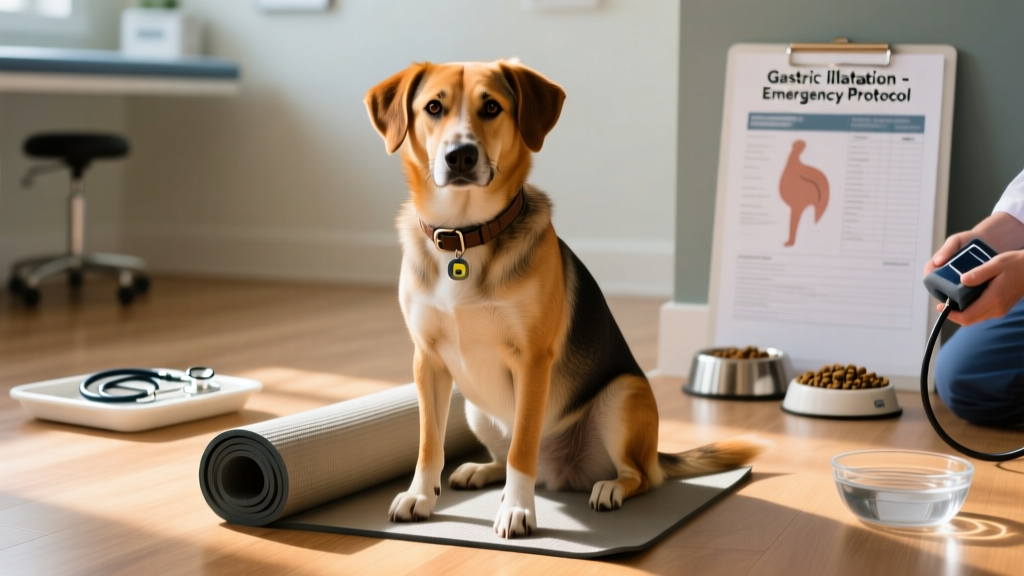
What Is Gastric Dilatation in Dogs?
Gastric dilatation in dogs occurs when the stomach fills with gas, fluid, or food and expands abnormally. In its most dangerous form — gastric dilatation-volvulus (GDV) — the distended stomach then twists on its axis, trapping its contents and cutting off blood supply to the stomach wall, spleen, and surrounding organs. This twist causes rapid cardiovascular collapse, tissue necrosis, and shock.
Simple gastric dilatation (bloat without torsion) can sometimes resolve on its own or with veterinary intervention, but it frequently progresses to GDV, which the Merck Veterinary Manual describes as a true surgical emergency. GDV affects an estimated 20,000 to 60,000 dogs annually in the United States, with mortality rates ranging from 10% to 30% even with aggressive treatment, according to data published in the Journal of the American Veterinary Medical Association.
The condition disproportionately strikes large, deep-chested breeds, though any dog can be affected. Understanding what triggers gastric dilatation in dogs — and recognizing the earliest warning signs — can be the difference between life and death.
Symptoms of Gastric Dilatation: Early Warning Signs vs. Critical Red Flags
Speed of recognition is the single most important factor in survival. GDV can progress from mild discomfort to cardiovascular collapse in under 60 minutes. Use the checklist below to assess your dog's condition.
| Severity | Symptom | What It Looks Like |
|---|---|---|
| Early (Act Now) | Restlessness / pacing | Dog cannot settle, repeatedly lies down and gets up |
| Early | Drooling / hypersalivation | Excessive, ropy saliva — more than typical panting moisture |
| Early | Unproductive retching | Dog tries to vomit but produces nothing or only white foam |
| Early | Mild abdominal distension | Belly looks slightly swollen, may feel firm to gentle touch |
| Advanced (EMERGENCY) | Pronounced abdominal swelling | Belly visibly bloated, drum-like when tapped |
| Advanced | Rapid, shallow breathing | Respiratory rate above 40 breaths/min at rest |
| Advanced | Pale or muddy gum color | Gums appear white, gray, or blue instead of healthy pink |
| Advanced | Weak pulse / collapse | Dog staggers, cannot stand, heart rate exceeds 160 bpm |
| Critical | Hypothermia | Body temperature drops below 99°F (37.2°C) |
| Critical | Loss of consciousness | Dog becomes unresponsive — cardiac arrest imminent |
Risk Factors: Which Dogs Are Most Prone to Gastric Dilatation?
High-Risk Profile
- Breed conformation: Deep-chested, large, and giant breeds have a chest-depth-to-width ratio that allows the stomach more room to rotate. Great Danes, Saint Bernards, Weimaraners, Irish Setters, Standard Poodles, German Shepherds, and Gordon Setters are among the most predisposed.
- Weight: Dogs over 99 lb (45 kg) face significantly elevated risk. Underweight dogs also show higher incidence, possibly due to ligament laxity.
- Age: Risk increases roughly 20% per year of age after age 3 in susceptible breeds. Most GDV cases occur in dogs aged 7–12 years.
- Genetics: Dogs with a first-degree relative (parent or sibling) that experienced GDV have a 63% increased lifetime risk, according to a landmark Purdue University study.
- Eating habits: Consuming one large meal daily, eating rapidly, and using elevated food bowls (controversial — some studies show a 2× risk increase) are associated with higher incidence.
- Temperament: Anxious, fearful, or stress-reactive dogs show higher GDV rates, likely due to aerophagia (air swallowing) and altered gut motility.
- Diet composition: Diets with fat listed among the first four ingredients, or kibble pieces larger than 30 mm, have been associated with increased risk in some epidemiological studies.
Breed-Specific Lifetime GDV Risk
| Breed | Estimated Lifetime Risk | Typical Adult Weight |
|---|---|---|
| Great Dane | 37–44% | 110–175 lb (50–79 kg) |
| Saint Bernard | 26–43% | 120–180 lb (54–82 kg) |
| Weimaraner | 22–30% | 55–90 lb (25–41 kg) |
| Irish Setter | 20–24% | 60–70 lb (27–32 kg) |
| Standard Poodle | 15–20% | 40–70 lb (18–32 kg) |
| German Shepherd | 12–19% | 50–90 lb (23–41 kg) |
| Labrador Retriever | 10–12% | 55–80 lb (25–36 kg) |
Risk percentages drawn from the Purdue University GDV study (JAVMA, 2001) and breed-specific follow-up research.
How Veterinarians Diagnose Gastric Dilatation in Dogs
When you arrive at the emergency clinic with a dog suspected of having gastric dilatation, the veterinary team moves fast. Diagnosis is typically clinical — meaning based on physical presentation — and confirmed with imaging. Here is the standard diagnostic sequence:
- Step 1 — Triage & Stabilization (Minutes 0–15): The vet assesses heart rate, gum color, capillary refill time, and respiratory rate. An IV catheter is placed immediately, and aggressive fluid resuscitation begins with crystalloid solutions (typically 60–90 mL/kg shock dose). This step starts before imaging.
- Step 2 — Lateral Abdominal Radiograph (Minutes 15–30): A single right-lateral X-ray is the gold-standard diagnostic tool. In GDV, the classic "double bubble" or "shelf" sign appears — the pylorus shifts dorsal and to the left of the fundus, creating a compartmentalized gas pattern. Cost: $150–$350 for emergency radiographs.
- Step 3 — Blood Work Panel (Minutes 15–45): A CBC, chemistry panel, and lactate level are drawn. Blood lactate above 6.0 mmol/L is a significant prognostic indicator — dogs with lactate above this threshold have higher mortality and a greater likelihood of gastric wall necrosis requiring partial gastrectomy. Cost: $150–$300.
- Step 4 — ECG Monitoring (Ongoing): Cardiac arrhythmias — particularly ventricular premature complexes (VPCs) — occur in up to 40% of GDV cases due to myocardial ischemia. Continuous ECG monitoring guides antiarrhythmic treatment decisions. Cost: $75–$200.
- Step 5 — Gastric Decompression (Pre-Surgical): The vet passes an orogastric tube to release trapped gas and fluid. If the tube cannot pass (suggesting complete torsion), trocarization — inserting a large-bore needle through the body wall into the stomach — may be performed to relieve pressure. This is a stabilization measure, not a diagnostic one, but it informs surgical planning.
Treatment Options: Medical Management vs. Surgery
Treatment depends on whether the dog has simple gastric dilatation (stomach distended but not twisted) or full GDV (stomach rotated). Here is how the options compare:
| Treatment | Indication | Procedure Details | Success Rate | Estimated Cost |
|---|---|---|---|---|
| Medical Decompression Alone | Simple dilatation (no volvulus confirmed) | Orogastric tube passage, IV fluids, monitoring for 24–48 hours | ~70–80% resolve without surgery; high recurrence risk | $500–$1,500 |
| Emergency Surgery (Gastropexy + Derotation) | Confirmed GDV (volvulus) | Stomach is surgically untwisted, assessed for necrosis, then sutured to the abdominal wall (incisional or belt-loop gastropexy) to prevent recurrence | 73–90% survive to discharge with timely surgery | $2,500–$7,000 |
| Partial Gastrectomy | GDV with necrotic stomach wall | Dead tissue is surgically removed before gastropexy; may also require splenectomy if spleen is infarcted | 50–66% survive to discharge | $4,000–$9,000+ |
| Prophylactic Gastropexy | High-risk breeds (preventive, elective) | Stomach sutured to abdominal wall during spay/neuter or as standalone laparoscopic procedure | Reduces GDV risk by ~95%; does not prevent dilatation but prevents torsion | $400–$1,800 (elective); $200–$600 added to spay/neuter |
Prognosis and Survival Rates by Stage
Prognosis for gastric dilatation in dogs depends heavily on how quickly treatment is initiated, whether volvulus has occurred, and the extent of tissue damage at the time of surgery.
| Clinical Scenario | Survival to Discharge | Long-Term Outlook |
|---|---|---|
| Simple dilatation, treated promptly (no torsion) | 85–95% | Normal lifespan; high recurrence risk without gastropexy (~70% will bloat again) |
| GDV, surgery within 1–2 hours of onset, no necrosis | 80–90% | Normal lifespan expected if gastropexy performed; recurrence with gastropexy below 5% |
| GDV, delayed presentation (>4 hours), moderate necrosis | 50–66% | Guarded; possible chronic GI issues, arrhythmia risk in first 72 hours post-op |
| GDV with gastric wall necrosis requiring partial gastrectomy | 50–60% | Survivors generally do well long-term but require extended hospitalization (3–5 days) |
| GDV with concurrent splenectomy + DIC (disseminated intravascular coagulation) | 20–38% | Poor; multi-organ failure is common in this scenario |
| Untreated GDV | Near 0% | Death typically occurs within 1–6 hours from cardiovascular collapse |
Post-operative cardiac arrhythmias occur in approximately 40% of GDV patients and are the leading cause of death in the first 48 hours after surgery. Continuous ECG monitoring during this window is standard of care at well-equipped emergency hospitals.
Cost of Treating Gastric Dilatation in Dogs
GDV treatment is among the most expensive emergency veterinary procedures. Understanding potential costs helps you prepare financially — whether through pet insurance, an emergency savings fund, or CareCredit.
| Cost Component | Low Estimate | High Estimate |
|---|---|---|
| Emergency exam & triage | $150 | $350 |
| IV fluids & stabilization | $200 | $600 |
| Radiographs (X-rays) | $150 | $350 |
| Blood work (CBC, chemistry, lactate) | $150 | $300 |
| Gastric decompression (non-surgical) | $100 | $300 |
| Surgery (gastropexy + derotation) | $2,000 | $5,000 |
| Partial gastrectomy (if needed) | $1,000 | $3,000 |
| Splenectomy (if needed) | $800 | $2,000 |
| Hospitalization (1–5 days) | $500 | $3,000 |
| Post-op medications & ECG monitoring | $200 | $800 |
| TOTAL — Uncomplicated GDV Surgery | $3,500 | $7,000 |
| TOTAL — Complex GDV (gastrectomy + splenectomy) | $5,500 | $12,000+ |
For context, pet insurance plans that cover hereditary and emergency conditions typically reimburse 70–90% of these costs after deductible. Policies must be purchased before the condition occurs — GDV is not covered retroactively.
Home Care and Recovery After GDV Treatment
If your dog survives surgery and comes home, the recovery period requires careful management for the first 2–4 weeks. Here is what daily care looks like:
First 10–14 Days Post-Discharge
- Feeding: Offer 3–4 small meals daily instead of one or two large ones. Use a slow-feeder bowl or food puzzle to prevent gulping. Total daily food volume should match your vet's calculated caloric requirement — typically 70–80% of normal for the first week, gradually increasing.
- Activity restriction: Leash walks only, 10–15 minutes, 2–3 times daily. No running, jumping, stairs, or rough play. The gastropexy incision needs time to form a strong adhesion to the body wall.
- Incision monitoring: Check the surgical site twice daily for redness, swelling, discharge, or dehiscence (opening). An E-collar (cone) is mandatory to prevent licking — typically worn for 10–14 days.
- Medications: Your vet will likely prescribe a proton pump inhibitor (e.g., omeprazole 0.5–1.0 mg/kg every 24 hours) to reduce gastric acid, a prokinetic agent (e.g., metoclopramide 0.2–0.5 mg/kg every 8 hours) to support GI motility, and an analgesic (e.g., carprofen or gabapentin). Always follow your veterinarian's dosing instructions exactly.
- Cardiac monitoring: Watch for weakness, collapse, or irregular heartbeat for the first 72 hours at home. If you notice any of these, return to the vet immediately — late-onset arrhythmias can occur.
Long-Term Lifestyle Adjustments
- Meal frequency: Feed 2–3 smaller meals per day permanently. Never allow free-choice (all-day) feeding for at-risk breeds.
- Exercise timing: Restrict vigorous exercise for at least 60 minutes before and 120 minutes after meals. This is one of the most consistently supported preventive measures.
- Water access: Do not allow gulping large volumes of water at once, especially after exercise. Offer small amounts frequently.
- Stress management: Minimize mealtime stress — feed in a quiet area away from other dogs if food competition causes rapid eating. Use positive reinforcement training to build calm feeding routines.
Prevention Strategies: Reducing Your Dog's GDV Risk
While you cannot eliminate the risk of gastric dilatation in dogs entirely — especially in predisposed breeds — you can substantially reduce it with these evidence-based strategies:
- Prophylactic gastropexy: The single most effective preventive measure. Discuss with your vet during your puppy's spay/neuter planning. For breeds like Great Danes and Saint Bernards, many veterinary surgeons recommend it as standard of care. Laparoscopic-assisted gastropexy can be performed as a minimally invasive standalone procedure with a recovery time of 5–7 days.
- Feed multiple small meals: Split daily food into 2–3 portions. A study published in JAVMA found that dogs fed one meal daily had a significantly higher risk of GDV compared to those fed multiple meals.
- Avoid elevated food bowls: Despite older advice recommending raised feeders, research has shown that elevated bowls may actually increase GDV risk by approximately 50%. Feed at floor level unless your vet recommends otherwise for a specific orthopedic reason.
- Choose appropriate kibble: Select a formula with kibble size under 30 mm in diameter and avoid diets where fat appears in the first four ingredients. Adding canned food or water to dry kibble may reduce risk.
- Manage water intake around meals: Restrict large water boluses immediately before and after eating. Allow normal access to water at all other times.
- Reduce environmental stress at mealtimes: Feed anxious dogs in a separate, quiet room. Competition with other dogs causes rapid ingestion and air swallowing.
🚨 When to Go to the Emergency Vet IMMEDIATELY
Do not wait. Do not call and "see if it's serious." Go directly to the nearest open emergency veterinary hospital if your dog shows any combination of the following:
- Distended or swollen abdomen that appeared suddenly
- Repeated attempts to vomit with no production (dry heaving / retching)
- Excessive drooling combined with restlessness
- Pale, white, gray, or blue gums
- Rapid breathing (>40 breaths/min at rest) or labored breathing
- Collapse, inability to stand, or extreme weakness
- Known at-risk breed that ate a large meal and is now acting "off"
Time is survival. Dogs treated within 1–2 hours of symptom onset have survival rates above 80%. Those treated after 4+ hours face dramatically worse outcomes.
Frequently Asked Questions About Gastric Dilatation in Dogs
Can gastric dilatation in dogs be cured?
Simple gastric dilatation (without torsion) can often be resolved with veterinary decompression and medical management. GDV (with torsion) requires emergency surgery — it cannot resolve on its own. With timely surgical intervention and gastropexy, most dogs recover fully and go on to live normal lifespans. The gastropexy prevents recurrence of the torsion component in approximately 95% of cases.
What is the life expectancy of a dog after surviving GDV?
Dogs that survive GDV surgery and are discharged from the hospital generally have a normal life expectancy, provided no significant gastric necrosis or complications occurred. The critical window is the first 72 hours post-surgery, when cardiac arrhythmias are most likely. Dogs that pass this window without complications typically return to baseline health within 2–4 weeks.
Which breeds are most prone to gastric dilatation?
Great Danes carry the highest lifetime risk (up to 44%), followed by Saint Bernards, Weimaraners, Irish Setters, Standard Poodles, German Shepherds, Gordon Setters, and Basset Hounds. However, any deep-chested dog — including mixed breeds over 50 lb (23 kg) — can develop GDV. Small breeds like Dachshunds and small terriers are rarely affected.
How much does GDV treatment cost?
Total costs range from $3,500 to $7,000 for an uncomplicated GDV surgery and from $5,500 to $12,000+ for complex cases requiring partial gastrectomy, splenectomy, or extended ICU stays. Prophylactic gastropexy costs $400–$1,800 when performed electively, or $200–$600 when combined with a spay/neuter procedure. Pet insurance with emergency and hereditary condition coverage can reimburse 70–90% of treatment costs.
Can I treat bloat at home?
No. There is no safe home treatment for GDV. Some online sources suggest administering simethicone (Gas-X) for mild gas, which may help with simple, mild gastric distension — but you cannot distinguish simple gas from early GDV at home. If your dog is retching unproductively and appears uncomfortable after eating, treat it as an emergency and go to the vet. Simethicone is not a substitute for professional evaluation.
Does bloat happen suddenly or gradually?
GDV typically develops rapidly — often within 30 minutes to 2 hours after eating a large meal. Owners frequently describe their dog as "fine at dinner and collapsing by bedtime." Simple gastric dilatation without torsion may develop more gradually, but because the progression to torsion is unpredictable and rapid, any bloat signs warrant immediate veterinary assessment.
This article is for informational purposes only and does not replace professional veterinary care. Always consult your veterinarian for diagnosis and treatment decisions regarding gastric dilatation in dogs. If you suspect your dog is experiencing a medical emergency, contact your nearest emergency veterinary clinic immediately.
Dr. Hannah Wickes
All our authors care for dogs every day — read more of their work on the authors page.


