Famotidine for Dogs: Canine Dosage, Safety & Side Effects Guide
Complete famotidine canine guide: safe dosages by weight, uses for acid reflux and ulcers, side effects, drug interactions, and when to call your vet.
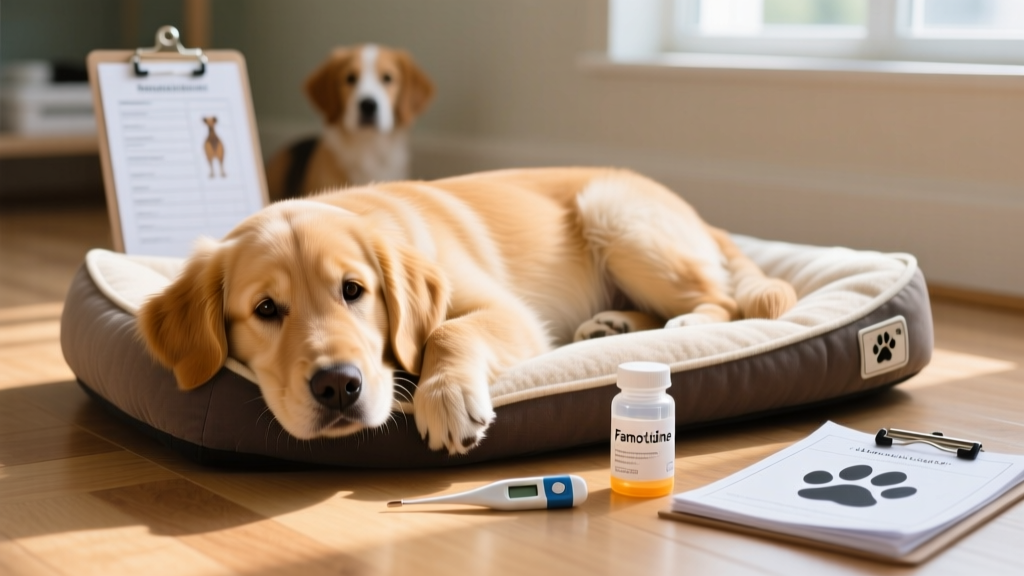
Can I Give My Dog Famotidine?
Yes — famotidine is widely used in veterinary medicine and is generally considered safe for dogs when dosed correctly under veterinary guidance. Sold under the brand name Pepcid AC and available as a generic, famotidine belongs to a class of drugs called H2-receptor antagonists (H2 blockers). It works by blocking histamine at the H2 receptors in the stomach lining, which directly reduces the production of gastric acid.
In veterinary practice, famotidine is one of the most commonly recommended OTC medications for managing acid-related gastrointestinal issues in dogs. According to the Merck Veterinary Manual, H2-receptor antagonists like famotidine effectively raise gastric pH and are preferred over older agents like cimetidine due to fewer drug interactions and greater potency per milligram.
However, "generally safe" does not mean "always appropriate." Famotidine masks symptoms — it reduces acid but does not treat the underlying cause of vomiting, regurgitation, or appetite loss. If your dog has been vomiting for more than 24 hours, has blood in vomit or stool, or shows signs of abdominal pain, skip the OTC aisle and head straight to your veterinarian.
What Is Famotidine Used for in Dogs?
Famotidine serves several purposes in canine medicine, ranging from well-established veterinary uses to off-label applications your vet may recommend based on clinical judgment.
Common Veterinary Uses
- Gastric ulcers: Treatment and prevention, particularly in dogs on NSAIDs (like carprofen or meloxicam) or corticosteroids long-term
- Acid reflux (gastroesophageal reflux): Reduces acid irritation of the esophagus, common in brachycephalic breeds and post-anesthesia patients
- Gastritis: Inflammation of the stomach lining from dietary indiscretion, infections, or systemic illness
- Mast cell tumor support: Mast cell tumors release excessive histamine, which drives massive gastric acid production — famotidine helps protect the stomach
- Kidney disease management: Dogs with chronic kidney disease (CKD) often develop uremic gastritis; famotidine reduces acid-related nausea and vomiting
Off-Label Uses Your Vet May Consider
- Megaesophagus management: Reducing acid damage when food sits in an enlarged esophagus
- Hiatal hernia: Minimizing reflux-associated tissue damage
- Pre-surgical prophylaxis: Some protocols use famotidine before anesthesia to reduce aspiration pneumonia risk from acid reflux
Famotidine Canine Dosage by Weight
The standard veterinary dosage for famotidine in dogs is 0.25 mg per pound of body weight (0.5 mg per kg), given once or twice daily depending on the condition being treated. Your veterinarian will determine the exact frequency based on severity — twice-daily dosing is common for active ulcer treatment, while once-daily may suffice for maintenance or prevention.
Famotidine is available in 10 mg and 20 mg tablets for human use. For small dogs, you will likely need to split tablets or ask your vet about compounding a lower-concentration formulation. Never guess at tablet splitting — use a pill cutter for accuracy.
| Dog Weight | Dose per Administration | Tablet Equivalent | Typical Frequency |
|---|---|---|---|
| 10 lb (4.5 kg) | 2.5 mg | ¼ of a 10 mg tablet | Every 12–24 hours |
| 20 lb (9 kg) | 5 mg | ½ of a 10 mg tablet | Every 12–24 hours |
| 40 lb (18 kg) | 10 mg | One full 10 mg tablet | Every 12–24 hours |
| 60 lb (27 kg) | 15 mg | 1.5 × 10 mg tablets | Every 12–24 hours |
| 80 lb (36 kg) | 20 mg | One full 20 mg tablet | Every 12–24 hours |
| 100 lb (45 kg) | 25 mg | 1.25 × 20 mg tablets | Every 12–24 hours |
Calculation example: Your 35 lb Beagle needs famotidine for acid reflux. Multiply 35 lb × 0.25 mg/lb = 8.75 mg per dose. Your vet may round this to 10 mg (one full tablet) for convenience, or recommend splitting a 20 mg tablet for a more precise 8.75 mg dose. Always follow your vet's specific instructions over any online calculator.
How Long Does Famotidine Take to Work in Dogs?
Famotidine typically begins reducing gastric acid production within 1 to 2 hours after oral administration, with peak effect occurring around 2 to 3 hours. However, noticeable clinical improvement — your dog eating more comfortably, reduced regurgitation, less lip-licking or nausea behavior — may take 24 to 48 hours of consistent dosing.
The duration of action is approximately 10 to 12 hours in dogs with normal kidney function. This is why twice-daily dosing is often recommended for active conditions, ensuring continuous acid suppression around the clock.
For dogs with impaired kidney function (common in senior dogs and those with CKD), famotidine clearance is slower. Your vet may adjust the dose downward or extend the dosing interval to every 24–48 hours to prevent drug accumulation. A typical course for acute gastritis runs 5 to 7 days, while chronic conditions like megaesophagus or mast cell tumor support may require indefinite daily use under veterinary monitoring.
Side Effects and Drug Interactions
Famotidine is well-tolerated by most dogs, but side effects can occur. Understanding the difference between mild, expected reactions and signs that warrant immediate veterinary attention is critical.
| Side Effect | Frequency | What to Do |
|---|---|---|
| Decreased appetite | Occasional | Monitor; usually resolves in 1–2 days |
| Vomiting (paradoxical) | Uncommon | Stop medication, contact vet if persists >24 hrs |
| Diarrhea | Uncommon | Ensure hydration; contact vet if bloody or >48 hrs |
| Lethargy / drowsiness | Rare | Monitor; may indicate dose too high |
| Dry mouth / increased thirst | Rare | Provide fresh water; usually benign |
| Serious — Call Your Vet Immediately: | ||
| Rapid heart rate or collapse | Very rare | Emergency vet visit — possible IV reaction or overdose |
| Hives, facial swelling, difficulty breathing | Very rare | Allergic reaction — emergency vet immediately |
| Black, tarry stools or bloody vomit | Rare | Indicates GI bleeding — emergency vet |
Drug Interactions
Famotidine has fewer drug interactions than cimetidine (Tagamet), but several important conflicts exist:
- Ketoconazole and itraconazole (antifungals): These drugs require an acidic stomach environment for absorption. Famotidine raises gastric pH, significantly reducing their effectiveness. If both are needed, your vet may space doses 2+ hours apart or switch antifungal formulations.
- Digoxin (heart medication): Altered gastric pH can change digoxin absorption rates, potentially leading to toxicity or subtherapeutic levels. Close monitoring of digoxin blood levels is required.
- Cisapride (prokinetic agent): Famotidine may reduce the effectiveness of cisapride used for motility disorders.
- Iron supplements: Reduced stomach acid impairs iron absorption — separate dosing by at least 2 hours if both are prescribed.
- Cephalosporin antibiotics (e.g., cefpodoxime): Some oral cephalosporins absorb poorly in low-acid environments. Discuss timing with your vet.
Contraindications: When Famotidine Is Dangerous
There are specific scenarios where famotidine should be avoided entirely or used only under strict veterinary supervision:
- Known hypersensitivity: If your dog has had an allergic reaction to famotidine or other H2 blockers (ranitidine, cimetidine), do not use it.
- Severe kidney disease without dose adjustment: Famotidine is cleared by the kidneys. Dogs with advanced CKD (IRIS Stage 3–4) need reduced doses — typically 50% of the standard dose or extended intervals. Giving a full dose to a kidney-compromised dog risks drug accumulation and neurological side effects.
- Liver disease: While famotidine is primarily renally cleared, hepatic impairment can alter drug metabolism. Use cautiously and under vet guidance.
- Pregnancy and lactation: Safety in pregnant or nursing dogs has not been established. Avoid unless your veterinarian determines the benefit outweighs the risk.
- Suspected GI foreign body or obstruction: If your dog is vomiting because of a swallowed object, famotidine will not help and may delay critical surgical intervention. This is a common and dangerous mistake owners make.
Overdose Symptoms and Emergency Response
Famotidine has a relatively wide safety margin in dogs — the LD50 in dogs is quite high, and most accidental overdoses result in manageable symptoms. However, massive overdoses (especially in small dogs who access an entire bottle) require immediate intervention.
Signs of Famotidine Overdose
- Severe vomiting or repeated retching
- Extreme lethargy or difficulty standing
- Rapid heart rate (tachycardia) or irregular heartbeat
- Tremors or seizures (rare, typically with very large overdoses)
- Collapse or unresponsiveness
- Call ASPCA Animal Poison Control immediately: (888) 426-4435 — available 24/7 (consultation fee applies)
- Or call Pet Poison Helpline: (855) 764-7661
- Contact your nearest emergency veterinary clinic and head there immediately
- Bring the medication bottle so the vet can confirm the exact formulation and calculate the ingested dose
- Do NOT induce vomiting unless specifically instructed by a poison control specialist or veterinarian
For context: a 20 lb dog consuming a single 20 mg tablet has taken approximately 1 mg/lb — about 4 times the standard dose. While this is unlikely to cause serious harm in an otherwise healthy dog, you should still contact your vet for guidance. A 10 lb dog consuming four 20 mg tablets (80 mg total, or 8 mg/lb) is a more serious scenario requiring immediate veterinary attention.
When to Skip OTC Famotidine and See Your Vet
Famotidine is a useful tool, but it is not a substitute for diagnosis. The following situations require veterinary evaluation, not a trip to the pharmacy:
- Vomiting persists for more than 24 hours despite treatment
- Vomit contains blood (bright red or dark "coffee grounds" appearance)
- Stools are black and tarry (melena) or contain visible blood
- Your dog is retching without producing vomit (potential bloat/GDV — a life-threatening emergency)
- Abdomen appears swollen, distended, or is painful to the touch
- Your dog is refusing all food and water for more than 24 hours
- Weight loss has been ongoing for more than a week
- Your dog is a puppy under 6 months old (dehydration risk is high)
- Your dog is on other medications that could interact (NSAIDs, steroids, antifungals)
- Symptoms recur every time you stop the famotidine (indicates an unresolved underlying condition)
Alternatives to Famotidine for Dogs
If famotidine is not appropriate for your dog, or if your vet wants to explore other options, several alternatives exist across different drug classes and approaches:
| Alternative | Drug Class | Key Differences | Typical Use Case |
|---|---|---|---|
| Omeprazole (Prilosec) | Proton pump inhibitor (PPI) | More potent acid suppression; takes 2–5 days for full effect; longer duration | Severe ulcers, refractory reflux, conditions not responding to H2 blockers |
| Pantoprazole (Protonix) | Proton pump inhibitor (PPI) | Available IV for hospitalized patients; fewer drug interactions than omeprazole | Critical care, dogs that cannot take oral medications |
| Sucralfate (Carafate) | Mucosal protectant | Coats and protects ulcers rather than reducing acid; often used alongside famotidine | Active gastric or esophageal ulcers, esophagitis |
| Misoprostol (Cytotec) | Prostaglandin analog | Prevents NSAID-induced ulcers by replacing protective prostaglandins; teratogenic — never use in pregnant dogs | Prevention of ulcers in dogs on long-term NSAIDs |
| Dietary management | Non-pharmaceutical | Bland diet (boiled chicken and rice), smaller frequent meals, elevated feeding for megaesophagus | Mild gastritis, dietary indiscretion recovery, adjunct to medication |
Your veterinarian may combine therapies — for example, famotidine for acid reduction plus sucralfate for ulcer coating — depending on the diagnosis. According to the American Veterinary Medical Association, any persistent GI symptom warrants professional evaluation rather than prolonged OTC management.
Frequently Asked Questions
Can I give my dog famotidine every day?
Short-term daily use (5–14 days) is generally safe under veterinary supervision. Long-term daily use requires monitoring because chronic acid suppression can alter gut bacteria populations, reduce absorption of certain nutrients (particularly vitamin B12, iron, and calcium), and mask worsening underlying disease. If your dog has been on famotidine for more than two weeks, your vet should re-evaluate the diagnosis and consider whether a different approach is warranted.
How much famotidine can I give my dog?
The standard dose is 0.25 mg per pound (0.5 mg/kg) of body weight, given once or twice daily. For a 50 lb dog, that is 12.5 mg per dose. Never exceed 0.5 mg/lb without explicit veterinary instruction. More is not better — higher doses do not provide proportionally more acid suppression and increase the risk of side effects.
What are the side effects of famotidine in dogs?
Most dogs tolerate famotidine well. Occasional side effects include decreased appetite, mild vomiting, or diarrhea. Rare but serious reactions include rapid heart rate, collapse, and allergic responses (hives, facial swelling). See the side effects table above for a complete breakdown and action steps.
Can I use Pepcid AC for my dog?
Yes, standard Pepcid AC tablets (10 mg or 20 mg famotidine) are the same active ingredient used in veterinary medicine. However, avoid Pepcid AC products that contain additional active ingredients (some combinations include simethicone or other compounds). Also avoid chewable or orally-disintegrating formulations that may contain xylitol. Plain, film-coated famotidine tablets are the safest option.
How long does it take for famotidine to work in dogs?
Acid suppression begins within 1–2 hours, with peak effect at 2–3 hours. Clinical improvement — your dog eating more comfortably, less regurgitation — typically becomes noticeable within 24–48 hours. If you see no improvement after 3 days of consistent dosing, contact your vet; the underlying condition may require a different treatment approach.
Are there alternatives to famotidine for dogs?
Yes. Omeprazole (Prilosec) provides stronger, longer-lasting acid suppression and is preferred for severe or refractory cases. Sucralfate coats and protects ulcers directly. Misoprostol prevents NSAID-induced ulcers. Dietary management (bland diet, smaller meals) can complement or replace medication in mild cases. Your vet will choose based on diagnosis and severity.
Is famotidine safe for puppies?
Famotidine can be used in puppies, but dosing must be precise and should only be administered under direct veterinary guidance. Puppies dehydrate rapidly from vomiting and have less metabolic reserve than adults. If your puppy is vomiting, see a vet before reaching for OTC medication — the underlying cause (parvovirus, foreign body, parasites) may be far more dangerous than the vomiting itself.
Can I give famotidine with my dog's other medications?
Possibly, but you must check with your veterinarian first. Famotidine interacts with several common canine drugs including ketoconazole, digoxin, iron supplements, and certain antibiotics. Your vet may adjust timing (spacing doses 2+ hours apart) or choose an alternative acid reducer to avoid interactions.
Sources: Merck Veterinary Manual — H2-Receptor Antagonists, AVMA Dog Care Resources, ASPCA Animal Poison Control. Always consult your licensed veterinarian for individualized medical advice.
Jonas Cole
All our authors care for dogs every day — read more of their work on the authors page.