Best Extra Small Dog Harness: 2026 Buyer's Guide & Top Picks
Find the best extra small dog harness for your tiny pup. Compare top 2026 picks with sizing charts, safety tips, pricing, and vet-backed fit guidance.
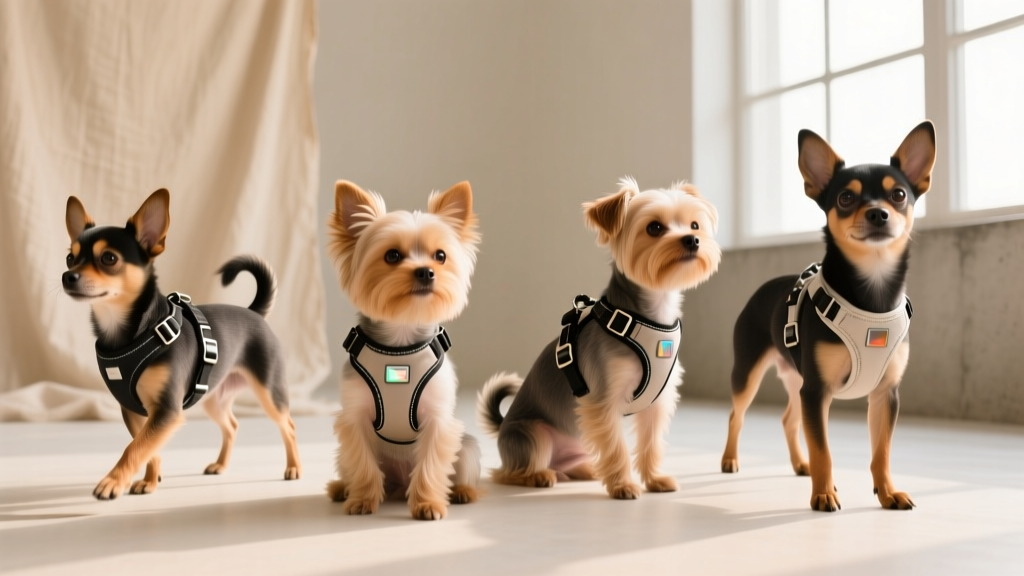
Why an Extra Small Dog Harness Matters for Tiny Breeds
If you share your home with a Chihuahua, Yorkshire Terrier, Pomeranian, or any dog under 10 pounds, you already know that standard harnesses simply don't fit. An extra small dog harness is specifically engineered for dogs weighing roughly 4–10 lb (1.8–4.5 kg) with chest girths between 10–16 inches (25–40 cm). Unlike collars, which concentrate leash pressure on the delicate trachea, a properly fitted harness distributes force across the sternum and ribcage — a critical distinction for toy breeds prone to tracheal collapse.
According to veterinary data published in the Journal of the American Veterinary Medical Association, toy and small-breed dogs experience tracheal irritation and collapse at significantly higher rates than larger breeds. A harness removes the primary mechanical trigger: neck compression from leash pulling. For puppies still in their vaccination window or senior dogs with cervical spine arthritis, the protection a well-designed harness provides is non-negotiable.
- Adjustability: At minimum, 4 adjustment points (2 neck, 2 chest) for a custom fit on barrel-chested or narrow-chested toy breeds.
- Weight: The harness itself should weigh under 3 oz (85 g) — heavy hardware overwhelms a 5 lb dog.
- Material: Breathable mesh or padded nylon with soft fleece lining at contact points.
- Closure type: Step-in designs for harness-averse dogs; overhead (vest-style) for easier size fine-tuning.
- D-ring placement: Back-clip for calm walkers; front-clip for dogs that pull (redirects momentum).
- Reflective elements: Essential for early-morning or evening walks — toy dogs are low to the ground and hard for drivers to spot.
- Escape-proof design: Look for dual-clip or martingale-style tightening to prevent Houdini escapes.
How to Measure Your Dog for an Extra Small Harness
The single biggest reason harnesses get returned is incorrect sizing. Before browsing products, take two measurements with a soft cloth tape measure:
- Chest girth: Wrap the tape around the widest part of your dog's ribcage, just behind the front legs. Keep one finger's width of slack.
- Neck circumference: Measure at the base of the neck where a collar would naturally sit — not up near the jawline.
Record both numbers in inches and centimeters. Most extra small harness size charts list chest girth ranges of 10–14 in (25–36 cm) for XXS and 13–17 in (33–43 cm) for XS. If your dog falls between sizes, size up — a harness that's too tight causes chafing and restricted breathing, particularly dangerous for brachycephalic breeds like Pugs and Brussels Griffons.
| Breed | Typical Weight | Chest Girth Range | Recommended Harness Size |
|---|---|---|---|
| Chihuahua | 3–6 lb / 1.4–2.7 kg | 10–13 in / 25–33 cm | XXS or XS |
| Yorkshire Terrier | 4–7 lb / 1.8–3.2 kg | 12–15 in / 30–38 cm | XS |
| Pomeranian | 4–7 lb / 1.8–3.2 kg | 13–16 in / 33–40 cm | XS |
| Toy Poodle | 5–9 lb / 2.3–4.1 kg | 13–16 in / 33–40 cm | XS |
| Maltese | 4–7 lb / 1.8–3.2 kg | 11–14 in / 28–36 cm | XXS or XS |
| Brussels Griffon | 7–11 lb / 3.2–5.0 kg | 14–17 in / 36–43 cm | XS or S (check brand) |
Top 7 Extra Small Dog Harnesses: 2026 Picks
Each product below was evaluated on fit adjustability, material quality, escape resistance, comfort for extended wear, and value. Prices reflect typical retail ranges as of early 2026.
1. Puppia Soft Dog Harness (Authentic, Size XS)
Price: $18–$24 | Best for: Harness-averse dogs, first-time harness users
The Puppia Authentic is a step-in vest harness made from 100% polyester air-mesh. It's been a staple in the toy-breed community for over a decade because the step-in design eliminates the overhead struggle many small dogs resist. The chest pad is soft and flexible, conforming to narrow or barrel-shaped ribcages without rigid structure.
- Extremely lightweight (~1.5 oz)
- Machine washable
- Available in 14 colors
- Soft mesh won't chafe bare skin
- Only back-clip D-ring (no front-clip option)
- Velcro closure can wear after 12–18 months
- Limited adjustability — must get size right
2. Ruffwear Hi & Light Harness (Size XXS)
Price: $40–$48 | Best for: Active dogs, hiking, outdoor adventures
Ruffwear's lightest harness weighs under 2 oz and features both a front-clip and back-clip leash attachment. The XXS size fits chest girths of 13–17 in (33–43 cm). It uses a single-piece V-ring on the back and a reinforced front webbing loop, giving you two training options without added bulk. The padded chest and belly panels use recycled polyester.
- Dual clip points (front + back)
- 4 adjustment points for precise fit
- Reflective trim for visibility
- Durable enough for trail use
- Overhead design may frustrate some dogs
- Premium price point
- XXS still too large for dogs under 4 lb
3. Blue-9 Balance Harness (Size Mini)
Price: $35–$42 | Best for: Training, dogs that pull, certified trainer recommendation
The Balance Harness is widely recommended by force-free certified professional dog trainers (CPDTs) for its six-point adjustment system and Y-shaped front design that avoids shoulder restriction. The Mini size accommodates chest girths from 12–16 in (30–40 cm). Both front and back leash rings are included, and the buckles are side-release rather than Velcro — more secure for escape-prone dogs.
- 6 adjustment points — best-in-class fit
- Y-front design preserves full shoulder range of motion
- Dual-clip for training versatility
- No shoulder strap pressure
- Overhead step can be tricky for very small dogs
- Webbing is stiffer than mesh options
- Limited color selection
4. Gooby Escape Free Sport Harness (Size Small)
Price: $22–$28 | Best for: Escape artists, slim-bodied sighthound mixes
Gooby's Escape Free line uses a neoprene-lined, step-in design with a patented tightening mechanism — when the dog pulls backward, the harness gently cinches rather than slipping off. This is the go-to for Italian Greyhounds, Whippet puppies, and narrow-chested toy breeds that slip standard harnesses. The Small fits chests 12–16 in (30–40 cm).
- Anti-escape cinch mechanism works reliably
- Neoprene padding is soft and water-resistant
- Step-in design is fast to put on
- Good for dogs with narrow heads relative to neck
- Back-clip only
- Neoprene can retain heat in summer
- Sizing runs small — measure carefully
5. Kurgo Tru Fit Smart Harness (Size XS)
Price: $28–$35 | Best for: Car travel, multi-use (walking + vehicle restraint)
The Kurgo Tru Fit doubles as a walking harness and a car safety harness when used with the included 10-inch seat belt loop. The XS fits chest girths 12–16 in (30–40 cm). It has a steel-nested D-ring on the back rated for crash forces and a front no-pull ring. The padded chest plate distributes pressure evenly.
- Crash-tested car restraint function
- Dual-clip front and back
- Lifetime warranty from Kurgo
- 5 adjustment points
- Heavier than mesh-only options (~3.5 oz)
- Overhead design
- Seat belt loop is short — works best in back seats
6. Rabbitgoo No-Pull Dog Harness (Size XS)
Price: $15–$20 | Best for: Budget-conscious owners, everyday walks
The Rabbitgoo harness is a popular budget option that punches above its weight class. The XS fits 11.5–17 in (29–43 cm) chest girths and includes both front and back metal D-rings. The outer shell is Oxford nylon with a breathable mesh inner lining. Reflective strips run along the chest and back straps.
- Most affordable dual-clip harness on this list
- 4 adjustment points
- Reflective strips for night visibility
- Top handle for quick grabs
- Bulkier than premium options
- Padding is thinner than Ruffwear or Blue-9
- Buckle quality is average — inspect regularly
7. Tre Ponti Fibbia Harness (Size 1 / Mini)
Price: $25–$32 | Best for: Italian design, step-in simplicity, Chihuahua owners
Made in Italy, the Tre Ponti Fibbia uses a unique single-strap step-in design that sits low on the chest, well away from the throat. The buckle (fibbia means "buckle" in Italian) is a quick-release clip. Size 1 fits dogs 3–8 lb (1.4–3.6 kg) with chest girths up to 14 in (36 cm). The ergonomic shape avoids the armpits entirely, eliminating chafing.
- Unique design avoids armpit chafing completely
- Ultra-lightweight (~1 oz)
- Fast step-in, one-buckle closure
- Ideal for tiny Chihuahuas and toy breeds
- Back-clip only
- Limited size range — only fits very small dogs
- Not widely available in big-box stores
Product Comparison Table
| Harness | Price | Clip Type | Weight | Adjust Points | Escape-Proof |
|---|---|---|---|---|---|
| Puppia Soft | $18–$24 | Back | ~1.5 oz | 2 | No |
| Ruffwear Hi & Light | $40–$48 | Front + Back | ~2 oz | 4 | Moderate |
| Blue-9 Balance | $35–$42 | Front + Back | ~2.5 oz | 6 | Yes |
| Gooby Escape Free | $22–$28 | Back | ~2.2 oz | 2 | Yes |
| Kurgo Tru Fit | $28–$35 | Front + Back | ~3.5 oz | 5 | Moderate |
| Rabbitgoo No-Pull | $15–$20 | Front + Back | ~3 oz | 4 | Moderate |
| Tre Ponti Fibbia | $25–$32 | Back | ~1 oz | 1 | No |
How to Put On an Extra Small Dog Harness: Step-by-Step
Proper application prevents chafing, escape, and discomfort. Here's the process for both common harness styles:
Step-In Harness (Puppia, Gooby, Tre Ponti)
- Lay the harness flat on the ground with the D-ring facing up.
- Gently guide your dog's front left paw into the left opening and front right paw into the right opening. Use a treat to lure if needed.
- Pull the harness up to the chest and fasten the back clip (Velcro, buckle, or snap).
- Run two fingers under every strap — you should fit exactly two fingers snugly, not more. This is the "two-finger rule" recommended by veterinary professionals.
- Attach the leash to the D-ring and give your dog a treat for cooperating.
Overhead / Vest-Style Harness (Ruffwear, Blue-9, Kurgo, Rabbitgoo)
- Unbuckle all straps and open the harness fully.
- Slip the neck loop over your dog's head — keep it loose enough to slide on without tugging the ears.
- Guide each front leg through its corresponding armhole. Support the leg gently; never force a joint.
- Bring the belly strap around underneath and buckle it on the dog's back or side.
- Adjust all straps using the two-finger rule. Check that the chest plate sits flat against the sternum, not riding up into the armpits.
- Clip the leash and reward your dog.
- Never leave a harness on unsupervised. Buckles and straps can snag on crate latches, furniture, or other dogs' teeth, creating a strangulation risk.
- Inspect weekly for wear. Check stitching at D-ring attachment points, buckle integrity, and Velcro adhesion. A failed harness on a busy street is an emergency.
- Remove the harness during car rides unless it's crash-rated. Only the Kurgo Tru Fit and a handful of Center for Pet Safety-certified harnesses are approved for vehicle restraint. Standard walking harnesses can cause injury in a collision.
- Watch for skin irritation. Red marks that persist more than 30 minutes after harness removal indicate poor fit or a material sensitivity. Switch to a hypoallergenic mesh or consult your veterinarian.
When to Skip the Harness and See Your Vet
A harness is a management tool, not a medical device. Certain situations require professional evaluation before you continue walking your dog in any harness:
- Persistent coughing or gagging during or after walks — could indicate tracheal collapse, kennel cough, or heart disease, especially in toy breeds. A veterinarian can perform radiographs or a fluoroscopy to assess tracheal integrity.
- Reluctance to walk or sudden limping — may signal a harness fit issue, but could also be early IVDD (intervertebral disc disease), patellar luxation, or arthritis. Breeds like Dachshunds and Pomeranians are predisposed.
- Skin lesions or hair loss under harness contact points — could be contact dermatitis, bacterial pyoderma, or a fungal infection requiring medicated treatment.
- Difficulty breathing or exercise intolerance — brachycephalic breeds (Pugs, Boston Terriers, Shih Tzus) may have brachycephalic obstructive airway syndrome (BOAS) that requires surgical evaluation, not just a harness swap.
In all of these cases, consult your veterinarian before assuming a new harness will solve the problem. Diagnostic costs for tracheal radiographs typically range from $150–$350 depending on your region.
Alternatives to a Standard Extra Small Dog Harness
If a traditional harness doesn't work for your dog — due to conformation, injury recovery, or behavioral resistance — consider these options:
Canine Mobility Support Harnesses
For senior toy dogs recovering from surgery or managing IVDD, a support harness like the Help 'Em Up Harness ($80–$120) provides full-body lifting assistance. These are prescribed or recommended by veterinary rehabilitation specialists and feature handles on the back and hips for controlled support.
Harness-Integrated Clothing
Brands like Chai's Choice and Alpine Outfitters make fleece-lined harness jackets that combine warmth with leash attachment — useful for hairless breeds (Chinese Crested, Xoloitzcuintli) or thin-coated toy breeds in cold climates. Price range: $30–$55.
DIY Temporary Harness
In an emergency (e.g., your harness breaks mid-walk), you can fashion a temporary harness from a soft cotton scarf or bandana using a figure-eight wrap around the chest and back. This is not a long-term solution — the material lacks structural integrity and D-ring reinforcement — but it's a useful skill for your kit. Look up "emergency figure-eight dog harness" tutorials from certified trainers for the proper technique.
Flat Collar with ID Tags Only
For dogs that walk perfectly on leash and have no tracheal risk, a lightweight flat collar with ID tags and no leash attachment (carrying the leash clipped to a harness) is acceptable. However, for any dog that pulls even occasionally, the AKC recommends a harness as the primary leash attachment point for toy breeds.
Where to Buy and What You'll Spend
Extra small dog harnesses are available across several retail channels. Here's what to expect in 2026:
| Retail Channel | Price Range | Advantages | Drawbacks |
|---|---|---|---|
| Chewy / Amazon | $12–$48 | Widest selection, fast shipping, easy returns | Can't try on before buying |
| Independent pet boutiques | $20–$55 | In-store fitting, knowledgeable staff | Limited brand selection |
| Direct from manufacturer | $25–$50 | Warranty support, newest models first | Slower shipping, no returns on used items |
| Big-box (Petco, PetSmart) | $10–$35 | Try before you buy, same-day availability | Mostly house brands, fewer premium options |
Budget at least $20–$35 for a quality extra small harness that will last 12–24 months. Replacing a $15 harness twice a year costs more than buying one $35 harness that endures.
Frequently Asked Questions
What is the best extra small dog harness overall?
There's no single "best" harness — it depends on your dog's body shape, behavior, and your use case. For training and adjustability, the Blue-9 Balance Mini leads with six adjustment points and dual-clip design. For step-in simplicity and ultra-light weight, the Puppia Soft and Tre Ponti Fibbia are excellent. For active outdoor dogs, the Ruffwear Hi & Light XXS offers the best durability-to-weight ratio.
How do I know if the harness fits correctly?
Use the two-finger rule: you should be able to slide exactly two flat fingers under every strap. The chest plate should sit flat against the sternum without riding into the armpits. The neck opening should not press against the trachea — if you see coughing, it's too tight or sits too high. After a 15-minute walk, check for red marks; mild imprinting that fades within 30 minutes is normal, but persistent redness means the fit needs adjustment.
How much does a good extra small dog harness cost?
Quality harnesses in the XXS/XS range cost between $15 and $48. Budget options (Rabbitgoo, generic brands) run $15–$20. Mid-range (Puppia, Gooby, Tre Ponti) cost $18–$32. Premium models (Ruffwear, Blue-9, Kurgo) are $28–$48. Expect to replace your harness every 1–2 years depending on use frequency and washing.
Can I use a cat harness for my extra small dog?
Technically, some cat harnesses in size XS overlap with dog XXS sizing. However, cat harnesses are designed for feline body proportions — longer torso, narrower chest — and typically use thinner webbing and lighter hardware not rated for the sudden-force loads a dog can generate on a leash. It's safer to use a harness designed and tested for canine use.
Are there natural or DIY alternatives to a commercial harness?
A DIY figure-eight harness made from soft cotton webbing can serve as a temporary emergency solution. For long-term use, no homemade harness matches the structural testing, D-ring reinforcement, and ergonomic design of commercial products. If cost is a barrier, look for sales on quality brands or check local Buy Nothing groups — many dog owners donate gently used harnesses when their dogs outgrow them.
My dog hates wearing a harness. What should I do?
Use desensitization and counter-conditioning — both are force-free, positive-reinforcement methods. Start by placing the harness on the floor and rewarding your dog for sniffing it. Progress to touching the harness to their body without putting it on, then briefly slipping it over the head for one second, gradually increasing duration over days or weeks. High-value treats (freeze-dried liver, boiled chicken) make this process faster. If your dog shows extreme fear or aggression around the harness, consult a certified professional dog trainer (CPDT-KA) or a veterinary behaviorist.
Marcus Aldridge
All our authors care for dogs every day — read more of their work on the authors page.


