Elderly Dog Care: A Complete Guide to Senior Canine Health & Comfort
Elderly dog care guide: senior health, nutrition, exercise, and quality of life tips for all breeds.
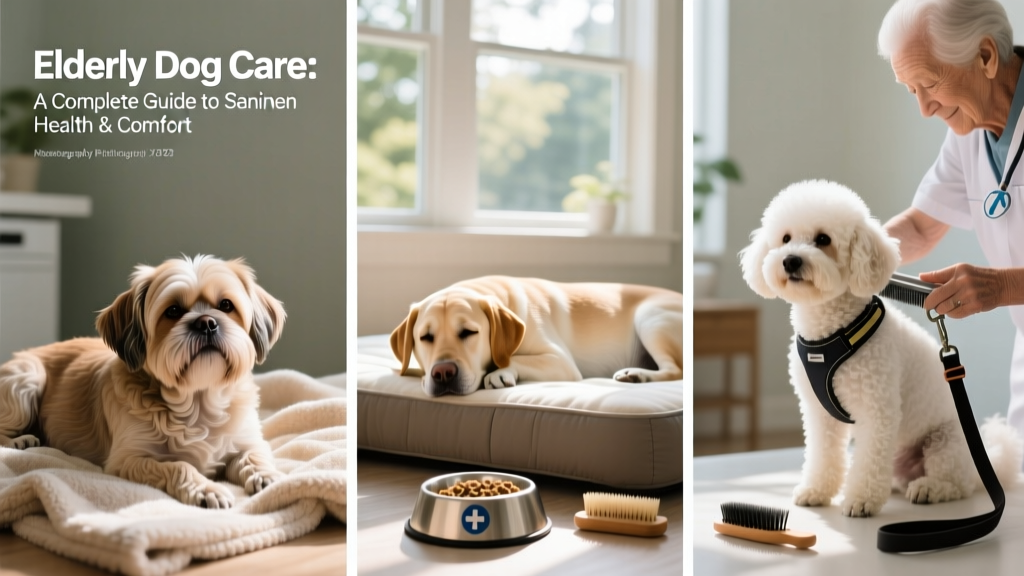
When Is Your Dog Considered a Senior?
The term "senior" isn't a one-size-fits-all label. A Chihuahua and a Great Dane age at dramatically different rates, and understanding your dog's specific life stage is the foundation of effective elderly dog care. According to the American Kennel Club, smaller breeds mature faster in their first two years but then age more slowly, while giant breeds age rapidly throughout their lives.
| Breed Size | Weight Range | Senior Threshold | Geriatric Threshold | Typical Lifespan |
|---|---|---|---|---|
| Small (Chihuahua, Toy Poodle, Pomeranian) | Under 20 lb / 9 kg | 10–11 years | 13–14 years | 12–16 years |
| Medium (Beagle, Cocker Spaniel, Bulldog) | 20–50 lb / 9–23 kg | 8–9 years | 11–12 years | 10–14 years |
| Large (Labrador, Golden Retriever, German Shepherd) | 50–90 lb / 23–41 kg | 7–8 years | 10–11 years | 9–12 years |
| Giant (Great Dane, Mastiff, Saint Bernard) | Over 90 lb / 41 kg | 5–6 years | 8–9 years | 7–10 years |
These thresholds matter because they determine when you should shift veterinary protocols, nutrition plans, and exercise routines. A 7-year-old Great Dane is already navigating senior health concerns, while a 7-year-old Jack Russell Terrier is still firmly in adulthood. Mark your calendar based on your dog's size, not a generic "7-year rule."
Physical Changes to Expect in Senior Dogs
Aging isn't a disease — it's a gradual physiological shift that touches nearly every body system. Here's what experienced veterinarians and gerontology researchers consider normal versus concerning in elderly dogs:
Normal Age-Related Changes
- Coat and skin: Graying around the muzzle and eyebrows (often starting around age 6–8), drier skin, slightly coarser or thinner fur. Some dogs develop benign fatty lumps called lipomas — soft, movable masses under the skin.
- Sleep patterns: Senior dogs sleep 14–18 hours per day (compared to 12–14 for adults). You'll notice more daytime napping and possibly restlessness at night.
- Energy levels: A gradual 20–30% reduction in stamina. Your dog may still want to walk but tires after 15–20 minutes instead of 45.
- Sensory decline: Hearing loss typically begins with high-frequency sounds (your dog may stop responding to whistle-style recall but still hear your voice). Vision changes include lenticular sclerosis — a bluish haze in the pupil that's often mistaken for cataracts but doesn't significantly impair vision.
- Muscle mass: Gradual loss of topline muscle, especially along the spine and hindquarters. This is called sarcopenia and is distinct from weight loss.
Changes That Warrant a Vet Visit
- Sudden or rapid weight loss (more than 10% of body weight in 30 days)
- Excessive thirst or urination (polydipsia/polyuria — a hallmark of kidney disease, diabetes, and Cushing's disease)
- Cloudy eyes that impair navigation (true cataracts, not lenticular sclerosis)
- Lumps that are firm, fixed to underlying tissue, or growing rapidly
- Persistent coughing, especially at night or after lying down
- Difficulty rising, climbing stairs, or jumping (beyond occasional stiffness)
Nutrition Adjustments for Elderly Dogs
Senior dogs don't automatically need "senior food." The right diet depends on your dog's specific health profile, body condition score (BCS), and any diagnosed conditions. The ASPCA recommends working with your vet to tailor nutrition rather than switching formulas based on age alone.
| Nutritional Factor | Adult Maintenance | Senior Adjustment | Why It Matters |
|---|---|---|---|
| Caloric Intake | Based on activity level | Reduce by 10–20% if sedentary; increase if underweight | Metabolism slows 10–25% with age; obesity accelerates joint degeneration |
| Protein | Minimum 18% (AAFCO adult) | Maintain 22–28% unless kidney disease is diagnosed | Senior dogs need MORE protein to combat sarcopenia; restriction only if renal values are elevated |
| Fat | 5–15% typical | 8–12% with emphasis on omega-3 fatty acids (EPA/DHA) | Omega-3s at 75–100 mg/kg body weight reduce joint inflammation and support cognitive function |
| Fiber | 2–5% | 3–6% if constipation is an issue | Gastrointestinal motility decreases with age; moderate fiber supports regularity |
| Phosphorus | No specific limit | Restrict to 0.4–0.7% if CKD diagnosed | Excess phosphorus accelerates kidney damage in dogs with chronic kidney disease |
| Sodium | No specific limit | Moderate restriction if heart disease present | Reduces fluid retention and cardiac workload |
| Joint Supplements | Optional | Glucosamine HCl (500–1000 mg/day for large dogs), chondroitin, MSM | Cartilage repair support; clinical improvement typically seen in 4–6 weeks |
Key insight many owners miss: The myth that senior dogs need low-protein diets is outdated and potentially harmful. Research published in the Journal of Veterinary Internal Medicine demonstrates that healthy senior dogs actually have increased protein requirements to maintain lean muscle mass. Protein restriction should only occur when blood work confirms kidney impairment — specifically, when SDMA (symmetric dimethylarginine) exceeds 14 µg/dL or BUN/creatinine are persistently elevated. Ask your vet to run an SDMA test at your dog's senior baseline exam.
Recommended senior-specific formulas to discuss with your vet: Hill's Science Diet Senior Vitality, Royal Canin Aging, Purina Pro Plan Bright Mind (contains MCT oil shown to support cognitive function in dogs 7+), and Open Farm Senior Recipe. Prices range from $45–$85 for a 24 lb / 11 kg bag depending on brand and retailer.
Exercise Modifications: Keep Moving, Adjust the Intensity
The single biggest mistake in elderly dog care is cutting exercise entirely because "they're old." Controlled, consistent movement preserves joint mobility, maintains muscle mass, supports cognitive health, and prevents obesity-related comorbidities. The goal isn't to stop activity — it's to modify it.
Senior Dog Exercise Protocol
- Frequency: 2 shorter walks per day (15–25 minutes each) rather than 1 long walk. This prevents post-exercise stiffness and soreness.
- Surface: Avoid concrete and asphalt when possible. Grass, packed dirt, and rubber-matted paths reduce joint impact by up to 40%.
- Swimming/hydrotherapy: Ideal for dogs with hip dysplasia or arthritis. Water provides resistance without weight-bearing stress. Professional hydrotherapy sessions cost $45–$75 per session; many pet insurance plans now cover this.
- Avoid: High-impact activities (fetch on hard surfaces, jumping in/out of vehicles, agility jumps). Replace with scent work, puzzle toys, and gentle hill walking.
- Temperature awareness: Senior dogs have impaired thermoregulation. Walk in temperatures between 45–75°F (7–24°C). In cold weather, use a fleece-lined coat for short-haired breeds. In heat, walk before 8 AM or after 7 PM.
- Warm-up and cool-down: 3–5 minutes of slow leash walking before and after the main walk reduces next-day stiffness.
- Watch for these stop signals: Lagging behind, excessive panting, sitting down mid-walk, limping that wasn't present at the start.
Mental exercise matters just as much. Canine cognitive dysfunction (CCD) affects an estimated 28% of dogs aged 11–12 and 68% of dogs aged 15–16, according to studies cited by the Merck Veterinary Manual. Combat cognitive decline with daily enrichment: snuffle mats ($15–$35), Kong Wobbler puzzle feeders ($12–$18), hide-and-seek games with treats, and short 5-minute training sessions using positive reinforcement. Mental stimulation has been shown to delay CCD onset by 1–2 years.
Health Screenings: What to Test and When
Preventive screening is where elderly dog care delivers the highest return on investment. Many senior diseases — kidney failure, hypothyroidism, early-stage cancer — are manageable when caught early but devastating when diagnosed late.
| Test | Frequency | What It Detects | Typical Cost (US) |
|---|---|---|---|
| Complete Blood Count (CBC) + Chemistry Panel | Every 6 months after senior threshold | Organ function, anemia, infection, electrolyte imbalances, diabetes | $85–$150 |
| SDMA (Kidney Biomarker) | Every 6 months (included in many senior panels) | Kidney disease 12–18 months earlier than creatinine alone | $25–$40 add-on or included |
| Urinalysis | Every 6 months | UTI, kidney concentrating ability, diabetes, bladder crystals | $35–$60 |
| Thyroid Panel (Total T4, Free T4, TSH) | Annually, or every 6 months if previously abnormal | Hypothyroidism — extremely common in senior dogs | $45–$80 |
| Blood Pressure Measurement | Annually (every 6 months if hypertensive) | Hypertension linked to kidney disease, Cushing's, heart disease | $30–$55 |
| Dental Exam + Radiographs | Annually; cleaning as recommended | Periodontal disease affects 80%+ of dogs over age 3; worsens with age | $250–$600 for cleaning with anesthesia and X-rays |
| Orthopedic Exam + Joint Radiographs | Annually if mobility changes noted | Osteoarthritis, hip dysplasia progression, cruciate ligament issues | $150–$350 for radiographs |
| Abdominal Ultrasound | As recommended based on bloodwork or symptoms | Tumors, organ enlargement, adrenal changes, bladder stones | $300–$500 |
| Cardiac Exam (Auscultation + Echocardiogram if murmur detected) | Auscultation every visit; echo if murmur grade 3+ or new | Heart valve disease, cardiomyopathy, arrhythmias | $350–$600 for echocardiogram |
Budget tip: Many veterinary practices offer senior wellness packages that bundle these tests for $200–$400 — a significant savings over à la carte pricing. Ask about "senior wellness panels" when scheduling. Pet insurance plans like Trupanion and Healthy Paws cover diagnostic testing when ordered for illness investigation, though routine wellness requires an add-on rider ($10–$25/month extra).
Common Health Problems in Elderly Dogs
Knowing what to watch for lets you intervene early. Here are the most prevalent conditions in senior dogs, organized by system:
Musculoskeletal
- Osteoarthritis (OA): Affects an estimated 20% of adult dogs and over 65% of dogs aged 8+. Signs include stiffness after rest, reluctance to jump, "bunny-hopping" gait, and irritability when touched around hips/spine. Treatment typically involves a multimodal approach: NSAIDs (carprofen $0.50–$1.50/day at standard dosing), gabapentin for nerve pain ($0.15–$0.50/day), omega-3 supplementation, weight management, and physical therapy.
- Intervertebral Disc Disease (IVDD): Especially common in dachshunds, French Bulldogs, and Pekingese. Sudden back pain, reluctance to move, or hind limb weakness requires immediate veterinary attention — surgical intervention within 24 hours of paralysis offers the best prognosis (85–95% recovery rate for deep-pain-positive patients).
Organ Disease
- Chronic Kidney Disease (CKD): Affects roughly 10% of dogs over age 10. Early signs are subtle: increased water consumption, larger urine volume, occasional vomiting, and decreased appetite. IRIS staging (International Renal Interest Society) guides treatment from Stage 1 (subclinical) through Stage 4 (severe).
- Liver disease: Elevated ALT and ALP on bloodwork may indicate chronic hepatitis, copper storage disease (common in Bedlington Terriers, Labs, Dobermans), or neoplasia. Bile acids testing helps differentiate functional impairment from benign enzyme elevation.
- Heart disease: Mitral valve disease affects up to 85% of small-breed dogs by age 13. Dilated cardiomyopathy (DCM) is more common in large breeds (Dobermans, Great Danes, Irish Wolfhounds). A new cough, exercise intolerance, or abdominal distension should prompt cardiac evaluation.
Cancer
Approximately 50% of dogs over age 10 will develop cancer, according to the AVMA. Common senior canine cancers include lymphoma, osteosarcoma (especially in large breeds), mast cell tumors, hemangiosarcoma (common in German Shepherds and Golden Retrievers), and transitional cell carcinoma of the bladder. Early detection through regular physical exams and bloodwork significantly improves treatment options and prognosis.
Cognitive and Sensory
- Canine Cognitive Dysfunction (CCD): The canine equivalent of Alzheimer's disease. Symptoms include disorientation (getting stuck behind furniture), altered sleep-wake cycles (wandering at night), decreased interaction with family, house soiling in previously trained dogs, and changes in activity level. Medications like selegiline (Anipryl) and supplements like SAMe and phosphatidylserine can slow progression.
- Hearing and vision loss: Gradual and often compensated for well by dogs. Sudden vision loss or eye redness/cloudiness requires urgent evaluation for glaucoma, which can cause permanent blindness within 24–48 hours without treatment.
Home Environment Adjustments for Senior Dogs
Your home was designed for a young, agile dog. Small modifications dramatically improve comfort and safety for elderly dogs, preventing injuries that can cascade into serious health crises.
Essential Modifications (Priority Order)
1. Orthopedic Bed — $60–$180
Choose a bed with at least 4 inches (10 cm) of high-density memory foam or egg-crate foam. The Big Barker 7" Orthopedic Dog Bed ($240–$320, 10-year warranty) is the gold standard for large breeds. For small breeds, the Furhaven Orthopedic Sofa ($35–$55) provides adequate support. Place beds in draft-free areas away from direct AC vents. Senior dogs lose body heat faster — consider a heated bed pad ($25–$45, low-voltage) for thin-coated breeds in cold climates.
2. Non-Slip Flooring — $30–$120
Hardwood, tile, and laminate floors are a major fall risk for dogs with weakened hindquarters. Cover high-traffic paths with non-slip area rugs or interlocking foam tiles. Alternatively, apply paw-grip pads like Pawz Rubber Dog Boots ($15–$20 for 12-pack) or use Musher's Secret paw wax ($16–$22) for temporary traction. For a permanent solution, apply non-slip floor treatment (SlipDoctors DuraGrip, $45–$75 per gallon) to tile and hardwood.
3. Ramps and Steps — $35–$150
If your dog still rides in the car or sleeps on the bed, a ramp prevents the spinal compression and joint strain of jumping. The Pet Gear Tri-Fold Ramp ($55–$80, supports up to 200 lb / 91 kg) folds compactly for vehicle use. For bed access, the PetSafe CozyUp Folding Pet Steps ($35–$50) work well for small-to-medium dogs.
4. Elevated Food and Water Bowls — $20–$60
Raising bowls 4–8 inches (10–20 cm) off the floor reduces neck strain for dogs with cervical arthritis or megaesophagus. Adjustable stands like the Neater Feeder ($35–$55) grow with your dog's needs. For dogs with megaesophagus, a Bailey Chair ($150–$300 custom) keeps them upright during and 15–20 minutes after eating.
5. Night Lights and Accessibility — $10–$30
Dogs with declining vision navigate better with consistent lighting. Place motion-activated night lights ($8–$15 per 2-pack) along hallways and near the door they use for potty breaks. Keep furniture layout consistent — rearranging a room can disorient a dog with CCD or poor vision.
6. Temperature Control
Senior dogs tolerate temperature extremes poorly. Maintain indoor temperature between 65–75°F (18–24°C). In summer, provide cooling mats ($20–$40, gel-based, no refrigeration needed). In winter, use fleece coats for short-haired breeds during outdoor bathroom breaks.
Behavioral Changes and Emotional Support
Senior dogs often become more clingy, anxious, or irritable — and these shifts have physiological causes, not just personality changes. Understanding the root helps you respond with patience.
Common Behavioral Shifts
- Increased attachment: Sensory decline makes dogs feel vulnerable. They may follow you room to room, whine when you leave, or develop separation anxiety that wasn't present in youth. This is normal. Provide a worn t-shirt with your scent in their bed when you're away.
- Nighttime restlessness: Pacing, panting, or vocalizing at night can indicate pain (arthritis worsens when lying still), CCD, or anxiety. A white noise machine ($20–$35) and a nightlight often help. If pacing persists, discuss melatonin (3–6 mg for large dogs, 1–3 mg for small dogs, given 30 minutes before bedtime) with your vet.
- Irritability with other pets or children: A dog in chronic pain has a lower threshold for annoyance. Teach children to let the senior dog initiate contact and never disturb a sleeping senior dog. Use baby gates to create a quiet retreat space.
- House soiling: If medical causes (UTI, kidney disease, CCD) are ruled out, the dog may simply not be able to "hold it" as long. Add a midday potty break, use washable pee pads ($25–$40 for 50-pack) in a designated indoor area, or consider a doggy door for yard access.
Training still works. Senior dogs can learn new cues and routines using positive reinforcement. Keep sessions short (3–5 minutes), use high-value treats, and be generous with praise. Mental engagement reduces anxiety and slows cognitive decline.
When to See the Vet More Frequently
The standard "annual wellness visit" is not sufficient for elderly dogs. Here's the recommended veterinary visit schedule based on life stage:
- Newly senior (at threshold age): Schedule a comprehensive senior baseline exam. This should include a full physical exam, complete bloodwork (CBC, chemistry, SDMA, thyroid), urinalysis, blood pressure, and a dental assessment. Budget $250–$500 for this initial workup.
- Stable senior (no active disease): Visit every 6 months for a physical exam and bloodwork review. Many conditions progress slowly enough that 6-month monitoring catches problems at a treatable stage.
- Senior with chronic conditions: Every 3–4 months, or as your veterinarian recommends. Dogs on long-term NSAIDs need liver and kidney values checked every 3–6 months. Dogs with heart disease need periodic rechecks of cardiac function.
- Geriatric (past geriatric threshold): Every 3–4 months minimum, even if apparently healthy. At this stage, conditions can develop and progress rapidly.
Emergency Red Flags — Call Your Vet or Emergency Clinic Immediately
- Sudden inability to stand or walk (possible spinal cord compression or stroke)
- Labored breathing, blue/pale gums (cardiac emergency or pulmonary crisis)
- Unproductive retching with a distended abdomen (GDV/bloat — life-threatening within hours)
- Seizures (first-time seizure in a senior dog often indicates a brain tumor or metabolic crisis)
- Complete refusal to eat or drink for 24+ hours
- Acute blindness or sudden eye cloudiness (glaucoma — permanent damage within 24–48 hours)
- Uncontrolled bleeding or rapidly enlarging mass
- Signs of severe pain: trembling, refusing to move, vocalizing, panting without exercise
Quality of Life Assessment: The Hardest Conversation
Perhaps the most important — and most painful — aspect of elderly dog care is learning to objectively assess your dog's quality of life. This isn't a one-time decision; it's an ongoing evaluation that helps you make compassionate choices about treatment, intervention, and ultimately, end-of-life care.
The HHHHHMM Quality of Life Scale
Developed by veterinarian Dr. Alice Villalobos, this scale evaluates seven categories on a 1–10 scoring system (1 = poor, 10 = excellent). A total score above 35 generally indicates acceptable quality of life. A score below 35 suggests it's time to discuss palliative care or humane euthanasia with your veterinarian.
| Category | What to Evaluate | Score (1–10) |
|---|---|---|
| Hurt | Is pain adequately managed? Can your dog move without distress? Is pain medication effective? | ___ |
| Hunger | Is your dog eating enough? Do you need to hand-feed or offer special foods? | ___ |
| Hydration | Is your dog drinking adequately? Does your vet need to administer subcutaneous fluids? | ___ |
| Hygiene | Can your dog keep clean? Are they soiled with urine or feces? Do they develop pressure sores? | ___ |
| Happiness | Does your dog show interest in family, toys, walks? Do they greet you? Do they seem content? | ___ |
| Mobility | Can your dog get up without assistance? Do they want to go for walks? Can they navigate your home? | ___ |
| More Good Days Than Bad | When bad days outnumber good days, the balance has shifted. Track this daily. | ___ |
Total: ___/70 (Above 35 = acceptable; Below 35 = discuss options with your veterinarian)
Practical Pain Indicators Many Owners Miss
Dogs are stoic by nature and often hide pain until it becomes severe. Watch for these subtle indicators:
- Panting when at rest (not related to temperature or exercise)
- A "tucked" or tense facial expression, flattened ears, narrowed eyes
- Reluctance to be touched in specific areas — flinching, turning away, or lip-licking
- Changes in posture: hunched back, tucked abdomen, shifted weight to front legs
- Decreased grooming — a previously well-groomed dog with matted fur may be too sore to groom
- Loss of appetite or interest in treats they previously loved
- Increased sleeping combined with restlessness — they can't get comfortable
The Emotional Toll on Owners
Caring for an elderly dog is emotionally exhausting in ways that puppy care never is. You're watching someone you love decline, making daily decisions about their comfort, and carrying the weight of an eventual goodbye. This grief is real and valid — researchers call it "anticipatory grief," and studies show it affects caregiver well-being as significantly as bereavement itself.
Give yourself permission to feel conflicted. Talk to your veterinarian openly about your dog's trajectory. Many vets will tell you: "Better a week too early than a day too late" when it comes to euthanasia decisions. The goal is to prevent suffering, not to prolong life at any cost. Consider connecting with a pet loss support group — the ASPCA offers a free pet grief counseling line, and the ASPCA Pet Loss Support Program provides resources for processing end-of-life decisions.
Frequently Asked Questions About Elderly Dog Care
When is my dog considered a senior?
It depends on breed size. Small breeds (under 20 lb / 9 kg) become seniors at 10–11 years. Medium breeds (20–50 lb / 9–23 kg) at 8–9 years. Large breeds (50–90 lb / 23–41 kg) at 7–8 years. Giant breeds (over 90 lb / 41 kg) as early as 5–6 years. Use your dog's size-based threshold, not a generic age, to guide care decisions.
How should I care for my senior dog differently?
Shift to twice-yearly veterinary exams with senior bloodwork panels. Adjust exercise to shorter, more frequent walks on soft surfaces. Evaluate your dog's diet with your vet — many seniors benefit from joint supplements, omega-3 fatty acids, and adjusted caloric intake. Modify your home with orthopedic beds, non-slip flooring, and ramps. Monitor for behavioral changes that may indicate pain or cognitive decline.
What health problems are most common in elderly dogs?
The most prevalent conditions include osteoarthritis (65%+ of dogs over age 8), chronic kidney disease (~10% of dogs over 10), dental disease (80%+ of all adult dogs, worsening with age), heart disease (especially mitral valve disease in small breeds and DCM in large breeds), cancer (approximately 50% of dogs over 10), hypothyroidism, and canine cognitive dysfunction. Regular screening catches many of these at manageable stages.
How do I adjust my senior dog's diet?
Don't automatically switch to a "senior" formula — these vary widely in composition. Work with your vet to assess body condition score and bloodwork. Most healthy seniors need maintained protein (22–28%) to prevent muscle loss, reduced calories if sedentary, added omega-3 fatty acids (75–100 mg/kg for joint and brain support), and joint supplements like glucosamine. Protein restriction is only appropriate if kidney disease is confirmed through SDMA and other renal markers.
When should I see the vet more frequently?
At minimum, every 6 months once your dog crosses the senior threshold. If your dog has been diagnosed with a chronic condition (heart disease, CKD, diabetes), expect visits every 3–4 months. Geriatric dogs (past the geriatric threshold for their size) should be seen every 3–4 months even when apparently healthy. Any sudden behavioral change, appetite loss, or mobility decline warrants an unscheduled visit.
How do I know if my senior dog is suffering?
Use the HHHHHMM Quality of Life Scale to objectively evaluate pain management, eating, hydration, hygiene, happiness, mobility, and whether good days outnumber bad. A total score below 35 out of 70 suggests suffering may outweigh comfort. Subtle pain signs include rest panting, tense facial expressions, reluctance to be touched, hunched posture, and loss of interest in previously enjoyed activities. Discuss your observations honestly with your veterinarian — they can assess pain levels clinically and recommend adjustments to palliative care or discuss humane euthanasia when appropriate.
Is it too late to get pet insurance for my senior dog?
It depends on the insurer and your dog's age. Most companies have enrollment age limits between 10–14 years. Pre-existing conditions are universally excluded, but new diagnoses after enrollment are typically covered. Embrace Pet Insurance enrolls dogs up to age 14; Pumpkin and Spot enroll up to age 14–15 depending on the plan. Premiums for senior dogs range from $60–$150/month depending on breed, age, and location. Consider whether the premium cost is justified by likely upcoming veterinary expenses.
Should I still vaccinate my elderly dog?
This requires a conversation with your veterinarian. Core vaccine decisions should be based on lifestyle risk and antibody titers rather than age alone. A titers test ($50–$100) measures existing antibody levels and may show your dog still has adequate protection without a booster. Rabies vaccination is legally required in most US jurisdictions regardless of age. Your vet may recommend modifying the vaccination protocol for a senior dog with compromised health — never make this decision without veterinary guidance.
Disclaimer: This article provides educational information about elderly dog care and does not replace professional veterinary advice. Always consult your veterinarian for diagnosis, treatment, and care decisions specific to your dog's health needs. If you suspect your dog has ingested a toxic substance, contact the ASPCA Animal Poison Control Center at (888) 426-4435 (24/7, consultation fee applies) or the Pet Poison Helpline at (855) 764-7661.
Priya Sutaria
All our authors care for dogs every day — read more of their work on the authors page.


