Doxycycline for Dogs: Uses, Dosage, Side Effects & Safety Guide
Complete guide to doxycycline for dogs — covers uses, dosage by weight and condition, side effects, drug interactions, cost, and when to call your vet.
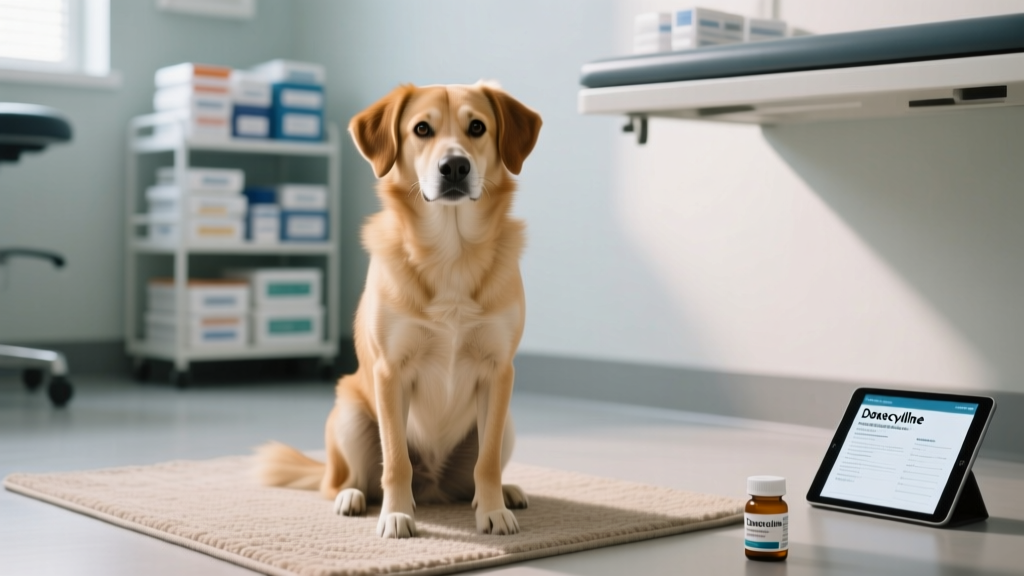
If your veterinarian has prescribed doxycycline for your dog, you likely have questions about what this medication does, how to give it safely, and what to watch for. Doxycycline is one of the most commonly prescribed antibiotics in veterinary medicine, used to treat everything from tick-borne diseases to respiratory infections. Understanding how it works and what to expect can help you support your dog's recovery and catch any problems early.
This guide covers the full clinical picture — mechanism of action, condition-specific dosing, real side-effect frequencies, drug interactions that matter, and practical administration tips drawn from current veterinary formularies including the Merck Veterinary Manual and Veterinary Partner (VIN).
What Is Doxycycline and How Does It Work in Dogs?
Doxycycline is a broad-spectrum antibiotic belonging to the tetracycline class. It is a bacteriostatic drug, meaning it doesn't directly kill bacteria — instead, it stops them from multiplying, giving your dog's immune system the upper hand to clear the infection.
Doxycycline binds to the 30S ribosomal subunit of susceptible bacteria, blocking the attachment of transfer RNA (tRNA) to the mRNA-ribosome complex. This inhibits protein synthesis, preventing bacteria from producing the proteins they need to grow and replicate. Because it targets a structure specific to bacterial cells, it has minimal direct effect on your dog's own cells.
Beyond its antibacterial action, doxycycline also has anti-inflammatory and immunomodulatory properties — it inhibits matrix metalloproteinases (MMPs) and reduces pro-inflammatory cytokine production. This secondary action is why it's sometimes prescribed for conditions where inflammation plays a major role, even beyond active infection.
Doxycycline is particularly valued in veterinary medicine because it penetrates cells effectively — making it one of the few antibiotics that can target intracellular organisms like Ehrlichia, Anaplasma, Bartonella, and Mycoplasma. These organisms hide inside your dog's cells where many other antibiotics simply can't reach them.
FDA-Approved and Common Off-Label Uses for Dogs
Doxycycline carries FDA approval for specific veterinary indications, but veterinarians frequently prescribe it for additional conditions based on strong clinical evidence — a practice known as off-label or extra-label use, which is legal and standard in veterinary medicine under the Animal Medicinal Drug Use Clarification Act (AMDUCA).
FDA-Approved Veterinary Uses
- Bacterial infections caused by susceptible organisms, including skin, urinary tract, and respiratory infections
- Leptospirosis — to clear the carrier phase and reduce shedding of Leptospira organisms
Common Off-Label Uses (Strong Clinical Support)
- Tick-borne diseases: Ehrlichiosis, Anaplasmosis, Lyme disease (borreliosis), Rocky Mountain spotted fever
- Heartworm disease: Used as part of adulticide treatment protocols to target Wolbachia, a symbiotic bacterium living inside heartworms — weakening the worms and reducing inflammatory reactions when they die
- Mycoplasma infections: Including hemotropic mycoplasmosis (infectious anemia)
- Bordetella bronchiseptica (kennel cough complex)
- Chlamydia and Rickettsia infections
- Wolbachia targeting in heartworm-positive dogs (pre-treatment before melarsomine injections)
- Dental and oral infections — particularly periodontal disease due to good tissue penetration
- Protozoal infections: Some protocols use doxycycline alongside other drugs for Babesia or Hepatozoon
Typical Doxycycline Dosage for Dogs by Condition
Doxycycline dosing varies significantly depending on the condition being treated. Your veterinarian will calculate the exact dose based on your dog's weight, the specific infection, and any comorbidities. The following table reflects standard veterinary formulary ranges — never adjust your dog's dose without veterinary direction.
| Condition | Dosage (mg/kg) | Frequency | Typical Duration |
|---|---|---|---|
| General bacterial infections | 5 mg/kg | Every 12 hours | 7–14 days |
| Ehrlichiosis / Anaplasmosis | 5 mg/kg | Every 12 hours | 28 days (minimum) |
| Lyme disease | 5–10 mg/kg | Every 12–24 hours | 28–30 days |
| Rocky Mountain spotted fever | 5–10 mg/kg | Every 12 hours | 14–21 days |
| Leptospirosis (carrier phase) | 5 mg/kg | Every 12 hours | 14 days |
| Heartworm (Wolbachia pre-treatment) | 10 mg/kg | Every 24 hours | 30 days before melarsomine |
| Mycoplasma (hemotropic) | 5–10 mg/kg | Every 12–24 hours | 21–28 days |
| Bordetella / respiratory infections | 5 mg/kg | Every 12 hours | 7–10 days |
Practical dosing example: A 50 lb (22.7 kg) Labrador being treated for Ehrlichiosis at 5 mg/kg every 12 hours would receive approximately 113 mg per dose — typically dispensed as one 100 mg tablet plus one 25 mg capsule, or compounded into an exact-dose capsule by the pharmacy.
Practical Dosing by Weight (Quick Reference for 5 mg/kg Dose)
| Dog Weight | Approximate Dose (5 mg/kg) | Common Tablet Size |
|---|---|---|
| 10 lb / 4.5 kg | ~25 mg | 25 mg capsule/tablet |
| 25 lb / 11.3 kg | ~56 mg | 50 mg tablet (rounded) |
| 50 lb / 22.7 kg | ~113 mg | 100 mg tablet |
| 75 lb / 34 kg | ~170 mg | 150 mg or 2×100 mg |
| 100 lb / 45.4 kg | ~227 mg | 200 mg tablet or 2×100 mg |
Your veterinarian may prescribe a slightly rounded dose to match commercially available tablet sizes. This is standard practice and generally safe within the therapeutic window of doxycycline.
How to Administer Doxycycline to Your Dog
Proper administration of doxycycline matters more than with many other antibiotics. This drug has specific handling requirements that directly affect both its effectiveness and your dog's safety.
With or Without Food?
Doxycycline can be given with a small amount of food. Unlike some tetracyclines (e.g., tetracycline hydrochloride), doxycycline's absorption is not significantly impaired by food. In fact, giving it with a small meal or treat is often recommended to reduce gastrointestinal upset — one of the most common side effects.
Doxycycline tablets and capsules can cause esophageal irritation and stricture (narrowing of the esophagus) in dogs if the pill gets stuck on the way down. Studies have shown that up to 65% of capsules and 30% of tablets given without a food or water chaser remain in the esophagus for over 5 minutes in dogs.
Always follow these steps:
- Give the pill, then immediately follow with at least 6 mL of water via syringe or a small handful of food (a "meatball" of canned food works well)
- Never "dry pill" — don't place the tablet on the back of the tongue and let your dog swallow on their own without a chaser
- If using compounded liquid, the esophageal risk is greatly reduced, but still follow with a small food reward
Available Formulations
- Tablets: 25 mg, 50 mg, 100 mg, 150 mg, 200 mg — most commonly prescribed; scored tablets can be split
- Capsules: 50 mg, 100 mg — higher esophageal risk than tablets; always chase with food/water
- Oral suspension (liquid): Compounded by specialty pharmacies — ideal for small dogs, cats, and dogs that resist pill administration; typically flavored (chicken, tuna, beef)
- Injectable (IV): Used in hospital settings for severe infections; not for home use
- Doxy-tabs vs. Doxy-soft chews: Some veterinary-specific brands offer chewable formulations that reduce esophageal risk
Duration of Treatment
How long your dog needs doxycycline depends entirely on the condition. Tick-borne diseases typically require 28 full days of treatment — stopping early, even if your dog seems better after a week, can result in relapse or chronic infection. Heartworm Wolbachia protocols run 30 days. General bacterial infections may resolve in 7–14 days. Always complete the full prescribed course unless your veterinarian explicitly tells you to stop.
Side Effects of Doxycycline in Dogs
Most dogs tolerate doxycycline well, but side effects do occur. Understanding the frequency and severity helps you know when to monitor at home and when to call the vet.
| Side Effect | Estimated Frequency | Severity | What to Do |
|---|---|---|---|
| Vomiting | ~10–15% of dogs | Mild–Moderate | Give with food; if persistent >2 days, contact vet |
| Diarrhea / soft stools | ~8–12% of dogs | Mild | Add probiotic; monitor hydration; contact vet if bloody or >3 days |
| Decreased appetite | ~5–10% of dogs | Mild | Offer food with medication; usually resolves in 2–3 days |
| Esophageal irritation / stricture | Rare (but serious) | Serious | Prevent by chasing pill with water/food; if regurgitation develops, contact vet immediately |
| Elevated liver enzymes | Uncommon (with prolonged use) | Moderate | Vet monitors via bloodwork during long courses |
| Photosensitivity (sun sensitivity) | Rare in dogs (more common in humans) | Mild | Limit direct sun exposure on light-skinned areas |
| Allergic reaction (hives, facial swelling, anaphylaxis) | Very rare | Emergency | Stop medication; seek emergency veterinary care immediately |
- Difficulty swallowing or repeated regurgitation (not vomiting — regurgitation is passive, undigested food coming back up)
- Facial swelling, hives, or difficulty breathing (allergic reaction)
- Severe, bloody, or persistent diarrhea lasting more than 48 hours
- Yellowing of gums or whites of eyes (jaundice — indicates liver involvement)
- Complete refusal to eat for more than 24 hours
- Lethargy that worsens instead of improving after 48–72 hours on the medication
Contraindications: Which Dogs Should NOT Receive Doxycycline
While doxycycline is generally one of the safer tetracycline-class antibiotics, certain dogs should not receive it or require careful risk-benefit evaluation by a veterinarian.
Absolute Contraindications
- Known hypersensitivity to doxycycline or any tetracycline-class antibiotic (tetracycline, minocycline, oxytetracycline)
- Severe hepatic (liver) failure — doxycycline is metabolized and partially excreted through the liver; compromised liver function can lead to toxic accumulation
Relative Contraindications (Use with Caution)
- Puppies under 6 months: Tetracyclines can cause permanent tooth discoloration (yellow-brown staining) and affect bone growth in developing animals. However, doxycycline binds less calcium than other tetracyclines, and for life-threatening infections like Ehrlichiosis in a puppy, veterinarians may still prescribe it — the benefit outweighs the cosmetic risk. Discuss this trade-off with your vet.
- Pregnant or nursing dogs: Doxycycline crosses the placenta and is excreted in milk. It can affect fetal skeletal development and tooth color. Use only if the infection poses a greater risk than the drug.
- Dogs with pre-existing kidney disease: Unlike some tetracyclines, doxycycline is primarily eliminated via the GI tract (feces), not the kidneys — making it actually safer than alternatives for dogs with renal impairment. However, dosing may still be adjusted.
- Dogs with megaesophagus: These dogs already have impaired esophageal motility, increasing the risk of doxycycline-induced esophageal stricture. Liquid formulation is strongly preferred.
Drug Interactions to Know About
Doxycycline interacts with several common veterinary medications and supplements. Always provide your veterinarian with a complete list of everything your dog is taking — including over-the-counter supplements, flea/tick products, and any medications from previous prescriptions.
| Drug / Supplement | Interaction Type | Clinical Significance | Management |
|---|---|---|---|
| Antacids (aluminum, calcium, magnesium) | Chelation — binds doxycycline, preventing absorption | High | Separate by at least 2 hours |
| Iron supplements | Chelation — reduces doxycycline absorption by up to 75% | High | Separate by at least 2–3 hours |
| Calcium supplements / dairy products | Chelation — calcium binds doxycycline | Moderate | Small amounts of food OK; avoid large dairy servings or calcium tabs within 2 hours |
| Sucralfate (Carafate) | Binds doxycycline in GI tract | High | Separate by at least 2 hours |
| Phenobarbital | Increases doxycycline metabolism, reducing effectiveness | Moderate | Vet may increase doxycycline dose |
| Warfarin | Doxycycline may potentiate anticoagulant effect | High | Monitor coagulation times closely |
| Penicillins / cephalosporins | Antagonism — bacteriostatic (doxy) may interfere with bactericidal (penicillin) action | Moderate | Generally avoid combining; vet will choose one or the other |
| Kaolin/pectin (anti-diarrheal) | Reduces doxycycline absorption | Moderate | Separate by at least 2 hours |
Monitoring, Follow-Up, and What to Expect
Depending on the condition and treatment duration, your veterinarian will likely recommend specific monitoring during your dog's doxycycline course.
| Treatment Duration | Recommended Monitoring | Typical Tests |
|---|---|---|
| Short course (7–14 days) | Owner observation; phone check-in if side effects develop | None routinely required |
| Extended course (21–30 days) | Mid-treatment recheck; assess clinical response | CBC (complete blood count), liver enzymes (ALT, ALP) |
| Tick-borne disease treatment | Pre-treatment, mid-treatment (day 14), and post-treatment (day 28–30) rechecks | CBC, chemistry panel, quantitative antibody titers (e.g., SNAP 4Dx Plus, IFA titers) |
| Heartworm Wolbachia protocol | Pre-treatment assessment, monitor during doxy course, recheck before melarsomine injections | Heartworm antigen test, microfilaria test, chest radiographs, CBC/chemistry |
What clinical improvement looks like: For tick-borne diseases, most dogs show significant improvement in fever, lethargy, and joint pain within 24–48 hours of starting doxycycline. This rapid response is actually one of the diagnostic clues veterinarians use — if a dog with suspected Ehrlichiosis improves dramatically on doxycycline, it supports the diagnosis. However, full clearance of the organism takes the entire 28-day course.
Cost of Doxycycline for Dogs and Generic Availability
Doxycycline is one of the more affordable veterinary antibiotics, and generic formulations are widely available. Pricing varies by formulation, dosage, and pharmacy.
| Formulation | Typical Cost Range (2026) | Notes |
|---|---|---|
| Generic tablets (100 mg, 30-day supply for medium dog) | $15–$45 | Widely available at human pharmacies (with vet Rx); often cheapest option |
| Brand-name veterinary tablets (e.g., Doxy-Tabs) | $25–$60 | Scored, veterinary-specific; available through vet clinics |
| Compounded oral suspension (flavored, 30-day supply) | $35–$85 | Ideal for small dogs or pill-resistant dogs; requires specialty compounding pharmacy |
| Compounded chew treats (30-day supply) | $40–$90 | Convenient but verify potency/stability with compounding pharmacy |
Money-saving tip: Ask your veterinarian for a written prescription that you can fill at a human pharmacy (CVS, Walgreens, Costco, or online through verified pharmacies like Chewy Pharmacy or 1-800-PetMeds). Generic doxycycline hyclate is the same active ingredient regardless of whether it's dispensed at a human or veterinary pharmacy — and human pharmacies often price it significantly lower. A 60-count bottle of 100 mg generic doxycycline hyclate tablets at a major chain pharmacy typically runs $10–$25 with a coupon (GoodRx or similar), compared to $40–$60+ at some veterinary clinics.
Missed Dose and Overdose: What to Do
If You Miss a Dose
- Give the missed dose as soon as you remember — unless it's close to the time for the next scheduled dose
- If it's nearly time for the next dose, skip the missed dose and resume the normal schedule
- Never double-dose to make up for a missed one — this increases the risk of GI side effects without meaningfully improving efficacy
- Missing a single dose is unlikely to compromise treatment, but repeated missed doses can lead to treatment failure and antibiotic resistance
If Overdose Occurs
Doxycycline has a relatively wide safety margin, and a single extra dose is unlikely to cause severe harm in most dogs. However, significant overdoses can cause:
- Severe vomiting and diarrhea
- Liver toxicity at very high doses
- Central nervous system signs (tremors, ataxia) in extreme cases
- Do NOT induce vomiting unless directed by a veterinarian
- Call your veterinarian or emergency veterinary clinic immediately
- Contact ASPCA Animal Poison Control: (888) 426-4435 (24/7, consultation fee applies) or Pet Poison Helpline: (855) 764-7661
- Have ready: your dog's weight, the strength of the medication, how many pills were consumed, and the time of ingestion
Alternatives to Doxycycline for Dogs
If your dog cannot tolerate doxycycline or has a contraindication, your veterinarian may consider alternatives depending on the condition:
| Condition | Alternative Medication(s) | Notes |
|---|---|---|
| Tick-borne diseases (Ehrlichiosis, Anaplasmosis) | Minocycline, imidocarb dipropionate (for Babesia co-infection) | Minocycline is in the same class but may be tolerated differently; imidocarb is injectable and has its own side effect profile |
| Lyme disease | Amoxicillin, cefovecin (Convenia) | Amoxicillin is the standard alternative; less effective for co-infections |
| Leptospirosis | Penicillin G (acute phase), then amoxicillin or azithromycin (carrier phase) | Penicillin is preferred for acute leptospiremia; doxycycline preferred for clearing renal carrier state |
| Respiratory infections (Bordetella) | Azithromycin, enrofloxacin (Baytril) | Fluoroquinolones like enrofloxacin are reserved for resistant infections to preserve their efficacy |
| Mycoplasma | Azithromycin, fluoroquinolones | Culture and sensitivity testing helps guide selection |
The choice of alternative depends on culture and sensitivity results (when available), the dog's medical history, cost considerations, and the veterinarian's clinical judgment. There is no universal substitute — what works best varies case by case.
Frequently Asked Questions
Can I give my dog human doxycycline?
The active ingredient is the same, but you should never give your dog doxycycline from your own prescription without veterinary guidance. Human prescriptions may contain different dosages, inactive ingredients (some xylitol-containing liquid formulations are toxic to dogs), and the dose your dog needs is almost certainly different from yours. Your vet can write a prescription that any licensed pharmacy can fill at the correct dose for your dog's weight and condition.
How long does it take for doxycycline to start working in dogs?
Most dogs with bacterial or tick-borne infections show noticeable improvement within 24–48 hours — reduced fever, increased energy, improved appetite. However, this initial improvement does not mean the infection is cleared. The full course must be completed to prevent relapse and antibiotic resistance.
Can doxycycline cause my dog's teeth to turn yellow?
In adult dogs with fully erupted permanent teeth, tooth discoloration from doxycycline is extremely rare. The staining risk applies primarily to puppies under 6 months whose teeth are still developing, and to fetuses if given during pregnancy. Even in puppies, doxycycline causes less staining than other tetracyclines because it binds calcium less aggressively. For life-threatening infections, the cosmetic risk is generally considered acceptable.
Should I give my dog probiotics while on doxycycline?
Yes — probiotics can help maintain healthy gut flora during antibiotic treatment. Choose a canine-specific probiotic (such as Purina FortiFlora, Proviable-DC, or Visbiome Vet) and give it at least 2 hours apart from the doxycycline dose. Giving them simultaneously would allow the antibiotic to kill the probiotic bacteria before they can provide benefit.
My dog vomited after taking doxycycline — should I re-dose?
If vomiting occurs within 30 minutes of dosing and you can see the pill in the vomit, contact your vet for guidance on whether to re-dose. If vomiting occurs after 1–2 hours, the medication has likely been absorbed. Repeated vomiting warrants a call to your vet — they may switch to a liquid formulation, add an anti-nausea medication like maropitant (Cerenia), or consider an alternative antibiotic.
Can doxycycline be used long-term in dogs?
For specific conditions, yes. Some dogs with chronic tick-borne infections, refractory Mycoplasma, or certain immune-mediated conditions may be on doxycycline for weeks to months. Long-term use requires periodic monitoring of liver enzymes and CBC. The anti-inflammatory properties of doxycycline are sometimes leveraged in chronic inflammatory conditions at lower "sub-antimicrobial" doses, though this is less common in veterinary medicine than in human dentistry.
Is doxycycline safe for dogs with kidney disease?
Doxycycline is actually the preferred tetracycline for dogs with kidney disease because it is eliminated primarily through the gastrointestinal tract rather than the kidneys. Other tetracyclines (like tetracycline HCl) are renally excreted and can accumulate to toxic levels in dogs with impaired kidney function. Your vet may still adjust the dose or monitor more closely, but doxycycline is generally considered the safest option in its class for renally compromised patients.
This article is intended for educational purposes. Always consult your veterinarian before starting, stopping, or modifying any medication for your dog. Your veterinarian is the only qualified professional who can determine the appropriate drug, dose, and treatment duration for your individual dog's condition.
Priya Sutaria
All our authors care for dogs every day — read more of their work on the authors page.


