Dogs and Vitamin B12: Deficiency Signs, Best Foods & Supplement Guide
Complete guide to dogs and vitamin B12: deficiency symptoms, dietary requirements, top B12-rich foods, supplement dosages, and when to consult your vet.
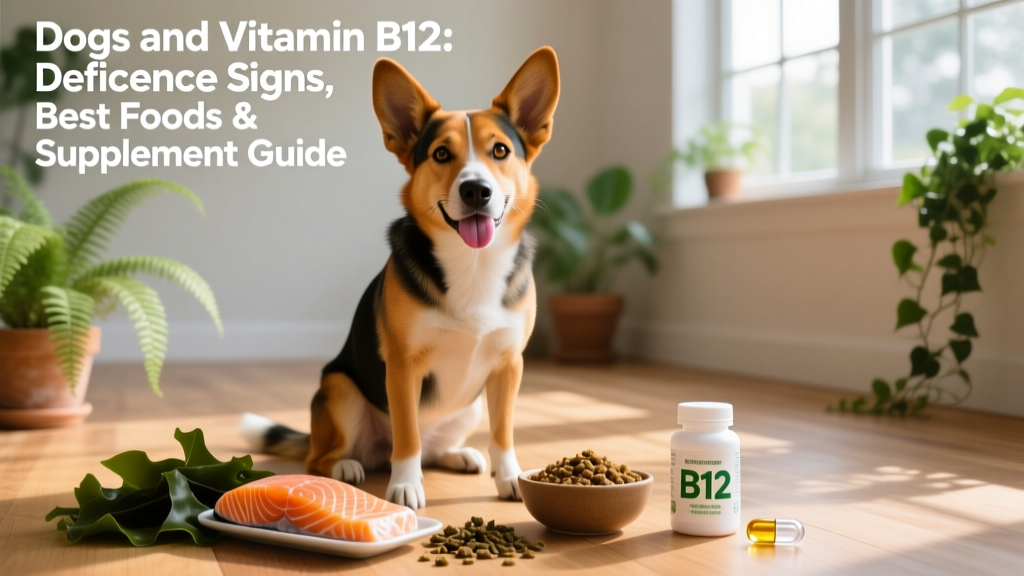
Why Vitamin B12 Matters for Your Dog's Health
Vitamin B12 (cobalamin) is a water-soluble vitamin that plays a non-negotiable role in your dog's nervous system function, red blood cell formation, and DNA synthesis. Unlike fat-soluble vitamins that the body stores for months, B12 reserves can deplete relatively quickly when absorption is compromised — making it one of the most clinically significant micronutrients in canine nutrition.
Most healthy dogs absorb adequate B12 from a complete commercial diet. But certain breeds, life stages, and medical conditions disrupt the absorption pathway in the ileum (the final section of the small intestine), leading to a condition called hypocobalaminemia. When this happens, no amount of dietary B12 fixes the problem without targeted intervention.
According to the Merck Veterinary Manual, cobalamin deficiency in dogs is most commonly secondary to gastrointestinal disease, exocrine pancreatic insufficiency (EPI), or inherited absorption defects — particularly in Giant Schnauzers, Border Collies, and Australian Shepherds.
Recognizing Vitamin B12 Deficiency in Dogs
B12 deficiency doesn't announce itself with a single dramatic symptom. Instead, it creeps in through a cluster of subtle signs that owners often attribute to aging, stress, or "just being off." Here's what to watch for, organized by severity:
| Severity | Symptom | What Owners Notice |
|---|---|---|
| Early | Lethargy and reduced stamina | Dog tires faster on walks, sleeps more than usual |
| Early | Decreased appetite | Leaving food in bowl, less interest in treats |
| Early | Weight loss despite eating | Ribs more prominent, waist more pronounced |
| Moderate | Chronic diarrhea or loose stools | Frequent accidents, poor stool consistency |
| Moderate | Poor coat quality | Dull, brittle fur; increased shedding |
| Moderate | Anemia (pale gums) | Gums appear whitish-pink instead of bubblegum pink |
| Severe | Neurological signs | Hind-end weakness, disorientation, seizures in extreme cases |
| Severe | Failure to thrive (puppies) | Stunted growth, developmental delays in young dogs |
Breed-specific red flag: Giant Schnauzer puppies with an inherited selective cobalamin malabsorption defect typically present between 6 and 12 weeks of age with failure to thrive, anemia, and neurological abnormalities. If you own this breed and notice these signs, request a serum cobalamin test from your veterinarian immediately.
Nutritional Requirements: How Much B12 Does Your Dog Need?
The Association of American Feed Control Officials (AAFCO) sets minimum nutrient profiles for commercial dog foods. For vitamin B12, the requirements vary by life stage:
| Nutrient | Adult Maintenance (per 1,000 kcal) | Growth & Reproduction (per 1,000 kcal) |
|---|---|---|
| Vitamin B12 (Cobalamin) | 0.027 mg minimum | 0.027 mg minimum |
| Crude Protein | 18% minimum (dry matter basis) | 22% minimum (dry matter basis) |
| Crude Fat | 5.5% minimum | 8.5% minimum |
| Caloric Density (typical kibble) | 350-450 kcal/cup | 380-500 kcal/cup |
For context, a 50 lb (23 kg) moderately active adult dog needs approximately 1,100-1,300 kcal/day, which translates to roughly 0.03-0.035 mg of B12 from food alone — easily met by any AAFCO-compliant diet. However, absorption is the real bottleneck. A dog with EPI or inflammatory bowel disease (IBD) may consume adequate B12 but absorb almost none of it.
Daily Calorie and B12 Needs by Weight
| Dog Weight | Daily Calories (Moderate Activity) | Daily Calories (High Activity) | Estimated B12 from Food |
|---|---|---|---|
| 10 lb / 4.5 kg | 300-350 kcal | 400-450 kcal | ~0.008-0.01 mg |
| 25 lb / 11 kg | 580-680 kcal | 750-850 kcal | ~0.015-0.018 mg |
| 50 lb / 23 kg | 1,000-1,200 kcal | 1,300-1,500 kcal | ~0.027-0.032 mg |
| 75 lb / 34 kg | 1,350-1,600 kcal | 1,750-2,000 kcal | ~0.036-0.043 mg |
| 100 lb / 45 kg | 1,650-1,950 kcal | 2,150-2,450 kcal | ~0.045-0.053 mg |
Adjustment factors: Reduce calories by 10-15% for senior dogs (7+ years) or dogs with low activity. Increase by 15-25% for intact males, working dogs, or dogs in cold climates. Pregnant and lactating females may need 25-50% more calories in late gestation and peak lactation. Always adjust based on body condition score rather than weight alone.
Best Dog Foods Rich in Vitamin B12
When selecting a commercial food, B12 content comes primarily from animal-derived ingredients — organ meats (especially liver), muscle meat, fish, and dairy. Plant-based ingredients contain virtually no bioavailable B12, which is why vegan dog diets carry a significant deficiency risk without careful supplementation.
What to Look for on the Label
- AAFCO Statement: Look for "formulated to meet the nutritional levels established by the AAFCO Dog Food Nutrient Profiles" — this confirms the food has been analyzed for minimum B12 content.
- Named Animal Proteins First: Chicken, beef, lamb, or salmon listed as the first two ingredients ensure adequate B12-rich animal tissue.
- Organ Meat Inclusion: Labels listing "chicken liver," "beef liver," or "poultry giblets" indicate higher natural B12 density.
- Avoid "Meat By-Product" Without Species Identification: Unnamed by-products are less reliable nutritionally.
- Guaranteed Analysis: Minimum 22% protein (adults) or 28%+ protein (puppies/active dogs) on a dry matter basis.
Top Recommended Foods for B12 Adequacy
1. Purina Pro Plan SAVOR Adult Shredded Blend (Chicken & Rice)
Price: $45-$60 for 35 lb bag (~$1.30-$1.70/lb)
Why: Chicken and poultry by-product meal as primary ingredients with added liver. Meets AAFCO adult maintenance profiles. Widely available and consistently tested. Approximately 0.04 mg B12 per 1,000 kcal from combined animal sources and vitamin premix.
2. Hill's Science Diet Adult Advanced Fitness (Lamb & Brown Rice)
Price: $55-$70 for 30 lb bag (~$1.80-$2.30/lb)
Why: Lamb meal and lamb provide highly digestible B12 sources. Hill's employs veterinary nutritionists on staff and conducts feeding trials beyond AAFCO minimums. Good option for dogs with chicken sensitivities who still need robust B12.
3. Royal Canin Gastrointestinal Low Fat (Prescription)
Price: $75-$95 for 25 lb bag (~$3.00-$3.80/lb) — requires veterinary authorization
Why: Specifically formulated for dogs with GI disease where B12 malabsorption is common. Highly digestible formula with enhanced vitamin fortification. Often recommended alongside cobalamin injections for dogs with chronic enteropathies.
4. Orijen Original (Fresh & Raw Ingredients)
Price: $80-$100 for 25 lb bag (~$3.20-$4.00/lb)
Why: 85% animal ingredients including free-run chicken, turkey, wild-caught fish, and cage-free eggs — all naturally rich in B12. The high inclusion of organ meats (chicken liver, turkey liver) provides dense cobalamin levels. Best for active, healthy dogs without renal concerns (high protein at 38% minimum).
5. Wellness CORE Senior Recipe (Deboned Chicken & Turkey)
Price: $55-$70 for 26 lb bag (~$2.10-$2.70/lb)
Why: Senior dogs have reduced gastric acid production, which impairs B12 release from food proteins. This formula uses deboned meats and added B12 in the vitamin premix, with moderate protein (32%) appropriate for aging kidneys while maintaining adequate cobalamin supply.
6. Nom Nom (Gently Cooked Fresh Food — Turkey Recipe)
Price: $5-$9/day depending on dog size (~$2.50-$4.50/lb)
Why: Fresh-cooked food with turkey, turkey liver, and eggs provides naturally high B12. Formulated by board-certified veterinary nutritionists to meet AAFCO profiles. The gentle cooking process preserves more heat-sensitive B vitamins compared to high-temperature extrusion used in kibble. Ships frozen with portioned meals.
7. The Farmer's Dog (Beef Recipe)
Price: $4-$8/day depending on dog size (~$2.20-$4.00/lb)
Why: Beef and beef liver as primary ingredients deliver excellent natural cobalamin. Human-grade ingredients with AAFCO-compliant formulation. The beef liver inclusion specifically boosts B12 density — liver contains 50-80 mcg of B12 per 100g, making it one of the richest natural sources.
Foods and Ingredients to Avoid
Some foods actively interfere with B12 absorption or create conditions that accelerate deficiency:
- Raw egg whites: Contain avidin, which binds biotin (another B vitamin), but excessive raw egg consumption can also disrupt overall B-complex balance. Cooked eggs are perfectly safe and B12-rich.
- Exclusively plant-based or vegan diets: No plant food contains bioavailable B12. If you feed a vegan diet (not recommended by the AVMA without veterinary nutritionist oversight), synthetic B12 supplementation at 2-5x AAFCO minimums is mandatory.
- Ultra-processed treats exceeding 10% of daily calories: Biscuits, rawhide, and filler-heavy treats displace nutrient-dense food from the diet, diluting overall B12 intake.
- Raw freshwater fish (especially carp, herring, smelt): Contains thiaminase, which destroys thiamine (B1), but chronic raw fish diets can also disrupt broader B-vitamin metabolism. Cooked fish is an excellent B12 source.
- High-fiber "weight loss" foods fed long-term without monitoring: Excessive insoluble fiber (cellulose, rice hulls) can speed intestinal transit time, reducing the window for B12 absorption in the ileum.
Homemade Diets and B12: What You Must Know
Homemade diets are increasingly popular, but they carry a well-documented risk of micronutrient gaps — and B12 is one of the most commonly deficient vitamins in home-prepared dog food. A 2021 study published in the Journal of the American Veterinary Medical Association found that over 90% of homemade dog food recipes evaluated failed to meet AAFCO minimums for at least one essential nutrient.
If you prepare homemade meals for your dog, follow these rules:
- Use a recipe formulated by a board-certified veterinary nutritionist (DACVN or equivalent). Websites like BalanceIT.com provide recipes developed by veterinary nutritionists with precise supplement measurements.
- Include B12-rich organ meats: A basic recipe framework includes 40% muscle meat, 10% organ meat (with at least 5% liver), 30% cooked carbohydrate, 15% vegetables, and 5% supplement blend. For a 50 lb dog eating ~1,200 kcal/day, this translates to roughly 1.5 oz of beef liver daily, providing approximately 30-40 mcg of B12.
- Add a complete vitamin-mineral supplement: Products like BalanceIT Canine Supplement or Alnutrin provide calibrated B12 along with calcium, zinc, copper, and other nutrients nearly impossible to balance through whole foods alone.
- Test your dog's blood levels annually: Serum cobalamin testing ($40-$80 at most veterinary labs) confirms your homemade diet is delivering adequate B12.
Sample B12-Rich Homemade Topper (Not a Complete Diet)
This topper is designed to boost B12 intake alongside a complete commercial food. It replaces no more than 10% of daily calories:
- 2 oz cooked beef liver, diced (approximately 40 mcg B12)
- 1 oz cooked sardines in water, mashed (approximately 8 mcg B12)
- 1 scrambled egg (approximately 0.5 mcg B12)
- 1 tablespoon plain unsweetened yogurt (approximately 0.1 mcg B12)
Mix and serve over kibble. Store unused portions in the refrigerator for up to 3 days or freeze in portion-sized silicone molds for up to 2 months. This topper is appropriate for dogs 20 lb and above; halve portions for smaller dogs.
B12 Supplements for Dogs: Types, Dosages, and When to Use Them
Supplementation becomes necessary in three scenarios: confirmed deficiency (serum cobalamin below 250 ng/L), malabsorptive GI disease, or a diet that cannot guarantee adequate B12 (homemade, vegan, or low-quality commercial food).
Supplement Types Compared
| Type | Administration | Bioavailability | Cost per Dose | Best For |
|---|---|---|---|---|
| Cyanocobalamin Injection (1,000 mcg/mL) | Subcutaneous injection by vet or trained owner | Highest — bypasses GI tract entirely | $5-$15 per injection (vet-administered); $1-$3 per vial (home) | Severe deficiency, EPI, IBD with malabsorption |
| Oral Cyanocobalamin Tablets | Given by mouth with food | Moderate — requires intrinsic factor and healthy ileum | $0.10-$0.30 per dose | Mild deficiency, maintenance after injection protocol |
| Methylcobalamin (Active Form) | Oral or sublingual | High — pre-converted active form | $0.30-$0.80 per dose | Neurological symptoms, dogs with liver disease |
| B-Complex Liquid Supplements | Added to food | Variable — depends on GI health | $0.15-$0.40 per dose | General B-vitamin support, picky eaters |
Dosage Guidelines
Always consult your veterinarian before starting any supplement. The following are typical veterinary dosing ranges, not home-prescription instructions:
- Subcutaneous injections (therapeutic protocol): 250-1,500 mcg per dog, administered once weekly for 6 weeks, then once monthly. Texas A&M University's Gastrointestinal Laboratory, which processes most canine cobalamin panels in the US, recommends this protocol for dogs with serum levels below 250 ng/L.
- Oral supplementation (maintenance): 250-500 mcg daily for small dogs (under 25 lb), 500-1,000 mcg daily for medium dogs (25-60 lb), and 1,000-2,000 mcg daily for large dogs (over 60 lb).
- B12 has an extremely wide safety margin. As a water-soluble vitamin, excess is excreted in urine. No upper toxicity limit has been established in dogs, though megadosing without veterinary guidance is unnecessary and wasteful.
Recommended B12 Supplement Products
- VetriScience Laboratories Canine B-Complex: $15-$22 for 60 capsules. Contains 100 mcg B12 per capsule along with full B-complex. Good for mild support. Available through vet clinics and online retailers.
- Wonder Laboratories Pet Factors B-12 3,000 mcg: $18-$25 for 100 tablets. High-dose oral cyanocobalamin suitable for dogs with confirmed deficiency under veterinary supervision.
- Wedgewood Pharmacy Compounded B12 (prescription): $25-$45 for a 30-day supply. Custom-flavored oral suspension — ideal for dogs that won't take tablets. Requires veterinary prescription.
How to Transition Your Dog to a New B12-Rich Food
Sudden diet changes cause GI upset in 30-40% of dogs. A gradual transition protects your dog's gut microbiome and lets you monitor stool quality throughout the process.
| Days | Old Food | New Food | What to Monitor |
|---|---|---|---|
| Days 1-2 | 75% | 25% | Appetite, enthusiasm for new food |
| Days 3-4 | 50% | 50% | Stool consistency (should remain formed) |
| Days 5-6 | 25% | 75% | Energy level, gas, any vomiting |
| Days 7-8 | 0% | 100% | Full transition — monitor stool for 3-5 more days |
Extend the transition to 10-14 days if: your dog has a history of food sensitivities, is currently experiencing GI issues, or is a puppy under 6 months old. If diarrhea persists beyond 48 hours at any stage, pause the transition at the previous ratio and consult your veterinarian.
Monitoring Success: Is Your Dog Getting Enough B12?
After correcting a deficiency or switching to a more B12-rich diet, track these markers over 4-8 weeks:
Body Condition Score (BCS)
Use the 9-point Purina BCS scale. A dog at ideal weight (score 4-5) should have ribs easily felt but not visible, a visible waist when viewed from above, and an abdominal tuck when viewed from the side. Weight gain after correcting B12 deficiency is common and positive — but monitor to ensure it doesn't overshoot into obesity (score 7+).
Coat Quality
B12 supports rapid cell division in hair follicles. Within 4-6 weeks of correcting deficiency, you should notice a shinier, denser coat with less brittleness. Run your hands along the back — the coat should feel smooth and springy, not dry or rough.
Energy and Activity
Lethargy is often the first symptom to improve. Expect noticeable energy increases within 2-3 weeks of starting B12 injections, or 4-6 weeks with oral supplementation and dietary improvement.
Stool Quality
Use a simple 1-4 scale: 1 = hard pellets, 2 = firm and formed (ideal), 3 = soft but holds shape, 4 = liquid diarrhea. B12 deficiency commonly causes scores of 3-4. Improvement to consistent 2s indicates successful treatment. Persistent loose stools despite B12 correction suggest an additional underlying condition requiring further diagnostic workup.
Blood Testing
Request a serum cobalamin recheck 4-6 weeks after starting treatment. Target levels are 400-800 ng/L (normal reference range varies by lab). If levels remain below 300 ng/L despite oral supplementation, your veterinarian will likely recommend switching to injectable B12.
Frequently Asked Questions
What is the best dog food for a dog with vitamin B12 deficiency?
The best food depends on the underlying cause. For dogs with GI disease causing malabsorption, Royal Canin Gastrointestinal or Hill's Prescription Diet i/d are formulated for maximum digestibility. For healthy dogs needing higher B12 intake, Orijen Original or Nom Nom fresh food provide dense animal-derived cobalamin from organ meats and muscle tissue. Always pair food changes with your veterinarian's treatment plan if deficiency has been diagnosed.
How much should I feed my dog to ensure adequate B12?
Feed according to the caloric needs for your dog's weight, age, and activity level (see the feeding table above). Any AAFCO-compliant food fed at appropriate caloric levels will provide minimum B12 requirements. The issue is rarely quantity — it's absorption. If your dog eats a complete diet but still shows deficiency signs, the problem is medical, not nutritional.
Can I feed my dog a homemade or raw diet and still meet B12 needs?
Yes, but only with a veterinary nutritionist-approved recipe and a complete vitamin-mineral supplement. Raw diets carry additional risks including Salmonella, Campylobacter, and parasitic contamination — the FDA explicitly advises against raw feeding due to pathogen risks to both pets and humans. If you choose a homemade diet, use a platform like BalanceIT.com and schedule annual blood panels to verify nutritional adequacy.
What ingredients should I avoid in dog food if my dog has B12 issues?
Avoid foods where unnamed meat by-products, corn gluten meal, or brewer's rice are the primary protein sources — these have lower B12 bioavailability. Also avoid ultra-high-fiber formulas (over 5% crude fiber) if your dog has malabsorption, as rapid transit time reduces B12 uptake. And never feed a fully plant-based diet to a dog with any history of B-vitamin deficiency.
How do I switch my dog to a new food safely?
Follow a 7-10 day gradual transition: 75/25 old-to-new for days 1-2, 50/50 for days 3-4, 25/75 for days 5-6, and 100% new by day 7-8. Extend to 14 days for dogs with sensitive stomachs. Monitor stool consistency daily and pause the transition if diarrhea develops.
Does my dog need B12 supplements if they eat commercial dog food?
Most dogs eating AAFCO-compliant commercial food do not need supplemental B12. Supplementation is warranted if your dog has: (1) a confirmed serum cobalamin deficiency, (2) EPI or chronic enteropathy, (3) is a Giant Schnauzer, Border Collie, or Australian Shepherd with known breed predisposition, or (4) eats a homemade diet without a verified supplement protocol. For all other dogs, a quality commercial food provides adequate B12.
Can my dog get too much vitamin B12?
B12 toxicity has not been documented in dogs. As a water-soluble vitamin, excess amounts are excreted in urine. However, unnecessary high-dose supplementation is wasteful and may mask symptoms of other conditions. Always work with your veterinarian to determine appropriate dosing based on blood test results.
Jonas Cole
All our authors care for dogs every day — read more of their work on the authors page.


