Dog Warts Treatment: Identification, Removal Options & Costs
Complete guide to dog warts treatment — causes, symptoms, vet diagnosis, removal options, costs, and when papillomas need professional care.
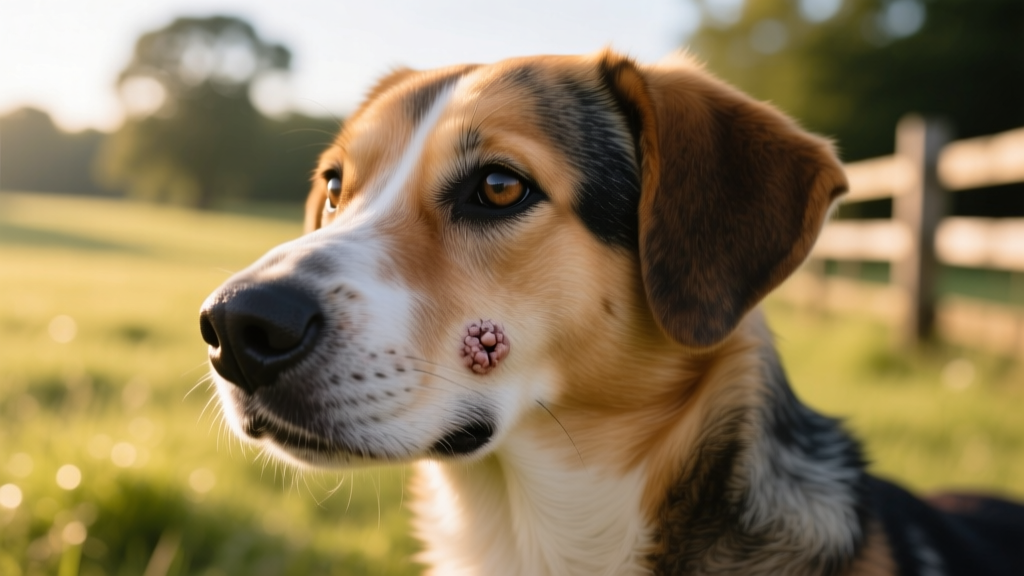
What Are Dog Warts? Understanding Canine Papillomas
Dog warts — medically known as canine papillomas — are benign skin or mucosal growths caused by the canine papillomavirus (CPV). These cauliflower-like or smooth, raised bumps appear most commonly on the lips, muzzle, inside the mouth, and occasionally on the skin or footpads. The condition is highly contagious between dogs through direct contact or shared objects like water bowls and toys, but it is not transmissible to humans or other species.
Canine papillomas are extremely common in two populations: puppies and young dogs under two years old (whose immune systems are still developing) and senior dogs or immunocompromised dogs (whose immune surveillance has declined). The Merck Veterinary Manual notes that oral papillomatosis is the most frequently recognized form, though cutaneous (skin) and footpad variants also occur. Most warts resolve spontaneously within 1 to 5 months as the dog's immune system mounts a response, but some cases require veterinary intervention.
It's critical to distinguish viral papillomas from other growths — including malignant tumors like squamous cell carcinoma or mast cell tumors — which can look similar to the untrained eye. Any new growth on your dog warrants a veterinary evaluation before attempting any dog warts treatment at home.
Recognizing Dog Warts: Symptom Checklist by Severity
Canine papillomas present differently depending on their location and the dog's immune status. Use this checklist to assess what you're seeing, but remember that only a veterinarian can confirm a diagnosis.
| Severity Level | Symptoms | Typical Location |
|---|---|---|
| Mild (Early Stage) | 1–3 small, smooth or slightly rough bumps; no discomfort; normal eating and drinking | Lips, outer muzzle, eyelids |
| Moderate | 5–15 raised cauliflower-like growths; mild mouth odor; occasional drooling; slight hesitation with hard kibble | Inside lips, gums, tongue, hard palate |
| Advanced | Dozens of coalescing warts; difficulty eating or swallowing; excessive drooling; oral bleeding; bad breath (halitosis); pawing at mouth | Entire oral cavity, pharynx, epiglottis |
| Cutaneous (Skin Form) | Single or multiple firm, pigmented, horn-like growths on skin; usually non-painful unless irritated by collar or grooming | Abdomen, legs, footpads, head |
| Concerning (Possible Malignancy) | Rapidly growing single mass; ulceration; bleeding; irregular borders; firm attachment to underlying tissue; weight loss | Any location — requires biopsy |
The incubation period for canine papillomavirus is typically 1 to 2 months after exposure, meaning warts may appear weeks after your dog encountered an infected dog at a park, daycare, or boarding facility.
Which Dogs Are Most at Risk? Key Risk Factors
- Age: Puppies and dogs under 2 years old (immature immune systems); senior dogs over 10 years (immune senescence)
- Immune status: Dogs on immunosuppressive drugs (cyclosporine, prolonged corticosteroids); dogs with Cushing's disease, hypothyroidism, or cancer
- Environment: Frequent dog parks, daycare facilities, boarding kennels, multi-dog households, shelters
- Breed predisposition: No single breed is genetically immune or uniquely susceptible, but brachycephalic breeds (Pugs, French Bulldogs, Boston Terriers) may experience more severe oral forms due to mouth conformation
- Existing oral disease: Dogs with periodontal disease or oral injuries have compromised mucosal barriers, facilitating viral entry
- Vaccination status: Unvaccinated puppies in high-exposure environments face compounded risk from concurrent infections that further suppress immunity
While any dog can develop papillomas, the condition is overwhelmingly seen in young dogs who haven't yet developed immunity to the various CPV strains. According to the American Kennel Club, puppy warts are so common that many owners consider them a normal part of puppyhood. Adult dogs with healthy immune systems rarely develop oral papillomas, and when they do, an underlying immune compromise should be investigated.
Cutaneous (skin) papillomas, which are caused by different CPV strains than the oral form, tend to appear in older dogs and are more likely to persist rather than resolve on their own. These are the growths more commonly confused with other skin tumors.
How Veterinarians Diagnose Dog Warts
Most veterinarians can make a presumptive diagnosis of canine papillomas based on appearance and the dog's age and history alone. However, atypical presentations or growths in older dogs require more thorough testing to rule out malignancy.
- 1Visual Examination & History — Your vet assesses the growth's appearance, texture, location, and number. Typical cauliflower-like oral papillomas in a young dog are often diagnosed visually. Cost: included in the exam fee ($50–$90).
- 2Fine Needle Aspirate (FNA) — A thin needle extracts cells from the growth for microscopic evaluation. This can quickly differentiate a papilloma from a mast cell tumor or other mass. Cost: $75–$150.
- 3Surgical Biopsy & Histopathology — A tissue sample is sent to a veterinary pathologist for definitive diagnosis. This is the gold standard, especially for skin warts in older dogs or any growth that appears atypical. Cost: $150–$350 (biopsy procedure + lab fees).
- 4Blood Work & Immune Panel — If papillomas are widespread, persistent, or appearing in an adult dog, your vet may run a complete blood count (CBC), chemistry panel, and thyroid test to check for underlying immune suppression. Cost: $120–$280.
In most straightforward puppy cases, steps 1 alone are sufficient. The total diagnostic cost for a typical young dog with classic oral papillomas is usually just the exam fee ($50–$90). Older dogs or atypical cases may incur $300–$600 in total diagnostic costs.
Dog Warts Treatment Options: What Actually Works
Treatment decisions depend on the wart type, location, number, and whether the growths are causing discomfort or functional problems. Here's a detailed comparison of available options:
| Treatment | How It Works | Best For | Cost Range | Success Rate / Notes |
|---|---|---|---|---|
| Watchful Waiting (No Treatment) | Allow immune system to resolve warts naturally | Mild oral papillomas in puppies/young dogs | $0 (beyond exam) | 70–90% resolve within 1–5 months; most common approach |
| Surgical Excision | Physical removal under local or general anesthesia | Solitary cutaneous warts; warts obstructing breathing/swallowing; suspicious growths needing biopsy | $200–$600 per wart | High for individual removal; new warts may form if virus is still active |
| Cryosurgery (Freezing) | Liquid nitrogen destroys wart tissue | Accessible cutaneous warts; small clusters | $150–$400 per session | Effective for skin warts; may require 1–3 sessions; less common for oral warts |
| Electrosurgery / Laser Ablation | Electric current or CO2 laser destroys wart tissue | Stubborn cutaneous warts; warts on footpads | $300–$800 | Good precision; requires anesthesia; typically single session |
| Autogenous Vaccine | Custom vaccine made from the dog's own wart tissue to stimulate immune response | Widespread, persistent oral papillomatosis unresponsive to time | $250–$500 | Variable results; works well in some dogs, poorly in others; takes 3–8 weeks to see improvement |
| Immunomodulatory Drugs | Medications like azithromycin or interferon to boost immune response | Severe, refractory cases; immunocompromised dogs | $30–$120/month (medication) | Azithromycin has shown promise in some studies; interferon use is controversial with mixed evidence |
| Topical Treatments | Imiquimod cream or silver nitrate applied to skin warts | Small, accessible cutaneous warts only | $20–$60 (cream tube) | Only for external skin warts; NEVER use inside the mouth; can cause local irritation |
The "Watch and Wait" Approach: Why It's Often Best
For most young dogs with oral papillomas, the veterinary recommendation is simply patience. The canine immune system typically recognizes and clears the papillomavirus within 4 to 16 weeks. During this time, you should:
- Switch to soft or moistened food if chewing appears uncomfortable
- Avoid hard chews, antlers, or abrasive toys that could cause warts to bleed
- Keep your dog isolated from other dogs to prevent spreading the virus
- Monitor weekly for changes in wart size, number, or appearance
- Disinfect shared bowls and toys with a diluted bleach solution (1:32 ratio)
When Surgical Removal Becomes Necessary
Your veterinarian will recommend active dog warts treatment rather than watchful waiting when:
- Warts are obstructing the airway or making swallowing difficult
- Warts are bleeding repeatedly or have become secondarily infected
- A solitary skin wart is growing, changing, or cannot be definitively identified as benign
- The dog is older than 2 years and warts are not regressing — raising suspicion for a different diagnosis
- Warts have persisted beyond 5–6 months without improvement
Cutaneous papillomas in adult dogs are more commonly removed surgically because they rarely resolve on their own and because confirming a benign diagnosis via histopathology is important in older animals.
A Note on Azithromycin
The antibiotic azithromycin has gained attention as a dog warts treatment after several veterinary dermatologists reported clinical improvement in dogs with persistent papillomatosis. The proposed mechanism is immunomodulatory rather than antibacterial. Typical protocols involve dosing at 5–10 mg/kg once daily for 10–14 days, but your veterinarian will determine the appropriate dosage and duration for your dog. This is a prescription medication and should never be administered without veterinary guidance.
Prognosis and Life Expectancy for Dogs With Warts
The prognosis for canine papillomas is overwhelmingly positive, but it varies by type and underlying immune status:
| Type | Typical Course | Prognosis | Recurrence Risk |
|---|---|---|---|
| Oral papillomatosis (young dogs) | Spontaneous regression in 1–5 months | Excellent — no impact on lifespan | Low after immune clearance; dog develops strain-specific immunity |
| Cutaneous papillomas (adult dogs) | Often persistent; require removal | Excellent once confirmed benign | New warts may form from different CPV strains |
| Footpad papillomas | Can cause lameness; slow to resolve | Good with treatment; may recur | Moderate — footpad warts are stubborn |
| Persistent/widespread papillomatosis | May indicate immune deficiency; requires investigation | Depends on underlying cause | High until immune function is restored |
| Malignant transformation (rare) | Papillomavirus-linked squamous cell carcinoma | Guarded — depends on tumor staging | This is why biopsy of persistent or changing warts matters |
In extremely rare cases, chronic papillomavirus infection has been linked to the development of squamous cell carcinoma — a malignant tumor — particularly in dogs with long-standing, unresolved infections. This is uncommon but reinforces the importance of having persistent warts evaluated and biopsied. The life expectancy of a dog with typical benign papillomas is identical to that of any healthy dog; the warts themselves do not shorten lifespan.
Home Care and Daily Management
While you wait for warts to resolve — or while your dog recovers from a removal procedure — these home management strategies support healing and prevent spread:
Diet and Feeding Adjustments
If oral warts are making meals difficult, soak kibble in warm water or low-sodium chicken broth for 5–10 minutes until soft. Canned food or a temporary homemade diet of boiled chicken and rice (not nutritionally complete for long-term use) can reduce chewing discomfort. Avoid feeding anything sharp, crunchy, or frozen until warts have resolved.
Hygiene and Containment
- Wash all food and water bowls daily in hot, soapy water or run through the dishwasher
- Disinfect toys with a 1:32 bleach solution, then rinse thoroughly
- Keep your dog separated from other household dogs — especially puppies and seniors
- Avoid dog parks, daycare, grooming salons, and boarding facilities until warts have fully resolved
- Wash your hands after handling your dog's mouth area (the virus is species-specific, but good hygiene prevents mechanical transfer to other dogs via your hands)
Post-Surgical Care (If Warts Were Removed)
- Use an Elizabethan collar (cone) to prevent licking or scratching at surgical sites
- Administer all prescribed pain medications and antibiotics as directed
- Feed soft food for 5–7 days after oral wart removal
- Monitor the site for swelling, discharge, or dehiscence (wound opening)
- Return for suture removal if non-dissolvable sutures were used (typically 10–14 days post-op)
What NOT to Do
Never attempt to freeze, burn, cut, or apply over-the-counter human wart removers to your dog's warts. Products containing salicylic acid (Compound W, Dr. Scholl's) are toxic to dogs and can cause chemical burns, oral ulceration, or systemic poisoning if ingested. If your dog has ingested any human wart removal product, contact the ASPCA Animal Poison Control Center at (888) 426-4435 (24/7, consultation fee applies) or the Pet Poison Helpline at (855) 764-7661 immediately.
How Much Does Dog Warts Treatment Cost?
Costs vary significantly depending on the approach and complexity of your dog's case. Here's a realistic breakdown based on 2026 veterinary pricing averages:
| Service | Low Estimate | High Estimate | Notes |
|---|---|---|---|
| Initial veterinary exam | $50 | $90 | Higher for emergency or specialty clinics |
| Fine needle aspirate (FNA) | $75 | $150 | May include in-house cytology |
| Biopsy + histopathology | $150 | $350 | Includes lab submission fees |
| Blood work (CBC/chem/thyroid) | $120 | $280 | Only if underlying condition suspected |
| Surgical excision (per wart) | $200 | $600 | Includes anesthesia; more for oral/difficult locations |
| Cryosurgery session | $150 | $400 | May need 1–3 sessions |
| Laser ablation | $300 | $800 | Requires specialized equipment |
| Autogenous vaccine | $250 | $500 | Custom-compounded from patient's tissue |
| Azithromycin (10–14 day course) | $30 | $80 | Prescription only; varies by dog weight |
Typical total costs by scenario:
- Best case (puppy with mild oral warts): $50–$90 (exam only, watchful waiting)
- Moderate case (adult dog, single skin wart removed): $400–$900 (exam + biopsy + surgical removal)
- Complex case (widespread persistent warts, autogenous vaccine): $600–$1,500 (exam + blood work + vaccine + follow-ups)
- Worst case (multiple surgeries, underlying immune disease): $1,500–$3,000+
Pet insurance typically covers wart treatment if the condition arises after the policy's effective date and is not classified as a pre-existing condition. Accident-and-illness policies from providers like Trupanion, Healthy Paws, or Nationwide generally reimburse 70–90% of covered costs after the deductible.
When to See the Vet Immediately: Red Flag Symptoms
- Rapidly growing mass that doubles in size within days
- Wart that bleeds persistently or won't stop oozing
- Difficulty breathing, noisy breathing, or gagging caused by throat warts
- Inability to eat or drink for more than 24 hours
- Signs of severe oral pain: constant drooling, pawing at mouth, whimpering
- Foul-smelling discharge or pus from a wart (indicates secondary bacterial infection)
- Wart that changes color (darkening, blackening) or develops irregular borders
- Weight loss, lethargy, or fever accompanying wart outbreaks
- Warts that have not improved after 5–6 months
- Any new growth on a dog over 7 years old — always get it checked
Do not wait to see if these symptoms resolve on their own. Early intervention for potentially malignant growths dramatically improves outcomes.
Preventing Canine Papillomas
While you cannot completely prevent papillomavirus exposure — it's widespread in the dog population — you can reduce risk and support your dog's immune defenses:
- Maintain core vaccinations: A dog fighting distemper or parvo has a compromised immune system more vulnerable to secondary infections like CPV. Keep DHPP and rabies current.
- Limit high-exposure environments for puppies: Until your puppy has completed their full vaccination series (typically around 16–18 weeks), avoid dog parks, communal water bowls, and daycare settings where papillomavirus spreads easily.
- Support immune health: Feed a complete and balanced diet that meets AAFCO nutritional standards. Adequate zinc, vitamin E, and omega-3 fatty acids support skin and mucosal immunity.
- Manage underlying conditions: Dogs with hypothyroidism, Cushing's disease, or other immune-suppressing conditions should be treated and monitored to reduce papilloma susceptibility.
- Isolate affected dogs: If one dog in your household has active warts, separate them from other dogs and do not share bowls, toys, or bedding until warts have fully resolved.
- Regular wellness exams: Annual or biannual veterinary check-ups allow early detection of any skin growths, including papillomas and more concerning tumors.
There is currently no commercially available vaccine specifically for canine papillomavirus. Some veterinary researchers have explored experimental vaccines, and autogenous vaccines (made from the individual dog's wart tissue) are used therapeutically rather than preventively.
Frequently Asked Questions About Dog Warts Treatment
Can I use human wart remover on my dog?
No. Human wart removers contain salicylic acid or other caustic compounds that are toxic to dogs. Applying these products can cause chemical burns, tissue necrosis, and systemic poisoning — especially dangerous if the dog licks the area. Always consult your veterinarian for safe dog warts treatment options.
Are dog warts contagious to humans or cats?
No. Canine papillomavirus is species-specific. It cannot infect humans, cats, or other non-canine animals. However, it is highly contagious between dogs, so infected dogs should be kept away from other dogs until warts resolve.
How long does it take for dog warts to go away on their own?
Most oral papillomas in young dogs resolve within 1 to 5 months as the immune system clears the virus. Some cases may take up to 6 months. If warts persist beyond this timeframe, veterinary evaluation is recommended to rule out other conditions.
Will my dog get warts again after they go away?
Once a dog's immune system clears a specific CPV strain, they typically develop lasting immunity to that strain. However, there are multiple CPV strains, so re-infection with a different strain is possible — though uncommon in healthy adult dogs.
Can apple cider vinegar or home remedies treat dog warts?
There is no veterinary evidence supporting the use of apple cider vinegar, thuja, tea tree oil, or other home remedies for treating canine papillomas. Tea tree oil is toxic to dogs at concentrations above 1–2%. Relying on unproven remedies can delay proper diagnosis if the growth is actually malignant. Consult your veterinarian before applying anything to your dog's skin or mouth.
My dog's wart turned black — is that normal?
Some papillomas darken as they regress and the tissue dies before falling off. However, a rapidly darkening, growing, or irregularly pigmented mass could be a melanoma or other malignant tumor. Have any color-changing growth evaluated by your veterinarian promptly.
For more information on canine skin conditions, the American Veterinary Medical Association offers resources for pet owners on recognizing and managing common dermatological issues in dogs.
Aaron Whyte
All our authors care for dogs every day — read more of their work on the authors page.


