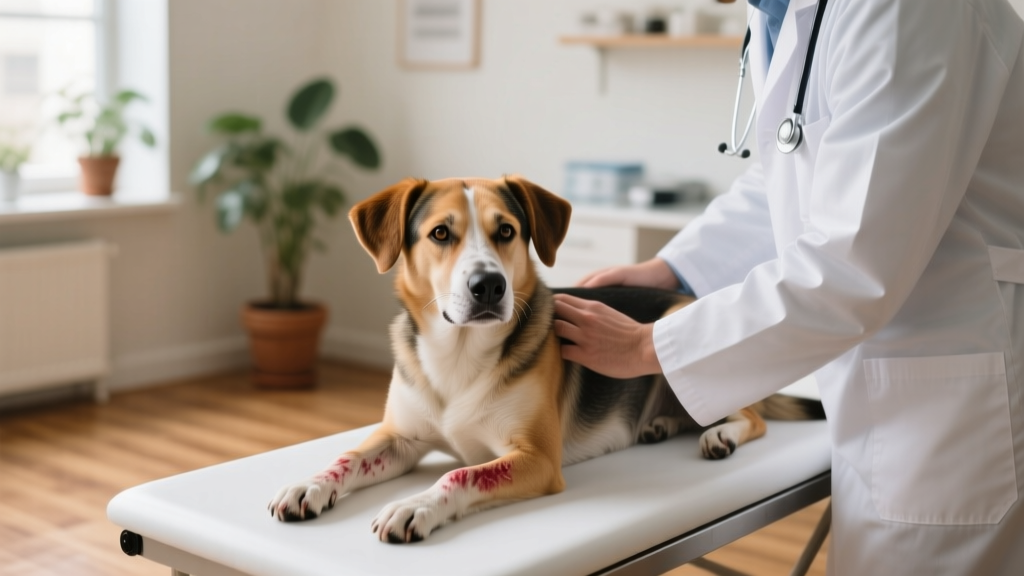
Dog Torn ACL Brace: Treatment Options, Costs & Recovery Guide
Explore dog torn ACL brace options, surgical vs. conservative treatment, costs, recovery timelines, and breed-specific risk factors for cranial cruciate ligament tears.

What Is a Torn ACL in Dogs?
In canine anatomy, the anterior cruciate ligament (ACL) is more accurately called the cranial cruciate ligament (CCL). This ligament stabilizes the knee (stifle) joint by preventing the tibia from sliding forward relative to the femur. A torn CCL is one of the most common orthopedic injuries in dogs, affecting an estimated 1 in 50 dogs annually in the United States according to veterinary insurance claims data.
Unlike human ACL tears, which often result from a single traumatic event (like a sports injury), canine CCL tears typically develop from chronic degeneration of the ligament fibers, combined with the natural tibial plateau angle that places constant stress on the structure. A sudden misstep or jump may be the "final straw," but the underlying weakening has usually been progressing for months or years.
When a dog tears their CCL, the knee becomes unstable, leading to pain, inflammation, progressive arthritis, and in many cases, secondary damage to the meniscus (the cartilage cushion within the joint). Treatment ranges from surgical stabilization to conservative management with a dog torn ACL brace, physical therapy, and weight management.
Symptoms of a Torn CCL: What to Watch For
CCL tear symptoms can appear suddenly or develop gradually. The severity of symptoms often correlates with whether the tear is partial or complete, and how long the injury has been present.
| Severity Level | Symptoms | Typical Timeline |
|---|---|---|
| Early / Partial Tear |
|
Days to weeks after initial strain |
| Moderate / Progressing Tear |
|
Weeks to months |
| Advanced / Complete Rupture |
|
Can occur suddenly or after weeks of partial tear |
Important note: Approximately 40-60% of dogs that tear one CCL will tear the opposite CCL within 1-2 years, partly due to compensatory weight-shifting and partly because the underlying degenerative process affects both knees.
Risk Factors: Which Dogs Are Most Vulnerable?
CCL Tear Risk Factor Profile
| Breed Predisposition | Rottweilers, Newfoundlands, Labrador Retrievers, Staffordshire Bull Terriers, Mastiffs, Akitas, Saint Bernards, Chesapeake Bay Retrievers. Small breeds like Bichon Frises and Shih Tzus are also at elevated risk relative to their population size. |
| Weight | Dogs over their ideal body weight face 2-4x increased risk. Dogs over 50 lb (23 kg) are overrepresented in CCL rupture statistics. Excess weight accelerates both ligament degeneration and post-injury arthritis. |
| Age | Most common in dogs aged 5-7 years, but can occur at any age. Degenerative changes begin as early as 2-3 years in predisposed breeds. |
| Conformation | Dogs with a steep tibial plateau angle, straight hind-leg conformation, or poor muscle conditioning place more mechanical stress on the CCL. |
| Activity & Environment | Weekend warrior syndrome — sedentary dogs that suddenly engage in intense play. Slippery flooring (hardwood, tile), jumping from heights, and abrupt directional changes on hard surfaces increase acute tear risk. |
| Spay/Neuter Status | Some studies suggest early spay/neuter (before skeletal maturity) may increase CCL tear risk in large breeds, potentially due to altered growth plate closure timing. Evidence is mixed; discuss with your vet. |
How Veterinarians Diagnose a Torn CCL
A proper diagnosis requires a hands-on veterinary examination. Here's what to expect during the diagnostic process:
-
1
Gait Observation
Your vet watches your dog walk and trot to assess lameness pattern, weight-bearing ability, and stride symmetry. Cost: Included in exam fee ($50-$90). -
2
Palpation: Cranial Drawer & Tibial Compression Tests
The vet manipulates the stifle to detect abnormal forward movement of the tibia. Sedation may be needed for anxious or painful dogs. These are the gold-standard physical tests for CCL rupture. Cost: Included in exam; sedation adds $40-$80. -
3
Orthopedic Radiographs (X-rays)
X-rays don't show the ligament itself but reveal joint effusion, osteophyte formation (bone spurs), tibial plateau angle, and rule out other causes (fractures, tumors, bone infection). Typically 2-3 views. Cost: $150-$350. -
4
Advanced Imaging (if needed)
MRI or CT may be recommended in complex cases to assess meniscal damage or if surgical planning requires detailed anatomy. Not always necessary. Cost: $800-$2,000. -
5
Blood Work (Pre-Surgical Screening)
CBC and chemistry panel to assess liver/kidney function before anesthesia. Cost: $80-$200.
According to the Merck Veterinary Manual, the combination of cranial drawer testing and radiographic evidence of joint effusion is sufficient for diagnosis in the majority of cases. Arthroscopy or surgical exploration may be used to confirm meniscal involvement.
Treatment Options: Surgery, Braces, and Conservative Management
Not every dog with a torn CCL needs surgery, and not every dog is a surgical candidate. The right approach depends on your dog's size, age, activity level, overall health, and your budget. Here's a comprehensive comparison:
| Treatment | Best For | Cost Range | Recovery Time | Success Rate |
|---|---|---|---|---|
| TPLO (Tibial Plateau Leveling Osteotomy) | Large/giant breeds, active dogs, dogs with steep tibial plateau angles | $3,500-$6,000 per knee | 8-12 weeks restricted; full recovery 4-6 months | 90-95% good to excellent function |
| TTA (Tibial Tuberosity Advancement) | Medium to large dogs, moderate tibial plateau angle | $3,000-$5,500 per knee | 8-12 weeks restricted; full recovery 3-5 months | 85-93% good to excellent function |
| Lateral Suture (Extracapsular Repair) | Small dogs under 30 lb (14 kg), cats, budget-conscious owners | $1,500-$3,000 per knee | 8-12 weeks restricted; full recovery 3-4 months | 75-85% in small dogs; lower in large dogs |
| Dog Torn ACL Brace (Orthopedic Stifle Orthosis) | Dogs that are poor surgical candidates (elderly, comorbidities), financial constraints, partial tears, or as a post-surgical support | $400-$1,200 (custom); $100-$300 (off-the-shelf) | Worn daily for months to indefinitely; reassess every 4-6 weeks | Variable; 40-60% show meaningful improvement in comfort and function when combined with rehab |
| Conservative Management (No Brace) | Small dogs under 15 lb (7 kg), very low-activity dogs, end-of-life care | $200-$800 (medications, supplements, rehab sessions) | Strict rest 6-8 weeks; gradual return over 3-4 months | ~65% of dogs under 15 lb achieve acceptable function; poor outcomes in dogs over 30 lb |
Dog Torn ACL Brace: A Closer Look
A dog torn ACL brace (also called a stifle orthosis or CCL brace) works by externally stabilizing the knee joint, limiting the abnormal forward tibial thrust that occurs when the CCL is compromised. These braces typically use a combination of rigid or semi-rigid side stays, neoprene or breathable mesh sleeves, and adjustable Velcro straps to hold the stifle in a functional range of motion.
When a brace makes sense:
- Your dog is elderly or has significant comorbidities (heart disease, kidney failure, uncontrolled Cushing's disease) that make anesthesia risky
- You're managing a partial tear while monitoring for progression
- Financial constraints make surgery impossible at this time
- You need interim stabilization while awaiting surgery scheduling
- Your dog has bilateral CCL tears and you're staging surgical repairs
Brace limitations to understand:
- Braces do not heal the torn ligament — they manage symptoms and may slow arthritis progression
- Compliance is critical: the brace must be worn during all weight-bearing activity
- Skin irritation, pressure sores, and chafing can occur if the brace fits poorly or is worn too long without breaks
- Large, active dogs may outwork the brace's stabilization capacity
- Custom-fitted braces from certified veterinary orthotists (such as those from companies like OrthoPets or DogLeggs) offer significantly better outcomes than generic online braces
Popular brace categories in 2026:
- Custom stifle orthoses ($800-$1,200): Made from a cast or 3D scan of your dog's leg; typically require a veterinary orthotist fitting appointment. Best outcomes for long-term use.
- Semi-custom hinged braces ($400-$700): Adjustable sizing with hinge mechanisms; brands like Balto and Hero offer sizing consultations via video.
- Soft compression sleeves ($30-$100): Provide warmth, mild compression, and proprioceptive feedback but minimal mechanical stabilization. Better for post-surgical support or mild sprains than full CCL tears.
Prognosis and Long-Term Outcomes
The prognosis for a dog with a torn CCL depends heavily on the treatment chosen, the dog's size, and how quickly the injury is addressed.
| Scenario | Expected Outcome | Arthritis Progression | Quality of Life Impact |
|---|---|---|---|
| Surgical repair (TPLO/TTA) in a dog under 7 years | Return to near-normal function in 85-95% of cases. Most dogs resume full activity by 4-6 months. | Mild to moderate arthritis develops but is manageable with supplements and weight control. | Excellent long-term; normal life expectancy. |
| Surgical repair in a senior dog (8+ years) | Good function in 75-85% of cases; recovery is slower and may not reach pre-injury levels. | Moderate to severe arthritis likely, requiring ongoing management. | Good with proper pain management; life expectancy unaffected by CCL tear itself. |
| Brace + conservative management in a small dog (<30 lb / 14 kg) | Functional improvement in 50-65% of cases. May have persistent mild lameness after heavy activity. | Moderate arthritis progression over 1-3 years. | Fair to good; daily pain medication may eventually be needed. |
| Brace + conservative management in a large dog (>50 lb / 23 kg) | Limited stabilization from brace alone. Many dogs remain significantly lame. Contralateral CCL tear risk elevated. | Severe arthritis within 1-2 years; possible meniscal tears. | Fair; chronic pain management required; mobility may decline significantly. |
| Untreated complete rupture | Progressive instability, muscle wasting, and compensatory injuries. Some small dogs develop fibrous stabilization over 6-12 months. | Severe, irreversible osteoarthritis. | Poor; chronic pain and reduced mobility. Not recommended. |
A CCL tear itself is not life-threatening and does not directly shorten a dog's life expectancy. However, the secondary effects — chronic pain, reduced mobility leading to weight gain, and compensatory injuries to the opposite leg or spine — can significantly impact quality of life if not managed proactively.
Home Care, Rehabilitation, and Daily Management
Whether your dog undergoes surgery or is managed conservatively with a brace, home care is where the majority of recovery happens. Here's a structured approach:
Weeks 1-4: Strict Rest Phase
- Confinement: Use a crate or small pen (large enough to stand, turn, and lie down comfortably). No stairs, no jumping, no running.
- Leash walks only: Short (5-10 minute) leash walks for bathroom breaks. Use a sling or towel under the abdomen for support if needed.
- Ice therapy: Apply ice packs wrapped in a towel to the stifle for 10-15 minutes, 3-4 times daily during the first 72 hours to reduce inflammation.
- Medications: Administer prescribed NSAIDs (such as carprofen or meloxicam) exactly as directed. Never combine NSAIDs with steroids or give human pain medications without veterinary guidance.
Weeks 4-8: Controlled Rehabilitation
- Gradual leash walks: Increase by 5 minutes per week. Keep pace slow and steady on flat, even surfaces.
- Passive range of motion (PROM): Gently flex and extend the stifle through its comfortable range, 10-15 repetitions, 2-3 times daily.
- Balance exercises: Have your dog stand on a cushion or balance pad for 30-60 seconds to engage stabilizing muscles.
- Hydrotherapy: Underwater treadmill sessions (if available) are among the most effective rehabilitation tools. Typically $50-$85 per session; 1-2 sessions per week recommended. The AVMA notes that hydrotherapy can significantly improve outcomes in orthopedic recovery.
Weeks 8-16: Building Strength
- Increasing duration: Leash walks up to 20-30 minutes. Introduce gentle hills.
- Strength exercises: Sit-to-stand repetitions (5-10 reps, 2x daily), cavaletti poles (walking over low raised bars), and figure-eight walking patterns.
- Brace weaning (if applicable): If using a dog torn ACL brace, your vet or orthotist may recommend gradually reducing wear time as muscle strength improves. Never stop brace use abruptly.
Ongoing Lifestyle Adjustments
- Weight management: This is the single most impactful long-term intervention. Keep your dog at a lean body condition score (BCS 4-5 on a 9-point scale). Every extra pound adds 4+ pounds of force on the stifle during movement.
- Joint supplements: Omega-3 fatty acids (EPA/DHA at 30-50 mg/kg combined daily), glucosamine/chondroitin (look for products with the NASC seal), and green-lipped mussel extract have the strongest evidence base.
- Environmental modifications: Non-slip rugs on hard floors, ramps for vehicle access and furniture, and raised food/water bowls for large breeds.
- Activity modification: Avoid high-impact activities (frisbee, agility, fetch on hard surfaces). Swimming and controlled leash walking are ideal lifelong exercises.
Full Cost Breakdown: Diagnosis Through Long-Term Care
CCL treatment is one of the most expensive orthopedic conditions in veterinary medicine. Here's a realistic budget framework:
| Expense Category | Low Estimate | Mid Estimate | High Estimate |
|---|---|---|---|
| Initial exam + diagnostics | $200 | $400 | $700 |
| Surgical repair (TPLO/TTA) | $3,000 | $4,500 | $6,500 |
| Custom ACL brace + fitting | $400 | $800 | $1,200 |
| Post-op medications (NSAIDs, tramadol, antibiotics) | $60 | $150 | $300 |
| Rehabilitation therapy (12 sessions) | $600 | $1,000 | $1,500 |
| Follow-up X-rays (2-3 sets over first year) | $200 | $400 | $600 |
| Annual joint supplements + pain management | $200 | $500 | $900 |
| Total First Year (Surgical Path) | $4,460 | $7,100 | $10,700 |
| Total First Year (Brace + Conservative) | $1,260 | $2,450 | $4,200 |
Worst-case scenario costs: If surgical complications occur (implant failure, infection requiring revision surgery), add $2,000-$4,000. If the contralateral CCL tears within two years (40-60% probability), double the surgical costs. Pet insurance with orthopedic coverage can offset 70-90% of these costs if enrolled before the injury — but most policies have a 14-day waiting period for orthopedic conditions and exclude pre-existing conditions.
Prevention Strategies
While you cannot entirely eliminate CCL tear risk, these evidence-based strategies significantly reduce it:
- Maintain lean body weight: This is the #1 modifiable risk factor. A dog at ideal weight has dramatically lower CCL stress than an overweight dog of the same frame.
- Build hind-end muscle strength: Regular conditioning exercises — hill walking, sit-to-stand reps, balance work — create muscular support that offloads the ligament.
- Avoid "weekend warrior" patterns: Consistent daily exercise is safer than sporadic intense activity. A dog that runs 3 miles daily has better-conditioned ligaments than one that sprints after a ball once a week.
- Manage flooring: Place non-slip rugs or yoga mats in high-traffic areas and near your dog's favorite resting spots. Wet paws on tile or hardwood are a common mechanism of injury.
- Consider early screening for predisposed breeds: If you own a Rottweiler, Newfoundland, or Labrador, discuss baseline orthopedic screening with your vet at age 2-3 years.
- Spay/neuter timing: For large and giant breeds, discuss delayed spay/neuter (after growth plate closure, typically 12-18 months) with your veterinarian, as some research suggests this may reduce orthopedic injury risk.
🚨 When to See the Vet Immediately
Seek veterinary attention within 24 hours if your dog shows any of these signs:
- Sudden non-weight-bearing lameness — your dog refuses to put any weight on a hind leg
- Audible "pop" or "snap" during activity followed by immediate lameness
- Rapid joint swelling — the knee visibly enlarges within hours of an incident
- Signs of severe pain — vocalizing, trembling, panting, refusing to eat, aggression when the leg is touched
- Sudden inability to rise or bear weight on both hind legs (possible bilateral injury or neurological emergency)
- Fever above 103°F (39.4°C) combined with joint swelling (possible joint infection — this is an emergency)
For non-emergency concerns like intermittent mild lameness or gradual stiffness, schedule a regular appointment within 1-2 weeks. Early diagnosis of a partial tear gives you more treatment options and better outcomes.
Frequently Asked Questions
Can a dog torn ACL brace replace surgery?
In most cases, no. A brace manages symptoms and provides external stabilization, but it does not repair the torn ligament or eliminate joint instability to the degree that surgery can. However, for dogs that are poor surgical candidates due to age, health conditions, or financial constraints, a well-fitted custom brace combined with physical rehabilitation and weight management can provide meaningful improvement in comfort and mobility. Small dogs under 30 lb (14 kg) tend to do better with brace-only management than large dogs.
How long should my dog wear an ACL brace each day?
Most veterinary orthotists recommend wearing the brace during all weight-bearing activity — typically whenever the dog is out of the crate. This usually means 8-14 hours per day. The brace should be removed at night and during crate rest to allow skin to breathe and to check for irritation. Break in a new brace gradually: start with 1-2 hours and increase by 1-2 hours daily over the first week.
What is the life expectancy of a dog with a torn CCL?
A torn CCL does not directly reduce a dog's lifespan. With appropriate treatment and weight management, a dog with a CCL tear can live a full, normal life. The concern is quality of life: untreated or poorly managed CCL tears lead to chronic pain, severe arthritis, and reduced mobility that can diminish your dog's enjoyment of daily activities. Addressing the injury proactively — whether surgically or with a brace and rehabilitation — is the key to preserving quality of life.
Which breeds are most prone to CCL tears?
The breeds with the highest documented CCL tear incidence include Rottweilers, Newfoundlands, Labrador Retrievers, Staffordshire Bull Terriers, Mastiffs, Akitas, Saint Bernards, and Chesapeake Bay Retrievers. However, any breed or mixed-breed dog can develop a CCL tear, particularly if overweight or middle-aged.
Can my dog's CCL heal on its own without treatment?
The ligament itself does not regenerate or heal once torn. In some small dogs (under 15 lb / 7 kg), scar tissue and fibrosis around the joint can eventually provide enough stability for acceptable function over 6-12 months. In dogs over 30 lb (14 kg), spontaneous stabilization is rare and the joint typically deteriorates into painful arthritis without intervention. "Waiting it out" is not recommended as a primary strategy for any dog over 15 lb.
How do I know if the brace is fitting properly?
A properly fitted brace should be snug but not tight — you should be able to slide two fingers under any strap. Check for signs of improper fit: red marks that persist more than 15 minutes after removal, hair loss or skin breakdown under the brace, the brace sliding or rotating during walks, or your dog trying to chew at or remove the brace. Schedule a fit check with your vet or orthotist within the first 2 weeks of use.
Is pet insurance worth it for CCL treatment?
If your dog is young and healthy and you haven't yet had a CCL diagnosis, pet insurance can be extremely valuable. Orthopedic surgeries like TPLO can cost $4,000-$6,500 per knee, and many dogs need bilateral repairs. However, if your dog has already shown symptoms of a CCL tear, the condition will likely be classified as pre-existing and excluded from coverage. The best time to enroll is before any orthopedic symptoms appear. Look for policies with no annual payout cap and orthopedic coverage included (not as a costly add-on).
Managing a dog's torn CCL — whether through surgical repair, a custom brace, or a combination of approaches — is a commitment that extends over months and often requires lifelong joint care. The decisions you make in the first weeks after diagnosis have the greatest impact on your dog's long-term comfort and mobility. Work closely with your veterinarian, follow rehabilitation protocols diligently, and keep your dog at a healthy weight. These three steps, more than any single treatment choice, determine the outcome.
Jonas Cole
All our authors care for dogs every day — read more of their work on the authors page.