Dog Red Skin: Causes, Symptoms, and Home Care Guide
Is your dog's skin red and irritated? Learn the top causes of dog red skin, how to examine your pet at home, treatment options, and when to see the vet.
Understanding Your Dog's Skin: A Quick Anatomy Primer
Dog skin vs. human skin — what's different?
Your dog's skin is their largest organ, but it functions quite differently from yours. Canine skin has only 3-5 cell layers in the epidermis compared to 10-15 in humans, making it significantly more delicate and vulnerable to irritation. While human skin maintains a pH around 5.5 (acidic), dog skin sits at a more neutral pH of 6.2-7.4. This higher pH means dogs have a weaker acid mantle — the protective barrier that fights off bacteria and fungi — which is why human shampoos and soaps can strip their skin and trigger redness.
Dogs also have a hair follicle density of roughly 15,000 follicles per square inch (compared to about 2,000 in humans), and each follicle can contain a primary guard hair plus multiple secondary undercoat hairs. This dense follicular structure creates more opportunities for folliculitis, hot spots, and allergic reactions to manifest as red, inflamed skin.
Additionally, dogs lack eccrine sweat glands across their body (they only have them on paw pads). Instead, they rely on sebaceous glands attached to each hair follicle to produce oils that protect the skin. When these glands overproduce due to irritation, you get the greasy, red, smelly patches owners often describe.
What Does Normal vs. Abnormal Dog Skin Look Like?
Before you can identify a problem, you need to know what healthy canine skin actually looks like. Many owners don't examine their dog's skin regularly, so they miss early warning signs.
| Indicator | Normal (Healthy) | Abnormal (Concerning) |
|---|---|---|
| Color | Pink, pale pink, or pigmented (black/brown patches — especially in spotted breeds) | Bright red, dark red, purple-tinged, or suddenly darkened (hyperpigmentation) |
| Texture | Smooth, supple, slightly elastic when pinched | Crusty, scaly, thickened (lichenification), raised bumps, or weeping/oozing |
| Moisture | Slightly moist from sebaceous oils; dry in cold months | Excessively greasy, wet/matted patches, or cracked and flaking |
| Odor | Mild "doggy" scent, or no noticeable smell | Yeasty (corn chip smell), rancid, or sharply sour |
| Temperature | Warm to touch (dogs run 101-102.5°F / 38.3-39.2°C normally) | Hot patches that feel distinctly warmer than surrounding skin |
| Behavior | Occasional scratching (1-2 times per hour is normal) | Constant licking, chewing, rubbing, or scratching that interrupts sleep or play |
Important note on pigmentation: Many breeds — including Dalmatians, Pit Bull Terriers, and Australian Shepherds — have naturally dark-pigmented skin patches. This is normal and not a sign of disease. The concern is change: if previously pink skin turns red, or if dark skin becomes thicker, raised, or smelly, that warrants investigation.
Common Causes of Dog Red Skin: A Problem-by-Problem Breakdown
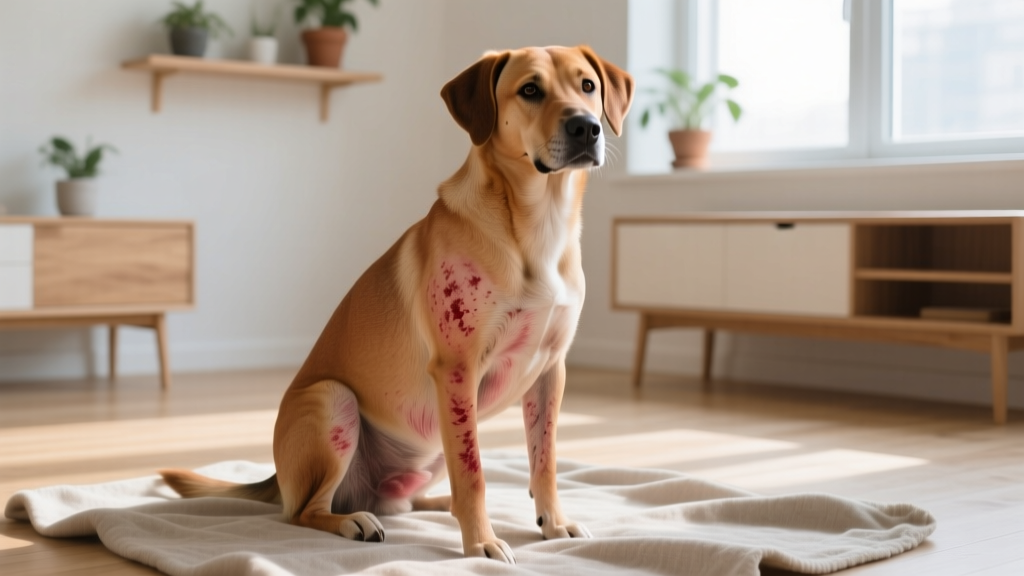
Red skin (erythema) is a symptom, not a diagnosis. Below are the most frequent underlying causes, organized by how commonly they appear in veterinary practice.
| Condition | Key Symptoms | Typical Location | Onset Speed |
|---|---|---|---|
| Environmental Allergies (Atopic Dermatitis) | Red skin, itching, licking paws, ear infections, face rubbing | Paws, belly, armpits, ears, groin | Seasonal or gradual (months) |
| Flea Allergy Dermatitis (FAD) | Intense itching, red bumps, hair loss, scabbing | Base of tail, lower back, inner thighs | Rapid (hours to 1-2 days after bite) |
| Food Allergies | Red skin, ear infections, GI upset, licking paws | Ears, paws, perianal area, belly | Gradual (weeks to months of exposure) |
| Hot Spots (Acute Moist Dermatitis) | Raw, red, oozing lesion; intense pain; matted fur | Anywhere, commonly hips, cheeks, limbs | Very rapid (hours) |
| Bacterial Folliculitis | Red bumps (pustules), crusty rings, patchy hair loss | Belly, groin, armpits | Gradual (1-2 weeks) |
| Yeast Dermatitis (Malassezia) | Greasy red skin, musty/corn-chip odor, thickened skin | Ears, paw pads, skin folds, groin | Gradual (weeks) |
| Contact Dermatitis | Redness, blistering, itching on contact areas | Belly, paws, chin (wherever touched irritant) | Rapid (minutes to hours) |
| Ringworm (Dermatophytosis) | Circular red patches, hair loss, scaling, crusting | Head, ears, paws, forelimbs | Gradual (1-3 weeks post-exposure) |
| Sarcoptic Mange | Extreme itching, red crusty skin, hair loss | Ear margins, elbows, hocks, belly | Gradual (2-6 weeks post-exposure) |
According to the Merck Veterinary Manual, allergic skin disease (atopy, FAD, and food allergy combined) accounts for roughly 30-40% of all canine dermatology cases presented to veterinarians, making it by far the most common driver of red skin in dogs.
How to Check Your Dog's Skin at Home: A Step-by-Step Exam
A monthly full-body skin exam takes about 5 minutes and can catch problems before they escalate. Here's the technique I recommend to dog owners:
- Start with the head. Part the fur on top of the skull and behind the ears. Check for redness, flakes, or small bumps. Gently flip the ear flaps and inspect the inner pinna — it should be pink (or pigmented), not bright red or crusty.
- Run your hands down the neck and shoulders. Feel for raised bumps, scabs, or matted fur. Part the coat in several spots along the back to visually inspect the skin underneath.
- Check the armpits and chest. These are prime allergy zones. Lift each front leg and look at the skin fold. Redness here often signals environmental allergies.
- Examine the belly and groin. This area has the least fur and shows skin changes earliest. Look for red patches, pustules, darkened areas, or any greasy film.
- Inspect all four paws — tops and bottoms. Spread the toes apart. Red, swollen interdigital spaces (between the toes) are a hallmark of both allergies and yeast infections. Check paw pads for cracks or redness.
- Lift the tail and check the base. Red, crusty, or hairless skin at the tail base strongly suggests flea allergy dermatitis. Also check the perianal area for redness or swelling.
- Do the "scratch count." Spend 60 seconds observing your dog in a calm state. Count how many times they scratch, lick, or bite at themselves. More than 3-4 episodes per minute at rest suggests active pruritus (itching) that needs veterinary attention.
Pro tip: Take photos during each monthly exam and store them in a dated folder on your phone. This gives your veterinarian a visual timeline, which is invaluable for diagnosing seasonal patterns or tracking treatment response.
Home Care Routine: Keeping Your Dog's Skin Healthy
Prevention and maintenance are more effective (and cheaper) than treating full-blown skin disease. Here's a practical care schedule:
- Daily: Quick visual scan of paws and belly after outdoor activity. Wipe paws with a damp cloth or unscented pet wipe if your dog walked through grass, mud, or areas treated with lawn chemicals. This removes allergens and irritants before they penetrate the skin.
- Weekly: Brush your dog thoroughly. Brushing distributes natural sebaceous oils, removes dead hair that can trap moisture, and lets you spot early redness or bumps. For double-coated breeds, use an undercoat rake; for short-coated breeds, a rubber curry brush works well.
- Every 2-4 weeks: Bathe with a veterinary-formulated, pH-balanced dog shampoo. Dogs with normal skin do well with a gentle oatmeal-based formula. Dogs with known allergies benefit from a chlorhexidine-based shampoo (2-4% concentration) left on the skin for a full 10 minutes before rinsing — this contact time is critical for antimicrobial efficacy.
- Monthly: Full-body skin exam (as described above). Apply veterinarian-recommended flea/tick prevention on schedule — even indoor dogs need this, as fleas hitchhike on clothing and other pets.
- Seasonally: If your dog has seasonal allergies, increase bathing frequency to weekly during peak pollen months (typically April-June and September-November in most US regions). Consider adding an omega-3 fatty acid supplement (fish oil providing 1,000-2,000 mg EPA+DHA daily for a 50 lb / 23 kg dog) to support the skin barrier.
Products Worth Having on Hand
These are the items I'd keep in a well-stocked dog first-aid kit for skin issues:
- Chlorhexidine shampoo (2-4%): Brands like Douxo S3 PYO or Malaseb. Price range: $18-$35 per 16 oz bottle. Available through veterinary offices and online pet pharmacies.
- Chlorhexidine spray or mousse: For spot-treating small areas between baths. Douxo S3 PYO mousse runs about $22-$28. Useful for dogs who hate full baths.
- Unscented pet wipes: Hypoallergenic wipes like Earthbath or Pogi's. $10-$15 per 100-count pack. Keep by the door for post-walk paw cleaning.
- Elizabethan collar (cone) or recovery suit: If your dog is actively licking or chewing a red area, you must physically prevent self-trauma while waiting for a vet appointment. Inflatable collars ($15-$25) are more comfortable than traditional cones for mild cases.
- Omega-3 fish oil supplement: Look for products with IFOS (International Fish Oil Standards) certification. Nordic Naturals Omega-3 Pet or Grizzly Salmon Oil. $15-$30 depending on size. Dose: approximately 50-75 mg combined EPA+DHA per kg of body weight daily.
When to See the Vet: Red Flag Symptoms You Shouldn't Ignore
Some skin redness can be managed at home initially, but certain presentations require prompt professional evaluation. Do not attempt home treatment if you see any of the following:
🚨 Call your veterinarian within 24 hours if your dog shows:
- Red skin accompanied by open sores, bleeding, or pus-filled lesions
- Rapidly spreading redness (expanding over hours, not days)
- Skin that is hot to the touch AND your dog is lethargic, feverish, or refusing food
- Facial swelling, hives, or redness combined with vomiting or difficulty breathing (possible anaphylaxis — this is an emergency)
- Red skin with a foul, necrotic, or sharply sour odor
- Intense itching that prevents your dog from sleeping or eating
- Red patches that appeared suddenly after starting a new medication
- Any skin changes in a puppy under 6 months old (puppies can deteriorate quickly from parasitic or infectious causes)
For anaphylactic reactions (facial swelling + vomiting + breathing difficulty), go to the nearest emergency veterinary clinic immediately.
For milder cases — a few small red patches, mild itching, no open wounds — you can try the home care routine above for 3-5 days. If there's no improvement or the redness worsens, schedule a veterinary appointment. Your vet may perform skin cytology (tape prep or impression smear, typically $40-$80), a skin scraping for mites ($30-$60), fungal culture ($50-$120, results take 2-4 weeks), or allergy testing ($250-$600 for serum IgE panels, $1,200-$2,000+ for intradermal skin testing with a veterinary dermatologist).
Always consult your veterinarian before starting any medicated shampoo, supplement, or over-the-counter treatment. What looks like a simple allergy could be a bacterial infection requiring prescription antibiotics, and delaying proper treatment can allow secondary infections to develop.
Breed Predispositions: Which Dogs Are Most Prone to Red Skin?
Genetics play a major role in skin health. Some breeds have anatomical features or immune system quirks that make red skin conditions far more likely.
| Breed | Predisposed Conditions | Why |
|---|---|---|
| West Highland White Terrier | Atopic dermatitis, Malassezia yeast infections | Genetic predisposition to IgE-mediated allergies; very high breed prevalence (estimated 30-40% affected) |
| French Bulldog | Interdigital dermatitis, skin fold pyoderma, environmental allergies | Deep facial and tail skin folds trap moisture; brachycephalic conformation |
| German Shepherd | Flea allergy dermatitis, pyoderma, sarcoptic mange susceptibility | Immune system genetics; dense double coat conceals early signs |
| Golden Retriever | Atopic dermatitis, hot spots, Malassezia | High allergy prevalence; thick coat retains moisture against skin |
| Shar-Pei | Mucinosis, skin fold infections, atopic dermatitis | Excessive skin folds create warm, moist environments for bacteria/yeast; unique mucin deposits in skin |
| Bulldog (English & American) | Interdigital cysts, fold dermatitis, zinc-responsive dermatosis | Deep skin folds, splayed toes, immune dysfunction |
| Boxer | Atopic dermatitis, demodectic mange, mast cell tumors (can appear as red patches) | Short coat offers minimal barrier; genetic immune predisposition |
| Cocker Spaniel | Seborrhea, Malassezia dermatitis, lip fold pyoderma | Sebaceous gland dysfunction; pendulous ears and lip folds trap debris |
| Pit Bull Terrier (American Staffordshire) | Environmental allergies, demodectic mange, contact dermatitis | Short single coat with minimal protection; genetic allergy predisposition |
| Dalmatian | Solar dermatitis (sunburn), atopy | Short white coat and lightly pigmented skin offer poor UV protection |
If you own one of these breeds, proactive skin care isn't optional — it's essential. Start monthly skin exams early, maintain year-round flea prevention, and discuss allergy screening with your veterinarian at your dog's annual wellness visit.
Prevention Strategies: Stopping Red Skin Before It Starts
The most effective prevention plan addresses the three biggest triggers: parasites, allergens, and moisture.
1. Year-Round Parasite Control
Flea allergy dermatitis is entirely preventable. Use a veterinarian-recommended oral or topical flea preventive every single month, even in winter. Products like Simparica Trio, Credelio, or Bravecto provide reliable coverage. Remember: it only takes one flea bite to trigger a cascade in a sensitized dog. Treat all pets in the household simultaneously — if your cat goes outdoors, they can carry fleas to your dog.
2. Allergen Reduction
For dogs with known environmental allergies:
- Wipe down your dog's coat and paws with a damp cloth after every outdoor excursion during high-pollen seasons.
- Wash your dog's bedding weekly in hot water (at least 130°F / 54°C) using a fragrance-free, dye-free detergent. Avoid fabric softeners and dryer sheets, which leave chemical residues against the skin.
- Consider a HEPA air purifier in the room where your dog sleeps. Models like the Levoit Core 300 ($80-$100) are effective for rooms up to 219 sq ft.
- If your veterinarian confirms food allergy via an elimination diet trial (8-12 weeks on a prescription hydrolyzed or novel-protein diet), strictly avoid the offending ingredient(s) for life. Even small exposures can reignite inflammation.
3. Moisture and Fold Management
For breeds with skin folds (Bulldogs, Shar-Peis, Pugs, Mastiffs):
- Clean facial folds daily with an unscented pet wipe or a cotton pad moistened with diluted chlorhexidine solution (1 part 2% chlorhexidine to 3 parts water).
- Dry folds thoroughly after bathing, swimming, or rain exposure. A cool-setting hair dryer on low speed works well for deep facial folds.
- Apply a thin layer of barrier cream (such as Vaseline or a zinc oxide-free pet balm like Bag Balm) to folds that tend to chafe — but only on clean, dry skin. Trapping moisture under a barrier cream worsens infection.
4. Nutrition and Skin Barrier Support
Feed a complete-and-balanced diet that carries an AAFCO statement for your dog's life stage. Look for diets with adequate omega-6 and omega-3 fatty acids. If your dog's kibble doesn't include significant fish oil, supplement with 50-75 mg EPA+DHA per kg body weight daily. Studies published in the Journal of Veterinary Internal Medicine have shown that omega-3 supplementation can reduce pruritus scores in atopic dogs by 20-30% over 8-12 weeks.
Frequently Asked Questions
Can I use human hydrocortisone cream on my dog's red skin?
You can apply a thin layer of 1% hydrocortisone cream to a small, localized red area for 1-2 days as a temporary measure, but there are important caveats. Dogs will lick the area, and ingesting topical steroids — even in small amounts — can cause GI upset. More critically, if the redness is caused by a bacterial or fungal infection, steroid cream will suppress the local immune response and make the infection worse. Always use an Elizabethan collar to prevent licking, and consult your veterinarian if the redness doesn't improve within 48 hours. Never use hydrocortisone near the eyes, inside the ears, or on open wounds.
Why does my dog's red skin keep coming back after treatment?
Recurring red skin almost always means the underlying cause hasn't been addressed. The most common scenario: a dog is treated for a secondary bacterial or yeast infection (which clears the redness temporarily), but the primary allergy driving the inflammation is never diagnosed or managed. Without identifying and controlling the root trigger — whether that's fleas, food, or environmental allergens — the skin will re-inflame within weeks to months. Work with your veterinarian on a long-term management plan rather than repeated short-term fixes.
Is dog red skin contagious to humans or other pets?
It depends on the cause. Ringworm (dermatophytosis) is zoonotic — meaning it can transmit from dogs to humans and other pets. Sarcoptic mange mites can temporarily infest humans (causing itchy bumps, though the mites can't complete their life cycle on human skin). Bacterial folliculitis and yeast infections are generally not contagious to healthy humans or pets. If your veterinarian suspects ringworm or mange, isolate the affected dog from other pets and immunocompromised household members until treatment is underway.
How much will a vet visit for red skin cost?
A standard dermatology workup typically ranges from $150-$400 for an initial visit, depending on which diagnostic tests are needed. This includes the exam fee ($50-$90), skin cytology ($40-$80), and possibly a skin scraping ($30-$60). If allergy testing is recommended, serum IgE panels run $250-$600, while intradermal testing with a veterinary dermatologist costs $1,200-$2,000+. Prescription medications (Apoquel, Cytopoint, antibiotics) add $30-$150 per month. Pet insurance with illness coverage can reimburse 70-90% of these costs, depending on your plan.
My dog has red skin only on their belly — what does that mean?
Belly-localized redness is most commonly caused by contact dermatitis (lying on a treated lawn, a new cleaning product on floors, or a reaction to a laundry detergent used on bedding) or environmental allergies (pollen and dust mites contact the thinly haired belly directly). In spayed females, a condition called spay-related incontinence can cause chronic moisture and secondary redness in the groin. Check what surfaces your dog lies on most often, and try switching to a fragrance-free detergent for their bedding.
This guide is intended for educational purposes and does not replace professional veterinary care. If your dog's red skin persists, worsens, or is accompanied by other symptoms, please consult your veterinarian for a proper diagnosis and treatment plan.
Aaron Whyte
All our authors care for dogs every day — read more of their work on the authors page.


