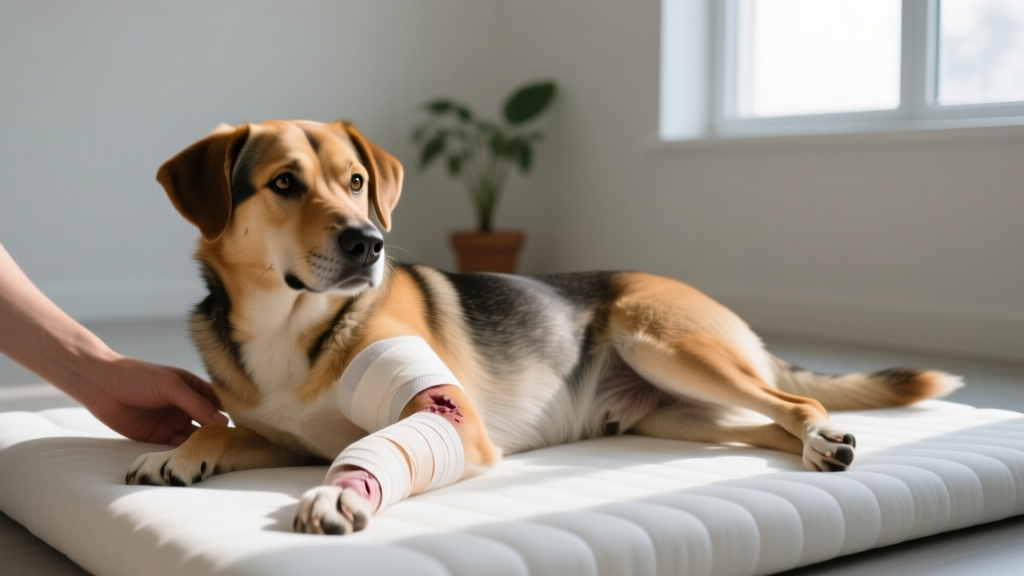
Dog Nail Cracked: What to Do, When to Worry, and How to Prevent It
Is your dog's nail cracked? Learn how to assess the damage, treat it safely at home, spot red-flag symptoms, and prevent future splits with expert care tips.

You hear the snap before you see it — a sharp click on the hardwood, a sudden limp, and then the wince. A dog nail cracked down the middle or split at the tip is one of the most common paw injuries owners encounter, and it ranges from a cosmetic annoyance to a painful emergency depending on how deep the fracture goes.
This guide walks you through exactly what a cracked nail means, how to evaluate it at home in the first five minutes, when you can manage it yourself, and when it's time to call your veterinarian. We'll also cover the anatomy that makes dog nails uniquely vulnerable, breed-specific risks, and a prevention routine that actually works.
Dog Nail Anatomy: Why They Crack Differently Than Human Nails
Anatomy Quick Primer
A dog's nail is structurally nothing like yours. Human nails are flat plates of keratin bonded to the nail bed. Dog nails are conical, weight-bearing structures made of a hard outer shell (the unguis) encasing a living core called the quick — a blood vessel and nerve bundle that grows outward as the nail grows.
Key structural differences:
- Quick location: The quick extends roughly 2-5 mm from the visible nail base in light-colored nails. In dark nails, it's invisible until you nick it.
- Dewclaws: The fifth nail on the inner leg (front legs in most breeds, rear in some) doesn't touch the ground, so it never self-files and is the most common nail to crack or curl.
- Growth rate: Dog nails grow approximately 1-2 mm per week, meaning a full regrowth after a break takes 6-8 weeks.
- Weight-bearing role: Unlike human nails, dog nails provide traction and proprioceptive feedback. A cracked nail alters gait, which can cascade into joint strain.
The quick is what makes a dog nail cracked injury potentially serious. If the crack extends into the quick, you're dealing with an open wound that bleeds freely, exposes nerve endings, and invites infection from whatever surface your dog was walking on.
Normal vs. Abnormal: Reading Your Dog's Nails
Before you can identify a problem, you need a baseline. Here's what healthy nails look like versus early warning signs of trouble.
| Indicator | Normal (Healthy) | Abnormal (Concern) |
|---|---|---|
| Surface texture | Smooth, glossy, consistent | Brittle, flaking, vertical ridges, or peeling layers |
| Color consistency | Uniform black, white, or pink (breed-dependent) | Sudden darkening, red streaks, or green/yellow discoloration |
| Length | Doesn't touch ground when standing on flat surface | Clicking on hard floors, curling under, splaying toes |
| Shape | Slight downward curve, oval cross-section | Twisted growth, thickened base, or hook shape |
| Surrounding skin | Clean, no swelling at nail fold | Red, swollen, or discharge at the nail bed (paronychia) |
| Sound on floors | Soft pad contact, minimal clicking | Rhythmic clicking or tapping on hard surfaces |
A practical rule: With your dog standing on a flat, hard surface, you should be able to slide a credit card (roughly 0.76 mm thick) under the tip of each nail. If you can't, the nails are too long and at increased risk of cracking under lateral stress.
Common Dog Nail Problems: Symptoms and Severity
| Condition | Symptoms | Severity | Typical Cause |
|---|---|---|---|
| Superficial crack | Hairline split on outer shell, no bleeding, mild roughness | Low | Dry air, brittle nails, overgrowth |
| Longitudinal split | Crack running tip-to-base, may catch on fabric, possible pain on pressure | Moderate | Impact trauma, catching on carpet/roots |
| Quick exposure | Active bleeding, visible pink/red tissue, intense licking, limping | High | Deep crack into quick, avulsion injury |
| Nail avulsion (torn off) | Nail partially or fully detached, significant bleeding, acute pain | Emergency | Severe trauma, caught and pulled |
| Symmetrical lupoid onychodystrophy (SLO) | Multiple nails brittle, splitting, lifting from bed simultaneously | High (chronic) | Autoimmune disease |
| Bacterial/fungal paronychia | Swollen nail fold, discharge, odor, nail softening or discoloration | Moderate-High | Infection (often secondary to crack) |
If multiple nails on the same paw or across paws are cracking simultaneously, this points toward a systemic issue — nutritional deficiency, autoimmune disease, or fungal infection — and warrants a veterinary workup rather than home management.
How to Examine Your Dog's Nails at Home (Step-by-Step)
A systematic exam takes about 3-5 minutes. Do this every 2 weeks as part of your regular grooming routine, and immediately after any incident where your dog limps or favors a paw.
- Position your dog: Have your dog stand on a non-slip surface (yoga mat or towel). For small dogs, place them on a table at your eye level. Offer a lick mat or high-value treat to keep them occupied.
- Visual inspection: Look at all 18-20 nails (including dewclaws). Note color, length, and whether any nail looks different from the others. Asymmetry is a red flag.
- Palpation test: Gently squeeze each nail between your thumb and forefinger, applying light lateral pressure. A healthy nail won't flex or cause a reaction. A cracked nail may produce a wince, paw withdrawal, or audible cracking sound.
- Check the nail bed: Lift the skin around each nail fold. Look for redness, swelling, moisture, or discharge. Healthy tissue should be dry and the same color as surrounding skin.
- Flex test: Gently press the tip of each nail against the floor surface. Watch for pain response or visible flexing/splitting of the nail wall.
- Dewclaw focus: Front dewclaws are notorious for silent overgrowth and cracking because they don't contact the ground. Examine these with extra attention — curling dewclaws can grow into the pad, creating a painful penetrating wound.
What to Do When Your Dog's Nail Is Cracked: Immediate Care
The first 10 minutes after discovering a dog nail cracked determine whether this becomes a simple home fix or an infection risk. Follow this triage framework:
Crack Severity Decision Guide
- Is there active bleeding?
- YES → Apply styptic powder (Kwik Stop or generic ferric subsulfate) with firm pressure for 30-60 seconds. If bleeding doesn't stop within 5 minutes of continuous pressure, go to the vet.
- NO → Proceed to step 2.
- Is the crack below the visible quick line? (In light nails, the quick appears as a pink triangle inside the nail.)
- YES → This involves the quick. Clean with dilute chlorhexidine (0.05% solution), bandage lightly, and see your vet within 24 hours — the nail may need partial removal and the quick needs to be assessed for infection risk.
- NO → Proceed to step 3.
- Is the cracked portion loose or hanging?
- YES → If it's a thin, clearly dead fragment with no attachment to live tissue, you can carefully trim it away with scissor-style nail clippers. If you're unsure, leave it and let your vet remove it under sedation if needed.
- NO → File the rough edges with a pet nail file or Dremel tool on low speed, then monitor.
Important: Never attempt to rip or pull a partially attached cracked nail off. This can cause severe pain, hemorrhage, and damage to the nail matrix. If a nail needs removal, your veterinarian will do this under local anesthesia or sedation.
Home Care After Trimming or Filing
- Clean: Wipe the area with a 0.05% chlorhexidine solution (diluted from a 2% stock — mix 1 part chlorhexidine to 39 parts water) twice daily for 3-5 days.
- Protect: Use a dog bootie (Ruffwear Bark'n Boots or similar, $25-$40 for a set) or a clean sock secured with medical tape when going outside for 5-7 days to prevent dirt contamination.
- Monitor: Check daily for swelling, increased licking, discharge, or odor — all signs of developing infection.
- Restrict activity: Avoid rough terrain, running on concrete, or swimming for 5-7 days while the nail bed seals.
Breeds Most Prone to Nail Problems
Not all dogs crack nails at the same rate. Breed-specific anatomy, coat type, activity level, and genetic predispositions all play a role.
| Breed | Risk Factor | Specific Concern |
|---|---|---|
| Greyhounds, Whippets, Italian Greyhounds | Thin nail structure, high-speed activity | Frequent longitudinal splits; nails snap under sprint forces |
| German Shepherds, Rottweilers | High prevalence of SLO (autoimmune nail disease) | Multiple nails crumbling or lifting simultaneously |
| Dachshunds, Basset Hounds | Low-slung body, dewclaws drag in underbrush | Dewclaw snagging and traumatic avulsion |
| Siberian Huskies, Alaskan Malamutes | Thick, fast-growing nails; cold-climate dryness | Brittle outer shell cracking in dry indoor heating |
| Great Pyrenees, Saint Bernards | Rear dewclaws (double dewclaws in Pyrenees) | Non-weight-bearing nails overgrow and curl into pads |
| Poodles (all sizes) | Hair growing into nail folds traps moisture | Secondary fungal/bacterial paronychia softening nails |
If your dog belongs to one of these breeds, increase your nail exam frequency to weekly and consider proactive filing rather than waiting for cracks to develop. According to the Merck Veterinary Manual, early identification of nail bed disorders significantly improves outcomes, especially for autoimmune conditions like SLO.
Your Dog Nail Care Routine: Products and Schedule
Consistent maintenance is the single most effective way to prevent a cracked nail. Here's a practical routine with specific product recommendations based on what veterinary grooming professionals use.
Recommended Nail Care Products (2026 Pricing)
| Product | Type | Best For | Price Range |
|---|---|---|---|
| Dremel 7300-PT Pet Grooming Tool | Rotary grinder (cordless) | All sizes; smooth finish, gradual shortening | $28-$35 |
| Millers Forge Large Dog Nail Clipper | Scissor-style plier | Dogs 40+ lb; thick nails | $12-$18 |
| Kwik Stop Styptic Powder | Ferric subsulfate powder | Emergency bleeding control | $5-$8 |
| Resco Deluxe Nail File | Manual emery board | Small dogs, nervous dogs, edge smoothing | $6-$10 |
| Chlorhexidine 2% Solution | Antiseptic (dilute before use) | Post-trim cleaning, infection prevention | $8-$14 |
Maintenance Schedule
- Every 2-3 weeks: Trim or grind nails to maintain the credit-card gap from the floor. Active dogs running daily on concrete may need less frequent trims; indoor or senior dogs often need more.
- Weekly: Visual inspection of all nails including dewclaws. Run your hand along each nail to feel for roughness or splitting you can't see.
- Monthly: Detailed nail bed exam (lift skin around fold, check for moisture/discharge). Trim hair around nail folds in long-coated breeds to prevent moisture trapping.
- Seasonally: In winter, apply a paw and nail balm (Musher's Secret or similar, $15-$20) to combat dryness from indoor heating. Dry nails are brittle nails.
Nutrition for Nail Strength
Nail quality is directly tied to diet. Dogs on AAFCO-complete commercial diets rarely have nutritional nail issues, but dogs on unbalanced homemade diets often develop brittle, peeling nails due to deficiencies in:
- Biotin (B7): 0.02-0.05 mg/kg body weight daily supplementation can improve nail hardness. Found naturally in egg yolks and organ meats.
- Zinc: Essential for keratin synthesis. Deficiency causes brittle nails and parakeratosis. The AAFCO minimum for adult maintenance is 80 mg/kg of dry matter diet.
- Omega-3 fatty acids (EPA/DHA): 20-55 mg/kg combined EPA+DHA daily supports nail bed health and reduces inflammation.
Always consult your veterinarian before adding supplements, especially if your dog is on a prescription diet or has comorbidities like kidney disease where mineral balance matters.
When to See the Vet: Red Flags for Cracked Nails
Call Your Veterinarian If You Notice:
- Bleeding that doesn't stop after 5 minutes of firm, continuous pressure with styptic powder
- Quick exposure — visible pink/red tissue in the crack, regardless of bleeding
- Signs of infection: swelling, warmth, pus, foul odor, or increasing redness at the nail bed within 24-72 hours of the crack
- Nail discoloration — a single nail turning dark when others are light, or vice versa (can indicate melanoma in rare cases)
- Multiple nails affected — two or more nails cracking, splitting, or lifting simultaneously suggests systemic disease
- Persistent licking of one nail for more than 48 hours, even without visible damage
- Lameness lasting more than 24 hours after the initial injury
- Nail growing at an abnormal angle after a previous crack — indicates matrix damage that may need surgical correction
At the veterinary visit, expect your vet to examine the nail under good lighting, possibly take a radiograph if bone involvement (P3 — the third phalanx bone inside the nail) is suspected, and potentially culture any discharge. A nail radiograph typically costs $80-$150 depending on your region, and partial nail removal with sedation runs $100-$300. If SLO or another autoimmune condition is suspected, your vet may recommend a biopsy ($200-$400) and bloodwork to rule out underlying disease.
Frequently Asked Questions
Can a cracked dog nail heal on its own?
A superficial crack in the outer shell (unguis) that doesn't reach the quick will typically grow out and be trimmed away within 6-8 weeks — the normal nail growth cycle. However, cracks that extend into the quick or cause the nail to split longitudinally will not heal on their own and require veterinary intervention to prevent chronic pain and infection.
Should I let my dog lick a cracked nail?
Brief licking (a few minutes) is normal and provides some mechanical cleaning. However, prolonged licking introduces oral bacteria into the wound and keeps the area moist, which delays healing and promotes bacterial growth. If your dog won't stop licking, use an Elizabethan collar (cone) or a recovery suit to protect the paw, and apply a light bandage.
Is a cracked nail an emergency?
Most cracked nails are not emergencies. It becomes urgent if: bleeding won't stop after 5 minutes of pressure, the nail is dangling (partial avulsion), the dog is in visible distress and won't bear weight, or you see bone or deep tissue exposed. In these cases, seek emergency veterinary care. For a simple crack with no bleeding, you can safely manage it at home and schedule a routine vet check if it doesn't improve in a few days.
How much does a vet charge for a cracked nail?
Costs vary by region and severity. A simple nail trim and filing of a cracked edge typically runs $15-$35 as a technician visit. Partial nail removal with local anesthesia and sedation ranges from $100-$300. If radiographs, culture, or biopsy are needed, total costs can reach $300-$600. Pet insurance with accident/illness coverage usually covers nail injuries when they result from trauma.
How can I prevent my dog's nails from cracking?
Prevention centers on three factors: maintain proper nail length (trim every 2-3 weeks), keep nails moisturized in dry climates or winter months using a paw balm, and ensure a nutritionally complete diet with adequate zinc, biotin, and omega-3 fatty acids. Regular exercise on varied surfaces (grass, dirt, concrete) naturally files nails and strengthens the nail wall. For breeds prone to brittle nails, proactive Dremel filing every 2 weeks prevents the buildup of stress fractures that lead to full cracks.
Bottom line: A dog nail cracked is usually manageable with calm assessment and basic first aid, but knowing when the damage goes deeper than the surface is what separates a minor home fix from a preventable infection. Keep styptic powder in your first-aid kit, maintain a regular trimming schedule, and don't hesitate to call your veterinarian when the crack involves the quick or shows signs of infection. For more on canine nail disorders, the American Kennel Club provides breed-specific grooming guidance, and the AVMA offers general grooming best practices.
Robin Maitland
All our authors care for dogs every day — read more of their work on the authors page.