Safe Dog Food Cake Recipe: Celebrate Your Pup's Birthday...
Vet-approved dog food cake recipe using safe, nutritious ingredients. Learn how to bake a birthday cake your dog can enjoy without digestive upset.
Why a Specialized Dog Food Cake Recipe Matters
Every dog owner wants to celebrate their pup's birthday, adoption anniversary, or milestone with something special. But human cake — loaded with sugar, chocolate, xylitol, and dairy — can send your dog to the emergency vet. A properly formulated dog food cake recipe uses ingredients that align with canine nutritional needs while still feeling like a celebration.
The challenge isn't just avoiding toxic ingredients. It's creating a treat that fits within your dog's daily caloric budget, respects their life stage requirements, and doesn't trigger food sensitivities. According to the Merck Veterinary Manual, treats and supplemental foods should never exceed 10% of a dog's total daily caloric intake. That means a dog food cake should be sized and portioned appropriately — not served as a free-for-all.
Nutritional Foundations: What Your Dog Actually Needs
Before we get to the recipe, understanding your dog's baseline nutritional requirements ensures the cake complements rather than disrupts their diet. Here's what the National Research Council and AAFCO recommend for daily intake:
| Nutrient | Adult Maintenance | Puppy (Growth) | Senior (7+ years) | Active/Working |
|---|---|---|---|---|
| Protein (minimum %) | 18% DM | 22% DM | 18-25% DM | 25-30% DM |
| Fat (minimum %) | 5.5% DM | 8.5% DM | 5.5-8% DM | 10-15% DM |
| Calories (kcal/day, 20 lb dog) | 550-650 | 700-850 | 475-575 | 800-1100 |
| Calories (kcal/day, 50 lb dog) | 1050-1250 | 1300-1600 | 900-1100 | 1500-2000 |
| Calcium:Phosphorus ratio | 1.1:1 to 1.4:1 | 1.1:1 to 1.5:1 | 1.1:1 to 1.4:1 | 1.1:1 to 1.4:1 |
DM = Dry Matter basis. These are minimums; individual needs vary by breed, metabolism, and health status. Always consult your veterinarian for personalized nutrition plans.
For a birthday cake treat, you're working within the 10% treat allowance. A 30 lb dog eating 750 kcal/day should get no more than 75 kcal from the cake portion they consume in one day. This is why our recipe focuses on nutrient-dense, low-sugar ingredients.
The Vet-Approved Dog Food Cake Recipe
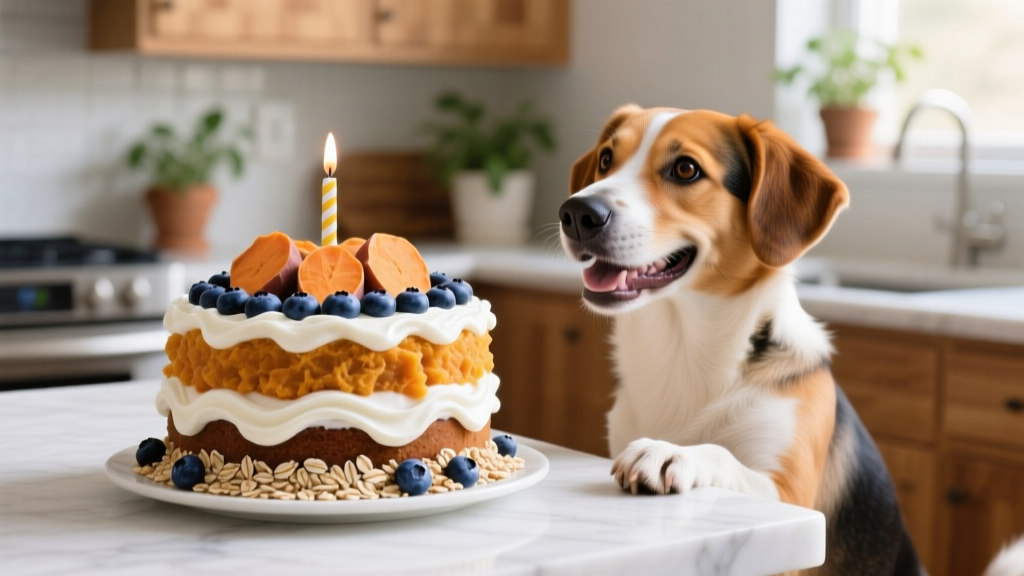
This recipe creates a single-layer, 6-inch cake suitable for sharing among 1-3 dogs (depending on size). Total recipe yields approximately 480 kcal, making each of 8 slices roughly 60 kcal.
Ingredients
- 1 cup whole wheat flour (or oat flour for grain-sensitive dogs) — provides structure and B vitamins
- 1 teaspoon baking powder (aluminum-free) — leavening agent
- 1/3 cup unsweetened applesauce — natural moisture and mild sweetness without added sugar
- 1/4 cup natural peanut butter (xylitol-free, no added sugar — check the label for ONLY peanuts and salt) — healthy fats and protein
- 1 large egg — complete protein and binding agent
- 1/4 cup low-sodium chicken broth — flavor and moisture
- 1/2 cup finely grated carrot — fiber, beta-carotene, and natural sweetness
- 2 tablespoons coconut oil (melted) — medium-chain triglycerides for coat health
"Frosting" Option (Optional)
- 1/2 cup plain, unsweetened Greek yogurt (only if your dog tolerates dairy — skip for lactose-sensitive dogs)
- 1 tablespoon peanut butter (xylitol-free)
- Mix until smooth and spreadable. Alternative: mashed sweet potato makes an excellent dairy-free frosting.
Instructions
- Preheat oven to 350°F (175°C). Grease a 6-inch round cake pan with coconut oil.
- In a medium bowl, whisk together the flour and baking powder.
- In a separate bowl, combine applesauce, peanut butter, egg, chicken broth, and melted coconut oil. Mix until uniform.
- Fold wet ingredients into dry ingredients. Add grated carrot and stir until just combined — don't overmix.
- Pour batter into the prepared pan and smooth the top.
- Bake for 25-30 minutes, or until a toothpick inserted in the center comes out clean.
- Cool completely on a wire rack before adding frosting. Never serve warm — dogs burn their mouths more easily than humans.
- Cut into appropriate portions based on your dog's size (see serving guide below).
- Under 15 lb: 1/8 of cake (one small slice, ~60 kcal) split across 2 days
- 15-30 lb: 1/8 to 1/4 of cake (60-120 kcal), single serving
- 30-60 lb: 1/4 to 1/3 of cake (120-160 kcal), single serving
- 60+ lb: Up to 1/2 of cake (240 kcal) if active, otherwise 1/3
Reduce your dog's regular meal portion proportionally on cake day to maintain caloric balance.
Life Stage and Condition Considerations
Not every dog should eat the same version of this cake. Here's how to adapt the recipe based on your dog's specific needs:
Puppies (Under 12 Months)
Puppies have higher protein and fat requirements and more sensitive digestive systems. Reduce the serving to 1/16 of the cake and ensure it doesn't replace any portion of their growth-formulated meals. Puppies need consistent calcium:phosphorus ratios, and occasional treats won't disrupt this — but habitual treat-feeding can.
Senior Dogs (7+ Years)
Older dogs often have reduced kidney function and slower metabolisms. Consider using oat flour instead of whole wheat for easier digestion, and reduce the peanut butter by half to lower phosphorus content. If your senior dog has diagnosed kidney disease, consult your veterinarian before offering any homemade treats — the protein and phosphorus content may conflict with their therapeutic diet.
Dogs with Food Allergies
Common canine allergens include chicken, beef, dairy, wheat, and egg. Adaptations:
- Chicken allergy: Replace chicken broth with low-sodium beef or vegetable broth
- Wheat allergy: Use oat flour or rice flour (note: rice flour produces a denser cake)
- Egg allergy: Use 1/4 cup unsweetened applesauce as an egg replacer (the cake will be denser)
- Peanut allergy: Substitute sunflower seed butter (verify xylitol-free)
Overweight Dogs or Weight Management
If your dog is on a weight loss plan (body condition score 6/9 or higher), halve the recommended serving and account for every calorie. Replace the coconut oil with an additional 2 tablespoons of applesauce to reduce fat content. A BCS assessment — where you should be able to feel ribs without pressing hard and see a visible waist from above — helps you determine whether treats fit your dog's goals.
Ingredients to Avoid in Any Dog Cake
| Ingredient | Risk | Toxic Dose |
|---|---|---|
| Chocolate (any form) | Theobromine poisoning — vomiting, seizures, cardiac arrest | As low as 0.1 oz baker's chocolate per lb body weight |
| Xylitol (artificial sweetener) | Rapid insulin release → hypoglycemia, liver failure | 0.05 g per lb body weight |
| Grapes/Raisins | Acute kidney failure (mechanism unknown) | Any amount — no safe threshold established |
| Macadamia nuts | Weakness, tremors, hyperthermia | 0.05 oz per lb body weight |
| Nutmeg | Myristicin toxicity — hallucinations, seizures | Larger quantities, but avoid entirely |
| Added sugar | GI upset, contributes to obesity and dental disease | N/A — avoid as a principle |
| Baking soda (as leavening) | Electrolyte imbalances if consumed in quantity | Use baking powder instead (lower sodium bicarbonate concentration) |
If your dog ingests any toxic ingredient, call ASPCA Animal Poison Control immediately: (888) 426-4435 (24/7, consultation fee applies).
How This Cake Fits Into Your Dog's Overall Diet
A birthday cake is a treat, not a meal. Understanding how it fits within your dog's complete nutritional picture prevents overfeeding and nutritional gaps. Here's how to evaluate your dog's regular food and ensure the cake doesn't create imbalance:
Reading Your Dog's Commercial Food Label
Before adding any homemade treat, verify your dog's primary diet meets these criteria:
- AAFCO Statement: Look for language like "[Product] is formulated to meet the nutritional levels established by the AAFCO Dog Food Nutrient Profiles for [life stage]." This is non-negotiable — it means the food has been analyzed or fed-tested to provide complete nutrition.
- Named Protein First: The first ingredient should be a specific named protein (chicken, lamb, salmon) — not "meat meal" or "animal by-products" without species identification.
- Guaranteed Analysis: Check minimum crude protein and fat percentages. Compare against the life stage requirements in the table above.
- Calorie Content (kcal/cup or kcal/kg): This lets you calculate exactly how much of the daily caloric budget the cake occupies.
Top Recommended Commercial Foods (If You're Reevaluating Your Dog's Base Diet)
While the cake is a treat, having a nutritionally complete base diet matters. Here are well-formulated options across categories, all carrying AAFCO statements for adult maintenance or all life stages:
Price: $45-55 for 35 lb bag
Protein: 26% | Fat: 16% | AAFCO: Adult Maintenance
Why: Named protein (chicken) first, consistent quality control, widely available. Good baseline for most healthy adult dogs.
Price: $55-70 for 30 lb bag
Protein: 22.4% | Fat: 15.1% | AAFCO: Adult Maintenance
Why: Added EPA from fish oil for joint support. Ideal for large breeds or dogs over 5 years showing early mobility changes.
Price: $50-65 for 30 lb bag
Protein: 23% | Fat: 14% | AAFCO: Adult Maintenance
Why: Size-specific kibble shape and calorie density. Good for dogs in the 23-55 lb range with moderate activity.
Price: $75-95 for 25 lb bag
Protein: 38% | Fat: 18% | AAFCO: All Life Stages
Why: High-protein, whole-prey ratios with named meats. Suitable for active dogs who need higher caloric density. Not ideal for sedentary dogs (too calorie-rich).
Price: $55-70 for 26 lb bag
Protein: 32% | Fat: 12% | AAFCO: Adult Maintenance
Why: Higher protein with reduced fat for senior metabolism. Added glucosamine and chondroitin. Good for dogs over 7 who maintain weight easily.
Price: $50-65 for 24 lb bag
Protein: 22% | Fat: 12% | AAFCO: Adult Maintenance
Why: Single animal protein source, grain-free, limited ingredient list. Appropriate for dogs with diagnosed food sensitivities to common proteins.
Note: Prices reflect typical US retail ranges as of early 2026 and may vary by region and retailer. Always verify current AAFCO statements on packaging, as formulations can change.
Homemade Diet Considerations: When the Cake Becomes the Diet
Some dog owners see a successful cake recipe and wonder: "Can I just feed homemade food all the time?" The short answer is: yes, but only with professional formulation.
A 2013 study published in the Journal of the American Veterinary Medical Association analyzed 200 homemade dog food recipes found online and in books. The result? 95% had at least one essential nutrient below AAFCO minimums, and many had multiple deficiencies.
If you want to transition to a homemade diet long-term:
- Work with a board-certified veterinary nutritionist (DACVN) — find one through the American College of Veterinary Nutrition
- Expect to pay $200-400 for a custom-formulated recipe with supplement protocols
- Plan for quarterly blood panels to monitor nutrient levels
- Use a balancing supplement (like Balance IT® or a veterinary-prescribed premix) to fill calcium, vitamin D, zinc, and other micronutrient gaps
The birthday cake recipe above is designed as an occasional treat, not a complete meal. Feeding it daily without proper balancing will create nutritional deficiencies over time.
If You're Considering Raw Diets
Raw feeding (BARF, prey model, etc.) remains controversial in veterinary nutrition. The American Veterinary Medical Association discourages raw diets due to documented risks of Salmonella, E. coli, and Listeria contamination — which affect both dogs and the humans handling the food. If you choose to raw-feed despite these warnings:
- Source human-grade meats from inspected facilities
- Follow strict kitchen hygiene (separate cutting boards, immediate surface sanitization)
- Have the diet formulated by a veterinary nutritionist
- Avoid raw feeding in households with immunocompromised people, young children, or elderly individuals
- Monitor your dog with quarterly fecal pathogen screens
Supplement Guidance: Does Your Dog Need Additions?
For a dog eating a complete, AAFCO-approved commercial diet, the birthday cake recipe doesn't require additional supplementation. However, if you're looking to boost specific nutrients for targeted health support, here's an evidence-based guide:
| Supplement | Indication | Typical Dose | Notes |
|---|---|---|---|
| Fish Oil (EPA/DHA) | Joint inflammation, skin/coat quality, cognitive support | 20-55 mg combined EPA+DHA per kg body weight daily | Look for IFOS-certified products to ensure purity. Refrigerate after opening. |
| Glucosamine + Chondroitin | Osteoarthritis, large breed joint support | Glucosamine: 20 mg/kg daily; Chondroitin: 15 mg/kg daily | Requires 4-6 weeks for therapeutic effect. Best combined with omega-3s. |
| Probiotics (multi-strain) | Digestive upset, post-antibiotic recovery, stress-related GI issues | 1-10 billion CFU daily depending on dog size | Strain-specific products (e.g., Enterococcus faecium SF68) have stronger evidence than generic blends. |
| Vitamin E | Antioxidant support, skin conditions | 2-5 IU per kg body weight daily | Fat-soluble — excess can accumulate. Only supplement if dietary intake is insufficient. |
When NOT to supplement: If your dog eats a complete commercial diet, adding calcium, vitamin D, or multivitamins can actually create excesses that are as harmful as deficiencies. Always consult your veterinarian before starting any supplement regimen.
Transition Protocol: Introducing the Cake (or Any New Food)
Even safe, wholesome ingredients can cause GI upset if introduced too quickly. If your dog has never eaten some of the cake ingredients before, follow a gradual introduction:
| Day | Action | What to Watch For |
|---|---|---|
| Day 1-2 | Offer a pea-sized amount of each new ingredient individually (peanut butter, carrot, coconut oil) | Vomiting, diarrhea, facial swelling, hives, excessive scratching |
| Day 3-4 | If no reaction, combine two ingredients in a small taste | Same monitoring; also watch for changes in stool consistency |
| Day 5-6 | Offer a small piece of the baked cake (1-2 bites) | GI tolerance, energy level, appetite for regular meals |
| Day 7 | If all clear, serve the full appropriate portion on celebration day | Normal stool within 24 hours post-serving |
This is especially important for dogs with known food sensitivities, puppies under 6 months, or dogs with a history of pancreatitis.
If You're Also Switching Their Regular Food
Separate the cake introduction from any base diet transition. For switching commercial foods, use this 10-day protocol:
- Days 1-3: 75% old food + 25% new food
- Days 4-6: 50% old food + 50% new food
- Days 7-9: 25% old food + 75% new food
- Day 10: 100% new food
If loose stool occurs at any stage, hold at the current ratio for 2 additional days before advancing. Dogs with sensitive stomachs may need a 14-21 day transition.
Monitoring Success: Is Your Dog Thriving?
Whether you're evaluating the impact of occasional treats or a broader dietary change, these four metrics tell you whether your dog's nutrition is on track:
- Body Condition Score 4-5/9 (ribs palpable without excess fat, visible waist from above, abdominal tuck from side)
- Shiny, soft coat with minimal shedding beyond seasonal norms
- Consistent energy appropriate to breed and age
- Firm, well-formed stools that are easy to pick up (not crumbly, not soft-serve)
- Stable weight within breed-appropriate range
- BCS 6+ (overweight) or 3- (underweight)
- Dull, brittle coat; excessive flaking; hot spots
- Lethargy or hyperactivity inconsistent with baseline
- Chronic soft stool, frequent gas, vomiting
- Weight fluctuation of more than 5% in 30 days without intentional diet change
After serving the birthday cake, monitor your dog's stool for 24-48 hours. Mild softening is normal with rich treats. Persistent diarrhea lasting more than 48 hours, vomiting, or signs of abdominal pain (hunched posture, reluctance to move) warrant a veterinary visit.
Storage and Food Safety
Unlike commercial treats loaded with preservatives, this homemade cake has a limited shelf life:
- Room temperature: Up to 2 hours after baking and cooling. Do not leave out longer — bacterial growth begins rapidly on moist, protein-containing foods.
- Refrigerated (40°F / 4°C): Up to 3 days in an airtight container. Frosting-topped cakes keep 2 days refrigerated.
- Frozen (0°F / -18°C): Up to 2 months. Slice before freezing and thaw individual portions in the refrigerator overnight. Do not refreeze thawed portions.
Always discard any uneaten cake left in your dog's bowl for more than 20 minutes. Moist homemade goods develop mold quickly, sometimes before it's visible to the human eye.
Frequently Asked Questions
Can I use regular flour instead of whole wheat?
Yes. All-purpose white flour works as a 1:1 substitute. It has slightly less fiber and fewer B vitamins but produces a lighter, fluffier texture. For dogs with wheat allergies specifically (not just grain sensitivity), use oat flour or coconut flour — but note that coconut flour absorbs significantly more liquid, so increase the broth by 2 tablespoons.
Is pumpkin a good addition to the cake?
Absolutely. Canned pure pumpkin (NOT pumpkin pie filling, which contains spices and sugar) is an excellent addition. Add 1/4 cup to the batter for extra fiber and beta-carotene. Pumpkin helps firm stool and is well-tolerated by most dogs, including those with sensitive stomachs.
My dog has pancreatitis — can they have this cake?
Consult your veterinarian first. Pancreatitis requires strict low-fat diets (typically under 10% fat on a dry matter basis). This cake contains peanut butter and coconut oil, both high in fat. A pancreatitis-safe version would replace the peanut butter with unsweetened applesauce and eliminate the coconut oil entirely, resulting in a lower-calorie, lower-fat product. Your vet can approve or modify the recipe for your dog's specific fat tolerance.
Can I make this cake in a muffin tin for portion control?
Yes — this is actually a smart approach for multi-dog households or for freezing individual portions. The same recipe yields approximately 12 standard muffins. Bake at 350°F (175°C) for 18-22 minutes. Each muffin is roughly 40 kcal, making portion math easier.
How often can I make this cake for my dog?
As an occasional treat, once every 2-4 weeks is reasonable for a healthy adult dog at ideal weight. For overweight dogs, limit to true celebrations (2-3 times per year). The cake should never replace nutritionally complete meals. Remember the 10% treat rule: treats of all kinds — including this cake, training treats, and chews — should not exceed 10% of daily calories.
My dog ate a cake with xylitol — what do I do?
This is a medical emergency. Call ASPCA Animal Poison Control at (888) 426-4435 immediately, then go to the nearest emergency veterinary clinic. Xylitol causes rapid, life-threatening hypoglycemia within 30-60 minutes and potential liver failure within 24-72 hours. Bring the cake packaging or ingredient list with you so the vet can estimate the ingested dose.
Final Thoughts on Celebrating Safely
A dog food cake recipe should be fun to make and safe to eat — not a source of nutritional anxiety. By working within your dog's caloric budget, avoiding toxic ingredients, and respecting their individual health needs, you can create a celebration that feels special without compromising their wellbeing. The recipe above is a starting point; adapt it to your dog's preferences and restrictions, and always prioritize their complete daily nutrition over any single treat.
This article provides general nutritional guidance and is not a substitute for professional veterinary advice. For personalized nutrition plans, especially for dogs with medical conditions, consult your veterinarian or a board-certified veterinary nutritionist.
Aaron Whyte
All our authors care for dogs every day — read more of their work on the authors page.