Dog Dental Powder: Complete Oral Health & Teeth Care Guide
Discover how dog dental powder fits into a complete oral care routine. Learn to examine your dog's teeth, spot problems early, and prevent dental disease.
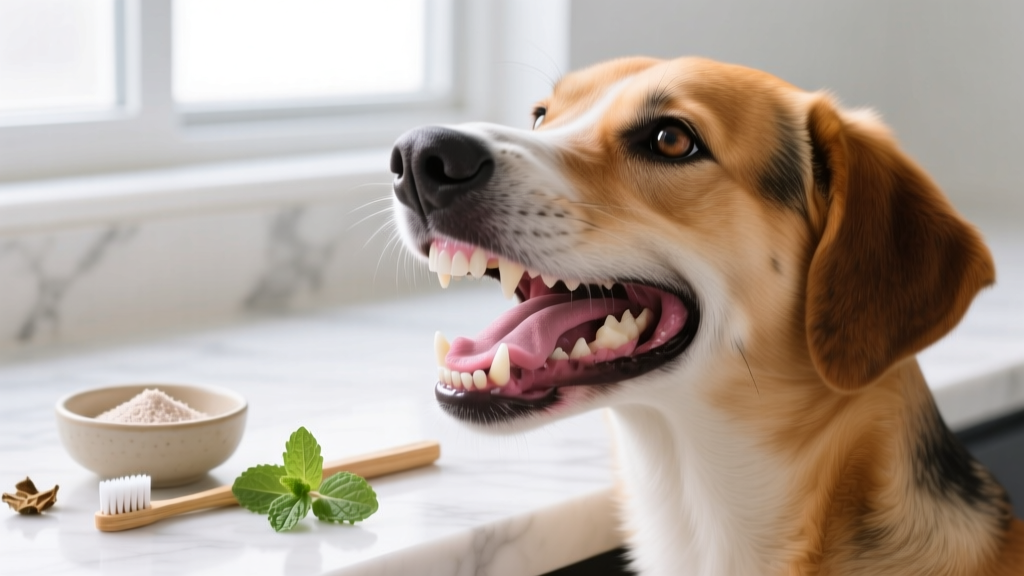
Canine Dental Anatomy: How Dog Teeth Work
Unlike humans, who have 32 permanent teeth, adult dogs have 42 teeth designed for gripping, tearing, and shearing rather than grinding. The canine mouth contains incisors for nibbling, canines for holding prey, premolars for cutting, and molars for crushing. Dog teeth are rooted deeply in the jawbone, with the carnassial teeth (upper fourth premolar and lower first molar) serving as the primary shearing mechanism.
Key Anatomical Differences: Dogs vs. Humans
- Tooth count: Dogs have 42 adult teeth; humans have 32
- Enamel thickness: Dog enamel is approximately 0.1-0.6mm thick, significantly thinner than human enamel (1-2mm), making dog teeth more susceptible to fracture
- pH environment: Canine saliva has a higher pH (7.5-8.0) compared to human saliva (6.5-7.0), which reduces cavity risk but increases tartar formation
- Periodontal ligament: Dogs have a more robust periodontal ligament, but this also means periodontal disease progresses faster once bacteria invade below the gumline
- Diet function: Dogs swallow food in larger pieces with minimal chewing, so dental health is less about function and more about preventing infection
The real danger zone in canine dental health is the subgingival space—the area below the gumline where 60% of the tooth structure resides. This is where periodontal disease begins, often invisible until significant damage has occurred.
Common Dental Problems in Dogs: Symptoms to Watch
According to the American Veterinary Medical Association, over 80% of dogs show signs of periodontal disease by age three. Here are the most prevalent oral health conditions:
| Condition | Primary Symptoms | Progression Timeline | Severity |
|---|---|---|---|
| Periodontal Disease | Bad breath, red/swollen gums, bleeding when chewing, loose teeth | Develops over months to years; grade 1 to grade 4 | High — can lead to organ damage |
| Gingivitis | Red gum margins, mild swelling, bleeding on contact | Reversible within 2-3 weeks with proper care | Low if caught early |
| Tooth Fractures | Visible chip, sensitivity to cold, pawing at mouth, dropping food | Immediate; pulp exposure causes pain within hours | High — requires extraction or root canal |
| Oral Tumors | Masses on gums, difficulty eating, facial swelling, weight loss | Variable; epulis grows slowly, melanoma progresses rapidly | Very high — requires biopsy |
| Retained Deciduous Teeth | Baby teeth present alongside adult teeth, crowding, misalignment | Apparent by 6-7 months of age | Moderate — causes malocclusion |
| Stomatitis | Severe oral inflammation, ulcers, excessive drooling, refusal to eat | Chronic condition; flares periodically | High — painful and difficult to manage |
Bad breath (halitosis) is never normal in dogs. While a mild "dog breath" odor is expected, a foul, rotting smell typically indicates advanced bacterial accumulation and warrants immediate veterinary attention.
How to Examine Your Dog's Teeth at Home
Regular home examinations help you catch problems before they become painful or expensive. Aim to check your dog's mouth at least once per week, ideally during a calm moment when your dog is relaxed.
Step-by-Step Oral Examination Technique
- Start with muzzle handling: Gently hold your dog's muzzle with one hand. If your dog resists, spend several days desensitizing them by touching the muzzle and rewarding with treats before attempting a full exam.
- Lift the upper lip: Using your thumb and forefinger, gently lift the upper lip on one side to expose the premolars and canines. Note the gum color—it should be bubblegum pink (or naturally pigmented in some breeds).
- Check the gumline: Look for redness, swelling, or recession at the point where the tooth meets the gum. Healthy gums have a stippled texture similar to an orange peel.
- Examine tooth surfaces: Look for yellow-brown tartar buildup, especially on the upper premolars and canines. White or cream-colored teeth are healthy; yellowing indicates plaque mineralization.
- Check the incisors: Gently pull down the lower lip to examine the front teeth. These are prone to tartar in brachycephalic breeds due to crowding.
- Inspect the back molars: Open the mouth slightly (if your dog allows) or slide your finger along the outside of the cheek teeth to feel for loose teeth, masses, or heavy calculus deposits.
- Assess breath odor: While some odor is normal, a distinctly foul or metallic smell suggests active infection or bleeding.
- Palpate the jaw: Run your hands along both sides of the lower jaw, feeling for asymmetry, swelling, or pain responses that could indicate a tooth root abscess.
Normal vs. Abnormal: What Healthy Dog Teeth Look Like
Knowing what's normal is essential for spotting trouble early. Here's a detailed comparison to guide your home assessments:
| Feature | Normal / Healthy | Abnormal / Concerning |
|---|---|---|
| Gum color | Salmon pink or naturally pigmented (black/brown patches in dark-coated breeds) | Bright red, pale white, blue-tinged, or yellow |
| Gum texture | Stippled, firm, knife-edged where they meet the tooth | Smooth, swollen, rolled edges, or receding |
| Tooth color | White to off-white with slight yellowing at the base in older dogs | Brown, gray, green-tinged, or translucent |
| Tooth stability | Firmly rooted; no movement when gently wiggled | Any looseness, shifting, or teeth at abnormal angles |
| Breath odor | Mild, not offensive; slightly meaty or neutral | Foul, rotting, metallic, or sweet/fruity (may indicate diabetes) |
| Bleeding | None during normal eating or gentle examination | Blood on toys, in water bowl, or when gums are touched |
| Eating behavior | Eats normally, chews on both sides of mouth | Dropping food, chewing on one side, head tilting while eating, sudden preference for soft food |
| Saliva | Clear, moderate amount | Excessive drooling, blood-tinged saliva, or thick/ropey saliva |
Capillary refill test: Press gently on your dog's gum with your finger—the area should turn white and return to pink within 1-2 seconds. Slower refill times can indicate circulatory issues; faster times may suggest inflammation.
Home Dental Care Routine: Where Dog Dental Powder Fits In
Effective canine dental care requires a multi-modal approach. No single product—including dog dental powder—can replace the mechanical action of brushing, but powders can serve as a valuable adjunct, particularly for dogs that resist toothbrushing.
Recommended Daily & Weekly Dental Maintenance
- Daily toothbrushing (gold standard): Use a veterinary-formulated enzymatic toothpaste (never human toothpaste—fluoride and xylitol are toxic to dogs). Brush using a circular motion at a 45-degree angle to the gumline. Focus on the outer surfaces of the upper premolars and canines where tartar accumulates fastest. Target: 30-60 seconds per session.
- Daily dental powder supplementation: Most dog dental powders contain ingredients like kelp (Ascophyllum nodosum), which has been shown to reduce plaque and tartar through systemic action—compounds are absorbed and secreted through saliva. Typical dosage: ½ to 1 scoop (approximately 0.5-2g depending on product and dog size) mixed into wet food daily. Popular options include PlaqueOff Dental Powder ($25-$35 for a 60-day supply), ProDen PlaqueOff ($20-$30), and TropiClean Tooth Powder ($15-$22).
- Daily dental chews (optional adjunct): Look for Veterinary Oral Health Council (VOHC)-approved chews that mechanically scrub teeth during chewing. Effective options include Greenies, Purina DentaLife, and Hill's Prescription Diet Dental Care chews. Give one chew per day, sized appropriately for your dog's weight.
- Weekly oral examination: Follow the 8-step exam process described above.
- Annual professional dental cleaning: Performed under general anesthesia by your veterinarian, including full-mouth radiographs. Cost typically ranges from $300-$800 depending on your region and whether extractions are needed.
How Dog Dental Powder Works
Dog dental powders typically function through one of two mechanisms:
- Systemic action (kelp-based powders): The active ingredient Ascophyllum nodosum is absorbed through the digestive tract and its compounds are excreted through saliva, where they soften existing tartar and prevent new plaque adhesion. Results typically become visible after 4-8 weeks of daily use.
- Topical/abrasive action (powder-applied-to-brush): Some powders are designed to be applied to a toothbrush or finger brush, providing mild abrasion and enzymatic action during brushing. These work similarly to toothpaste but in a dry format preferred by some owners.
Important: Dog dental powder is not a replacement for brushing or professional cleanings. It works best as part of a layered approach. Dogs with existing grade 2+ periodontal disease will not see significant improvement from powder alone and need veterinary treatment first.
Products You'll Need
| Product Category | Specific Recommendations | Price Range | Frequency |
|---|---|---|---|
| Enzymatic toothpaste | Virbac C.E.T. Enzymatic Toothpaste, Sentry Petrodex | $8-$14 | Daily |
| Dog dental powder (kelp-based) | PlaqueOff, ProDen PlaqueOff, Oral Probiotic powders | $15-$35 | Daily |
| Toothbrush | Finger brush (for small dogs/puppies), dual-head canine brush (for medium/large dogs) | $4-$10 | Replace every 3 months |
| VOHC-approved dental chews | Greenies, Purina DentaLife, Oravet Dental Hygiene Chews | $15-$30 per bag | Daily |
| Water additives (optional) | TropiClean Fresh Breath, Oxyfresh | $10-$18 | Daily |
When to See the Vet: Dental Red Flags
Contact Your Veterinarian Immediately If You Notice:
- Facial swelling, especially below the eye (indicates tooth root abscess)
- Refusal to eat for more than 24 hours
- Visible blood in saliva, water bowl, or on chew toys
- Loose, broken, or visibly fractured teeth
- Masses or growths anywhere in the mouth
- Pawing at the mouth accompanied by whining or distress
- Sudden, extreme bad breath that developed rapidly
- Dropping food or chewing exclusively on one side
- Excessive drooling beyond your dog's normal baseline
- Gums that appear blue, white, or bright cherry-red
Do not attempt to treat dental infections at home. Oral infections in dogs can spread systemically, affecting the heart (endocarditis), kidneys, and liver. Always consult your veterinarian for diagnosis and treatment of dental disease.
Professional dental cleanings under anesthesia allow your veterinarian to probe below the gumline and take dental radiographs—procedures impossible in a conscious dog. The American Kennel Club recommends annual professional cleanings for most dogs, with more frequent cleanings (every 6-9 months) for predisposed breeds.
Breed Predispositions: Which Dogs Are Most at Risk
Genetics play a significant role in canine dental health. Some breeds are predisposed to specific oral conditions due to jaw conformation, tooth crowding, or immune system factors.
| Breed | Common Dental Issues | Why They're at Risk | Recommended Care Frequency |
|---|---|---|---|
| Yorkshire Terrier | Severe periodontal disease, retained deciduous teeth, tooth crowding | Small jaw with 42 teeth forces crowding; genetically weak periodontal attachment | Professional cleaning every 6 months; daily brushing mandatory |
| Greyhound | Gingival recession, tooth fractures, enamel hypoplasia | Thin gingival tissue, high bite force relative to tooth size, racing-related trauma | Annual cleaning with radiographs; avoid hard antlers and bones |
| Pug / French Bulldog | Malocclusion, overcrowding, periodontal disease | Brachycephalic jaw compresses teeth into smaller space; rotated premolars | Professional cleaning every 6-8 months; daily brushing essential |
| Dachshund | Early-onset periodontal disease, tooth loss | Genetic predisposition to aggressive periodontitis; immune-mediated component | Professional cleaning every 6 months; start dental care by 6 months of age |
| Boxer | Gingival hyperplasia (gum overgrowth), epulis tumors, oral masses | Breed-specific tendency for excessive gum tissue growth; higher tumor incidence | Annual cleaning; biopsy any oral masses immediately |
| Shih Tzu | Tooth crowding, retained baby teeth, malocclusion | Brachycephalic skull with undershot bite; teeth erupt at abnormal angles | Professional cleaning every 6 months; monitor puppy tooth eruption closely |
| Maltese | Severe tartar accumulation, periodontal disease, tooth loss by age 5-7 | Small mouth, genetic predisposition to rapid calculus formation | Professional cleaning every 4-6 months without fail |
If you own a predisposed breed, discuss a breed-specific dental care plan with your veterinarian during your puppy's first visits. Early intervention significantly reduces lifetime dental costs and prevents painful disease.
Prevention Strategies: Building a Lifelong Dental Health Plan
Preventing dental disease is dramatically less expensive and less stressful than treating it. Here's a comprehensive prevention framework:
- Start early: Begin handling your puppy's mouth by 8 weeks of age. Introduce a finger brush and enzymatic toothpaste by 12 weeks. Dogs accustomed to dental care as puppies tolerate it far better throughout life.
- Layer your approach: Combine daily brushing with dog dental powder in food, VOHC-approved chews, and annual professional cleanings. Each layer addresses a different aspect of plaque and tartar control.
- Choose appropriate chew toys: Avoid antlers, hooves, and hard nylon bones that can fracture teeth. The Merck Veterinary Manual recommends chews that you can indent with your fingernail—anything harder risks tooth damage. Good options include Kong Classic rubber toys, Nylabone Flexi-Chew, and rope toys (supervised use only).
- Feed for dental health: While no diet prevents dental disease entirely, larger kibble pieces and dental-formulated diets (such as Hill's Prescription Diet t/d or Royal Canin Dental) use a mechanical scraping action as the tooth bites through the kibble.
- Schedule professional cleanings proactively: Don't wait for visible tartar or bad breath. By the time symptoms are obvious, periodontal damage is often irreversible. Follow your veterinarian's recommended cleaning schedule based on your dog's breed, age, and individual risk factors.
- Monitor and document: Take monthly photos of your dog's teeth and gums from the same angle. This visual record helps you and your veterinarian track changes over time and catch subtle deterioration.
Frequently Asked Questions About Dog Dental Health
Can dog dental powder replace brushing?
No. Dog dental powder—particularly kelp-based formulas like PlaqueOff—can reduce tartar accumulation by an estimated 30-50% based on manufacturer studies, but it cannot replicate the mechanical removal of plaque that brushing provides. Think of dental powder as a supplement to brushing, not a substitute. For dogs that absolutely refuse brushing, powder plus VOHC-approved dental chews is the next best option, but these dogs should see the veterinarian for professional cleanings more frequently.
How long does it take for dog dental powder to show results?
Most kelp-based dental powders require 4-8 weeks of consistent daily use before visible improvement. Existing tartar will gradually soften and may flake off during chewing. However, heavy calculus deposits (thick, brown, cement-like buildup) will not be eliminated by powder alone and require professional scaling under anesthesia.
Are there any risks or side effects of dog dental powder?
Kelp-based powders contain iodine, which can affect thyroid function in dogs with pre-existing thyroid conditions. If your dog has hypothyroidism or hyperthyroidism, consult your veterinarian before starting any kelp-containing supplement. Some dogs experience mild gastrointestinal upset (loose stools) during the first week of use. Always choose powders specifically formulated for dogs—never use human dental products, which may contain xylitol, fluoride, or other toxic ingredients.
How much does a professional dog dental cleaning cost?
Professional dental cleaning costs vary by region and facility, but typical ranges in 2026 are: basic cleaning with anesthesia ($300-$500), cleaning with dental radiographs ($400-$700), and cleaning with extractions ($500-$1,500+ depending on complexity). Pre-anesthetic bloodwork adds $80-$150. Many veterinary clinics offer dental discount months (often February, which is National Pet Dental Health Month) with 10-20% savings.
Is anesthesia really necessary for dental cleanings?
Yes. The American Veterinary Dental College and AVMA both strongly recommend anesthesia for professional cleanings. Anesthesia-free cleanings only address visible tartar above the gumline while missing the subgingival disease that causes tooth loss and systemic infection. Additionally, scaling without anesthesia is stressful and potentially dangerous if the dog moves suddenly with sharp instruments in their mouth.
My dog's teeth look fine—do I still need to worry?
Absolutely. Periodontal disease is often called a "silent disease" because the most destructive processes occur below the gumline where you cannot see them. Dogs are also remarkably stoic about oral pain—they will continue eating even with fractured teeth or abscesses. Regular veterinary oral examinations and radiographs are the only reliable way to assess true dental health.
This article provides general educational information about canine dental health. It does not replace professional veterinary diagnosis or treatment. Always consult your veterinarian before starting new supplements, including dog dental powder, especially if your dog has pre-existing health conditions or is on medication.
Anouk Beaumont
All our authors care for dogs every day — read more of their work on the authors page.