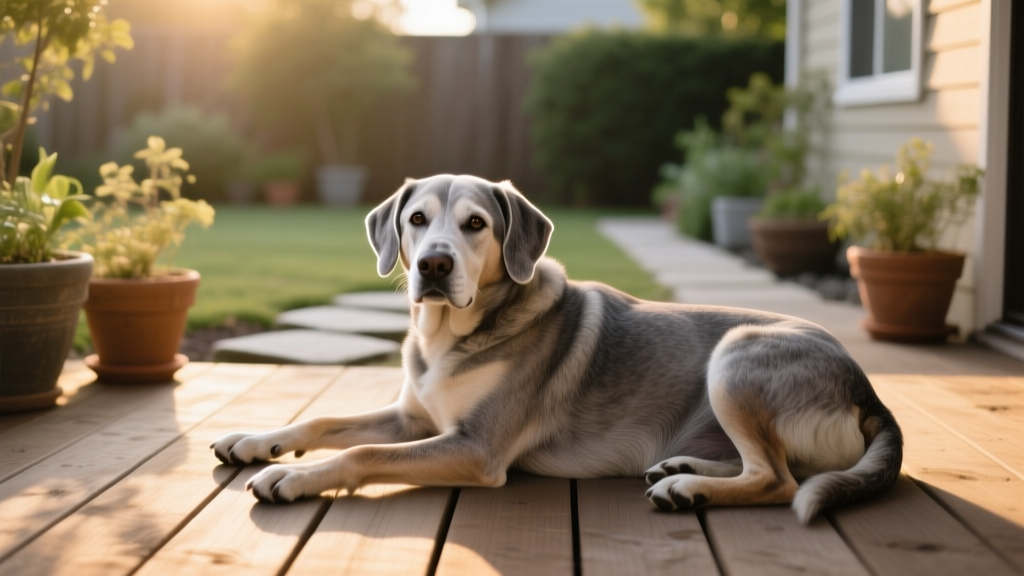
Popular Dog Breeds Mixed With Golden Retriever: A Complete Guide
Explore popular dog breeds mixed with Golden Retriever, including Goldendoodles, Goldadors, and more. Learn about traits, health, costs, and care.

The Appeal of Dog Breeds Mixed With Golden Retriever
The Golden Retriever consistently ranks among the top three most popular breeds in the United States, according to AKC registration data. It's no surprise that breeders have crossed Goldens with other popular breeds to create designer mixes that aim to blend the Golden's legendary friendly temperament with traits like lower shedding, different energy levels, or altered size. But mixing breeds doesn't produce cookie-cutter results — every litter, and even every puppy within a litter, can look and behave differently.
This guide breaks down the most common dog breeds mixed with Golden Retriever, what you can realistically expect from each cross, and the honest truths about health, temperament variability, and cost that marketing-heavy breeder websites often skip.
Understanding Designer Mix Generations: F1, F1B, F2, and Multigen
Why generations matter for Golden Retriever mixes: The generation of a designer cross directly affects how predictable the puppies' traits will be — especially coat type, shedding level, and size.
| Generation | Parentage | Predictability | Coat Outcome |
|---|---|---|---|
| F1 (First Cross) | Golden Retriever × Other purebred (e.g., Poodle) | Moderate — widest trait variation | Unpredictable; may shed heavily or lightly |
| F1B (Backcross) | F1 mix × One parent breed (usually Poodle for low-shed goals) | Higher — 75% one breed, 25% other | More likely curly/low-shed, but not guaranteed |
| F2 (Second Generation) | F1 × F1 (both parents are the same mix) | Low — highest genetic variability | Wide range even within same litter |
| Multigen (F3+) | Multigen × Multigen (multiple generations of the mix) | Highest — but still not purebred-level consistency | More consistent if line has been stabilized |
The critical takeaway: no generation of any designer mix guarantees specific traits. An F1B Goldendoodle may still shed, and an F2 litter can produce puppies that look nothing like each other. Responsible breeders perform health testing on parent dogs regardless of generation — this matters far more than the generation label.
Parent Breed Breakdown: The Golden Retriever Foundation
Every Golden Retriever mix inherits traits from both parent breeds. Understanding what the Golden Retriever brings to the table helps set realistic expectations.
| Trait | Golden Retriever | Typical Cross Partner (e.g., Poodle, Labrador) |
|---|---|---|
| Weight | 55–75 lb (25–34 kg) | Varies widely: Poodles 6–70 lb depending on size variety |
| Height | 21.5–24 in (55–61 cm) | Varies by breed |
| Temperament | Friendly, reliable, trainable, eager to please | Breed-specific (Poodle: intelligent/active; Lab: outgoing/energetic) |
| Coat | Dense double coat, heavy shedder, water-resistant | Breed-specific (Poodle: single curly coat, low-shed; Lab: double coat, heavy shedder) |
| Energy Level | High — needs 60–90 min daily exercise | Generally high across popular cross partners |
| Lifespan | 10–12 years | Varies: Poodles 12–15 years; Labs 10–12 years |
| Key Health Risks | Cancer (hemangiosarcoma, lymphoma), hip/elbow dysplasia, heart disease | Breed-specific risks combine in the mix |
The Golden Retriever's most heritable traits are its people-oriented temperament and its retrieving instinct. Most Golden mixes show strong food and toy motivation, which makes positive reinforcement training highly effective. However, the Golden's predisposition to certain cancers is also heritable — a reality that no amount of "hybrid vigor" eliminates.
The Most Popular Dog Breeds Mixed With Golden Retriever
Goldendoodle (Golden Retriever × Poodle)
The Goldendoodle is the most widely recognized Golden Retriever mix, originally developed in the 1990s. Breeders typically use Standard, Medium, or Miniature Poodles, which dramatically affects the size of the resulting puppies.
| Goldendoodle Type | Weight Range | Height Range | Poodle Parent Size |
|---|---|---|---|
| Standard | 50–90 lb (23–41 kg) | 20–26 in (51–66 cm) | Standard Poodle (40–70 lb) |
| Medium | 30–50 lb (14–23 kg) | 17–20 in (43–51 cm) | Medium Poodle (25–45 lb) |
| Miniature | 15–35 lb (7–16 kg) | 13–20 in (33–51 cm) | Miniature Poodle (10–15 lb) |
Coat possibilities: F1 Goldendoodles can have straight, wavy, or curly coats. Curly coats (inherited from the Poodle side) tend to shed less, while straight or wavy coats (leaning Golden) shed moderately to heavily. Only F1B and multigen lines with consistent Poodle backcrossing tend to produce reliably low-shed coats — and even then, individual variation occurs.
Temperament range: Best-case Goldendoodles are sociable, highly trainable, and excellent with children. Challenging scenarios include puppies that inherit the Poodle's sensitivity and wariness of strangers combined with the Golden's mouthiness and high energy — resulting in a dog that's reactive, anxious, or difficult for first-time owners to manage.
Typical cost: $1,500–$4,000 from a health-testing breeder in 2026. Miniature varieties from established multigen lines can reach $5,000+. Rescue Goldendoodles appear occasionally through breed-specific Poodle and Golden Retriever rescues, typically at $300–$600 adoption fees.
Goldador (Golden Retriever × Labrador Retriever)
Also sometimes called a "Golden Lab," this mix combines two of the most popular retriever breeds. Because both parents are similar in size and temperament, Goldadors tend to be more predictable than Poodle crosses — but they inherit double coats from both sides, meaning heavy shedding is essentially guaranteed.
- Weight: 55–80 lb (25–36 kg)
- Height: 21–25 in (53–64 cm)
- Coat: Short to medium double coat; golden, yellow, black, or chocolate
- Shedding: Heavy — both parent breeds are prolific shedders
- Temperament: Extremely friendly, food-motivated, high energy, mouthy
- Cost: $800–$2,500 from breeders; frequently available in shelters and rescues at $100–$400
Goldadors suit active families with yards who don't mind dog hair. They excel as therapy and service dog candidates due to their stable temperaments, but their exercise needs are substantial — expect 60–90 minutes of vigorous activity daily.
Goberian (Golden Retriever × Siberian Husky)
This striking cross combines the Golden's warmth with the Husky's independence and dramatic looks. Goberians are among the most variable of Golden Retriever mixes because the parent breeds have notably different temperaments.
- Weight: 45–80 lb (20–36 kg)
- Height: 20–24 in (51–61 cm)
- Coat: Thick double coat; colors range from golden to black-and-white, often with Husky-style markings and blue or heterochromatic eyes
- Shedding: Very heavy — seasonal "blowing" of the undercoat twice yearly
- Temperament best case: Friendly, adventurous, good with families
- Temperament challenge: High prey drive (Husky), stubborn streak, escape artist tendencies, vocalization (howling), and potential same-sex dog aggression
- Cost: $500–$1,500 from breeders; occasionally in rescues
Goberians need experienced owners who understand that Husky traits like independence and prey drive don't respond well to force-based training. Positive reinforcement combined with secure containment (6-foot fences, never invisible fences) is essential. These dogs are not ideal for homes with cats or small animals.
Golden Cocker Retriever (Golden Retriever × Cocker Spaniel)
Sometimes called a "Cogol" or "Golden Cocker," this mix produces a smaller dog with the Golden's gentle disposition and the Cocker Spaniel's compact size.
- Weight: 30–55 lb (14–25 kg)
- Height: 15–21 in (38–53 cm)
- Coat: Medium to long, wavy to straight; feathering on legs and ears
- Shedding: Moderate
- Temperament: Gentle, affectionate, can be sensitive or timid if not well-socialized
- Cost: $600–$1,800
This mix suits apartment dwellers who want a Golden-like personality in a smaller package. Ear care is critical — both parent breeds are prone to ear infections due to floppy, feathered ears that trap moisture.
Golden Shepherd (Golden Retriever × German Shepherd)
This cross blends the Golden's sociability with the German Shepherd's protective instincts and intelligence. The result can be a loyal family guardian, but temperament variability is significant.
- Weight: 55–85 lb (25–39 kg)
- Height: 21–26 in (53–66 cm)
- Coat: Medium to long double coat; tan, black, golden, or sable
- Shedding: Heavy year-round, seasonal peaks
- Temperament best case: Loyal, intelligent, confident, family-oriented
- Temperament challenge: Wariness of strangers, guarding tendencies, reactivity if under-socialized, potential herding behaviors with children
- Cost: $500–$2,000
Golden Shepherds require early, extensive socialization (ideally starting before 12 weeks) and owners who can provide consistent leadership through positive reinforcement. They're not recommended for first-time dog owners.
Trait Variability: What's Predictable vs. What's a Gamble
More predictable (inherited from Golden Retriever in most crosses):
- People-oriented, affectionate disposition
- Food and toy motivation (high trainability with positive reinforcement)
- Mouthiness — carrying objects, gentle mouthing, chewing tendencies
- Love of water (most Golden mixes will seek out puddles, lakes, and pools)
Less predictable (varies significantly between individuals):
- Shedding level — even within the same litter
- Adult size — especially in F1 and F2 generations
- Coat texture and color
- Prey drive and cat compatibility
- Barking and vocalization levels
- Separation anxiety susceptibility
- Wariness vs. friendliness toward strangers
The honest truth about mixed breeds: you're accepting a wider range of possible outcomes than you would with a well-bred purebred. This isn't a disadvantage — many owners love the surprise element — but it means you should choose a breeder or rescue that lets you meet the puppy's parents (or at minimum, the mother) and provides temperament evaluations.
Health Considerations: The Hybrid Vigor Myth vs. Reality
One of the most persistent claims about designer mixes is that "hybrid vigor" makes them healthier than purebreds. The reality, supported by veterinary research, is more nuanced.
What Hybrid Vigor Actually Means
Hybrid vigor (heterosis) refers to the reduced likelihood of inheriting recessive genetic conditions when two unrelated breeds are crossed. For example, if Golden Retrievers carry a recessive gene for one condition and Poodles carry a recessive gene for a different condition, the F1 puppies are unlikely to express either disease because they'd need two copies of the same defective gene.
However, hybrid vigor does not protect against:
- Conditions both breeds share — hip dysplasia, elbow dysplasia, and certain eye disorders are prevalent in both Golden Retrievers and many common cross partners (Poodles, Labs, German Shepherds)
- Polygenic conditions — cancers, heart disease, and autoimmune disorders involve multiple genes and environmental factors; mixing breeds doesn't eliminate risk
- Dominant genetic conditions — only one copy of a defective gene is needed, so crossing breeds doesn't help
- Structural issues — size mismatches (e.g., breeding a Golden with a Miniature Poodle) can create puppies with disproportionate builds prone to joint problems
Health Conditions to Screen For in Golden Retriever Mixes
| Condition | Prevalence in Goldens | Cross Breeds Also Affected | Recommended Screening |
|---|---|---|---|
| Hip dysplasia | ~20% (OFA data) | Poodles, Labs, GSDs, Huskies | OFA or PennHIP evaluation of parents |
| Elbow dysplasia | ~10% | Poodles, Labs, GSDs | OFA elbow radiographs |
| Hemangiosarcoma | ~20% of Golden deaths | Heritable component suspected in Goldens | No reliable screening; know family history |
| Lymphoma | ~12% lifetime risk | Higher in Goldens than average | No screening available |
| Progressive retinal atrophy (PRA) | Present in breed | Poodles, Cocker Spaniels | DNA test (prcd-PRA); CERF eye exam |
| Hypothyroidism | Moderate prevalence | Cocker Spaniels, GSDs | Thyroid panel on parents |
| Ichthyosis (skin condition) | Present in Goldens | Golden-specific; may pass to mixes | DNA test available |
When evaluating a breeder of any Golden Retriever mix, ask for documentation of both parents' health clearances. For the Golden Retriever parent, this should include OFA hip and elbow scores, a current CERF eye exam, and ideally a DNA test for ichthyosis and PRA. The Golden Retriever Club of America provides detailed health testing recommendations that apply regardless of whether the Golden is being bred to another Golden or a different breed.
Always consult your veterinarian about breed-specific health screening for your individual dog, regardless of its mix or generation.
Grooming Needs by Coat Type
Grooming requirements for dog breeds mixed with Golden Retriever depend entirely on which parent's coat the individual dog inherits. Here's a practical breakdown:
| Coat Type | Likely Inheritance | Brushing Frequency | Professional Grooming | Shedding Level |
|---|---|---|---|---|
| Straight, medium-length | Golden-dominant | 3–4× per week | Not required; optional bath/trim every 8–12 weeks | Moderate to heavy |
| Wavy/fleece | Mixed inheritance | Daily to every other day | Every 6–8 weeks ($60–$100 per session) | Low to moderate |
| Curly (Poodle-type) | Poodle-dominant | Daily (mats easily) | Every 4–6 weeks ($70–$120 per session) | Low |
| Double coat, short | Lab-dominant | 2–3× per week; daily during blow | Not required | Heavy |
| Thick double, long | Husky-dominant | Daily | Not recommended (shaving damages coat) | Very heavy |
Important grooming note: Never shave a double-coated Golden Retriever mix. The undercoat provides insulation against both heat and cold, and shaving can permanently damage the coat's ability to regrow properly. Use an undercoat rake (like the Furminator or a Greyhound comb) for deshedding instead.
Is Any Golden Retriever Mix Hypoallergenic?
No dog is truly hypoallergenic. The term is a marketing creation — allergens come from dander (dead skin cells), saliva, and urine, not just hair. However, Golden Retriever mixes with Poodle ancestry (Goldendoodles) may produce fewer allergens if they inherit a curly, single-layer coat that sheds minimally. This is more likely in F1B and multigen lines with consistent Poodle backcrossing.
If allergies are a concern:
- Spend at least 30 minutes with the specific puppy or adult dog before committing
- Understand that even "low-shed" Goldendoodles can trigger allergies through saliva and dander
- F1 Goldendoodles are the least predictable for allergy sufferers — avoid them if allergies are severe
- Consider that a puppy's coat may change texture as it matures (typically between 8–14 months)
Cost Breakdown: Purchase Price and First-Year Expenses
Beyond the purchase price, budget for first-year care costs that apply to any medium-to-large mixed breed dog:
| Expense Category | Estimated Cost (2026) | Notes |
|---|---|---|
| Purchase price (breeder) | $500–$5,000+ | Goldendoodles highest; Goldadors lowest |
| Adoption fee (rescue) | $100–$600 | Often includes spay/neuter, initial vaccines |
| Initial veterinary (first year) | $500–$1,200 | Vaccines (DHPP, rabies, bordetella), spay/neuter, heartworm prevention |
| Food (annual) | $400–$900 | Varies by size and food quality (AAFCO complete-and-balanced) |
| Grooming (annual, if applicable) | $0–$1,400 | $0 for short-coated mixes; up to $120/session for curly coats |
| Supplies (first year) | $300–$600 | Crate, bed, leash, harness, toys, bowls |
| Pet insurance (annual) | $400–$900 | Varies by deductible and coverage; recommended for cancer-prone breeds |
| Training classes | $150–$400 | Group positive-reinforcement classes; private sessions cost more |
First-year total for a breeder-purchased Golden Retriever mix: $2,750–$10,000+ depending on the specific mix, coat type (grooming costs), and your region. Annual ongoing costs after year one: $1,200–$3,500.
Who Should Consider a Dog Breed Mixed With Golden Retriever?
These mixes suit households that can provide:
- Time: 60–90 minutes of daily exercise plus mental stimulation (puzzle toys, training sessions, scent work)
- Space: A securely fenced yard is ideal; apartment living is possible for smaller mixes (Golden Cocker, Miniature Goldendoodle) with committed daily walks
- Family composition: Most Golden mixes do well with children due to the Golden's gentle nature, but supervise interactions with toddlers given the dogs' size and mouthiness
- Grooming commitment: Willingness to brush regularly and budget for professional grooming if the coat requires it
- Training philosophy: Patience for positive reinforcement methods — Golden mixes respond poorly to harsh corrections and shut down or become fearful
Less ideal for: First-time owners considering Goberians or Golden Shepherds (the Husky and GSD traits add complexity); people who want a guaranteed low-shed dog (no mix guarantees this); those unable to commit to potential cancer screening and treatment costs later in the dog's life.
Frequently Asked Questions
What two breeds make up a Golden Retriever mix?
A Golden Retriever mix pairs one Golden Retriever parent with another breed. The most common pairings are with Poodles (Goldendoodle), Labrador Retrievers (Goldador), Siberian Huskies (Goberian), German Shepherds (Golden Shepherd), and Cocker Spaniels (Golden Cocker Retriever). The specific combination determines the mix's name and likely trait range.
How big will a dog breed mixed with Golden Retriever get?
Adult size depends heavily on the other parent breed and the generation of the cross. Most Golden Retriever mixes fall between 30–90 lb (14–41 kg) and 15–26 inches (38–66 cm) at the shoulder. The widest range occurs in Goldendoodles, where Miniature Poodle crosses produce dogs as small as 15 lb while Standard Poodle crosses can reach 90 lb. Ask the breeder for the parents' exact weights for the best estimate.
What will the temperament of a Golden Retriever mix be like?
Most Golden Retriever mixes inherit a friendly, people-oriented, food-motivated temperament that makes them highly trainable. However, the other parent breed significantly influences the outcome: Poodle crosses may be more sensitive and alert, Husky crosses more independent and prey-driven, and German Shepherd crosses more protective and wary of strangers. Early socialization (exposure to diverse people, environments, and sounds before 16 weeks) is critical regardless of the mix.
Is a Golden Retriever mix hypoallergenic or low-shedding?
No dog is truly hypoallergenic. Some Golden Retriever mixes — particularly F1B or multigen Goldendoodles with strong Poodle coat inheritance — shed less and may be better tolerated by allergy sufferers. However, F1 Goldendoodles, Goldadors, Goberians, and Golden Shepherds all shed moderately to heavily. Coat type varies even within the same litter, so there is no guarantee.
What health issues might a Golden Retriever mix inherit?
Golden Retriever mixes can inherit conditions common to both parent breeds, including hip dysplasia, elbow dysplasia, progressive retinal atrophy, hypothyroidism, and — critically — cancers like hemangiosarcoma and lymphoma, which have a notably high incidence in the Golden Retriever breed. Hybrid vigor reduces the risk of some recessive conditions but does not eliminate shared or polygenic health risks. Request health clearances for both parents from any breeder.
How much does a Golden Retriever designer mix cost?
Purchase prices range from $500 to $5,000+ depending on the specific mix, generation, and breeder reputation. Goldendoodles from established multigen lines with full health testing typically cost $2,000–$4,000. Goldadors tend to be less expensive at $800–$2,500. Rescue and shelter Golden mixes are available for $100–$600 adoption fees. First-year care costs add $2,000–$5,000+ beyond the purchase price.
Where can I find Golden Retriever mixes for adoption?
Check ASPCA adoption resources, local animal shelters, and breed-specific rescues. Golden Retriever rescue organizations (like those affiliated with the GRCA) and Poodle rescues occasionally take in mixed-breed dogs. Petfinder.com allows you to search by breed mix across thousands of shelters and rescues nationwide.
Priya Sutaria
All our authors care for dogs every day — read more of their work on the authors page.