Dog Bitten by Fleas: Identification, Treatment & Prevention Guide
Dog bitten by fleas? Learn how to identify flea infestations, treat your pet effectively, and prevent reinfestation with proven veterinary-recommended methods.
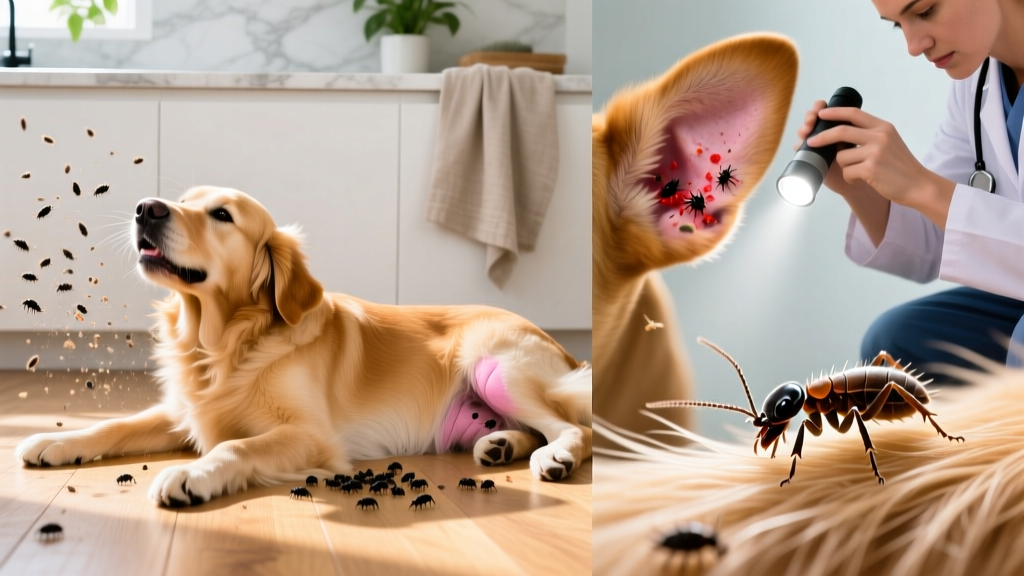
How to Know If Your Dog Has Been Bitten by Fleas
If you've noticed your dog scratching, biting, or licking excessively — especially around the base of the tail, groin, and belly — fleas are the most likely culprit. Flea bites on dogs appear as small red bumps, often surrounded by inflamed skin, and they cluster in areas where fur is thinner. But bites are only the visible tip of a much larger problem.
Fleas are the most common external parasite affecting dogs worldwide. According to the Merck Veterinary Manual, the cat flea (Ctenocephalides felis) accounts for over 90% of flea infestations found on dogs. Yes — the "cat flea" is the primary flea species that bites dogs too.
Flea Identification: What to Look For
- Size: 1.5–3.3 mm (roughly the size of a pinhead or sesame seed)
- Color: Dark reddish-brown to nearly black when engorged with blood
- Shape: Laterally flattened (side-to-side), which lets them move through fur easily
- Movement: Fast-moving; they jump vertically up to 7 inches (18 cm) and horizontally up to 13 inches (33 cm)
- Where found on dog: Base of the tail, lower back, inner thighs, groin, belly, and armpits — anywhere with less dense fur and warmer skin
- Key evidence: "Flea dirt" — small black specks that look like ground pepper. Place them on a damp white paper towel; if they dissolve into reddish-brown streaks, that's digested blood and confirms flea presence
Many dogs are allergic to flea saliva — a condition called flea allergy dermatitis (FAD). In these dogs, even a single flea bite can trigger intense itching that lasts 5–7 days. You may see hair loss, hot spots, and thickened skin from chronic scratching, even if you can't find a single live flea on the animal.
How Dogs Get Fleas: Transmission Routes
Fleas don't discriminate by breed, age, or lifestyle. Even strictly indoor dogs can get fleas. Here's how transmission happens:
- Outdoor environments: Flea larvae and pupae survive in shaded, humid areas — under decks, in leaf litter, tall grass, and shrubs. Your dog picks up newly emerged adults simply by walking through these zones.
- Other animals: Contact with infested dogs, cats, rabbits, raccoons, opossums, or rodents at dog parks, boarding facilities, groomers, or on walks. Fleas jump between hosts readily.
- Your home: Flea eggs fall off infested animals and accumulate in carpets, bedding, upholstery, and floor cracks. Visitors with infested pets can introduce fleas to your home.
- Wildlife vectors: Mice, rats, squirrels, and feral cats nesting near or under your home deposit flea eggs and larvae that eventually emerge and find their way to your dog.
The Companion Animal Parasite Council (CAPC) notes that fleas can survive indoors year-round regardless of outdoor temperatures, which is why infestations can emerge even in January if eggs have been dormant in carpeting.
The Flea Life Cycle: Why One Treatment Isn't Enough
Understanding the flea life cycle is critical because treating only adult fleas leaves 95% of the population untouched. Here are the four stages:
- Egg (2–12 days): A female flea lays 20–50 eggs per day after her first blood meal. Eggs are tiny (0.5 mm), white, oval, and non-sticky — they fall off the dog into the environment like salt from a shaker. They accumulate wherever your dog spends the most time.
- Larva (4–18 days): Eggs hatch into worm-like larvae (2–5 mm) that avoid light and burrow deep into carpet fibers, cracks, and soil. They feed on flea dirt (adult flea feces) and organic debris. This stage is vulnerable to desiccation — larvae die in humidity below 50%.
- Pupa (5 days to 12 months): Larvae spin a sticky, debris-covered cocoon. Inside, they develop into pre-emerged adults. The pupal stage is the most resistant — it is immune to virtually all insecticides. Pupae can remain dormant for months, waiting for vibrations, warmth, or CO₂ that signal a host is nearby.
- Adult (2 weeks to 3 months on host): Newly emerged adults must find a blood meal within 24 hours or they die. Once on a host, they begin feeding within minutes and mating within 24–48 hours. The cycle restarts.
This is why a "quick fix" flea bath won't solve an infestation. You need a strategy that breaks the cycle at multiple stages over a minimum of 3 months.
Symptoms of Flea Infestation: Mild vs. Severe
| Severity | Symptoms | What You'll See |
|---|---|---|
| Mild (fewer than 20 fleas) | Occasional scratching, minor skin irritation | 1–2 flea bites visible; flea dirt may be present on comb; dog otherwise comfortable |
| Moderate (20–100 fleas) | Frequent scratching and biting, restlessness, mild hair loss | Multiple bite clusters on belly/inner thighs; visible flea dirt throughout coat; some hot spots from chewing |
| Heavy (100+ fleas) | Constant scratching/biting, widespread hair loss, secondary skin infections, lethargy | Fleas visible to naked eye running through coat; severe FAD reactions; scabbing and oozing lesions; possible anemia in puppies or small dogs |
| Critical (severe burden in vulnerable dogs) | Flea bite anemia, tapeworm infection, secondary bacterial pyoderma | Pale gums, weakness, collapse (anemia); rice-like tapeworm segments near anus; deep skin infections requiring antibiotics |
🚨 Call Your Vet Immediately If:
- Your puppy or toy-breed dog has a heavy flea burden (risk of life-threatening anemia)
- Gums appear pale or white instead of pink
- Your dog is lethargic, weak, or refusing food alongside flea symptoms
- Hot spots are oozing, spreading, or smell foul (secondary infection)
- You see rice-like segments in stool or around the anus (tapeworms transmitted by fleas)
Health Risks: Diseases Fleas Transmit to Dogs
Fleas are more than an itchy nuisance — they are disease vectors. The American Kennel Club highlights several conditions linked to flea infestations:
- Flea Allergy Dermatitis (FAD): The #1 cause of skin disease in dogs. An immune reaction to flea saliva proteins causing extreme itching, hair loss, and secondary infections. Affects roughly 40% of dogs with flea exposure.
- Tapeworms (Dipylidium caninum): Dogs ingest infected fleas during grooming. Tapeworms attach to the intestinal wall and can grow up to 8 inches long. You'll see proglottid segments (resembling grains of rice) in feces or around the anus.
- Flea Bite Anemia: Heavy infestations — particularly in puppies under 6 months, senior dogs, or toy breeds under 15 lb (7 kg) — can cause significant blood loss. A single flea can consume 15 times its body weight in blood daily.
- Bartonellosis (Bartonella henselae): Fleas transmit this bacterium, which can cause fever, lameness, lymph node enlargement, and heart valve inflammation (endocarditis) in dogs.
- Mycoplasma haemocanis: A blood parasite transmitted by fleas that destroys red blood cells, causing anemia — particularly dangerous in splenectomized or immunocompromised dogs.
Treatment Protocol: How to Eliminate a Flea Infestation
Step 1: Treat All Pets in the Household
Every dog and cat in the home must be treated simultaneously — even if only one animal shows symptoms. Untreated pets serve as reservoirs that perpetuate the infestation.
Step 2: Choose a Fast-Acting Adulticide
For immediate relief, you need a product that kills adult fleas within hours. Options include:
- Capstar (nitenpyram): OTC oral tablet that kills adult fleas within 30 minutes but provides only 24-hour protection. Useful as a "knockout" dose before starting a longer-term preventive. Approximate cost: $8–$12 per dose.
- Prescription oral isoxazolines: Bravecto (fluralaner), NexGard (afoxolaner), Simparica Trio (sarolaner/moxidectin/pyrantel), and Credelio (lotilaner) provide 1–3 months of adult flea kill with 99%+ efficacy. These require a veterinary prescription. Cost range: $40–$70 per dose depending on dog weight.
- Topical spot-on treatments: Frontline Plus (fipronil + (S)-methoprene), Advantage II (imidacloprid + pyriproxyfen), and Revolution Plus (selamectin + sarolaner) are applied between the shoulder blades. Efficacy: 85–98%. Cost: $15–$50 per month.
Step 3: Add an Insect Growth Regulator (IGR)
Products containing methoprene or pyriproxyfen prevent flea eggs from hatching and larvae from developing. Many combination products (Frontline Plus, Advantage II) already include IGRs. If using a standalone adulticide like Capstar, pair it with a separate IGR product to break the life cycle.
Step 4: Treat the Environment (Non-Negotiable)
Because 95% of the flea population exists as eggs, larvae, and pupae in your home, environmental treatment is essential:
- Indoors: Vacuum all carpets, rugs, and upholstery daily for 2 weeks. The vibration stimulates pupae to emerge, exposing them to treatment. Immediately seal and discard the vacuum bag or empty the canister outside. Wash all pet bedding, blankets, and your own bedding in hot water (minimum 140°F / 60°C). Use a household spray containing an IGR (e.g., pyriproxyfen) plus an adulticide (e.g., permethrin-based) on carpets, baseboards, and under furniture. Cost: $15–$30 for a quality IGR spray.
- Yard: Focus on shaded, humid areas where your dog rests — under porches, along fences, in dog houses. Apply a yard spray containing permethrin or bifenthrin plus an IGR. Keep grass short, remove leaf litter, and eliminate standing water. Cost: $20–$40 per application; treat every 2–3 weeks during peak season.
- Severe infestations: Professional pest control treatment ($150–$400 for a typical home) may be warranted when DIY efforts fail after 6–8 weeks.
Step 5: Continue Monthly Prevention for at Least 3–6 Months
Because the pupal stage can remain dormant for up to 12 months, you must maintain preventive treatment for a minimum of 3 consecutive months after the last visible flea to ensure the life cycle is fully broken.
Prevention Products Compared: Topical, Oral & Collar Options
| Product Type | Product Examples | Active Ingredient(s) | Duration | Kills Adult Fleas | Prevents Eggs/Larvae | OTC or Rx | Approx. Cost/Dose |
|---|---|---|---|---|---|---|---|
| Oral chewable | NexGard | Afoxolaner | 30 days | Yes (within 8 hrs) | No (kills adults before laying) | Rx | $45–$60 |
| Oral chewable | Bravecto | Fluralaner | 12 weeks | Yes (within 2 hrs) | No (kills adults before laying) | Rx | $55–$70 |
| Oral chewable | Simparica Trio | Sarolaner + moxidectin + pyrantel | 30 days | Yes (within 8 hrs) | No (kills adults before laying) | Rx | $55–$75 |
| Oral tablet | Capstar | Nitenpyram | 24 hours | Yes (within 30 min) | No | OTC | $8–$12 |
| Topical spot-on | Frontline Plus | Fipronil + (S)-methoprene | 30 days | Yes (within 12 hrs) | Yes (IGR) | OTC | $15–$22 |
| Topical spot-on | Advantage II | Imidacloprid + pyriproxyfen | 30 days | Yes (within 12 hrs) | Yes (IGR) | OTC | $15–$20 |
| Topical spot-on | Revolution Plus | Selamectin + sarolaner | 30 days | Yes (within 6 hrs) | No (kills adults before laying) | Rx | $45–$65 |
| Collar | Seresto | Imidacloprid + flumethrin | 8 months | Yes (within 24 hrs) | Partial (repels + kills) | OTC | $55–$70 (one-time) |
Important note: Never use dog flea products on cats. Permethrin, found in some OTC dog spot-on treatments, is highly toxic to cats and can cause seizures and death. Always consult your veterinarian before choosing a product, especially in multi-pet households.
Seasonal Risk Calendar: When Fleas Peak by Region
| Region | Peak Flea Season | Year-Round Risk? | Notes |
|---|---|---|---|
| Southeast US (FL, GA, AL, MS, LA) | March – November (outdoors); year-round indoors | Yes — high | Warm, humid climate supports outdoor flea populations nearly year-round |
| Northeast US (NY, MA, PA, CT) | May – October (outdoors) | Yes — indoors | Outdoor fleas die in freezing temps, but indoor populations persist in heated homes |
| Midwest US (IL, OH, MI, MN) | June – September (outdoors) | Yes — indoors | Shorter outdoor season but indoor infestations common October–March |
| Southwest US (AZ, NM, SoCal) | Year-round (outdoors in mild areas) | Yes — high | Dry heat reduces flea survival, but monsoon season (July–Sept) spikes populations |
| Pacific Northwest (WA, OR) | May – October | Yes — indoors | Mild, wet winters support extended outdoor flea activity compared to colder regions |
The CAPC recommends year-round flea prevention for all dogs regardless of region, because indoor environments maintain flea-friendly temperatures and humidity throughout winter.
Can Fleas Spread to Humans or Other Pets?
Zoonotic Potential: Fleas and Humans
Fleas will bite humans — particularly ankles and lower legs — but they cannot complete their life cycle on human blood. Human flea bites appear as small, itchy red bumps, often in clusters of three (colloquially called "breakfast, lunch, and dinner"). While uncomfortable, the primary zoonotic concern is disease transmission:
- Cat scratch disease (Bartonella henselae): Fleas transmit this bacterium between animals; humans can contract it through cat scratches contaminated with flea feces.
- Murine typhus: Rare in the US but possible; transmitted by flea feces entering bite wounds.
- Tapeworms: Children can accidentally ingest an infected flea and develop Dipylidium caninum tapeworm infection.
Spread to Other Pets
Fleas move freely between dogs, cats, ferrets, and rabbits. In a multi-pet household, treating only one animal is futile — every mammal must receive appropriate species-specific treatment. Never use dog-formulated permethrin products on cats. Consult your veterinarian for safe multi-species protocols.
How Often Should You Treat Your Dog for Fleas?
For active infestations: Treat all pets monthly (or per product label — Bravecto is every 12 weeks) for a minimum of 3 consecutive months while simultaneously treating the environment. Many veterinary dermatologists recommend 6 months of continuous treatment for stubborn infestations.
For prevention: The veterinary consensus, endorsed by the CAPC, is year-round monthly preventive treatment (or every 12 weeks for Bravecto). This prevents infestations from establishing, protects against flea-borne diseases, and eliminates the costly, stressful process of treating a full-blown infestation.
The annual cost of year-round flea prevention ranges from $120–$250 depending on the product and your dog's weight. Compare that to the $300–$800 you might spend treating an active infestation — including vet visits for FAD or tapeworms, environmental sprays, and professional pest control — and prevention is clearly the more economical choice.
Frequently Asked Questions
Can I use natural or home remedies to treat fleas on my dog?
While some owners try essential oils, diatomaceous earth, or apple cider vinegar, none of these have reliable scientific evidence for flea elimination. Essential oils like tea tree, eucalyptus, and citrus can be toxic to dogs. Food-grade diatomaceous earth may have some effect on environmental larvae but does not kill fleas on your dog and poses an inhalation risk. Stick to EPA-registered or FDA-approved products with proven efficacy. Always consult your veterinarian before trying any alternative treatment.
My dog is on flea prevention but still has fleas — what's happening?
The most common reasons include: (1) the product was applied incorrectly or the dog was bathed within 48 hours of a topical application, reducing efficacy; (2) the product dose doesn't match the dog's current weight; (3) environmental infestation is so heavy that newly emerging fleas overwhelm the product's kill speed; (4) the product is counterfeit (a known issue with online purchases — buy from your vet or authorized retailers). Talk to your vet about switching to a different active ingredient class.
How long does it take to get rid of a flea infestation completely?
Expect 3–6 months of consistent treatment for all pets and the environment. The pupal cocoon stage is the bottleneck — no insecticide kills pupae, so you must wait for them to emerge and be killed by the adulticide on your pet. Consistency is key: missing even one monthly dose resets the clock.
Are flea collars safe and effective?
The Seresto collar (imidacloprid + flumethrin) is the most studied OTC flea collar and provides up to 8 months of protection with demonstrated efficacy. However, the FDA has received reports of adverse events associated with some flea collars, and cheaper, unregulated collars sold online may contain inconsistent active ingredient levels. If you choose a collar, purchase Seresto from a veterinary clinic or authorized retailer to avoid counterfeits.
Should I bathe my dog to get rid of fleas?
A flea shampoo or a bath with dish soap (like Dawn) will kill fleas currently on your dog through contact action, but it provides zero residual protection. Bathing is useful as a first step to reduce the adult flea load and provide immediate comfort, but it must be followed by a proper preventive product. Wait 48 hours after bathing before applying a topical spot-on treatment, as natural skin oils are needed for proper distribution.
This article is for informational purposes only and does not replace professional veterinary advice. Always consult your veterinarian for diagnosis, treatment recommendations, and product selection tailored to your dog's health history and lifestyle. If you suspect your dog has ingested a toxic substance, contact the ASPCA Animal Poison Control Center at (888) 426-4435 (24/7, consultation fee applies).
Marcus Aldridge
All our authors care for dogs every day — read more of their work on the authors page.


