Dental Issues in Dogs: Symptoms, Home Checks & Prevention Guide
Learn to spot dental issues in dogs early. Includes home exam steps, normal vs abnormal signs, breed risks, cleaning routines, and vet red flags.

If your dog has ever turned away from a favorite treat or you've caught a whiff of something truly awful when they yawned, you may be dealing with canine dental trouble. Dental issues in dogs are staggeringly common — the American Veterinary Medical Association estimates that over 80% of dogs show signs of periodontal disease by age three. Left untreated, oral infections can seed bacteria into the bloodstream, affecting the heart, liver, and kidneys.
This guide walks you through exactly how your dog's mouth works, what to look for during home exams, which breeds carry the highest risk, and how to build a practical dental care routine that actually sticks.
How Your Dog's Mouth Works: A Quick Anatomy Primer
Dog vs. Human Dentition — Key Differences
- Tooth count: Adult dogs have 42 teeth (humans have 32). Puppies have 28 deciduous (baby) teeth that erupt between 3–6 weeks and are replaced by 12–16 weeks of age.
- Tooth structure: Canine teeth are proportionally longer and more curved than human canines, designed for gripping and tearing. Carnassial teeth (upper fourth premolar and lower first molar) act as shears for crushing bone — a structure humans don't have.
- Enamel thickness: Dog enamel is roughly 0.1–0.6 mm thick compared to human enamel at 1–2 mm. This makes dog teeth more vulnerable to fracture but less prone to cavity formation (dogs get cavities at a far lower rate than humans).
- Saliva pH: Dog saliva is more alkaline (pH ~7.5–8.0) than human saliva (~6.5–7.0), which helps protect against acid-driven decay but encourages calculus (tartar) mineralization.
- Periodontal ligament: Dogs have a similar ligament structure anchoring teeth to bone, but their gingival sulcus (the groove between gum and tooth) is deeper — typically 1–3 mm — making it a prime pocket for bacterial accumulation.
The practical takeaway: dogs rarely get traditional "cavities" the way humans do. Their primary dental enemy is periodontal disease — a progressive infection of the structures supporting the tooth.
Common Dental Problems in Dogs (and What Each Looks Like)
| Condition | Key Symptoms | Typical Onset | Severity |
|---|---|---|---|
| Periodontal disease | Bad breath, red/swollen gums, tartar buildup, loose teeth, bleeding when chewing | Progressive; often visible by age 2–3 | Mild → Severe (4 stages) |
| Fractured teeth | Sudden reluctance to chew hard items, visible crack, facial swelling, pawing at mouth | Acute (trauma or chewing hard objects) | Moderate → Severe |
| Tooth resorption | Tooth discoloration (pinkish hue), pain on touch, dropping food, jaw chattering | Gradual; often undetected without dental X-rays | Moderate → Severe |
| Oral tumors | Visible mass, bleeding, difficulty swallowing, weight loss, loose teeth near mass | Variable; more common in dogs 8+ years | Severe (requires biopsy) |
| Retained deciduous teeth | "Double row" of teeth, misalignment, food trapping between teeth | Puppyhood (4–7 months) | Mild → Moderate |
| Gingival hyperplasia | Overgrown gum tissue covering teeth, difficulty eating, trapped debris | Gradual; may be medication-induced | Mild → Moderate |
According to the Merck Veterinary Manual, periodontal disease accounts for the vast majority of canine dental visits. It progresses through four stages — from gingivitis (reversible) to advanced periodontitis with bone loss (irreversible) — which is why early detection at home matters so much.
How to Examine Your Dog's Teeth at Home
A monthly home mouth exam takes about 60 seconds and can catch problems months before they become painful. Here's the step-by-step technique I recommend to every dog owner:
Step-by-Step Home Dental Exam
- Choose a calm moment. Wait until your dog is relaxed — post-walk or during an evening cuddle. Never attempt an exam when they're excited or anxious.
- Start with the outside. Gently lift the upper lip on one side using your thumb and forefinger. You should be able to see the canine, premolars, and gum line.
- Check the gum color. Healthy gums are bubblegum pink (some breeds have natural black pigmentation — know your dog's baseline). Press a gum with your finger; it should blanch white and return to pink within 1–2 seconds (capillary refill time).
- Look at the gum line. The gum should meet each tooth cleanly with no visible gap, redness, or recession. A thin red line along the gum margin signals early gingivitis.
- Scan for tartar. Look for yellow-brown crusty deposits, especially on the upper fourth premolars (the large cheek teeth). These are the first teeth to accumulate calculus.
- Check both sides. Repeat on the opposite side, then gently pull down the lower lip to inspect lower teeth.
- Peek at the incisors. Lift the front lip to see the small front teeth. Look for crowding, missing teeth, or worn edges.
- Smell test. Mild "dog breath" is normal. A putrid, rotting odor suggests advanced bacterial infection and warrants a vet visit.
- Palpate the jaw. Run your fingers along both sides of the lower jaw and under the chin. Feel for swellings, asymmetry, or tender spots — these can indicate tooth root abscesses.
- Open the mouth (if your dog allows it). Gently press down on the lower jaw while lifting the upper jaw to see the palate and inner tooth surfaces. Look for masses, ulcers, or foreign material (stick fragments, bone shards).
Pro tip: Take a photo of your dog's healthy mouth as a baseline reference. This makes it far easier to spot changes months later.
Normal vs. Abnormal: What a Healthy Dog Mouth Looks Like
| Feature | ✅ Normal / Healthy | ⚠️ Abnormal / Concerning |
|---|---|---|
| Gum color | Bubblegum pink or breed-typical black/pink patches | Bright red, pale/white, bluish, or yellowish gums |
| Gum texture | Firm, stippled (like orange peel), tightly adhered to tooth | Puffy, spongy, bleeding easily, or receding from tooth |
| Tooth surface | Smooth, white to off-white, no visible cracks | Yellow/brown deposits, cracks, chips, pink discoloration, or visible pulp |
| Breath odor | Mild, not offensive | Foul, putrid, metallic, or sweet/fruity odor |
| Tooth alignment | Upper incisors slightly overlap lower; canines interlock cleanly | Teeth touching palate, severe underbite causing tissue trauma, rotated teeth |
| Saliva | Clear, normal volume | Excessive drooling, blood-tinged saliva, or thick/ropey saliva |
| Eating behavior | Eats enthusiastically, chews on both sides | Dropping food, chewing on one side, sudden preference for soft food |
| Tooth count (adult) | 42 teeth (some congenital absences are benign) | Missing teeth with swelling (may be impacted/abscessed under gum) |
Building a Dog Dental Care Routine That Works
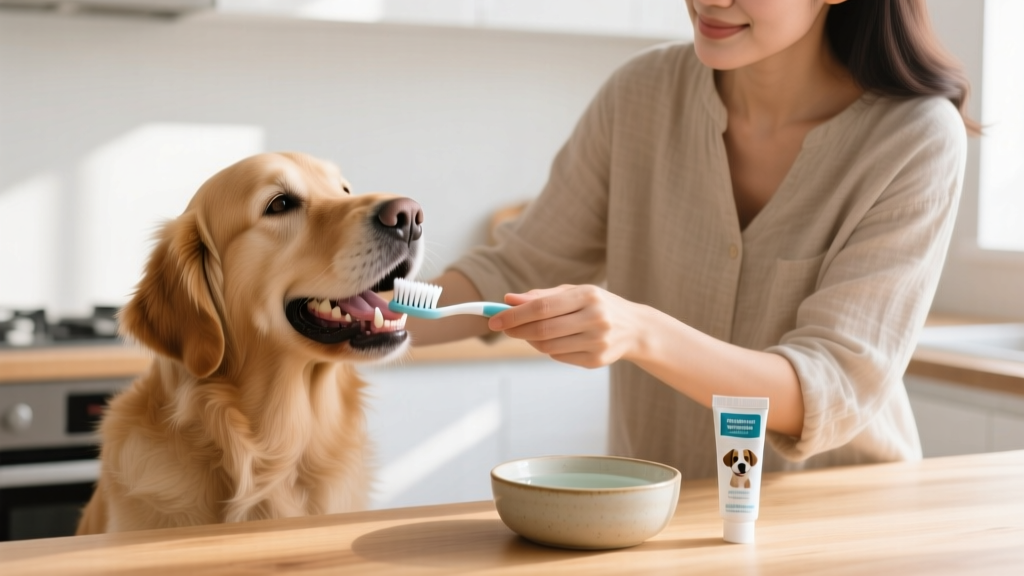
Daily brushing remains the gold standard for preventing dental issues in dogs. Here's a realistic care schedule based on what veterinary dentists recommend and what actually works in multi-dog households:
Daily (ideal) or Minimum 3× Per Week
- Brush with enzymatic toothpaste. Use a dog-specific enzymatic paste (e.g., Virbac C.E.T. or Sentry Petrodex). These contain glucose oxidase and lactoperoxidase, enzymes that continue breaking down plaque for hours after brushing. Never use human toothpaste — fluoride and xylitol are toxic to dogs.
- Technique: Apply paste to a finger brush or soft-bristled dog toothbrush. Hold brush at a 45° angle to the gum line. Use small circular motions on the outer surfaces. Focus on the upper cheek teeth and canines where tartar accumulates fastest. Aim for 30–60 seconds total.
Daily (Supplemental)
- VOHC-approved dental chews. Look for the Veterinary Oral Health Council seal — products must demonstrate ≥15% reduction in plaque or tartar in controlled trials. Examples: Purina Pro Plan Dental Chewz, Greenies (original formula), Hill's Prescription Diet t/d. Budget: $15–$35/month depending on dog size.
- Water additives. Products like TropiClean or Oxyfresh add antimicrobial agents to drinking water. They provide modest benefit (~10–15% plaque reduction) but are not a replacement for brushing.
Monthly
- Full home mouth examination (see steps above)
- Inspect chew toys for wear — replace any that have become small enough to swallow or have sharp edges
Annually (or every 6 months for high-risk breeds)
- Professional veterinary dental exam
- Professional dental cleaning under anesthesia when recommended — typically every 1–3 years depending on tartar accumulation rate. Expect costs of $300–$800 for a routine cleaning, $800–$2,500+ if extractions are needed.
Recommended Dental Care Products
| Product Category | Specific Recommendations | Price Range | Notes |
|---|---|---|---|
| Enzymatic toothpaste | Virbac C.E.T. Enzymatic Toothpaste, Sentry Petrodex | $8–$15 | Poultry, beef, or malt flavors; avoid mint (dogs dislike it) |
| Toothbrush | Virbac C.E.T. Dual-Head Brush, Boshel finger brushes | $5–$12 | Finger brushes work well for beginners and small breeds |
| VOHC-accepted chews | Purina Dental Chewz, Greenies, Whimzees | $15–$35/month | Check VOHC.org for current accepted product list |
| Dental diet (kibble) | Hill's Prescription Diet t/d, Royal Canin Dental | $40–$75/bag | Requires prescription; mechanically scrubs teeth via kibble design |
| Water additive | TropiClean Fresh Breath, Oxyfresh | $10–$18 | Supplemental only — not a brushing replacement |
| Dental spray/gel | TropiClean Advanced Cleaning Gel | $10–$16 | Applied along gum line; useful for dogs that resist brushing |
When to See the Vet: Dental Red Flags You Shouldn't Ignore
🚨 Call Your Veterinarian Promptly If You Notice:
- Visible tooth fracture with exposed pulp (dark center or pink/red spot in tooth)
- Facial swelling, especially below the eye (classic sign of tooth root abscess)
- Bleeding from the mouth that doesn't stop within 5 minutes
- Complete refusal to eat for more than 24 hours
- Loose or wobbly adult teeth
- Any visible oral mass or growth (even small ones — oral melanoma is aggressive)
- Pus or discharge from the gums or nasal cavity
- Sudden, severe bad breath that developed over days (not gradually)
- Pawing at the mouth combined with whining or behavior changes
- Difficulty closing the mouth or jaw hanging open
Emergency — Seek Immediate Care: Profuse oral bleeding, facial trauma, difficulty breathing, or suspected poisoning from ingestion of toxic dental products (human toothpaste containing xylitol or fluoride). Contact the ASPCA Animal Poison Control Center at (888) 426-4435 (24/7, consultation fee applies) if you suspect toxic ingestion.
Always consult your veterinarian for a proper diagnosis. Home observation helps you describe symptoms accurately, but dental disease staging requires professional examination with dental radiographs.
Breed Predispositions: Which Dogs Are at Highest Risk?
Not all dogs face equal dental risk. Skull shape (cephalic index), tooth crowding, genetics, and diet all play roles. Here's a breakdown of breeds with well-documented predispositions:
| Breed | Primary Dental Risk | Why | Recommended Exam Frequency |
|---|---|---|---|
| Yorkshire Terrier | Severe periodontal disease, retained baby teeth | Tiny jaw with 42 teeth causes extreme crowding; genetic predisposition to early plaque formation | Every 6 months |
| Dachshund | Periodontal disease, tooth fractures | Long muzzle but narrow jaw; high tartar accumulation rate | Every 6–12 months |
| Greyhound | Severe gingivitis, tooth resorption | Breed-specific inflammatory response; high prevalence of odontoclastic resorptive lesions | Every 6 months |
| Boxer / Bulldog (brachycephalic) | Malocclusion, gingival hyperplasia, crowded teeth | Shortened skull compresses dental arch; teeth rotate and overlap creating plaque traps | Every 6 months |
| Shih Tzu | Periodontal disease, retained deciduous teeth, malocclusion | Brachycephalic skull with dental crowding; genetically prone to early gum recession | Every 6 months |
| Cavalier King Charles Spaniel | Early-onset periodontal disease | Small jaw with predisposition to rapid calculus formation; often shows Stage 2+ disease by age 3 | Every 6 months |
| German Shepherd | Tooth fractures, oral masses | High bite force + drive to chew hard objects; higher oral tumor incidence in large breeds | Every 12 months |
| Toy / Miniature Poodle | Periodontal disease, tooth root abscesses | Small mouth crowding; thin enamel; propensity for retained roots after tooth loss | Every 6 months |
Brachycephalic breeds (short-nosed dogs) deserve special attention. Their compressed skulls force teeth into abnormal positions — upper and lower canines may collide, and incisors often crowd into overlapping rows. Every misaligned tooth creates a niche where plaque thrives undisturbed. The American Kennel Club recommends dental checkups start at puppyhood for these breeds.
Preventing Dental Issues in Dogs: A Practical Framework
Prevention is dramatically cheaper than treatment. A professional dental cleaning runs $300–$800 for a straightforward case, while treating advanced periodontal disease with multiple extractions and follow-up care can exceed $2,000–$3,000. Here's a layered prevention strategy:
1. Start early — puppyhood conditioning. Begin handling your puppy's mouth at 8–10 weeks. Touch their gums daily, reward with treats, and introduce a toothbrush by 12 weeks. Dogs accustomed to mouth handling as puppies accept brushing far more readily as adults. Use positive reinforcement — pair every mouth touch with a high-value reward (small bits of chicken or cheese).
2. Choose appropriate chew items. Avoid antlers, hooves, ice cubes, and hard nylon bones — these are the leading causes of slab fractures in carnassial teeth. The veterinary dentist rule of thumb: if you can't indent the chew with your thumbnail, it's too hard. Better options include rubber Kong toys, medium-density nylon chews (like Benebone with some flex), and VOHC-approved edible chews.
3. Feed for dental health. While no diet eliminates the need for brushing, larger kibble pieces that require chewing before swallowing provide mild mechanical cleaning. Prescription dental diets (Hill's t/d, Royal Canin Dental) use a matrix design that doesn't shatter on impact — the tooth sinks into the kibble, scrubbing the surface. Raw bones carry fracture and bacterial contamination risks and are not recommended by most veterinary dentists.
4. Schedule regular professional assessments. Annual wellness exams should include an oral evaluation. Dogs in high-risk breeds or those with a history of dental disease benefit from 6-month intervals. Professional cleanings under general anesthesia allow full-mouth dental radiographs — essential because roughly 60% of each tooth sits below the gum line where you can't see it.
5. Manage systemic risk factors. Dogs with diabetes, Cushing's disease, or chronic kidney disease face accelerated periodontal breakdown due to altered immune response. Keeping these conditions well-managed directly protects oral health. Certain medications (cyclosporine, amlodipine) can cause gingival overgrowth — discuss dental side effects with your vet when starting new medications.
Frequently Asked Questions
How do I know if my dog's dental issues are an emergency?
Acute signs like facial swelling (especially under the eye), profuse bleeding, visible tooth fracture with dark or pink pulp exposure, sudden inability to close the mouth, or complete food refusal for 24+ hours warrant same-day veterinary attention. Chronic bad breath or mild tartar buildup, while important to address, can typically wait for a scheduled appointment within 1–2 weeks.
Can I use human toothpaste on my dog?
No. Human toothpastes often contain fluoride (toxic to dogs in significant amounts) and many now contain xylitol, an artificial sweetener that causes rapid, potentially fatal hypoglycemia and liver failure in dogs. Always use a dog-specific enzymatic toothpaste. If your dog accidentally ingests human toothpaste, contact the ASPCA Animal Poison Control Center at (888) 426-4435 immediately.
My dog hates having his teeth brushed — what are alternatives?
While brushing is the gold standard, alternatives that provide partial benefit include: VOHC-accepted dental chews (15–20% plaque reduction), dental water additives (10–15% reduction), dental gels applied along the gum line without brushing, and prescription dental diets. Combining two or three of these approaches gets you closer to brushing-level protection. A gradual desensitization program using positive reinforcement can also help reluctant dogs accept brushing over 4–8 weeks.
How much does a professional dog dental cleaning cost?
A routine cleaning with dental radiographs under anesthesia typically costs $300–$800 depending on your region and clinic. If extractions are needed, costs rise to $800–$2,500+ depending on the number and complexity of teeth removed (surgical extraction of a multi-rooted carnassial tooth is more expensive than a simple incisor extraction). Some pet insurance policies cover dental cleanings and disease treatment — check your policy details.
At what age should I start dental care for my dog?
Begin mouth handling and gentle brushing at 8–10 weeks of age during the puppy socialization window. Most puppies lose their baby teeth by 6–7 months — have your vet check for retained deciduous teeth at the spay/neuter appointment (typically 5–7 months). Establish a full brushing routine by 6 months of age, and schedule the first professional dental assessment by 12 months.
Are dental chews safe for all dogs?
Most VOHC-accepted chews are safe for healthy adult dogs, but they can pose choking or intestinal blockage risks for aggressive chewers who swallow large pieces. Supervise your dog with any chew. Avoid hard chews (antlers, hooves) for dogs with existing dental work or thin enamel. Puppies under 6 months and dogs with a history of pancreatitis should avoid high-fat edible chews — consult your veterinarian for appropriate options.
Dr. Hannah Wickes
All our authors care for dogs every day — read more of their work on the authors page.