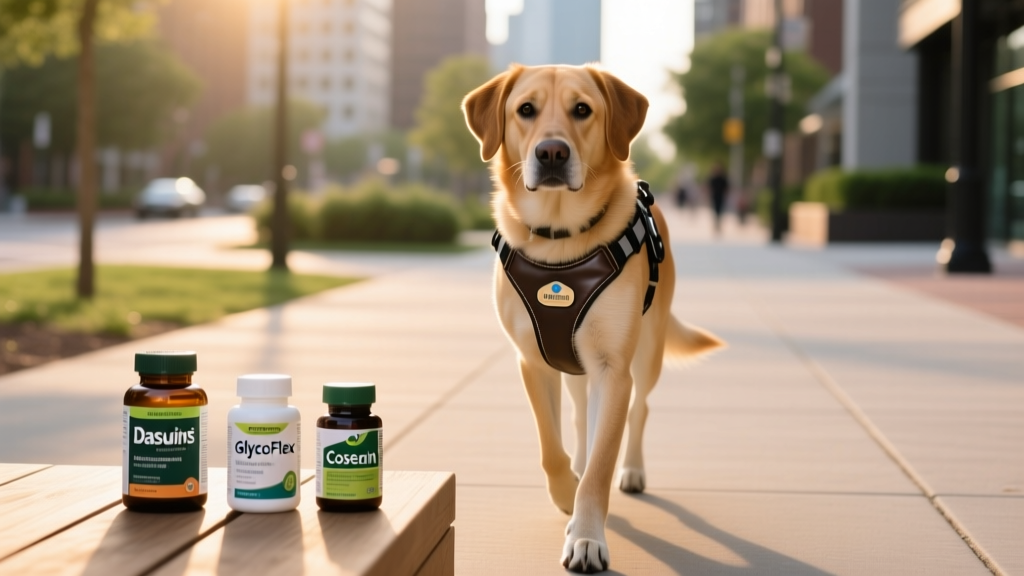
Finding the Most Comfortable Dog Harness: A 2026 Buyer's Guide
Compare top-rated comfortable dog harness options for 2026. Vet-informed buying criteria, sizing tips, safety warnings, and real pricing for every breed.

Why a Comfortable Dog Harness Matters More Than You Think
A poorly fitted collar puts direct pressure on a dog's trachea, thyroid gland, and cervical spine. The Merck Veterinary Manual documents tracheal collapse as a common condition in toy breeds, and even a single hard leash pull can exacerbate cervical injury in dogs of any size. A comfortable dog harness redistributes force across the chest and shoulders, eliminating neck strain while giving you better control.
But not all harnesses are created equal. A 2021 study published in the Journal of Veterinary Behavior found that harnesses with narrow straps (under 1 inch) created measurable pressure points on the sternum, while padded, wider designs distributed load more evenly. The takeaway: comfort isn't a luxury feature — it's a biomechanical necessity for long-term joint and soft tissue health.
Buying Criteria: What to Look for in a Comfortable Dog Harness
Top 7 Comfortable Dog Harness Picks for 2026
1. Ruffwear Front Range Harness
Best all-around for active dogs
Price: $39.95–$44.95 depending on size
Key features: 4 adjustment points, foam-padded chest and belly panels, dual leash attachment (front V-ring and back aluminum V-ring), reflective trim, ID pocket.
- Pros: Holds shape after hundreds of washes; foam doesn't compress over time; front clip sits high enough to avoid shoulder chafing on most breeds.
- Cons: Sizing runs small — measure carefully; not ideal for extreme pullers over 70 lb (32 kg) as the front ring stitching can stress.
2. Kurgo Tru-Fit Smart Harness
Best for car travel safety
Price: $32.99–$37.99
Key features: Crash-tested to FMVSS 213 standards (up to 75 lb / 34 kg), 5 adjustment points, steel nestable buckles, padded chest plate, includes 10-inch seat belt tether loop.
- Pros: Doubles as walking harness and car restraint; steel buckles won't snap under sudden braking force; wide chest plate distributes crash load.
- Cons: Heavier than walking-only harnesses (adds 4–6 oz); padding is thinner than Ruffwear; not the best choice for all-day hiking comfort.
3. Julius-K9 IDC Powerharness
Best for working dogs and strong pullers
Price: $44.99–$69.99 (size-dependent)
Key features: Heavy-duty polyester shell, breathable inner lining, chest strap angled below the elbow joint to avoid restricting shoulder movement, reflective chest label, customizable hook-and-loop patches.
- Pros: Handles extreme pull force without deformation; chest strap design proven in biomechanical studies to clear the shoulder joint; used by search-and-rescue and police K9 units worldwide.
- Cons: No front clip (back-clip only, so less effective for pull training); bulky on small dogs; sizing chart can be confusing for first-time buyers.
4. Blue-9 Balance Harness
Best for hard-to-fit body shapes
Price: $35.00–$42.00
Key features: 6 independent adjustment points (most on the market), available in 5 sizes with mix-and-match neck and girth straps, no overhead threading required (step-in design), front and back leash rings.
- Pros: Unmatched adjustability for barrel-chested, deep-chested, or long-bodied dogs (Dachshunds, Corgis, Bulldogs); goes over the head without lifting legs, which anxious dogs tolerate better.
- Cons: Padding is minimal — best suited for dogs that don't pull hard; buckles are plastic, not metal; not crash-tested.
5. Rabbitgoo No-Pull Dog Harness
Best budget option under $25
Price: $17.99–$24.99
Key features: Breathable mesh padding, dual metal leash rings (front and back), 4 adjustment straps, reflective strips, top carry handle.
- Pros: Excellent value; mesh breathes well in hot climates; front clip effectively redirects pullers; handle useful for lifting small-to-medium dogs into cars.
- Cons: Mesh frays after 8–12 months of heavy use; stitching on the front ring is the first failure point; sizing inconsistent between color variants — always remeasure.
6. Chai's Choice Adventure Harness
Best padded option for sensitive skin
Price: $28.99–$34.99
Key features: Dual-layer padding (sponge interior, mesh exterior), 3M reflective piping, front and back D-rings, belly strap with quick-release buckle, padded handle.
- Pros: Thickest padding in its price range; dogs with thin coats (Boxers, Vizslas, Dobermans) show less chafing with this model; reflective coverage is superior to most competitors.
- Cons: Extra padding means more heat retention — not ideal for brachycephalic breeds in summer; takes longer to dry after washing.
7. Embark Urban Harness
Best for city walking and leash-reactive dogs
Price: $34.99–$39.99
Key features: No-rip nylon construction, reinforced front D-ring rated to 600 lb pull force, extra-wide chest plate (3.5 inches on large size), grab handle, lightweight at 5.8 oz (medium).
- Pros: Reinforced front ring handles sudden lunges without tearing; wide chest plate disperses force during reactive episodes; lightweight enough for all-day wear without fatigue.
- Cons: Only 3 adjustment points; limited color options; back clip sits slightly forward, which can twist on long-bodied dogs.
Side-by-Side Comparison
| Harness | Price Range | Adjustment Points | Clip Style | Best For | Weight (Medium) |
|---|---|---|---|---|---|
| Ruffwear Front Range | $39.95–$44.95 | 4 | Dual (front + back) | Active all-around use | 6.2 oz |
| Kurgo Tru-Fit Smart | $32.99–$37.99 | 5 | Back | Car travel safety | 8.5 oz |
| Julius-K9 IDC | $44.99–$69.99 | 3 | Back | Working dogs, strong pullers | 7.8 oz |
| Blue-9 Balance | $35.00–$42.00 | 6 | Dual (front + back) | Hard-to-fit body shapes | 5.0 oz |
| Rabbitgoo No-Pull | $17.99–$24.99 | 4 | Dual (front + back) | Budget-conscious owners | 6.8 oz |
| Chai's Choice Adventure | $28.99–$34.99 | 4 | Dual (front + back) | Sensitive skin, thin coats | 7.1 oz |
| Embark Urban | $34.99–$39.99 | 3 | Dual (front + back) | City walking, reactive dogs | 5.8 oz |
How to Fit and Use a Dog Harness Safely
Even the most comfortable dog harness becomes a source of injury if fitted incorrectly. Here's the step-by-step process I recommend to every client:
- Measure before you buy. Use a soft tape measure around the widest part of the ribcage (girth) and the narrowest part of the neck. Record both in inches and centimeters. Do not estimate from weight alone — a 50 lb (23 kg) Labrador and a 50 lb (23 kg) Basset Hound have drastically different chest proportions.
- Apply the two-finger rule. Once the harness is on, you should be able to slide two flat fingers under every strap. If you can fit your whole hand, it's too loose (escape risk). If you can't fit two fingers, it's too tight (chafing and restricted breathing).
- Check the chest plate position. The front D-ring (if present) should sit at the center of the sternum, not off to one side. The plate itself should not press into the armpit — if you see red marks after a 15-minute walk, the girth straps need to be loosened by one notch.
- Perform the shake test. After fitting, let your dog shake their body vigorously. The harness should not rotate more than 15 degrees to either side. Excessive rotation means the neck opening is too wide.
- Inspect after every 5 walks. Check stitching at all D-ring attachment points, buckle teeth for cracks, and strap edges for fraying. Most harness failures occur at the front clip stitching after 6–9 months of pulling force.
⚠️ Critical Safety Warnings
- Never leave a harness on an unsupervised dog. Buckles and straps can snag on crate wire, furniture legs, or fence boards, creating a strangulation hazard.
- Remove the harness during car rides unless it is crash-tested. A non-certified harness can fail under sudden deceleration, turning your dog into an unrestrained projectile. The AKC recommends only harnesses that meet FMVSS 213 crash-test standards for vehicle restraint.
- Do not use a back-clip harness with a retractable leash for pullers. The combination encourages pulling by allowing the dog to lean forward into constant tension. Pair a front-clip harness with a fixed-length 4-to-6-foot leash for training.
- Watch for heat stress. Padded harnesses add insulation. In temperatures above 85°F (29°C), limit continuous wear to 30 minutes and check the chest and belly for heat rash.
How Harness Design Affects Canine Biomechanics
A harness's effectiveness depends on how well it respects normal canine movement. The American Veterinary Medical Association emphasizes that unrestricted shoulder extension is critical during trotting and running gaits. Here's what the evidence shows:
Non-restrictive (Y-shaped) harnesses feature a chest strap that splits into a Y below the sternum, leaving the shoulder joint fully free. Studies using pressure-mapping sensors show these designs reduce peak force on the sternum by 23–31% compared to horizontal-strap designs during normal walking.
Restrictive (horizontal-strap) harnesses cross the chest in a single band above the shoulder joint. While these offer more control for strong pullers, gait analysis studies show they reduce stride length by up to 8% and increase shoulder joint flexion angles, which over months can contribute to soft tissue strain in athletic dogs.
The practical takeaway: For everyday walking, hiking, and dogs in active sports (agility, canicross, bikejoring), choose a Y-shaped non-restrictive harness. For short-duration control situations (vet visits, reactive dog management), a horizontal-strap design is acceptable as long as it's not worn for extended exercise.
When to Skip OTC and See Your Vet
A harness is a tool, not a treatment. Consult your veterinarian instead of relying on an over-the-counter harness if your dog shows any of the following:
- Persistent coughing or gagging during or after walks — this may indicate tracheal irritation, collapsing trachea, or cardiac issues, not just a poorly fitted collar.
- Limping or altered gait that appears only when wearing a harness — this suggests the harness is restricting joint movement or pressing on a nerve, and your vet can assess whether a custom orthopedic harness is needed.
- Skin lesions, hot spots, or hair loss under harness contact points — recurring chafing can indicate underlying dermatitis, allergy, or fungal infection that requires medical treatment.
- Extreme fear or panic when the harness is presented — a certified force-free trainer or veterinary behaviorist can help with desensitization protocols rather than forcing harness use.
If your dog has been diagnosed with IVDD (intervertebral disc disease), degenerative myelopathy, or any spinal condition, ask your vet about a support harness with a rigid handle, such as the Help 'Em Up Harness, which is designed for mobility assistance rather than leash walking.
Pricing, Where to Buy, and Alternatives
Typical price ranges by category:
- Budget harnesses (basic padding, 3–4 adjustment points): $15–$25
- Mid-range harnesses (quality padding, 4–5 adjustment points, dual clip): $28–$45
- Premium/working harnesses (heavy-duty materials, specialized design): $45–$90
- Custom/orthopedic harnesses (veterinary prescribed): $80–$200+
Buy directly from manufacturer websites (Ruffwear, Kurgo, Blue-9) for accurate sizing exchanges, or from authorized retailers like Chewy and Amazon. Avoid third-party marketplace sellers offering "same brand" harnesses at 40–60% below retail — counterfeit harnesses with substandard stitching are a documented safety issue.
Natural and DIY Alternatives
While a sewn harness requires specialized equipment, there are legitimate alternatives for specific situations:
- Flat collar + loose-leash training: For dogs that already walk politely, a well-fitted flat collar (1.5 inches wide for medium dogs, 1 inch for small dogs) placed high on the neck is perfectly safe. The key is training, not equipment.
- Martingale collar: For sighthounds and narrow-headed breeds, a martingale collar provides escape resistance without the bulk of a full harness. Best for dogs that don't pull.
- Head halter (Gentle Leader, Halti): Redirects pulling by controlling the head, similar to a horse halter. Requires a 2-week acclimation period using positive reinforcement. Not suitable for brachycephalic breeds due to facial structure.
- DIY towel sling: For temporary mobility support (post-surgery, senior dogs on stairs), a bath towel looped under the belly provides emergency assistance. This is not a walking harness substitute.
Frequently Asked Questions
What is the best comfortable dog harness for dogs that pull?
A front-clip, Y-shaped harness like the Ruffwear Front Range or Blue-9 Balance gives you the most control without causing pain. The front attachment point redirects your dog's forward momentum sideways when they pull, which naturally slows them down. Pair this with positive reinforcement training — reward your dog with treats for walking at your side — for lasting results.
How do I choose the right harness size?
Measure your dog's girth (widest part of the ribcage, just behind the front legs) and neck circumference. Compare both measurements to the manufacturer's size chart — never rely on weight alone. If your dog falls between sizes, choose the larger size and adjust down, rather than the smaller size which may restrict breathing.
How much does a good dog harness cost?
Expect to pay $28–$45 for a quality mid-range harness that will last 1–3 years with daily use. Budget options under $25 work for light use but typically need replacement within 8–12 months. Premium harnesses ($45–$90) are worth the investment for working dogs, extreme pullers, or dogs that spend hours hiking.
Are harnesses better than collars for all dogs?
For leash walking, yes — harnesses are safer for the trachea and cervical spine in virtually all dogs. The exception is dogs with certain skin conditions or post-surgical incisions on the chest where harness straps would cause irritation. In those cases, your vet may recommend a temporary flat collar with supervised, short walks only.
Can my dog wear a harness all day?
No. Even the most comfortable dog harness should be removed when your dog is resting, crated, or unsupervised. Continuous wear causes pressure sores, matting in long-coated breeds, and moisture buildup that leads to bacterial or fungal skin infections. Put the harness on for walks and take it off when you get home.
How do I clean a dog harness?
Most padded harnesses can be hand-washed in warm water with a mild detergent (no bleach, no fabric softener). Rinse thoroughly, squeeze out excess water, and air-dry flat for 12–24 hours. Machine washing is acceptable for some models (check the care label), but always use a mesh laundry bag on a gentle cycle to protect buckles and D-rings.
Dr. Hannah Wickes
All our authors care for dogs every day — read more of their work on the authors page.