Benefits of Coconut Oil for Dogs: Safety, Dosage, and Vet Guidance
Explore the benefits of coconut oil for dogs, safe serving sizes by weight, preparation tips, risks, and when to consult your veterinarian before adding it.
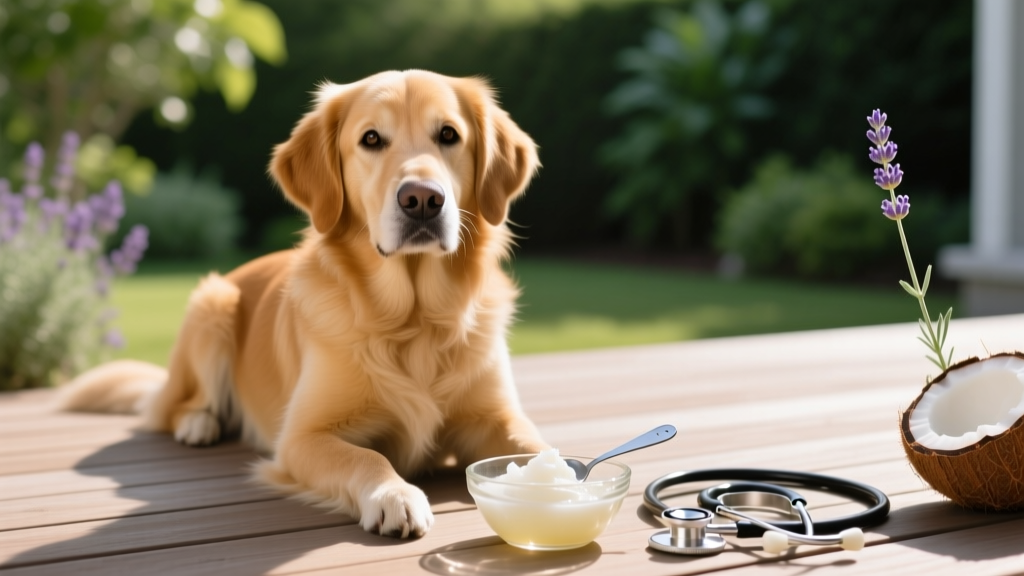
Coconut oil has become a staple in many dog owners' pantries, touted for everything from shinier coats to better digestion. But before you scoop a spoonful into your pup's bowl, you need the facts — not the hype. Here's the straight answer on whether coconut oil is safe for dogs and what the science actually supports.
What Are the Real Benefits of Coconut Oil for Dogs?
The benefits of coconut oil for dogs center primarily on its fatty acid profile. Coconut oil is rich in medium-chain triglycerides (MCTs), particularly lauric acid (approximately 49% of its fat content), along with smaller amounts of capric acid and caprylic acid. Here's what the evidence supports — and what it doesn't:
Supported Benefits
- Skin and coat health: Topical application can help moisturize dry, flaky skin. A 2014 study published in the Journal of Traditional and Complementary Medicine found that virgin coconut oil improved skin barrier function and hydration in human subjects with mild-to-moderate xerosis — and many veterinary dermatologists recommend it as a low-risk topical moisturizer for dogs with dry paw pads or elbows.
- MCTs for cognitive support in senior dogs: Research published in the Journal of Veterinary Internal Medicine has explored MCT supplementation for age-related cognitive dysfunction in dogs. MCTs are metabolized into ketone bodies, which can serve as an alternative energy source for aging brains. However, purified MCT oil (not whole coconut oil) was typically used in these studies, and results are modest.
- Palatability enhancer: A small amount of coconut oil mixed into kibble can encourage picky eaters or dogs with reduced appetite to eat, thanks to its strong aroma and flavor.
Unproven or Overstated Claims
- "Cures" allergies or yeast infections: While lauric acid has demonstrated antimicrobial properties in laboratory settings, the concentration that reaches your dog's skin or gut through dietary coconut oil is far too low to treat active infections. Relying on coconut oil instead of prescribed antifungal or allergy medication can allow conditions to worsen.
- Weight loss aid: Despite MCT marketing, coconut oil is calorically dense — approximately 120 calories per tablespoon. Adding it to an already sufficient diet without reducing other calories will cause weight gain, not loss.
- Flea and tick repellent: There is no peer-reviewed evidence that coconut oil (topical or dietary) repels parasites. Use FDA-approved or veterinary-recommended preventives instead.
How Much Coconut Oil Can I Give My Dog? Serving Sizes by Weight
Precision matters here. "A little bit" is not a serving size. Use the following table as a starting framework, but always confirm with your vet — especially if your dog has any underlying health conditions.
| Dog Weight Class | Weight Range | Starting Dose (First Week) | Maximum Daily Dose | Calories Added |
|---|---|---|---|---|
| Toy / Small | Under 15 lb (6.8 kg) | ¼ teaspoon once daily | ½ teaspoon (2.5 mL) daily | ~10 cal |
| Small-Medium | 15–30 lb (6.8–13.6 kg) | ½ teaspoon once daily | 1 teaspoon (5 mL) daily | ~20 cal |
| Medium | 30–60 lb (13.6–27.2 kg) | ½ teaspoon once daily | 1 tablespoon (15 mL) daily | ~120 cal |
| Large | 60–90 lb (27.2–40.8 kg) | 1 teaspoon once daily | 1.5 tablespoons (22.5 mL) daily | ~180 cal |
| Giant | Over 90 lb (40.8 kg) | 1 teaspoon once daily | 2 tablespoons (30 mL) daily | ~240 cal |
Critical rule: These calories must come out of your dog's daily caloric budget, not be added on top. The ASPCA and most veterinary nutritionists recommend that treats and supplements make up no more than 10% of total daily caloric intake. For a 40 lb dog eating roughly 900 calories per day, that's a 90-calorie supplement cap — meaning a full tablespoon of coconut oil already exceeds the treat budget.
Nutritional Profile: What's Actually in Coconut Oil?
| Nutrient | Per 1 Tablespoon (15 mL) | Relevance to Dogs |
|---|---|---|
| Total Fat | 13.6 g | Very high — primary concern for pancreatitis risk |
| Saturated Fat | 11.8 g (87%) | Far exceeds most canine dietary recommendations |
| Lauric Acid (C12) | ~6.5 g | Antimicrobial properties in vitro; limited in vivo data for dogs |
| Capric Acid (C10) | ~0.8 g | MCT; rapidly metabolized for energy |
| Caprylic Acid (C8) | ~0.9 g | MCT; studied for antifungal properties |
| Vitamin E | 0.01 mg (trace) | Negligible — not a meaningful source |
| Vitamin K | 0.8 mcg | Negligible contribution |
| Protein / Carbs / Fiber | 0 g each | Pure fat — no micronutrient diversity |
Coconut oil is essentially pure fat with trace micronutrients. It does not provide protein, fiber, vitamins, or minerals in meaningful amounts. If you're looking to supplement specific nutrients (omega-3 fatty acids, for example), fish oil is a far more evidence-backed choice for canine skin, coat, and joint health.
How to Prepare and Introduce Coconut Oil Safely
If your veterinarian approves coconut oil for your dog, follow these preparation and introduction guidelines:
- Choose the right type: Use unrefined, cold-pressed virgin coconut oil. Avoid refined or hydrogenated varieties, which may contain chemical residues from processing. Organic certification is a plus but not a safety requirement.
- Start at 25% of the maximum dose: For a 30 lb dog, that means beginning with roughly ¼ teaspoon per day — not the full tablespoon.
- Mix thoroughly into food: Melt the oil (it solidifies below 76°F / 24°C) and stir it into wet food or moistened kibble. Never give it straight from the spoon — the texture and taste can cause gagging or food aversion in some dogs.
- Monitor for 48 hours: Watch for loose stools, increased gas, vomiting, or decreased appetite. These are signs the dose is too high or your dog doesn't tolerate the fat load.
- Increase gradually: If no adverse effects appear after 5-7 days, increase to 50% of the max dose for another week, then to the full dose if tolerated.
- For topical use: Apply a thin layer to dry paw pads, elbows, or flaky skin patches. Massage in gently and distract your dog for 5-10 minutes to prevent immediate licking. Topical use does not carry pancreatitis risk.
Risks, Side Effects, and When NOT to Feed Coconut Oil
Coconut oil is not appropriate for every dog. Understanding the risks is just as important as knowing the benefits.
Common Side Effects of Overfeeding
- Diarrhea and loose stools: The most frequently reported issue. Excess MCTs draw water into the intestines and accelerate transit time.
- Greasy, foul-smelling stool: Undigested fat passing through the GI tract — a sign the dose exceeds your dog's fat-digestion capacity.
- Weight gain: At 120 calories per tablespoon, daily supplementation without caloric adjustment will add pounds. A 30 lb dog gaining just 3 lb represents a 10% body weight increase — equivalent to a 170 lb person gaining 17 lb.
- Vomiting: Particularly in dogs fed coconut oil on an empty stomach or at too high a dose initially.
Serious Risks
- Pancreatitis: This is the most concerning risk. Pancreatitis is an inflammatory condition of the pancreas triggered by high-fat meals. Breeds with known predisposition include Miniature Schnauzers, Cocker Spaniels, Yorkshire Terriers, and Dachshunds. Symptoms include severe vomiting, abdominal pain (prayer position), lethargy, and dehydration. Pancreatitis is a veterinary emergency — treatment costs range from $500 for mild outpatient cases to $5,000+ for hospitalization with IV fluids.
- Lipid metabolism disorders: Dogs with hyperlipidemia (elevated blood triglycerides) or conditions like hypothyroidism and Cushing's disease often have impaired fat metabolism. Adding saturated fat worsens these conditions.
Dogs Who Should NOT Receive Coconut Oil
- Dogs with any history of pancreatitis (even a single episode)
- Dogs diagnosed with hyperlipidemia or fat malabsorption
- Overweight or obese dogs (body condition score 7/9 or higher) unless calories are strictly managed
- Dogs with Cushing's disease, hypothyroidism, or diabetes mellitus — consult your veterinarian first
- Puppies under 12 months — their developing digestive systems are more sensitive to fat load changes, and their diets should be nutritionally complete without supplementation
- Dogs on prescription low-fat diets (e.g., Royal Canin Gastrointestinal Low Fat, Hill's i/d Low Fat)
- Repeated vomiting (more than 2 episodes in 12 hours)
- Bloody or black, tarry diarrhea
- Severe lethargy or collapse
- Abdominal pain — hunched posture, whining when touched, "prayer position" (front end down, rear end up)
- Refusal to eat or drink for more than 24 hours
These symptoms may indicate pancreatitis or another serious condition. Do not attempt home treatment. If your regular vet is unavailable, contact the ASPCA Animal Poison Control Center at (888) 426-4435 (24/7, consultation fee applies) or go to the nearest emergency veterinary clinic.
Coconut Oil vs. Other Oils: A Quick Comparison
Coconut oil isn't the only supplement oil on the market. Here's how it stacks up against common alternatives for canine use:
| Oil Type | Primary Benefit | Key Fatty Acids | Evidence Level for Dogs | Caloric Density |
|---|---|---|---|---|
| Coconut Oil | Skin moisturizer (topical); MCT energy | Lauric acid (C12) | Limited / mostly anecdotal | 120 cal/tbsp |
| Fish Oil (salmon/anchovy) | Anti-inflammatory; joint, coat, kidney support | EPA and DHA (omega-3) | Strong — multiple peer-reviewed studies | 120 cal/tbsp |
| Flaxseed Oil | Omega-3 source (ALA) | ALA (omega-3) | Moderate — dogs convert ALA to EPA/DHA poorly | 120 cal/tbsp |
| Olive Oil | Monounsaturated fat; palatability | Oleic acid (omega-9) | Limited for dogs; better tolerated than saturated fats | 120 cal/tbsp |
| MCT Oil (purified) | Cognitive support in senior dogs | C8, C10 (no lauric acid) | Moderate — specific studies on canine cognitive dysfunction | 115 cal/tbsp |
If your primary goal is anti-inflammatory support for joints, skin allergies, or kidney disease, fish oil with verified EPA/DHA content is the better-supported choice according to the Merck Veterinary Manual. If you're specifically interested in MCTs for cognitive aging, purified MCT oil (which concentrates C8 and C10 without the saturated fat load of whole coconut oil) may be more effective.
Frequently Asked Questions
Can dogs eat coconut oil every day?
Yes, at the appropriate dose for their weight and health status, some dogs can tolerate daily coconut oil. However, "daily" does not mean "unlimited." Stick to the serving sizes in the table above and reduce other treat calories accordingly. If your dog is on a complete and balanced commercial diet (look for the AAFCO statement on the label), they are already receiving all essential fatty acids they need — coconut oil is a supplement, not a necessity.
What happens if my dog eats too much coconut oil?
The most likely outcome is digestive upset: diarrhea, greasy stools, gas, and possibly vomiting. In susceptible dogs — particularly Miniature Schnauzers and other pancreatitis-prone breeds — a large dose of saturated fat can trigger acute pancreatitis, which is painful and potentially life-threatening. If your dog accidentally consumes a large amount (e.g., got into a jar), withhold food for 12 hours, offer small amounts of water, and monitor closely. Contact your veterinarian if vomiting or diarrhea persists beyond 24 hours or if you notice signs of abdominal pain.
Is coconut oil good for dogs with itchy skin?
Topically, virgin coconut oil can provide temporary relief for dry, flaky patches on paw pads, elbows, and noses. Its occlusive properties help trap moisture against the skin. However, if your dog's itching is caused by allergies (environmental or food), yeast overgrowth, bacterial infection, or parasites, coconut oil will not address the underlying cause. See your veterinarian for proper diagnosis — untreated allergic dermatitis can lead to secondary infections that require prescription medication.
Can puppies have coconut oil?
It's best to avoid supplementing coconut oil in puppies under 12 months of age. Puppies require precisely balanced nutrition for growth, and adding unmeasured fat can displace essential nutrients from their diet. If a veterinarian specifically recommends MCT supplementation for a puppy with a diagnosed condition, follow their dosing instructions exactly.
Does coconut oil help with dog bad breath?
There's no evidence that coconut oil treats halitosis in dogs. Bad breath is most commonly caused by periodontal disease, which affects an estimated 80% of dogs by age three according to the American Veterinary Medical Association. The most effective interventions are professional dental cleanings under anesthesia, daily tooth brushing with enzymatic dog toothpaste, and VOHC-approved dental chews. Adding coconut oil to your dog's food will not resolve dental disease.
Are there related coconut products that are unsafe for dogs?
Coconut water is generally safe in small amounts but is high in potassium — avoid it for dogs with kidney disease. Coconut flesh (the white meat) is safe in small pieces but is a choking hazard for small dogs and high in the same saturated fats as the oil. Avoid coconut-flavored human products such as macaroons, cakes, or candies, as they frequently contain xylitol (extremely toxic to dogs), chocolate, raisins, or macadamia nuts. Always check ingredient labels before sharing any coconut-containing human food.
Disclaimer: This article is for informational purposes only and does not replace professional veterinary advice. Always consult your veterinarian before introducing new supplements to your dog's diet, especially if your dog has pre-existing health conditions or is on prescription medication.
Tom Renshaw
All our authors care for dogs every day — read more of their work on the authors page.


