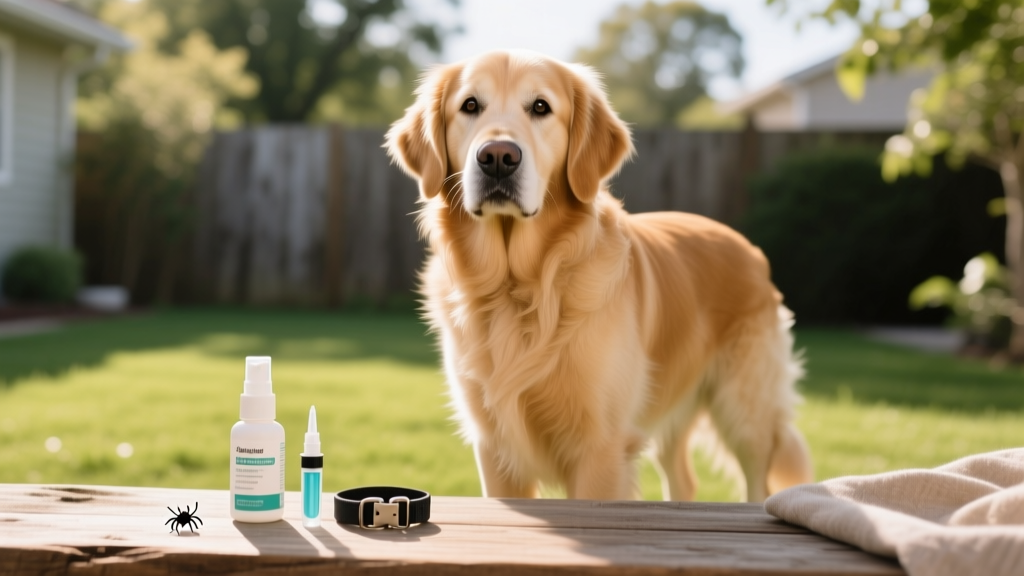
Chewable Flea Medication for Dogs: Complete Parasite Prevention Guide
Compare chewable flea medication for dogs with topicals and collars.

Identifying Fleas: What Every Dog Owner Needs to See
Before you can treat a flea problem, you need to confirm one exists. Adult fleas (Ctenocephalides felis — the cat flea, which is actually the most common species found on dogs) are tiny, measuring just 1-3 mm long. They're dark reddish-brown, wingless, and laterally flattened — built like a surfboard to slide between hair shafts. If you part your dog's coat and see fast-moving, dark specks scrambling near the skin, especially around the tail base, groin, and neck, you're looking at adult fleas.
But adults represent only about 5% of a total flea population. The other 95% exists as eggs, larvae, and pupae hiding in your carpet, bedding, and yard. This is why treating your dog alone rarely solves the problem.
- Adult fleas: 1-3 mm, dark reddish-brown, fast-moving, found at skin level near tail base and belly
- Flea dirt (feces): Black pepper-like specks in the coat — place on wet paper towel; if it dissolves into reddish-brown streaks (digested blood), it's flea dirt
- Flea eggs: 0.5 mm, white, oval — nearly invisible, fall off dog into environment within hours of being laid
- Larvae: 2-5 mm, whitish, legless, worm-like — hide in dark carpet fibers and cracks
- Pupae: Sticky cocoons that camouflage with dust and debris — can remain dormant 5 weeks to 6 months
The Flea Life Cycle: Why One Treatment Never Works
Understanding the flea life cycle is what separates owners who win the battle from those who fight it every spring. According to the Merck Veterinary Manual, a single female flea can lay 20-50 eggs per day after her first blood meal, producing up to 2,000 eggs over her 2-3 month lifespan.
Stage 1 — Eggs (2-12 days): Laid on the dog but fall off within 8 hours into carpet, bedding, couches, and yard soil. They hatch in 2-12 days depending on temperature and humidity (optimal: 70-85°F / 21-29°C and 70-85% humidity).
Stage 2 — Larvae (5-20 days): Maggot-like larvae avoid light and burrow deep into carpet, under furniture, and into soil cracks. They feed on adult flea feces (flea dirt) and organic debris. This stage lasts 5-20 days.
Stage 3 — Pupae (5 days to 6 months): Larvae spin sticky cocoons that adhere to fibers and resist vacuuming and insecticides. Pupae can remain dormant for months, waiting for vibrations, warmth, or CO₂ signals that a host is nearby. This dormant stage is why "sudden" flea infestations appear in homes that were previously clear.
Stage 4 — Adults (2-3 months): Newly emerged adults must find a host within days. Once they take their first blood meal, they become dependent on that host and begin reproducing within 24-48 hours.
The complete cycle can finish in as few as 14 days under ideal conditions or stretch to over a year. In climate-controlled homes, fleas reproduce year-round — which is why the AVMA recommends year-round prevention rather than seasonal treatment.
How Dogs Get Fleas (Transmission Routes)
Fleas don't fly, and they rarely jump directly from one dog to another. The primary transmission routes include:
- Environmental exposure: Walking through infested yards, parks, or wooded areas where pupae wait in grass and soil
- Wildlife vectors: Raccoons, opossums, foxes, and feral cats deposit flea eggs in yards, under decks, and near foundations
- Other pets: Cats, rabbits, or ferrets in the household can carry fleas to shared spaces
- Secondhand environments: Moving into a previously infested apartment, visiting a friend's home, or boarding at a facility with active flea populations
- Grooming facilities and dog parks: High-traffic dog areas where pupae accumulate in carpeting and grass
Even strictly indoor dogs get fleas — pupae can hitchhike inside on your shoes, clothing, or visitors' belongings.
Symptoms: From Mild Irritation to Severe Infestation
| Severity | Symptoms | What You'll Observe |
|---|---|---|
| Mild (1-10 fleas) | Occasional scratching, mild restlessness | You may find 1-2 fleas or flea dirt during grooming; dog seems slightly itchy at tail base |
| Moderate (10-50 fleas) | Frequent scratching, biting at skin, hot spots, hair loss at tail base and hindquarters | Visible flea dirt throughout coat; dog interrupts sleep to scratch; skin may be reddened and inflamed |
| Heavy (50+ fleas) | Constant scratching/biting, widespread hair loss, thickened skin, secondary bacterial infections, anemia in small dogs or puppies | Fleas visible running across skin; dog appears distressed, lethargic; pale gums (anemia indicator); open sores from self-trauma |
| Flea Allergy Dermatitis (FAD) | Severe reaction to flea saliva — even ONE bite triggers intense itching lasting days | Disproportionate reaction; dog may chew raw patches on legs, flanks, and tail base from single flea exposure |
- Pale or white gums (sign of flea-bite anemia — potentially fatal in puppies and small breeds under 10 lb / 4.5 kg)
- Open, oozing sores or foul-smelling skin (secondary pyoderma infection)
- Small white, rice-like segments around the anus or in bedding (tapeworm segments — Dipylidium caninum, transmitted when dogs ingest fleas during grooming)
- Lethargy combined with heavy scratching
Health Risks: Diseases Fleas Transmit to Dogs
Fleas aren't just itchy — they're disease vectors. The three most clinically significant conditions they cause or transmit include:
Flea Allergy Dermatitis (FAD): The most common skin disease in dogs. A hypersensitivity reaction to proteins in flea saliva. Dogs with FAD can develop severe dermatitis from a single flea bite, with symptoms persisting for 1-3 weeks after the flea is gone. Treatment requires both strict flea elimination and often veterinary-prescribed anti-inflammatory medication (such as oclacitinib or corticosteroids for acute flare-ups).
Dipylidium caninum (Tapeworm): Flea larvae ingest tapeworm eggs, and when dogs bite or swallow infected adult fleas during grooming, the tapeworm develops in the dog's intestines. Segments (proglottids) appear as moving, rice-grain-sized pieces near the anus or in stool. Treatment requires a prescription dewormer (praziquantel) from your veterinarian — typically a single dose at 5-10 mg/kg.
Bartonellosis: Bartonella henselae bacteria (the same organism causing cat scratch disease in humans) can be transmitted to dogs via flea feces entering bite wounds. While less common than FAD or tapeworms, bartonellosis can cause fever, lameness, endocarditis, and granulomatous inflammation in dogs.
Treatment Protocol: OTC vs. Prescription Options Compared
Once you've confirmed a flea infestation, here's how treatment breaks down between over-the-counter and veterinary-prescribed options. Consult your veterinarian to determine the safest product for your dog's age, weight, breed, and health status.
| Category | Active Ingredients | Efficacy | Cost Range | Notes |
|---|---|---|---|---|
| Rx Oral Chewables (Isoxazoline class) | Fluralaner, sarolaner, afoxolaner, lotilaner | 99-100% kill rate within 8-12 hours; also kills ticks | $18-$28 per monthly dose (varies by dog weight) | Prescription required; most effective class available; some products last 12 weeks per dose |
| Rx Oral (Spinosad class) | Spinosad, spinetoram | 95-99% kill rate within 4 hours; flea-only (no tick coverage) | $15-$22 per monthly dose | Prescription required; faster initial kill but shorter residual activity |
| OTC Oral (Lufenuron) | Lufenuron (insect growth regulator) | Does NOT kill adult fleas; prevents eggs from hatching | $8-$15 per monthly dose | Must be combined with adulticide; useful as add-on in heavy infestations |
| OTC Topical Spot-On | Fipronil, imidacloprid, permethrin (dogs only) | 85-95% kill rate; efficacy decreases with bathing/swimming | $10-$20 per monthly dose | No prescription needed; permethrin is TOXIC to cats — never use dog products on cats |
| Rx Topical (Selamectin/Moxidectin combos) | Selamectin + sarolaner, moxidectin + imidacloprid | 95-100% kill rate; broad-spectrum (fleas, ticks, heartworm, mites) | $20-$30 per monthly dose | All-in-one parasite prevention; prescription required |
| Flea Collars | Flumethrin + imidacloprid (Rx-grade) or tetrachlorvinphos (OTC) | Rx collars: 90-95% efficacy; OTC collars: 40-70% efficacy | $10-$65 (OTC to Rx-grade) | Rx collars last 8 months; OTC collars often unreliable and may cause skin reactions |
How Chewable Flea Medication for Dogs Actually Works
The isoxazoline class of chewable flea medication for dogs (including fluralaner, afoxolaner, sarolaner, and lotilaner) works systemically. When your dog eats the flavored chewable tablet, the active ingredient is absorbed into the bloodstream. When a flea bites your dog and ingests blood containing the drug, it causes uncontrolled neurological activity in the flea's nervous system, leading to death — typically within 4-12 hours of the first bite.
Key advantages of chewable flea medication for dogs over topicals:
- No bathing restrictions — swimming, rain, and grooming don't reduce efficacy
- No risk of transferring product to children, furniture, or other pets
- Precise dosing by weight (topicals can be under-dosed if applied incorrectly)
- Palatable — most dogs eat them willingly as treats
Important safety note: The FDA has issued warnings about the isoxazoline class potentially causing neurological adverse events (tremors, ataxia, seizures) in some dogs, particularly those with pre-existing seizure disorders. If your dog has a history of epilepsy or neurological conditions, discuss alternative flea control options with your veterinarian before starting any isoxazoline product.
Prevention Products Comparison: Topical, Oral, and Collar Options
| Product Type | Active Ingredients (Examples) | Duration | Covers | Annual Cost (50 lb / 23 kg dog) |
|---|---|---|---|---|
| Rx Oral Chewable (monthly) | Afoxolaner, sarolaner | 30 days | Fleas, ticks, some cover mites | $220-$310 |
| Rx Oral Chewable (12-week) | Fluralaner | 84-90 days | Fleas, ticks | $160-$240 |
| Rx Topical (monthly) | Selamectin + sarolaner, fipronil + (S)-methoprene | 30 days | Fleas, ticks, heartworm, intestinal parasites (varies by brand) | $240-$360 |
| OTC Topical (monthly) | Fipronil, imidacloprid, permethrin | 30 days (decreases with water exposure) | Fleas, some cover ticks | $120-$200 |
| Rx Flea/Tick Collar | Flumethrin + imidacloprid | 8 months | Fleas, ticks, larvae | $55-$70 (1-2 collars/year) |
| OTC Flea Collar | Tetrachlorvinphos, pyriproxyfen | 5-7 months (claimed) | Fleas only (variable efficacy) | $15-$30 |
Environmental Control: Breaking the Cycle at Home and in the Yard
Treating your dog without treating your environment is like mopping the floor while the faucet runs. Because 95% of the flea population exists off your dog, environmental control is non-negotiable for eliminating an active infestation.
Indoor Treatment Protocol
- Vacuum thoroughly: Every carpet, rug, upholstered furniture piece, and floor crack. Vacuuming removes up to 96% of adult fleas from carpets and stimulates pupae to emerge (making them vulnerable to treatment). Empty the vacuum canister or dispose of the bag in an outdoor trash bin immediately after each session. Vacuum daily for the first 2 weeks of treatment.
- Wash all bedding: Dog beds, human bedding, couch covers, and throw blankets in hot water (minimum 140°F / 60°C) for at least 10 minutes. Dry on high heat for 20+ minutes. Repeat weekly during active treatment.
- Apply an Insect Growth Regulator (IGR): Products containing methoprene or pyriproxyfen prevent eggs and larvae from developing into adults. These are available as sprays or foggers. IGRs remain active in carpet for 3-7 months, providing long-term protection. A 1,500 sq ft home typically requires $25-$45 in IGR spray product.
- Consider professional pest control: For severe infestations (you see fleas jumping on socks when walking across carpet), professional extermination costs $250-$500 for a single-family home and typically includes a follow-up visit at 14 days.
Yard Treatment
Fleas thrive in shaded, moist areas — under decks, along fence lines, beneath shrubs, and in dog run areas. They die quickly in direct sunlight.
- Mow grass short and remove leaf litter to expose soil to sunlight
- Apply outdoor IGR spray (pyriproxyfen-based) to shaded areas where your dog rests. Treat a 1,000 sq ft area for approximately $15-$30.
- Discourage wildlife: Secure trash cans, block access under decks and porches, and remove food sources that attract opossums, raccoons, and feral cats — all major flea carriers
- Use beneficial nematodes (Steinernema carpocapsae) in moist, shaded soil areas — these microscopic worms parasitize flea larvae and are safe for pets, children, and plants. Apply at 1 million nematodes per 1,000 sq ft ($20-$35 per application)
Seasonal Risk Calendar: When Fleas Peak by Region
| Region | Peak Season | Moderate Risk | Indoor Risk |
|---|---|---|---|
| Southeast (FL, GA, AL, MS, LA) | Year-round (no hard frost) | All months | High — warm, humid homes |
| Southwest (AZ, NM, S. CA) | March-November | December-February (low) | Moderate — dry climate suppresses outdoor populations |
| Midwest (IL, OH, MO, IN) | May-October | April, November | Moderate — heated homes sustain indoor populations |
| Northeast (NY, MA, PA, CT) | June-October | May, November | Moderate — winter heating creates ideal indoor conditions |
| Pacific Northwest (WA, OR) | April-November | Year-round (mild winters) | High — moisture sustains populations |
Because climate-controlled homes maintain 68-75°F (20-24°C) year-round, indoor flea populations can persist through any winter. Year-round prevention is recommended by the Companion Animal Parasite Council (CAPC).
Zoonotic Potential: Can Fleas Spread to Humans?
Yes — fleas are a zoonotic concern. While Ctenocephalides felis (the cat flea) prefers canine and feline hosts, it will bite humans when no preferred host is available. Human flea bites appear as small, red, intensely itchy bumps, typically clustered in groups of three (the colloquial "breakfast, lunch, and dinner" pattern) around the ankles and lower legs.
More seriously, fleas can transmit Bartonella henselae to humans (causing cat scratch disease), and historically, fleas have transmitted Yersinia pestis (plague) and Rickettsia typhi (murine typhus). While plague is extremely rare in U.S. domestic settings (limited to rodent fleas in the Southwest), bartonellosis is an underdiagnosed concern.
Fleas do not live on humans long-term — they feed and leave. The risk is primarily from bites and the pathogens they carry, not from permanent infestation. Treating your dog and your home eliminates the human risk.
If you suspect a flea-borne illness in a household member (prolonged fever, swollen lymph nodes, unexplained rash after known flea exposure), consult a physician and mention the flea exposure history.
Frequently Asked Questions
How do I know if my dog has fleas?
Use a fine-toothed flea comb (teeth spaced 0.2-0.3 mm apart) and comb through the coat over a white paper towel, concentrating on the tail base, groin, and behind the ears. Look for live fleas (fast, dark, 1-3 mm insects) or flea dirt (black specks that turn reddish-brown when moistened). Even if you see no fleas, persistent scratching — especially at the tail base — warrants a veterinary exam, as dogs with flea allergy dermatitis may groom away all evidence.
How often should I treat my dog for fleas?
Monthly for most oral and topical preventives. Fluralaner-based chewables are dosed every 12 weeks. Year-round treatment is recommended regardless of season, as indoor environments support flea reproduction throughout winter. Missing even one monthly dose can allow a new generation to establish.
Can fleas spread to other pets in the household?
Absolutely. Every mammal in the household — cats, ferrets, rabbits — must be on species-appropriate flea prevention simultaneously. Treating only one pet while others remain unprotected allows fleas to survive on untreated hosts and reinfest your treated dog. Never use dog-specific products on cats (permethrin is fatal to cats).
Why is my dog still scratching after flea treatment?
Several possible reasons: (1) The product needs 8-24 hours to reach full efficacy — newly emerged fleas may bite before dying. (2) Your dog has FAD, and even dead fleas triggered a reaction that lasts 1-3 weeks. (3) Environmental reinfestation from untreated areas of the home. (4) A secondary skin infection or different allergy (food, environmental) is causing the itching. If scratching persists beyond 48 hours after treatment, consult your veterinarian.
Are natural or home remedies effective for flea control?
Most home remedies (essential oils, garlic supplements, diatomaceous earth, apple cider vinegar sprays) lack peer-reviewed evidence for efficacy and some carry safety risks. Garlic is toxic to dogs in sufficient quantities. Essential oils like tea tree, eucalyptus, and citrus can cause neurological toxicity. Diatomaceous earth applied to dogs can cause respiratory irritation when inhaled. For reliable protection, use EPA-registered or FDA-approved products and discuss options with your veterinarian.
How do I safely switch between flea prevention products?
Wait until the current product's dosing interval has elapsed before starting a new one (e.g., finish the full 30 days on a monthly product before switching). Combining two isoxazoline products or stacking oral and topical preventives without veterinary guidance risks overdose. Always consult your veterinarian when transitioning between product classes.
- ASPCA Animal Poison Control: (888) 426-4435 (24/7, consultation fee applies) — call if your dog ingests a flea product meant for another species, or shows neurological symptoms after treatment
- Your veterinarian or emergency clinic: Call immediately if your dog experiences seizures, severe tremors, vomiting, or collapse after administering any flea medication
- FDA Safety Reporting: Report adverse drug events at fda.gov
Beth Carrasco
All our authors care for dogs every day — read more of their work on the authors page.