Can Dogs Eat Zucchini Squash? Safety, Portions & Prep Guide
Can dogs eat zucchini squash? Yes — it's safe and nutritious. Learn exact serving sizes by weight, prep tips, risks, and when to skip it.
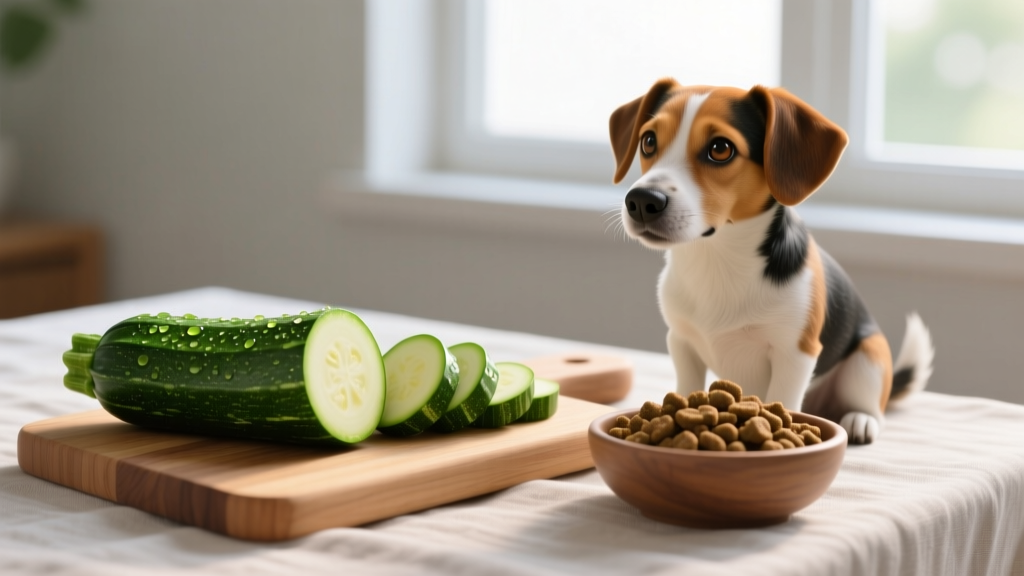
Plain, unseasoned zucchini (also called courgette or summer squash) is non-toxic and safe for dogs. It's low in calories, fat, and sodium, making it a smart treat for weight management. Serve it raw, steamed, or baked — never fried or seasoned with garlic, onion, or butter. Treats, including zucchini, should not exceed 10% of your dog's daily caloric intake.
If you've ever watched your dog sniff a zucchini slice that rolled off the cutting board and wondered whether it was safe to let them have it, you're not alone. Zucchini squash — the green summer squash found in nearly every grocery store — is one of the most dog-friendly vegetables you can share. The American Kennel Club lists zucchini among vegetables safe for canine consumption, and many veterinary nutritionists recommend it as a low-calorie alternative to commercial treats.
But safe doesn't mean unlimited. Portion size, preparation method, and your dog's individual health profile all matter. Below you'll find exact serving sizes, nutritional data, step-by-step prep instructions, and the specific scenarios where zucchini should be avoided.
How Much Zucchini Squash Can I Give My Dog?
The 10% treat rule is your baseline: no more than 10% of your dog's total daily calories should come from treats and table food. Zucchini contains roughly 17 calories per 100 grams (about 3.5 ounces), so it's hard to overdo calories — but too much fiber too fast will cause loose stools or gas.
| Dog Weight | Daily Max Serving | Visual Equivalent |
|---|---|---|
| Toy breeds (under 10 lb / 4.5 kg) | 1–2 tablespoons, diced | 2–3 thin rounds |
| Small breeds (10–25 lb / 4.5–11 kg) | 2–3 tablespoons, diced | 4–5 thin rounds or ¼ small zucchini |
| Medium breeds (25–50 lb / 11–23 kg) | ¼ cup diced (about 4 tbsp) | ½ small zucchini |
| Large breeds (50–90 lb / 23–41 kg) | ⅓–½ cup diced | 1 small zucchini or ½ medium |
| Giant breeds (90+ lb / 41+ kg) | ½–¾ cup diced | 1 medium zucchini |
Starting out? Give roughly one-third of the recommended serving on day one and watch for 24–48 hours. If stools stay firm and your dog shows no signs of gas or discomfort, increase gradually to the full amount over the next three to four days.
Is Zucchini Squash Good for Dogs Nutritionally?
Zucchini is about 95% water, which contributes to hydration — especially useful for dogs who are reluctant water drinkers or those on dry kibble diets. Here's a breakdown of what's actually inside, based on USDA FoodData Central values for raw zucchini with skin:
| Nutrient | Per 100 g Raw Zucchini | Benefit for Dogs |
|---|---|---|
| Calories | 17 kcal | Low-cal treat ideal for overweight dogs |
| Water | 94.8 g | Supports hydration |
| Fiber | 1.0 g | Promotes healthy digestion and stool bulk |
| Vitamin C | 17.9 mg | Antioxidant; supports immune function |
| Vitamin A (as beta-carotene) | 10 µg RAE (200 IU) | Supports vision and skin health |
| Vitamin K | 4.3 µg | Essential for blood clotting |
| Potassium | 261 mg | Supports nerve and muscle function |
| Manganese | 0.177 mg | Aids metabolism and bone development |
| Folate (B9) | 24 µg | Important for cell division, especially in growing puppies |
Compared to higher-calorie treats like cheese (roughly 90–110 kcal per ounce) or peanut butter (about 94 kcal per tablespoon), zucchini delivers micronutrients and fiber at a fraction of the caloric cost. For a 30 lb dog on a weight-loss plan, swapping even two peanut butter treats per day for zucchini slices saves roughly 180 calories daily — enough to make a measurable difference in body condition score over 4–6 weeks.
How Should I Prepare Zucchini Squash for My Dog?
Preparation matters more than the vegetable itself. Here's a step-by-step guide:
- Wash thoroughly. Rinse under cool running water and scrub the skin with a produce brush to remove pesticide residue and dirt. Organic zucchini still needs washing.
- Trim the stem end. The stem is tough, fibrous, and a choking risk for smaller dogs. Cut off and discard at least ½ inch from the top.
- Leave the skin on. The skin holds most of the fiber, vitamin A, and potassium. It's safe and digestible for dogs of all sizes.
- Cut to appropriate size. For toy and small breeds, dice into ¼-inch cubes or slice into thin rounds. For large breeds, ½-inch cubes or thicker rounds work fine.
- Choose a cooking method (or serve raw):
- Raw: Perfectly safe and retains maximum vitamin C. Best for dogs with healthy teeth.
- Steamed: Softens fiber, easier to digest. Steam for 4–5 minutes until fork-tender. Let cool to room temperature.
- Baked: Slice into rounds, place on parchment, bake at 350°F (177°C) for 12–15 minutes. No oil needed.
- Boiled: Quick but leaches water-soluble vitamins (C, folate) into the water. If boiling, use minimal water and consider adding the cooking water to your dog's food bowl.
- No seasoning. Skip salt, butter, olive oil, garlic, onion powder, and any spice blends. Dogs don't need flavor enhancement, and many common seasonings (garlic, onion, chives) are toxic.
- Cool before serving. Hot food can burn a dog's mouth and esophagus. Aim for room temperature or slightly warm (below 105°F / 40°C).
Can dogs eat zucchini bread or zucchini muffins? No. Baked goods typically contain sugar, butter, eggs, flour, and potentially raisins or xylitol — all of which are problematic. Xylitol is acutely toxic to dogs even in small amounts. Stick to plain zucchini only.
What Happens If My Dog Eats Too Much Zucchini Squash?
Zucchini isn't toxic, so an accidental overindulgence is unlikely to be an emergency. However, excessive amounts can cause:
- Loose stools or diarrhea: The fiber and water content act as a mild laxative. A 20 lb dog eating an entire medium zucchini (about 200 g) in one sitting will likely have soft stools for 12–24 hours.
- Gas and bloating: Sudden increases in dietary fiber ferment in the large intestine, producing gas. This is uncomfortable but usually resolves within 24 hours.
- Choking (whole rounds in small dogs): A toy breed attempting to swallow a thick zucchini round whole can choke. Always cut to appropriate size.
- Intestinal blockage (extremely rare): Only a concern if a very small dog swallows a large, unchewed chunk. Signs include repeated vomiting, inability to keep water down, abdominal pain, and lethargy — these require immediate veterinary attention.
- Vomiting more than twice within 4 hours
- Visible abdominal distension or pain (dog hunches, whines when belly is touched)
- Bloody or black, tarry stools
- Lethargy or refusal to drink water for more than 12 hours
- Signs of choking: pawing at mouth, gagging, blue-tinged gums
If you suspect your dog has eaten something toxic alongside the zucchini (e.g., seasoned with garlic or onion), contact the ASPCA Animal Poison Control Center at (888) 426-4435 (24/7, consultation fee applies) or the Pet Poison Helpline at (855) 764-7661.
Dogs Who Should Not Eat Zucchini Squash
While zucchini is safe for the vast majority of dogs, a few groups should avoid it or require veterinary approval first:
- Dogs with kidney disease: Zucchini contains 261 mg of potassium per 100 g. Dogs on potassium-restricted diets (common in chronic kidney disease stages 3–4) may need to limit high-potassium vegetables. Consult your veterinarian before adding zucchini to their diet.
- Dogs prone to calcium oxalate bladder stones: Zucchini contains moderate oxalates. While not as high as spinach or beet greens, dogs with a history of oxalate uroliths should have all vegetable additions cleared by their vet.
- Puppies under 12 weeks: Very young puppies have sensitive, developing digestive systems. Stick to a complete-and-balanced puppy food and veterinarian-approved treats only during early weaning and socialization phases.
- Dogs on novel-protein elimination diets: If your vet has placed your dog on a strict dietary trial for food allergies, introducing any new food — even a vegetable — can confound results. Wait until the trial concludes.
- Dogs with known squash or cucurbit allergy: Rare, but documented. If your dog has reacted to cucumber, pumpkin, or butternut squash, zucchini belongs to the same botanical family (Cucurbitaceae) and could trigger a similar response.
Related Foods to Know About
Zucchini belongs to a broader family of squash and vegetables. Here's how related foods compare:
| Food | Safe for Dogs? | Notes |
|---|---|---|
| Yellow summer squash | ✅ Yes | Same species as zucchini (Cucurbita pepo). Prep identically. |
| Butternut squash | ✅ Yes | Cook and remove seeds/rind. Higher in natural sugars. |
| Pumpkin (plain, canned) | ✅ Yes | Use 100% pure pumpkin, NOT pie filling (contains spices and sugar). |
| Acorn squash | ✅ Yes | Cook and remove seeds. Serve in small pieces. |
| Spaghetti squash | ✅ Yes | Cook, remove seeds and rind. Stringy texture is fine for dogs. |
| Cucumber | ✅ Yes | Same family (Cucurbitaceae). Very low calorie, high water. |
| Raw potato (white) | ⚠️ Caution | Raw potato contains solanine. Must be cooked. Not related to squash but often confused. |
Introducing Zucchini Safely: A 5-Day Plan
If this is your dog's first time eating zucchini, follow this gradual introduction schedule to minimize digestive upset:
- Day 1: Offer one small piece (about ½ teaspoon for small dogs, 1 teaspoon for large dogs) of steamed, cooled zucchini. Give it as a standalone treat, not mixed into food, so you can clearly attribute any reaction.
- Day 2: Observe stool quality, energy level, and appetite. If everything looks normal, proceed. If stools are soft, wait another day before increasing.
- Day 3: Double the Day 1 amount. You can now mix it into their regular food.
- Day 4–5: Increase to the full serving size for your dog's weight class (see table above). By Day 5, zucchini can be a regular part of the treat rotation.
Keep a brief log — even just a note on your phone — of what you fed and when, along with stool quality (firm, soft, loose). This is invaluable if you later need to troubleshoot a food sensitivity with your veterinarian.
Frequently Asked Questions
Can dogs eat zucchini skin?
Yes. Zucchini skin is safe, edible, and contains the majority of the vegetable's fiber and vitamin A content. Wash it well and leave it on. The only exception is if you're preparing zucchini for a very small toy breed (under 5 lb / 2.3 kg) and want to peel it to reduce fiber density — but this is optional, not necessary.
Can dogs eat zucchini seeds?
Yes, in small amounts. Young zucchini seeds (the kind in typical grocery-store squash) are soft and digestible. However, large, mature seeds from overgrown garden zucchini can be a mild choking risk for toy breeds and may pass undigested. If the seeds are large and firm, scoop them out before serving.
Can dogs eat zucchini flowers?
Zucchini blossoms are non-toxic to dogs, but they're not a necessary part of their diet. If your dog snags one from the garden, there's no cause for alarm. Avoid any flowers that have been treated with pesticides or herbicides.
Can I use zucchini as a low-calorie training treat?
Absolutely. Small diced cubes of steamed zucchini (about ½ teaspoon each, roughly 1 calorie per piece) work well for repetitive reward-based training sessions where you're delivering 20–50 treats per session. Keep pieces small so your dog doesn't fill up. For high-value recall training, pair zucchini with a higher-value reward like freeze-dried liver to maintain motivation.
Is zucchini safe for dogs with diabetes?
Zucchini has a very low glycemic index and contains only about 3.1 g of carbohydrates per 100 g, making it a suitable treat for diabetic dogs. However, always check with your veterinarian before changing the diet of a dog managing a chronic condition, as even small additions can affect insulin requirements.
Can dogs eat frozen zucchini?
Yes. Frozen zucchini chunks make a refreshing summer treat, especially for dogs who enjoy crunching on ice. Thaw slightly for senior dogs or dogs with dental issues to prevent tooth damage. You can also steam zucchini, puree it, and freeze it in silicone ice cube trays for convenient portion-controlled treats.
Disclaimer: This article provides general nutritional guidance and is not a substitute for professional veterinary advice. Always consult your veterinarian before introducing new foods to your dog's diet, especially if your dog has existing health conditions or is on a prescription diet. For a comprehensive list of foods toxic to dogs, visit the ASPCA's Toxic and Non-Toxic Plants resource.
Aaron Whyte
All our authors care for dogs every day — read more of their work on the authors page.


