Can Dogs Eat Human Food? A Safe & Toxic Guide for Owners
Can dogs eat human food? Discover which kitchen staples are safe, which are toxic, exact serving sizes by weight, and vet-approved preparation tips.
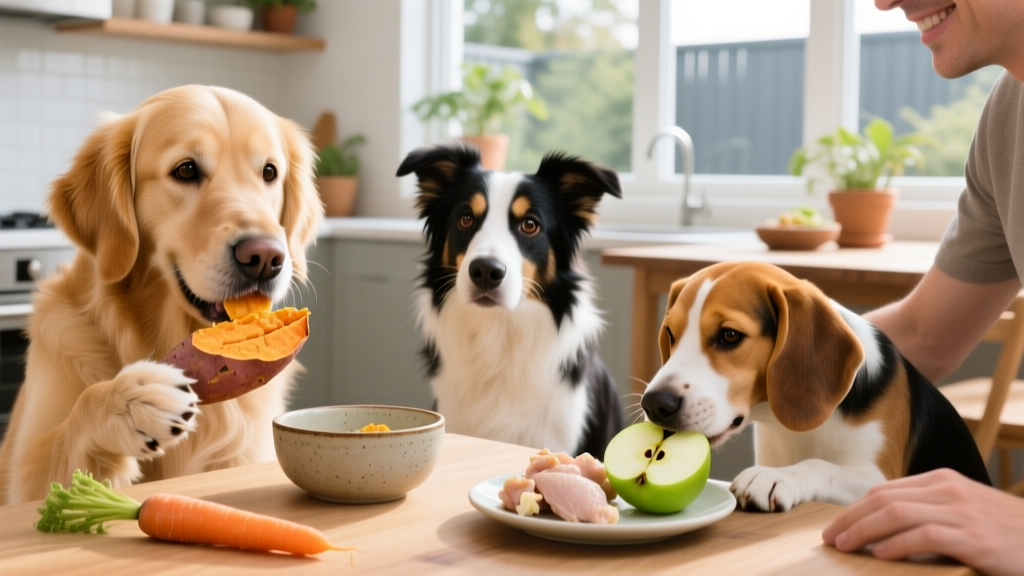
Which Human Foods Are Safe for Dogs?
Not all human food is created equal in a dog's digestive system. Dogs lack certain enzymes that humans use to break down compounds like theobromine (in chocolate) and thiosulfate (in onions). But many whole, unseasoned foods are not only safe — they're nutritionally beneficial when served correctly.
Below is a categorized breakdown of common kitchen foods, organized by safety level. This is the framework I recommend to every dog owner I work with: think of it as a traffic-light system for your pantry.
| Food | Verdict | Key Notes |
|---|---|---|
| Cooked chicken (boneless, skinless) | ✅ SAFE | Excellent lean protein; no seasoning, no bones |
| Blueberries | ✅ SAFE | High in antioxidants; great low-calorie treat |
| Plain pumpkin (canned, not pie filling) | ✅ SAFE | Fiber-rich; helps with mild GI upset |
| Carrots (raw or steamed) | ✅ SAFE | Low-calorie; good for dental health when raw |
| Plain cooked rice | ✅ SAFE | Bland diet staple for GI recovery |
| Peanut butter (xylitol-free) | ⚠️ CAUTION | Must check label for xylitol; high fat — small portions only |
| Cheese (low-fat varieties) | ⚠️ CAUTION | Many dogs are lactose intolerant; start with tiny amounts |
| Apples (cored, no seeds) | ⚠️ CAUTION | Seeds contain amygdalin (cyanide precursor); remove all seeds and core |
| Grapes / Raisins | ❌ TOXIC | Can cause acute kidney failure — no safe dose exists |
| Onions / Garlic / Chives | ❌ TOXIC | Destroy red blood cells; all forms (raw, cooked, powdered) dangerous |
| Chocolate (especially dark/baking) | ❌ TOXIC | Theobromine toxicity; darker = more dangerous |
| Xylitol (sugar-free gum, baked goods) | ❌ TOXIC | Causes rapid hypoglycemia and liver failure |
| Macadamia nuts | ❌ TOXIC | Causes weakness, tremors, hyperthermia within 12 hours |
| Cooked bones (any type) | ❌ DANGER | Splinter easily; risk of GI perforation and obstruction |
How Much Human Food Can I Give My Dog?
The most common mistake I see is portion size. A tablespoon of peanut butter might be fine for a 70 lb Labrador, but that same tablespoon represents a caloric overload for a 10 lb Chihuahua. The general veterinary guideline is that treats and supplemental foods should not exceed 10% of your dog's daily caloric intake (the remaining 90% should come from a complete and balanced diet meeting AAFCO standards, per the FDA).
Here's a practical serving-size reference for the most popular safe human foods, broken down by your dog's weight class:
| Food | Small Dog (10–20 lb / 4.5–9 kg) |
Medium Dog (21–50 lb / 9.5–23 kg) |
Large Dog (51–90+ lb / 23–41+ kg) |
|---|---|---|---|
| Cooked chicken (shredded) | 1–2 tablespoons | 2–4 tablespoons | ¼–½ cup |
| Blueberries | 2–3 berries | 5–8 berries | 10–15 berries |
| Plain canned pumpkin | 1 teaspoon | 1–2 tablespoons | 2–4 tablespoons |
| Carrots (chopped) | 2–3 baby carrots | 4–6 baby carrots | 1 large carrot |
| Peanut butter (xylitol-free) | ½ teaspoon | 1 teaspoon | 1 tablespoon |
| Apple slices (no seeds/core) | 2–3 thin slices | 4–6 slices | ½ apple |
| Plain cooked rice | 1 tablespoon | 2–3 tablespoons | ¼–⅓ cup |
| Low-fat cheese (cubed) | 1 small cube (¼ oz) | 2–3 cubes (½ oz) | 1 oz |
Calorie context: The average 30 lb dog needs roughly 700–900 calories per day (depending on activity level). That means human food treats should stay under 70–90 calories daily. A single tablespoon of peanut butter contains about 95 calories — which is why portion control matters so much.
Nutritional Benefits of Safe Human Foods
When chosen wisely, human foods can supplement your dog's diet with nutrients that may be less bioavailable in some commercial kibbles. Here's a breakdown of what specific safe foods bring to the table, based on USDA FoodData Central values:
| Food | Calories | Key Nutrients | Fiber | Primary Benefit |
|---|---|---|---|---|
| Blueberries (8 berries) | ~4 kcal | Vitamin C (2.4 mg), Vitamin K (5.4 mcg), Manganese | 0.5 g | Antioxidant support; anthocyanins may reduce oxidative stress |
| Cooked chicken breast (3 tbsp) | ~35 kcal | Protein (7 g), Niacin (3.5 mg), Vitamin B6, Phosphorus | 0 g | Lean muscle maintenance; highly digestible protein source |
| Pumpkin (2 tbsp canned) | ~10 kcal | Vitamin A (1,280 IU), Potassium (112 mg), Iron | 1.3 g | GI regulation; soluble fiber firms loose stools |
| Carrots (5 baby carrots) | ~20 kcal | Beta-carotene (2,500 mcg), Vitamin K, Potassium | 1.7 g | Dental scraping (raw); vision and immune support |
| Apple (5 slices, no seeds) | ~15 kcal | Vitamin C (3 mg), Pectin, Quercetin | 0.8 g | Gentle fiber source; polyphenols support gut health |
A quick note: dogs synthesize their own vitamin C, so the vitamin C content in fruits isn't as critical for them as it is for humans. The real value of these foods lies in their fiber content, antioxidant compounds, and the variety they add to a dog's diet.
How to Prepare Human Food for Your Dog
Preparation is where most accidents happen. A food that's perfectly safe when prepared correctly becomes dangerous with the wrong seasoning, cooking method, or overlooked pit. Follow these rules every time:
- Remove all seeds, pits, cores, and stems. Apple seeds contain amygdalin, which metabolizes into hydrogen cyanide. Peach and cherry pits contain the same compound. Avocado pits are also a choking and obstruction hazard (and avocado flesh contains persin, which is mildly toxic to some dogs in large amounts).
- Cook meats thoroughly — no raw chicken or pork. While raw feeding is a separate debate, if you're adding human food as a supplement, cook all meats to an internal temperature of 165°F (74°C) to eliminate Salmonella and Campylobacter risk. Never feed cooked bones of any kind — they become brittle and splinter.
- No seasoning, oils, butter, garlic, or onion. This is non-negotiable. Garlic powder on chicken, butter on vegetables, or onion in a stew renders the entire dish unsafe. Serve plain, steamed, boiled, or baked.
- Steam or boil vegetables for easier digestion. Raw carrots are fine as a crunchy treat, but harder vegetables like sweet potato, broccoli stems, and green beans are more digestible when lightly steamed. Cut into bite-sized pieces appropriate for your dog's mouth size.
- Always read labels on processed foods. Peanut butter is the classic trap — many brands (especially "sugar-free" or "diet" varieties) contain xylitol, which is lethal to dogs even in small amounts. Check every label, every time, even for brands you've bought before — formulations change.
What Happens If My Dog Eats Too Much Human Food?
Overfeeding human food creates problems on two fronts: acute digestive distress and long-term nutritional imbalance.
Short-term (within 12–24 hours): Even safe foods can cause vomiting, diarrhea, or gas when introduced too quickly or fed in excessive quantities. High-fat foods (cheese, peanut butter, fatty meats) can trigger pancreatitis — a painful, potentially life-threatening inflammation of the pancreas. Symptoms include repeated vomiting, a hunched "prayer position" posture, lethargy, and abdominal pain. Pancreatitis treatment typically costs $1,500–$5,000 in emergency veterinary care.
Long-term: If human food regularly exceeds 10–15% of caloric intake, dogs develop nutrient deficiencies because table food doesn't meet the calcium-to-phosphorus ratios, taurine levels, or trace mineral requirements that AAFCO-complete diets provide. You'll see dull coats, poor muscle tone, and in severe cases, metabolic bone disease.
Contact your veterinarian or an emergency clinic right away if your dog shows any of these after eating human food:
- Repeated vomiting (more than 2 episodes in 6 hours)
- Bloody diarrhea or black, tarry stools
- Known ingestion of grapes, raisins, onions, xylitol, chocolate, or macadamia nuts — even a small amount
- Abdominal distension, unproductive retching, or restlessness (signs of bloat/GDV — this is a surgical emergency)
- Seizures, tremors, or inability to stand
- Difficulty breathing or pale/white gums
ASPCA Animal Poison Control: (888) 426-4435 (24/7, consultation fee applies)
Pet Poison Helpline: (855) 764-7661
Which Dogs Should NOT Eat Human Food?
While most healthy adult dogs can tolerate carefully selected human foods, certain dogs should stick exclusively to their prescribed diet:
- Puppies under 6 months: Their developing digestive systems are more sensitive, and their nutritional requirements for growth are very precise. Any deviation from a puppy-formulated complete diet risks growth abnormalities, especially in large-breed puppies prone to orthopedic conditions.
- Dogs with pancreatitis (current or history): Even small amounts of fat from cheese, meat drippings, or peanut butter can trigger a recurrence. These dogs need strict low-fat diets.
- Dogs with food allergies or inflammatory bowel disease (IBD): Introducing novel proteins or fiber sources can trigger flare-ups. Work with your vet on an elimination diet protocol before adding any new food.
- Dogs with kidney disease: Many human foods are higher in phosphorus and sodium than renal diets allow. Pumpkin, for example, is high in potassium — problematic for dogs with advanced CKD.
- Diabetic dogs: Fruits like apples and blueberries contain natural sugars that can disrupt insulin regulation. Any treats must be factored into their glycemic management plan.
- Senior dogs on prescription diets: If your dog is on a veterinary therapeutic diet (e.g., Hill's Prescription Diet, Royal Canin Veterinary Diet, Purina Pro Plan Veterinary Diets), adding outside food can undermine the specific nutrient modifications those diets provide.
When in doubt, consult your veterinarian before introducing any human food — especially if your dog has a pre-existing condition or takes medication.
How to Introduce New Human Foods Safely
Follow this protocol whenever offering a new food for the first time:
- Verify safety first. Confirm the food is on the safe list above or cross-reference with the ASPCA's toxic and non-toxic food database. If unsure, don't feed it.
- Start with 25% of the recommended serving. For a medium dog trying blueberries for the first time, that's 1–2 berries — not the full 5–8.
- Feed only one new food at a time. If you introduce three new foods and your dog gets diarrhea, you won't know which one caused it.
- Monitor for 24–48 hours. Watch for vomiting, diarrhea, excessive gas, itching, ear redness, or paw licking (signs of food sensitivity). Note stool consistency.
- If no adverse reaction, gradually increase to full serving over 3–5 days. You can then add this food to your dog's regular rotation.
- If any reaction occurs, stop immediately. Wait 2 weeks before retrying at an even smaller dose. If the reaction recurs, that food is not a good fit for your individual dog.
Related Foods to Watch Out For
When one food is toxic, its close relatives often are too. Here's a quick cross-reference to keep in mind:
| Toxic Food | Related Items Also Toxic | Why It's Dangerous |
|---|---|---|
| Grapes | Raisins, currants, sultanas, grape juice, wine | Tartaric acid (identified 2021) causes acute renal tubular necrosis |
| Onions | Garlic, leeks, chives, shallots, onion powder | N-propyl disulfide causes oxidative damage to red blood cells (Heinz body anemia) |
| Macadamia nuts | Foods containing macadamia (cookies, trail mixes) | Unknown toxin causes hind-limb weakness, tremors, hyperthermia |
| Xylitol | Sugar-free gum, some peanut butters, "keto" baked goods, certain medications | Triggers massive insulin release → hypoglycemia within 30–60 min; liver failure at higher doses |
| Chocolate | Cocoa powder, cacao nibs, chocolate-covered espresso beans, brownies | Theobromine and caffeine; LD50 varies by chocolate type (baking chocolate is ~10× more toxic than milk chocolate) |
Frequently Asked Questions
Can dogs eat human food every day?
Yes, small amounts of safe human food can be part of a daily routine — but only if it stays within the 10% treat calorie rule. A few blueberries or a tablespoon of pumpkin on top of kibble daily is fine. Replacing meals with human food is not, unless you're working with a board-certified veterinary nutritionist (DACVN) to formulate a complete homemade diet.
Is cooked food better than raw for dogs?
For meats: yes, cooking to 165°F (74°C) eliminates bacterial pathogens. For vegetables: it depends. Carrots and bell peppers are fine raw; sweet potatoes and broccoli are more digestible when steamed. Never feed raw potatoes (they contain solanine) or raw legumes.
Can puppies eat human food?
Puppies under 6 months should primarily eat a complete, AAFCO-approved puppy diet. Tiny tastes of safe foods (a blueberry, a lick of pumpkin) won't cause harm, but their primary nutrition must come from a growth-formulated diet to support proper skeletal and organ development.
My dog ate something toxic — what do I do?
Call the ASPCA Animal Poison Control Center at (888) 426-4435 or the Pet Poison Helpline at (855) 764-7661 immediately. Do not induce vomiting unless specifically instructed to do so by a veterinarian or poison control specialist. Note the time of ingestion, estimated quantity, and your dog's weight — they'll need this information.
Are grain-based human foods safe for dogs?
Plain cooked rice, oatmeal, and quinoa are safe and commonly used in veterinary bland diets for GI upset. Avoid bread dough (yeast dough expands in the stomach and produces ethanol), seasoned grain dishes, and anything with onion or garlic mixed in. Despite the grain-free marketing trend, most dogs tolerate grains well — the FDA's investigation into grain-free diets and DCM has raised concerns about potential links between grain-free diets and dilated cardiomyopathy.
How do I know if my dog is allergic to a human food?
Food allergy symptoms in dogs include chronic ear infections, paw licking/chewing, facial rubbing, hives, vomiting, or diarrhea. True food allergies affect an estimated 1–2% of dogs with skin disease (per the Merck Veterinary Manual). If you suspect a food allergy, your vet may recommend an 8–12 week elimination diet trial using a novel protein or hydrolyzed diet — not simply swapping treats at home.
Anouk Beaumont
All our authors care for dogs every day — read more of their work on the authors page.


