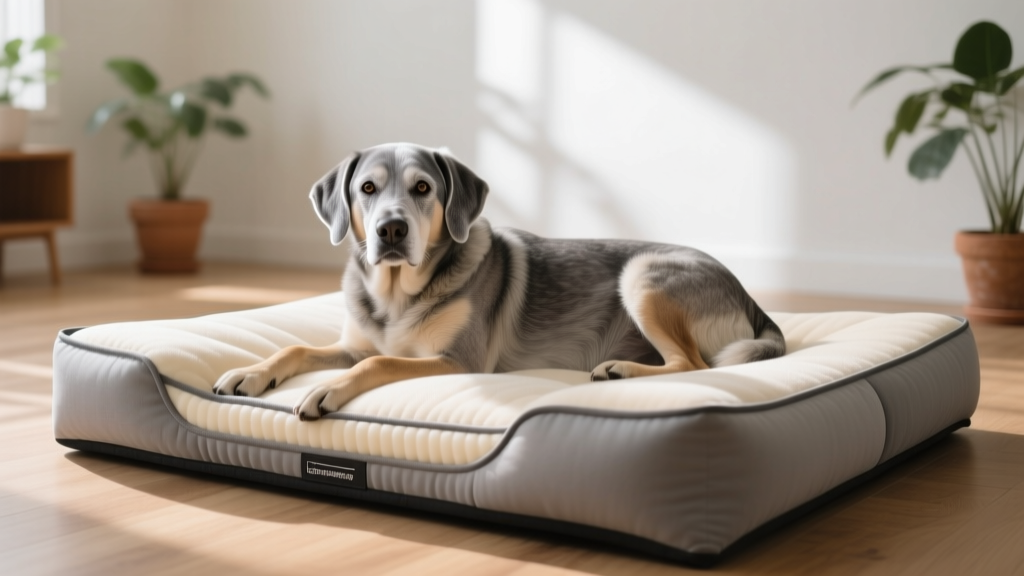
Safe Picks for Travel, Calming & Home Use
Find the best soft dog crate for your pup in 2026. We compare top picks on safety, durability, sizing, and price with expert buying criteria and vet insights.

What Is a Soft Dog Crate and Why Would Your Dog Need One?
A soft dog crate is a collapsible enclosure made from fabric (typically Oxford nylon, polyester, or canvas) stretched over a lightweight frame — usually steel wire, fiberglass poles, or aluminum tubing. Unlike wire or plastic crates, soft crates prioritize portability and comfort over containment security.
According to the American Kennel Club, crate training provides dogs with a den-like safe space that reduces anxiety and aids house training. Soft crates serve this function in specific scenarios where hard-sided crates are impractical:
- Car travel: They fold flat for storage and weigh 50-70% less than wire crates of equivalent size.
- Hotel stays and vacation rentals: Many properties allow soft crates where wire crates scratch floors.
- Camping and outdoor events: Lightweight enough to carry to a campsite or agility trial.
- Senior or arthritic dogs: Padded floors and softer walls are gentler on joints than wire crate trays.
- Anxiety-prone dogs (calmed): The enclosed, den-like feel can help dogs who are already comfortable with crating — but soft crates are contraindicated for dogs with active separation anxiety who may chew through fabric.
How to Choose the Right Soft Dog Crate: Sizing, Material & Feature Breakdown
Getting the Size Right
The most common mistake dog owners make is buying a crate that's too small (thinking "cozy is better") or too large (thinking "more room is always good"). Here's the precise formula:
| Measurement | How to Measure | Crate Minimum |
|---|---|---|
| Length | Nose tip to base of tail (not tail tip) | Add 4-6 inches |
| Height | Floor to top of head (or ear tips if erect) | Add 2-4 inches |
| Weight | Current weight on a scale | Stay within manufacturer's max rating |
Frame Materials Compared
Steel wire frames (most durable): Hold shape under moderate pressure, but add 2-4 lb to overall weight. Best for dogs who lean against crate walls.
Fiberglass/flex poles (lightest): Tent-pole style assembly. Collapse if a dog pushes hard against walls, but pack down to under 2 inches thick. Best for air travel carry-on.
Aluminum tubing (balanced): Lighter than steel, stronger than fiberglass. Found in premium models. Best all-around choice for frequent travelers.
Fabric Denier and Durability
Denier (D) measures fabric thickness. For soft crates:
- 300D-420D: Lightweight, suitable for small dogs under 20 lb who don't scratch or chew.
- 600D Oxford nylon: The standard for mid-range crates. Resists moderate scratching and is water-resistant.
- 900D-1050D ballistic nylon: Heavy-duty. Found in premium models. Resists determined scratching but adds weight.
Top 7 Soft Dog Crates: Detailed Reviews with Pricing
1. EliteField 3-Door Folding Soft Dog Crate
Price range: $45-$80 depending on size (S through XXL) | Best for: Budget-conscious owners with calm, crate-trained dogs
Key features: 600D polyester fabric, steel tube frame, 3 mesh doors (front, top, side), fleece pad included, carry bag, folds flat in under 30 seconds. Available in 5 sizes and 12 colors.
Specs (Large model): Interior 36"L × 24"W × 28"H | Weight: 7.2 lb | Max dog weight: 70 lb
- Excellent ventilation with 3-panel mesh
- Under $60 for large size
- Machine-washable cover and pad
- Seatbelt straps for car anchoring
- Zippers lack interior locking clips
- Frame flexes if dog leans hard on walls
- Fleece pad is thin (¼ inch) — upgrade recommended
- Not suitable for chewers — fabric tears easily
2. Pet Gear No-Zip Soft Crate (Generation II)
Price range: $80-$130 | Best for: Dogs who nose-open zippers; owners who want one-hand access
Key features: Push-button latch doors instead of zippers, 600D nylon, steel frame, interior tie-down straps, water bottle holder, top and front openings. The latch system is the standout — it eliminates the most common failure point in soft crates.
Specs (Medium model): Interior 30"L × 21"W × 23"H | Weight: 8.5 lb | Max dog weight: 50 lb
- No-zip latch doors prevent escapes
- More rigid frame than zipper-only models
- Interior straps to secure crate pad
- One-hand open/close operation
- Heavier than comparable zipper models
- Latch mechanism can jam with dog hair buildup
- Limited to 3 sizes (S, M, L)
- Higher price point for the size range
3. Firstrax Noz2Noz Sof-Krate N2 Series
Price range: $70-$120 | Best for: Frequent travelers who need quick setup and rugged build
Key features: Heavy-duty 900D nylon, reinforced steel frame with locking joints, dual zipper locks (interior clip + exterior pull), rounded corners to prevent snagging, removable and machine-washable cover. The N2 Series has been a top seller in the soft crate category for over a decade with iterative improvements.
Specs (42" model): Interior 42"L × 28"W × 31"H | Weight: 11.3 lb | Max dog weight: 90 lb
- 900D fabric resists scratching better than most
- Dual-locking zippers prevent escapes
- Largest size accommodates big breeds
- Rounded corners protect car interiors and floors
- Heavier than competitors at 11+ lb
- Setup takes 60-90 seconds (locking joints)
- Pad sold separately ($20-$30 extra)
- Only 2 color options (black, green)
4. Amazon Basics Soft-Sided Pet Carrier Travel Crate
Price range: $30-$50 | Best for: Small dogs under 25 lb; airline under-seat travel (check carrier dimensions with your airline)
Key features: Polyester fabric with PVC frame, fleece-lined bed, mesh panels on 3 sides, top and side entry, shoulder strap for carrying. This is a carrier-style soft crate — designed more for transport than stationary crating.
Specs (Medium): Interior 26"L × 15.5"W × 17"H | Weight: 3.8 lb | Max dog weight: 25 lb
- Under $40 for most sizes
- Lightest option reviewed at under 4 lb
- Compact fold for storage
- Shoulder strap for hands-free carrying
- PVC frame flexes and collapses under pressure
- Not suitable as a stationary home crate
- Small maximum size limits breed options
- Thin padding — dog can feel frame through floor
5. Precision Pet Products Soft Side Pet Crate
Price range: $55-$95 | Best for: Multi-dog households needing consistent sizing across different dogs
Key features: 420D nylon, steel frame, 3-door access (front, side, top), water-resistant floor panel, seatbelt loops, reflective trim for nighttime visibility. Available in 5 sizes from 21" to 42".
Specs (36" model): Interior 36"L × 24"W × 27"H | Weight: 6.8 lb | Max dog weight: 65 lb
- Water-resistant floor prevents leaks on hotel carpets
- Reflective trim adds visibility for camping
- Good price-to-size ratio
- Consistent sizing across the product line
- 420D fabric less durable than 600D+ options
- Mesh panels are smaller than competitors (less airflow)
- Pad is non-removable (spot clean only)
- Zippers are standard — no locking mechanism
6. OxGord Soft Dog Crate — Heavy-Duty Travel Model
Price range: $90-$150 | Best for: Medium-to-large dogs who need a rugged soft crate for outdoor use
Key features: 1050D ballistic nylon, reinforced aluminum frame, lockable zippers with carabiner clips, heavy-duty YKK zippers, 4 mesh ventilation panels, memory foam pad included. This is the most rugged option in our lineup.
Specs (42" model): Interior 42"L × 30"W × 33"H | Weight: 13.5 lb | Max dog weight: 100 lb
- 1050D ballistic nylon is the most scratch-resistant fabric reviewed
- Memory foam pad included (2-inch thick)
- Aluminum frame resists bending
- Carabiner zipper locks prevent escapes
- Heaviest option at 13.5 lb
- Premium price point ($130+ for large sizes)
- Bulkier when folded than competitors
- Limited availability — often ships only from manufacturer site
7. Jespet Soft-Sided Pet Travel Crate
Price range: $35-$65 | Best for: Occasional use — weekend trips, vet visits, short-term containment
Key features: 300D polyester, lightweight steel frame, 2-door access (front, top), mesh ventilation on 3 sides, carry handle and shoulder strap, includes thin fleece pad.
Specs (Large): Interior 36"L × 24"W × 26"H | Weight: 5.5 lb | Max dog weight: 60 lb
- Lightest full-size option at 5.5 lb
- Budget-friendly under $50 for large size
- Fastest setup time — under 15 seconds
- Compact fold (3 inches flat)
- 300D fabric tears with moderate scratching
- Not suitable for daily/long-term use
- Frame joints are plastic (weakest in lineup)
- Only 2 doors (no side access)
Soft Dog Crate Comparison Table: All 7 Picks Side by Side
| Product | Fabric | Frame | Max Weight | Price Range | Washable Cover | Locking Zippers |
|---|---|---|---|---|---|---|
| EliteField 3-Door | 600D polyester | Steel tube | 70 lb | $45-$80 | ✅ | ❌ |
| Pet Gear No-Zip Gen II | 600D nylon | Steel | 50 lb | $80-$130 | ✅ | ✅ (latch) |
| Firstrax N2 Sof-Krate | 900D nylon | Steel (locking) | 90 lb | $70-$120 | ✅ | ✅ |
| Amazon Basics Soft | Polyester | PVC | 25 lb | $30-$50 | ❌ (spot) | ❌ |
| Precision Pet Soft Side | 420D nylon | Steel | 65 lb | $55-$95 | ❌ (spot) | ❌ |
| OxGord Heavy-Duty | 1050D ballistic | Aluminum | 100 lb | $90-$150 | ✅ | ✅ |
| Jespet Soft-Sided | 300D polyester | Steel (plastic joints) | 60 lb | $35-$65 | ✅ | ❌ |
How to Use a Soft Dog Crate Safely: Step-by-Step Setup and Training
Step 1: Assemble the Frame
Unfold the frame on a flat surface. For steel tube frames, extend each leg until you hear the locking click. For pole-style frames, thread each pole through its fabric sleeve and seat the ends into their grommets. Never force a joint — if it doesn't click, realign it.
Step 2: Position in a Low-Traffic, Climate-Controlled Area
Place the crate in a room-temperature area (65°F-75°F / 18°C-24°C) away from direct sunlight, radiators, and drafty windows. Dogs in soft crates have less airflow than in wire crates, making temperature regulation critical. In warm weather, position a fan to blow across the mesh panels.
Step 3: Add Bedding and Familiar Items
Place the included pad (or an upgraded orthopedic pad for senior dogs) on the floor. Add a familiar blanket or a t-shirt that smells like you. Avoid loose items your dog could shred and swallow — no stuffed toys with squeakers for unsupervised crating.
Step 4: Introduce Using Positive Reinforcement
Leave all doors open. Toss high-value treats (small pieces of chicken, cheese, or commercial training treats) inside the crate. Let your dog enter and exit freely 10-15 times. Do not close any door during this first session. Repeat over 2-3 days before progressing.
Step 5: Close One Door at a Time
Once your dog enters willingly, close the front door while you sit beside the crate. Give treats through the mesh every 30-60 seconds for 5 minutes. If your dog shows stress (panting, whining, pawing at mesh), open the door immediately and go back to Step 4 for another session.
Step 6: Gradually Increase Duration
Follow this progression: 5 minutes → 15 minutes → 30 minutes → 1 hour → 2 hours. Never leave a dog in a soft crate for more than 4 hours at a stretch (per AVMA guidelines on crating duration). Puppies under 6 months should follow the "age in months + 1 = max hours" rule (e.g., a 3-month-old puppy: maximum 4 hours, but 2 hours is more appropriate for soft crate use).
Step 7: Secure the Crate During Travel
In a vehicle, use the seatbelt straps to anchor the crate to a seat. Place it behind the front seats or in the cargo area of an SUV where it won't slide. Never place a soft crate in the front seat (airbag risk) or on an elevated surface where it could fall.
When to Skip a Soft Crate and See Your Vet Instead
A soft crate is a management tool, not a treatment. If your dog shows any of the following behaviors in or around a crate, stop crating and consult your veterinarian — these may indicate underlying medical or behavioral conditions that require professional intervention:
🚨 Red flags that warrant a veterinary or certified behaviorist consultation:
- Self-injury: Bloody nails, broken teeth, or raw skin around the mouth from attempting to escape
- Excessive drooling or panting that persists after 10+ minutes in the crate (may indicate panic, not just adjustment)
- Vomiting or diarrhea triggered specifically by crating (stress-induced GI upset may need medication)
- Refusal to eat or drink for 12+ hours after crating sessions
- Destructive behavior escalating outside the crate (chewing walls, doors, furniture when you leave)
- Urinating or defecating in the crate in a previously house-trained dog (rule out UTI, GI illness, or cognitive decline in seniors before assuming behavioral causes)
These symptoms may indicate separation anxiety, confinement distress, or a medical condition. A veterinary behaviorist can develop a desensitization protocol and, if needed, prescribe anti-anxiety medication such as fluoxetine or clomipramine.
Alternatives to Soft Dog Crates: When a Different Solution Works Better
Soft crates serve a specific niche. Here are situations where alternatives may be more appropriate:
| Alternative | When to Use It | Price Range |
|---|---|---|
| Wire crate with divider panel | Primary home crate, puppies still growing, dogs who chew fabric | $40-$90 |
| Plastic airline crate (IATA-compliant) | Air travel in cargo hold, dogs who need more rigid containment | $50-$180 |
| Exercise pen (x-pen) | Puppies, dogs who need more space, supervised play areas | $35-$80 |
| Furniture-style wooden crate | Permanent home placement, aesthetic integration with decor | $150-$500 |
| Dog-proofed room with baby gate | Dogs with confinement distress, senior dogs who need space to move | $30-$60 (gate only) |
| Crash-tested vehicle crate (e.g., Ruff Land, Gunner) | Car travel safety — the only safe option for highway driving | $300-$700 |
Natural and DIY Alternatives
If you need a temporary soft enclosure and want to avoid buying a commercial product, consider these options:
- Pop-up playpen: Children's pop-up playpens (mesh-sided, $20-$35) work well for small dogs under 15 lb as a temporary travel crate. Ensure the mesh is tight enough that paws can't get caught.
- Blanket-draped wire crate: Drape a breathable cotton sheet over a wire crate to create the enclosed, den-like feel of a soft crate. This works well for anxious dogs who need visual barriers but also need the security of a rigid frame.
- DIY PVC frame crate: For handy owners, a frame built from 1-inch PVC pipe and fittings ($15-$25 in materials) with a sewn canvas cover can replicate commercial soft crate functionality. Ensure all joints are glued (not friction-fit) to prevent collapse.
Soft Dog Crate FAQ: Your Top Questions Answered
What is the best soft dog crate for dogs overall?
For most crate-trained dogs, the Firstrax Noz2Noz N2 Series offers the best balance of durability (900D nylon), security (dual-locking zippers), and size range (up to 90 lb dogs). For budget buyers with calm dogs, the EliteField 3-Door provides solid functionality under $60. For escape artists who manipulate zippers, the Pet Gear No-Zip Gen II with its latch-door system is the safest choice.
How much does a soft dog crate cost?
Soft dog crates range from $30 to $150 depending on size, fabric quality, and frame material. Budget models (300D-420D fabric, PVC or basic steel frames) cost $30-$55. Mid-range models (600D fabric, steel frames, locking zippers) cost $55-$100. Premium models (900D+ fabric, aluminum frames, memory foam pads) cost $100-$150.
Can I use a soft dog crate for a puppy?
Yes, but only with close supervision and only for short durations (1-2 hours max for puppies under 6 months). Puppies chew during teething (typically 3-6 months) and can destroy soft crate fabric quickly, creating ingestion hazards. Use a wire crate with a divider panel as your primary puppy crate, and introduce the soft crate for travel only after your puppy is reliably crate-trained and past the peak teething phase.
Are soft dog crates safe for air travel?
Most airlines require hard-sided IATA-compliant crates for cargo hold travel. For cabin travel (under-seat), soft-sided carriers are typically accepted, but each airline has specific dimension requirements — always check with your airline before purchasing. Look for carriers labeled "airline-approved" and verify dimensions against your specific airline's under-seat measurements.
How do I clean a soft dog crate?
Remove the cover from the frame (most unzip or unsnap). Machine wash the cover on a gentle cycle with cold water and a mild, fragrance-free detergent. Air dry — high heat can shrink the fabric and damage mesh. Wipe the frame with a damp cloth and mild soap. For odor control between washes, spray the interior with an enzymatic cleaner (such as Nature's Miracle) and let it air dry completely before reassembly. Wash the cover every 1-2 weeks with regular use.
Will a soft dog crate help with my dog's separation anxiety?
A soft crate alone will not treat separation anxiety. If your dog is already crate-trained and calm in a crate, a soft crate may provide a more comforting den-like environment during your absence. However, if your dog has separation anxiety (vocalizing, destroying items, self-injury when left alone), crating can make the problem worse. Consult your veterinarian for a comprehensive behavior modification plan that may include counter-conditioning, desensitization, and medication.
Disclaimer: This article provides general product guidance and does not replace professional veterinary or certified behaviorist advice. If your dog shows signs of distress, illness, or behavioral issues, consult your veterinarian before using any containment product. Product prices reflect ranges observed in early 2026 and may vary by retailer and region.
Marcus Aldridge
All our authors care for dogs every day — read more of their work on the authors page.