Best Puzzle Toys for Dogs in 2026: Vet-Approved Picks & Buying Guide
Find the best puzzle toys for dogs with our 2026 expert review. Compare top picks, prices, safety tips, and vet-backed enrichment strategies.
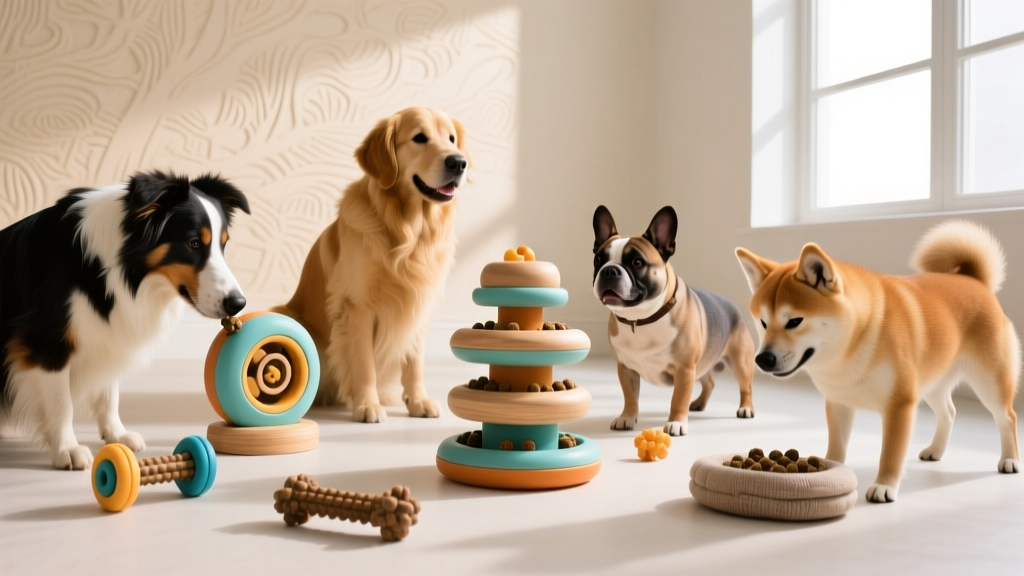
Dogs aren't just pets—they're problem solvers. The American Kennel Club notes that mental stimulation can be as tiring for dogs as physical exercise, reducing destructive behaviors rooted in boredom. Puzzle toys for dogs tap into natural foraging instincts, slowing meal consumption and providing cognitive challenges that keep your dog's brain sharp. Whether you have a curious puppy, a high-drive working breed, or a senior dog needing gentle engagement, the right puzzle toy can transform idle hours into rewarding brain work.
How Puzzle Toys for Dogs Actually Work
At their core, puzzle toys exploit a dog's instinct to work for food—a behavior called contrafreeloading. Research published in the journal Applied Animal Behaviour Science demonstrates that dogs prefer to earn their food rather than receive it freely. Puzzle toys capitalize on this by requiring dogs to manipulate compartments, slide panels, lift flaps, or roll objects to release kibble or treats.
These toys fall into several mechanical categories:
- Sliding-panel puzzles: Dogs push or slide covers to reveal hidden treat compartments (e.g., Nina Ottosson designs).
- Stuffable rubber toys: Hollow toys filled with peanut butter, wet food, or kibble that dogs must lick, chew, and manipulate to empty (e.g., KONG Classic).
- Rolling dispensers: Ball-shaped toys with adjustable openings that release kibble as dogs nudge and roll them.
- Snuffle mats and foraging toys: Fabric-based toys where dogs use their noses to find hidden treats among fleece strips.
- Multi-chamber interactive feeders: Complex boards with several mechanisms—levers, drawers, cones—that dogs must solve sequentially.
The cognitive load varies by design. A beginner-level toy might require a single paw-swipe, while advanced puzzles demand dogs solve three or four steps in sequence. This progression matters: too easy, and your dog loses interest; too hard, and frustration replaces enrichment.
What to Look For: Buying Criteria That Matter
- Difficulty Level: Match to your dog's experience—beginner (1 mechanism), intermediate (2-3 steps), advanced (sequential multi-step)
- Size Appropriateness: Toy should be large enough that it can't be swallowed; treat openings should match kibble size
- Material Durability: Natural rubber or hard ABS plastic for power chewers; soft plush/fleece for gentle dogs
- Ease of Cleaning: Dishwasher-safe or hand-washable—bacteria buildup in crevices is a real health risk
- Adjustability: Openings or mechanisms that scale difficulty as your dog learns
- Supervision Requirements: Some toys are safe for solo play; others need monitoring to prevent piece ingestion
Top 7 Puzzle Toys for Dogs: 2026 Picks
1. KONG Classic Dog Toy
Price: $14.99–$19.99 (varies by size: S/M/L/XL) | Difficulty: Beginner to Intermediate | Best For: All breeds, especially power chewers
The KONG Classic remains a veterinary staple. Its hollow, snowman-shaped natural rubber body can be stuffed with kibble, peanut butter, yogurt, or canned food—and frozen for extended challenge time. The unpredictable bounce adds a physical play element. Available in six sizes from XS (for dogs under 5 lb) to XXL (for dogs over 90 lb).
- Virtually indestructible (red rubber); black "Extreme" version for aggressive chewers
- Dishwasher safe (top rack)
- Veterinarian-recommended for separation anxiety and crate training
- Freezing extends engagement to 30-45 minutes
- Simple design may bore advanced problem-solvers
- Heavy chewers can eventually break down red rubber over 1-2 years
- Can get lodged under furniture when bouncing
2. Nina Ottosson Dog Brick Interactive Puzzle
Price: $19.99–$24.99 | Difficulty: Intermediate (Level 2) | Best For: Dogs ready to graduate beyond basic stuffable toys
This board-style puzzle features three types of challenges: flip-open compartments, sliding bone-shaped covers, and removable brick pieces. Dogs must use paws and nose to access treats hidden under each mechanism. Made from BPA-free, phthalate-free, PVC-free composite plastic. Measures approximately 12.75" x 9.25" x 2".
- Three distinct mechanisms prevent quick learning
- Removable bricks adjust difficulty from 3 to 8 treat compartments
- Easy to clean—hand wash with warm soapy water
- Non-slip rubber feet keep board stable during play
- Requires supervision—small removable pieces are a choking hazard if chewed off
- Not suitable for aggressive chewers who may break plastic components
- Flat design means dogs can sometimes "cheat" by flipping the whole board
3. Outward Hound Hide A Squirrel Plush Puzzle
Price: $12.99–$22.99 (sizes Junior to XL) | Difficulty: Beginner | Best For: Dogs motivated by squeaky toys and soft textures
A plush tree trunk with removable stuffed squirrels that squeak. Dogs pull, paw, and nose the squirrels out of the trunk's holes. While not a food-dispensing puzzle, it engages hunting and extraction instincts. The XL "Ginormous" version holds 6 squirrels for extended play.
- Engages prey-drive without food motivation
- Squirrels double as standalone fetch/carry toys
- Machine washable (gentle cycle, air dry)
- Replacement squirrel packs available (~$7.99)
- Not for power chewers—squeakers and seams fail quickly under heavy chewing
- No adjustable difficulty
- Supervision required to prevent stuffing ingestion
4. Starmark Bob-A-Lot Interactive Dog Toy
Price: $11.99–$15.99 (Small/Large) | Difficulty: Beginner to Intermediate | Best For: Fast eaters and food-motivated dogs
A weighted, wobble-base dispenser that dogs push, paw, and nose around to release kibble through an adjustable opening. The large holds up to 3 cups of kibble; the small holds about 1 cup. The adjustable treat-dispensing hole lets you control flow rate and difficulty.
- Adjustable opening scales difficulty from easy trickle to challenging slow-release
- Weighted base prevents toy from rolling under furniture
- Durable polyethylene withstands most chewing
- Doubles as a slow feeder for mealtime
- Loud on hard floors—best on carpet or rugs
- Clever dogs learn to hold it upside down and shake
- Seams can crack under extreme chewer pressure over time
5. Nina Ottosson Dog Casino (Advanced Level 3)
Price: $24.99–$29.99 | Difficulty: Advanced | Best For: Experienced puzzle dogs and intelligent breeds (Border Collies, Poodles, German Shepherds)
A sophisticated puzzle board with multiple sequential challenges: dogs must first pull out drawers, then spin knobs, then lift cones—all to access hidden treats. This multi-step sequencing builds working memory and persistence. Measures approximately 13" x 13" x 3.5".
- Genuinely challenging for dogs who've mastered simpler puzzles
- Multiple sequential steps build complex problem-solving skills
- Locking mechanisms prevent dogs from skipping steps
- Excellent for rainy-day indoor enrichment sessions
- Frustrating for beginners—may cause dogs to give up or chew the board
- Strictly supervised play only—small knobs are ingestion hazards
- Higher price point for a toy your dog may solve in under 5 minutes once learned
6. Sniffiz SmellyMatty Snuffle Mat
Price: $29.99–$39.99 | Difficulty: Beginner to Intermediate | Best For: Scent-driven breeds (Beagles, Basset Hounds, Bloodhounds) and senior dogs
A fabric foraging mat with multiple layers of fleece strips, pockets, and hidden compartments. Dogs use their noses to locate treats buried deep within the textile layers. The SmellyMatty includes 5 built-in puzzle mechanisms (zippers, pockets, rolled sections) beyond simple fleece strip hiding. Machine washable.
- Engages olfactory system—dogs have up to 300 million scent receptors
- Completely silent—ideal for apartments and nighttime enrichment
- Low-impact—perfect for injured, senior, or mobility-limited dogs
- Machine washable; dries in 4-6 hours on a rack
- Higher price for a fabric product
- Chewers may shred fleece strips and ingest fabric
- Requires thorough cleaning to prevent food residue buildup and odor
7. West Paw Toppl Treat Toy
Price: $16.95–$22.95 (Small/Large) | Difficulty: Beginner to Intermediate | Best For: Dogs who need durable stuffable toys, especially those in the West Paw "Zogoflex" ecosystem
A cup-shaped, hollow rubber toy with interior prongs that grip treats, kibble, or frozen fillings. The unique feature: two Toppls (small and large) can interlock to create a sealed, more challenging puzzle. Made in Bozeman, Montana from recyclable Zogoflex material. Dishwasher safe.
- Interlocking design creates customizable difficulty
- Floats in water—great for pool/lake play
- Guaranteed tough: West Paw's one-time replacement guarantee
- Recyclable through West Paw's Join the Loop program
- Buying two sizes for interlocking doubles the cost ($34-$46 total)
- Interior prongs can trap food residue if not cleaned thoroughly
- Not as mentally complex as board-style puzzles
Side-by-Side Comparison
| Product | Difficulty | Price Range | Chew Durability | Solo Play Safe | Dishwasher Safe |
|---|---|---|---|---|---|
| KONG Classic | Beginner–Intermediate | $14.99–$19.99 | Excellent | Yes | Yes (top rack) |
| Nina Ottosson Dog Brick | Intermediate | $19.99–$24.99 | Moderate | No | No (hand wash) |
| Outward Hound Hide A Squirrel | Beginner | $12.99–$22.99 | Low | No | Yes (gentle cycle) |
| Starmark Bob-A-Lot | Beginner–Intermediate | $11.99–$15.99 | Good | Yes | No (hand wash) |
| Nina Ottosson Dog Casino | Advanced | $24.99–$29.99 | Moderate | No | No (hand wash) |
| Sniffiz SmellyMatty | Beginner–Intermediate | $29.99–$39.99 | Low | No | Yes (machine wash) |
| West Paw Toppl | Beginner–Intermediate | $16.95–$22.95 | Excellent | Yes | Yes |
Safety First: What You Must Know Before Buying
- Choking and ingestion risk: Any puzzle toy with removable parts (knobs, drawers, squeakers) requires active supervision. Dogs can and do swallow small plastic pieces, leading to intestinal blockages requiring $3,000–$7,000 in emergency surgery.
- Material toxicity: Only purchase toys labeled BPA-free, phthalate-free, and PVC-free. Cheap imported puzzle boards may contain lead-based paints or formaldehyde-releasing plastics.
- Caloric intake: Puzzle toys used with treats add to daily caloric intake. Factor treat calories into your dog's daily food allowance to prevent weight gain. A single tablespoon of peanut butter adds ~95 calories.
- Frustration threshold: If your dog shows signs of distress (whining, pawing frantically, attempting to destroy the toy rather than solve it), the puzzle is too difficult. Remove it and step down one difficulty level.
- Wear inspection: Check rubber toys weekly for cracks, missing chunks, or worn edges. Discard any toy showing structural damage immediately.
How to Introduce and Use Puzzle Toys Step by Step
Introducing a puzzle toy incorrectly can lead to frustration, disinterest, or even fear. Follow this progression to build your dog's confidence and problem-solving skills:
- Start absurdly easy. For the first 2-3 sessions, make the solution obvious. Leave compartments open, stuff the KONG loosely so treats fall out with a single nose bump, or place treats on top of the snuffle mat rather than buried. The goal is teaching your dog: "This thing = food comes out."
- Demonstrate if needed. Dogs learn through observation. Slowly manipulate the puzzle yourself while your dog watches. Slide a panel, reveal a treat, and let them eat it. Repeat 3-5 times.
- Gradually increase difficulty. Once your dog solves the easy version confidently (within 1-2 minutes), add one challenge layer. Close one compartment. Bury treats deeper in the snuffle mat. Tighten the Bob-A-Lot opening one notch.
- Keep sessions short. Limit puzzle sessions to 10-15 minutes. If your dog hasn't solved it by then, help them succeed (open a compartment, loosen a lid) so the session ends with a win, not defeat.
- Rotate toys. Dogs habituate quickly. Rotate between 3-4 different puzzle types every 2-3 days to maintain novelty and prevent boredom. Store unused puzzles out of sight.
- Use high-value fillings strategically. Reserve your dog's favorite treats (freeze-dried liver, small cheese pieces, lickable squeezes) for the hardest puzzles. Use regular kibble for easier daily enrichment toys.
- Never leave puzzle boards unattended. Stuffable rubber toys (KONG, Toppl) are generally safe for solo crate time. Board puzzles with small removable pieces are not.
The Science Behind Puzzle Toys: Do They Really Help?
The evidence for canine cognitive enrichment is substantial. A 2022 study in Applied Animal Behaviour Science found that dogs provided with food-puzzle toys showed significantly lower cortisol levels and fewer stereotypic behaviors (pacing, excessive licking, repetitive barking) compared to dogs fed from standard bowls. The Merck Veterinary Manual notes that environmental enrichment—including interactive feeding devices—is a first-line behavioral intervention for separation anxiety, noise phobias, and compulsive disorders in dogs.
For senior dogs, puzzle toys may offer neuroprotective benefits. Research from the University of Veterinary Medicine Vienna demonstrated that older dogs who regularly engaged with cognitive enrichment tasks maintained better performance on learning and memory tests over a 6-month period compared to control groups. While puzzle toys won't prevent canine cognitive dysfunction (CCD), they contribute to what veterinary behaviorists call "cognitive reserve."
Certified veterinary behaviorists frequently recommend puzzle toys as part of a comprehensive behavior modification plan. Dr. Lisa Radosta, a board-certified veterinary behaviorist, has noted in published case reviews that food-dispensing toys are particularly effective for high-energy breeds (Belgian Malinois, Australian Shepherds, Border Collies) who develop destructive behaviors when under-stimulated.
DIY and Natural Alternatives to Commercial Puzzle Toys
You don't need to spend $40 on a commercial puzzle to provide enrichment. Several effective alternatives cost almost nothing:
- Muffin tin puzzle: Place treats in a standard muffin tin and cover each cup with a tennis ball. Your dog must remove the balls to access treats. Cost: ~$0 if you have both items.
- Towel roll-up: Spread kibble on an old bath towel, roll it tightly, and tie a loose knot. Dogs must unroll and untangle to find food. Supervise to prevent fabric ingestion.
- Frozen broth blocks: Fill an ice cube tray or silicone mold with low-sodium chicken broth mixed with kibble pieces. Freeze overnight. The ice block becomes a licking and melting challenge. Great for hot weather.
- Cardboard box foraging: Place a small cardboard box inside a larger box with crumpled paper and scattered treats. Dogs tear through layers to find food. Discard after one session. Cost: free.
- Scatter feeding: Simply toss kibble across a grassy yard or snuffle-mat area. This mimics natural foraging behavior and engages scent-tracking. Zero equipment needed.
Important: If you feed a homemade diet or use human food as puzzle fillings, consult a veterinary nutritionist to ensure nutritional completeness. The ASPCA's toxic food list should be checked before using any human foods—onions, garlic, grapes, raisins, xylitol, macadamia nuts, and chocolate are all toxic to dogs.
When to Skip the Puzzle Toy and See Your Vet Instead
Puzzle toys are enrichment tools, not treatments. Certain behaviors that owners try to "fix" with puzzles actually require veterinary evaluation:
- Obsessive-compulsive behaviors: If your dog paces, flank-sucks, shadow-chases, or spins repetitively for extended periods, this may indicate a compulsive disorder requiring medication (typically SSRIs like fluoxetine) and a veterinary behaviorist's guidance.
- Destructive behavior paired with anxiety signs: Panting, drooling, destruction focused on exit points (doors, windows), and self-injury during alone time suggest separation anxiety—not boredom. This condition often requires a combination of behavioral modification and anti-anxiety medication.
- Sudden cognitive decline: If a previously puzzle-proficient senior dog suddenly can't solve easy puzzles, appears confused, or gets "stuck" in corners, consult your vet about canine cognitive dysfunction (CCD). Early intervention with supplements like SAMe or prescription medications like selegiline (Anipryl) may slow progression.
- Food aggression or resource guarding: If your dog growls, snaps, or stiffens when you approach them during puzzle toy use, stop the toy immediately and consult a certified professional dog trainer (CPDT-KA or IAABC-certified) or veterinary behaviorist. Resource guarding requires specialized desensitization protocols, not more enrichment.
- Pica (eating non-food items): If your dog chews and swallows pieces of puzzle toys rather than interacting with them to get food, this may indicate pica—a condition linked to nutritional deficiencies, anxiety, or gastrointestinal disease. Your vet will likely run bloodwork and a fecal panel.
Frequently Asked Questions
What is the best puzzle toy for dogs?
There is no single "best" puzzle toy—the right choice depends on your dog's size, chewing style, experience level, and motivation type. For most dogs starting out, the KONG Classic ($14.99–$19.99) offers the best combination of durability, versatility, and safety for solo play. For dogs ready for a cognitive challenge, the Nina Ottosson Dog Brick ($19.99–$24.99) provides multi-mechanism complexity. Power chewers should use the KONG Extreme (black rubber, $19.99–$27.99) or West Paw Toppl ($16.95–$22.95).
How do I choose the right puzzle toy for my dog?
Match the toy to three factors: (1) your dog's current skill level—start one level easier than you think they need; (2) their chewing style—rubber for power chewers, composite plastic or fabric for gentle mouths; (3) their motivation type—food-driven dogs excel with dispensers, while prey-driven dogs prefer extraction toys like Hide A Squirrel. Always verify the toy's size rating matches your dog's weight class.
How much do puzzle toys for dogs cost?
Basic stuffable rubber toys (KONG Classic, similar generics) run $12–$20. Intermediate board puzzles (Nina Ottosson Level 2, Starmark Bob-A-Lot) cost $12–$25. Advanced multi-step puzzles (Nina Ottosson Level 3) range from $25–$35. Premium snuffle mats with built-in mechanisms cost $30–$45. Budget-conscious owners can create effective DIY alternatives for under $5 using household items.
How do I use puzzle toys safely?
Supervise all board-style puzzles with removable pieces. Inspect rubber toys weekly for cracks and discard damaged toys immediately. Factor treat calories into daily food intake to prevent obesity. Choose BPA-free, phthalate-free products. Never use toxic fillings (no xylitol-containing peanut butter, no grapes, no chocolate). Clean food-contact surfaces after every use to prevent bacterial growth. If your dog shows frustration (whining, frantic pawing, attempting to destroy the toy), remove it and try an easier level.
Are there natural alternatives to commercial puzzle toys?
Yes. Scatter feeding kibble in grass, rolling treats inside old towels, using muffin tins covered with tennis balls, and freezing broth-kibble blocks all provide natural enrichment without purchasing specialized products. Scent-work games—hiding treats around the house and encouraging your dog to find them—engage the same foraging instincts as commercial puzzles. Always supervise DIY enrichment to prevent ingestion of non-food materials.
When should I skip OTC puzzle toys and see a vet?
Consult your veterinarian if your dog exhibits obsessive-compulsive behaviors, sudden cognitive decline, food aggression, pica (eating toy pieces), or anxiety-driven destruction focused on doors and windows. These behaviors indicate underlying medical or behavioral conditions that puzzle toys alone cannot address. A veterinary behaviorist (DACVB-certified) can develop a comprehensive treatment plan that may include medication, behavior modification, and structured enrichment.
Beth Carrasco
All our authors care for dogs every day — read more of their work on the authors page.


