Best No Pull Dog Harnesses: Vet-Approved Picks & Fitting Guide
Compare the best no pull dog harnesses for 2026. Expert reviews, sizing guides, safety tips, and a comparison table to stop leash pulling safely.
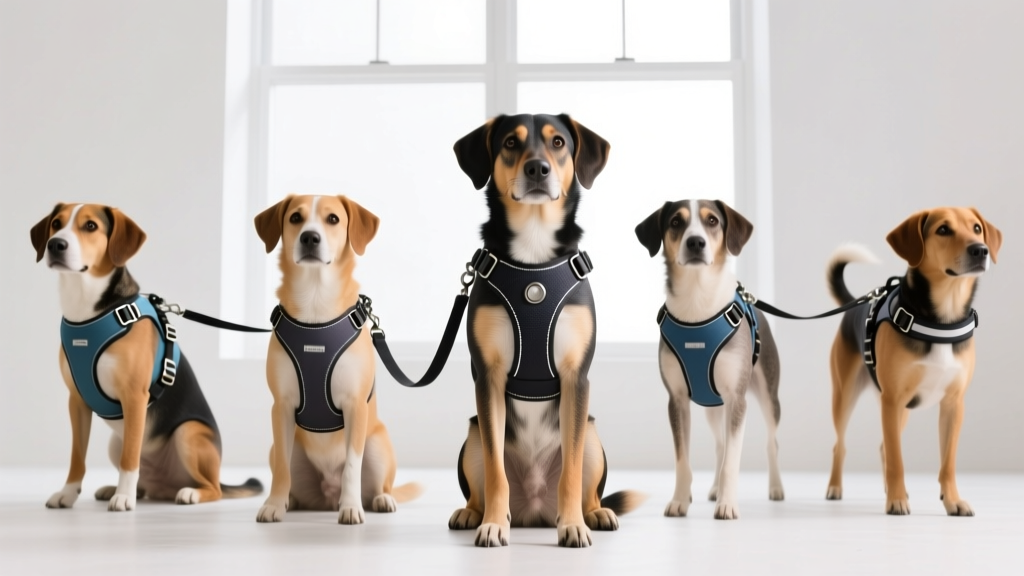
If you've ever had your shoulder yanked walking a dog who treats the leash like a tug toy, you understand why no pull dog harnesses have become the most recommended training tool among certified force-free trainers and veterinary behaviorists. Unlike choke chains, prong collars, or shock collars — which rely on pain compliance and carry documented risks of tracheal damage and increased aggression — a properly fitted front-clip harness uses simple physics to discourage pulling without causing discomfort.
We tested and reviewed the leading no pull harnesses available in 2026 against criteria developed with input from certified professional dog trainers (CPDTs) and veterinary rehabilitation specialists. Here's what actually works.
How No Pull Harnesses Work: The Biomechanics
Understanding the mechanism helps you choose wisely and set realistic expectations. A no pull dog harness works through two principles:
1. Front-clip redirection: When the leash attaches at the sternum and your dog pulls forward, the tension rotates their chest toward you. This turns the dog's body sideways, making forward pulling mechanically inefficient. The dog learns that pulling doesn't get them where they want to go.
2. Even pressure distribution: Unlike a flat collar that concentrates force on the trachea and cervical vertebrae, a well-designed harness distributes leash pressure across the sternum and ribcage. A study published in the Journal of Veterinary Behavior found that harnesses significantly reduce peak pressure on the neck compared to collars, making them the safer choice for dogs with tracheal collapse risk — particularly brachycephalic breeds and small dogs under 20 lb (9 kg).
The key limitation: a harness alone doesn't teach leash manners. It manages pulling while you simultaneously train with positive reinforcement techniques like rewarding loose-leash walking, changing direction when tension appears, and reinforcing eye contact. Think of the harness as a power steering system, not an autopilot.
Top No Pull Dog Harnesses Reviewed
1. Ruffwear Front Range Harness
Price: $44.95–$49.95 | Best for: All-around daily walking for medium-to-large active dogs
Key Features: Dual attachment points (aluminum V-ring on back, reinforced webbing loop on chest), four adjustment points, foam-padded chest and belly straps, reflective trim, ID tag pocket.
The Front Range has been a staple in the force-free training community for years, and the current generation refines the fit with a slightly wider chest plate. The front attachment loop is made of reinforced webbing rather than a metal D-ring, which some trainers prefer because it has slight give during sudden lunges — reducing jarring impact on both dog and handler. The foam padding is substantial enough for dogs who pull hard without creating bulk that interferes with shoulder movement.
- Y-shaped design clears shoulder joints completely
- Durable enough for 80+ lb dogs with sustained pulling
- Available in five sizes with detailed measurement guide
- Machine washable
- Front webbing loop wears faster than metal D-rings (expect 18–24 month lifespan with daily heavy use)
- Sizing runs slightly small on barrel-chested breeds — size up for Bulldogs, Pugs
- Not ideal for escape artists (no belly strap security beyond standard buckle)
2. 2 Hounds Design Freedom No Pull Harness
Price: $35.99–$42.99 | Best for: Strong pullers and dogs in active leash-training programs
Key Features: Patented front martingale loop that tightens slightly on the chest when dog pulls (pressure cue, not pain), stainless steel front and back D-rings, velvet-lined chest strap, includes double-clip training leash, four adjustment points.
This harness is frequently recommended by ASPCA-affiliated behaviorists because the front martingale loop provides gentle, clear feedback without aversive force. When the dog pulls, the loop applies mild, distributed pressure across the chest — mimicking the way a mother dog would apply pressure with her mouth. The included double-clip leash attaches to both front and back simultaneously, giving you steering control (front) plus braking (back), which is exceptionally effective for dogs over 60 lb (27 kg) who pull with real force.
- Includes matching double-clip leash (a $15–$20 value)
- Martingale front loop provides clearer communication than static front clips
- Velvet lining prevents chafing on short-coated breeds
- Available in 20+ colors and patterns
- More complex to put on than simpler designs (two buckles, martingale loop routing)
- Velvet lining attracts hair and requires frequent cleaning
- Not available in sizes for dogs under 14 lb (6.4 kg)
3. Blue-9 Balance Harness
Price: $59.95–$69.95 | Best for: Hard-to-fit body types (deep-chested sighthounds, long-bodied Dachshunds, broad-chested pit bull-type breeds)
Key Features: Six adjustment points (most on the market), independent neck and girth adjustment, front and back D-rings, no shoulder restriction design validated by veterinary orthopedic specialists, buckle neck (no overhead step-in required).
The Balance Harness was developed in collaboration with veterinary rehabilitation professionals, and it shows in the engineering. The neck opening buckles rather than requiring the dog to step into it — critical for dogs with mobility issues, post-surgical recovery, or head-shyness. The six-point adjustment system lets you independently tune the neck opening, chest depth, and girth circumference, which solves the fit problems that plague owners of dogs with non-standard proportions.
- Best-in-class adjustability fits virtually any body type
- Step-in-free design reduces stress for anxious or mobility-impaired dogs
- Gait analysis testing confirms no shoulder or stride restriction
- Lightweight (5.6 oz for size M) — dogs barely notice it
- Highest price in this roundup
- Six buckles mean more time to put on and more potential failure points
- Limited color options compared to competitors
4. Rabbitgoo No Pull Dog Harness
Price: $19.99–$27.99 | Best for: Budget-conscious owners and first-time harness buyers
Key Features: Front and back metal D-rings, four adjustment points, breathable mesh padding, reflective strips, padded handle on back, five size options.
At roughly half the price of premium options, the Rabbitgoo delivers the essential no pull dog harness mechanics — front clip, Y-shape chest, adequate padding — without luxury features. It's a solid entry point if you're unsure whether your dog will tolerate a harness long-term or if you need a backup harness for the car or a dog sitter. The mesh padding is thinner than the Ruffwear or Blue-9, so for dogs who pull relentlessly for 45+ minute walks, you may see some chest rubbing on short-coated breeds after extended use.
- Excellent price-to-performance ratio
- Back handle useful for assisting dogs into cars or over obstacles
- Quick-dry mesh suitable for rainy climates
- Widely available with fast shipping
- Padding compresses over time (expect reduced cushioning after 4–6 months of daily use)
- Front D-ring attachment point uses plastic reinforcement — not rated for dogs over 75 lb (34 kg) with explosive pulling
- Runs large — order one size down from chart recommendation
5. Kurgo Tru Fit Smart Harness
Price: $34.99–$39.99 | Best for: Owners who want one harness for walking and car travel
Key Features: Crash-tested car harness capability (with included 10-inch seat belt loop), front V-ring and back D-ring, five adjustment points, broad padded chest plate, steel nesting buckles.
The Kurgo Tru Fit is one of the few no pull harnesses that also functions as a crash-rated vehicle restraint, which matters if you drive your dog regularly. The steel nesting buckles are the same type used in climbing harnesses — they won't accidentally release if bumped, and they're rated for 2,000 lb of static force. The chest plate is broader than competitors, distributing pressure over a wider area, which is particularly beneficial for dogs prone to tracheal sensitivity.
- Dual-purpose: walking harness and crash-tested car restraint
- Steel buckles outlast plastic by years
- Broad chest plate ideal for brachycephalic breeds and tracheal-collapse-risk dogs
- Lifetime warranty against manufacturing defects
- Heavier than competitors (8.8 oz for medium) — small dogs may find it bulky
- Broad chest plate can interfere with eating/drinking if left on during meals
- Steel buckles are slower to fasten than quick-release plastic
6. Petsafe 3-in-1 Harness
Price: $26.95–$31.95 | Best for: Puppy owners transitioning through growth phases
Key Features: Front and back clips, adjustable martingale-style front control, five adjustment points, lightweight nylon, includes 2-foot training leash with traffic handle, vehicle seat belt restraint strap included.
Puppies grow unpredictably, and the Petsafe 3-in-1 offers enough adjustment range to accommodate growth spurts without requiring a new harness every six weeks. The martingale front control provides gentler guidance than a static clip — helpful when you're teaching a puppy that pulling doesn't work without startling them during critical socialization windows (8–16 weeks).
- Generous adjustment range accommodates puppy growth
- Lightweight enough for puppies as small as 8 lb (3.6 kg)
- Includes both training leash and car restraint strap
- Simple design — easy for beginners to put on correctly
- Minimal padding — not comfortable for extended walks on adult dogs
- Front martingale loop can tangle if dog rolls on ground
- Nylon webbing fades with UV exposure
Side-by-Side Comparison
| Harness | Price Range | Front Clip | Adjustment Points | Weight Range | Best For |
|---|---|---|---|---|---|
| Ruffwear Front Range | $44.95–$49.95 | Webbing loop | 4 | 13–100+ lb | Daily all-around use |
| 2 Hounds Freedom | $35.99–$42.99 | Martingale loop | 4 | 14–250 lb | Strong pullers in training |
| Blue-9 Balance | $59.95–$69.95 | Metal D-ring | 6 | 11–100+ lb | Hard-to-fit body shapes |
| Rabbitgoo | $19.99–$27.99 | Metal D-ring | 4 | 12–100 lb | Budget / first-time buyers |
| Kurgo Tru Fit | $34.99–$39.99 | Metal V-ring | 5 | 10–100+ lb | Walking + car travel |
| Petsafe 3-in-1 | $26.95–$31.95 | Martingale loop | 5 | 8–100 lb | Growing puppies |
How to Fit and Use a No Pull Harness Correctly
A no pull harness only works if it fits correctly. An ill-fitted harness can cause chafing, restricted movement, or — in worst cases — the dog slipping free and bolting into traffic. Follow this step-by-step process every time you use a new harness:
Step 1: Take two measurements
Use a soft measuring tape. Measure the neck girth at the base of the neck where it meets the shoulders (not where a collar sits — lower). Then measure the chest girth at the widest point of the ribcage, typically just behind the front legs. Record both in inches and centimeters.
Step 2: Match to the manufacturer's size chart — not your dog's weight
Weight-based sizing is unreliable because a 50 lb (23 kg) Whippet and a 50 lb (23 kg) English Bulldog have dramatically different chest measurements. Always size by girth measurements, and if your dog falls between sizes, choose the larger size and adjust down.
Step 3: Put the harness on and check the two-finger rule
Fasten all buckles. You should be able to slide exactly two flat fingers under any strap — not more (too loose, escape risk), not fewer (too tight, restricting circulation). Check this at every adjustment point.
Step 4: Verify shoulder clearance
Watch your dog walk and trot. The front straps should not cross or touch the shoulder joint (the point where the front leg meets the body). If you see the strap riding up into the armpit during movement, the harness is too small or the chest strap needs to be loosened relative to the neck strap.
Step 5: Attach leash to the front clip for training walks
Clip to the front D-ring or loop. Keep 4–6 feet of leash slack — short, tight leashes trigger the opposition reflex and actually increase pulling. When your dog pulls, stop walking. Wait for them to look back at you or release tension, then reward with a treat or forward movement. This pairs the harness's mechanical redirection with positive reinforcement learning.
Step 6: Transition to back clip when pulling is resolved
Once your dog consistently walks with a loose leash (typically 4–8 weeks of consistent training), switch to the back clip for casual walks. Keep the front clip available for high-distraction environments like vet offices, outdoor festivals, or areas with heavy wildlife activity.
⚠️ Safety Warnings
- Never leave a harness on an unsupervised dog. Buckles and straps can catch on crate wires, furniture legs, or fence posts — creating a strangulation hazard.
- Inspect stitching and D-ring attachment monthly. Look for fraying webbing, loose rivets, or bent D-rings. A failed attachment point on a busy street is an emergency.
- Do not use front-clip harnesses for tying out or tethering. The front attachment is not rated for sustained static load and can twist the dog's body if they lean against a tie-out.
- Remove the harness during play sessions with other dogs. Dogs grab harness straps during play, which can lead to jaw entrapment or redirected frustration bites.
- Brachycephalic breeds (Pugs, French Bulldogs, Boston Terriers): Monitor for increased breathing difficulty when any harness is applied. If your dog shows increased respiratory effort, consult your veterinarian about harness alternatives.
When to See a Vet or Trainer Instead of Buying a Harness
Sometimes pulling isn't a training problem — it's a medical or behavioral issue that a harness can't fix. Consult your veterinarian or a certified veterinary behaviorist if you notice any of the following:
- Sudden onset pulling in a previously calm walker: This can indicate vision loss, cognitive dysfunction (in senior dogs), or anxiety disorders requiring medical management.
- Pulling combined with reactivity (lunging, barking, snarling at other dogs or people): Leash reactivity often has a fear or frustration root that requires desensitization and counter-conditioning protocols beyond what equipment alone can address.
- Your dog injures themselves pulling — limping, coughing, or showing signs of pain after walks: This warrants a veterinary exam to rule out orthopedic issues, tracheal damage, or spinal problems before continuing any walking program.
- You've used a front-clip harness with consistent positive reinforcement training for 8+ weeks with no improvement: This suggests the pulling is driven by something deeper — possibly high arousal, prey drive, or under-stimulation — and a certified professional dog trainer (CPDT-KA or CPDT-KSA) or veterinary behaviorist (DACVB) can design a targeted behavior modification plan.
According to the American Veterinary Society of Animal Behavior (AVSAB), punishment-based tools (shock collars, prong collars, choke chains) carry risks of increased fear, anxiety, and aggression and are not recommended as first-line approaches to leash pulling.
Natural Alternatives and Complementary Approaches
If you're looking to reduce reliance on equipment or supplement your harness training, these force-free alternatives address pulling at its root causes:
Exercise before walks: A dog who has already burned energy through 15–20 minutes of sniffing games, flirt pole play, or indoor fetch will have significantly less pulling energy. This is especially effective for high-drive breeds like Border Collies, Belgian Malinois, and Siberian Huskies.
Decompression walks (sniffaris): Let your dog choose the route and pace on a long line (15–30 ft / 4.5–9 m) in a safe, open area. Allowing unrestricted sniffing reduces overall arousal levels and makes structured leash walks easier afterward. Research in Applied Animal Behaviour Science has shown that sniffing lowers canine heart rate and cortisol levels.
Loose leash training games: The "1-2-3" walking game (treat at your knee for 1 step, then 2 steps, then 3 steps before reward) builds duration gradually. The "red light/green light" method (stop when leash tightens, move forward only when slack) teaches that pulling makes the walk stop, not continue.
Head halters (Gentle Leader, Halti): These fit around the muzzle and back of the head, giving steering control similar to a horse halter. They are highly effective for powerful pullers but require careful conditioning — many dogs initially resist the nose loop. Never jerk a head halter, as this can cause cervical injury.
Frequently Asked Questions
What is the best no pull dog harness overall?
For most dogs, the Ruffwear Front Range offers the best balance of durability, comfort, and effective front-clip redirection at a mid-range price. For dogs with extreme pulling or difficult body shapes, the 2 Hounds Freedom Harness (for strong pullers) or Blue-9 Balance (for hard-to-fit shapes) are superior choices. There is no single "best" harness — the right choice depends on your dog's size, body shape, pulling intensity, and your training goals.
How much does a good no pull harness cost?
Expect to pay between $20 and $70 for a quality no pull dog harness. Budget options like the Rabbitgoo ($19.99–$27.99) work well for mild pullers and casual use. Mid-range options from Ruffwear, Kurgo, and 2 Hounds Design ($34–$50) offer better durability and padding for daily use. Premium options like the Blue-9 Balance ($59.95–$69.95) justify their cost through superior adjustability and veterinary-informed design. Avoid harnesses under $15 — at that price point, materials and stitching quality are unreliable for safety-critical equipment.
Can a no pull harness hurt my dog?
A properly fitted no pull harness used correctly will not hurt your dog. The front-clip mechanism redirects rather than punishes. However, a poorly fitted harness can cause chafing, restricted shoulder movement, or armpit rubbing. Check fit weekly (dogs' body condition changes with seasons and age), and remove the harness immediately if you see redness, hair loss, or your dog resists wearing it.
How long does it take for a no pull harness to stop pulling?
The harness provides immediate mechanical reduction in pulling force — you'll feel the difference on the first walk. However, lasting behavioral change (your dog choosing to walk on a loose leash without the harness) typically takes 4–8 weeks of consistent training paired with positive reinforcement. Some high-drive or highly reactive dogs may require 3–6 months of structured behavior modification with a professional trainer.
Should I get a harness with a handle on the back?
A back handle is useful for large dogs you need to assist into vehicles, senior dogs who need help on stairs, or dogs recovering from surgery. For everyday walking, the handle adds weight and can be grabbed by other dogs during play. If your primary use is walking and training, skip the handle unless you have a specific assistance need.
Are no pull harnesses safe for puppies?
Yes, front-clip harnesses are safe for puppies and are the preferred walking equipment recommended by most veterinarians and trainers for dogs under 12 months. Choose a lightweight, adjustable model (like the Petsafe 3-in-1) that can accommodate rapid growth, and re-check fit every two weeks during growth spurts. Avoid heavy, padded adult harnesses on puppies — the weight can alter natural gait development.
Disclaimer: This article provides product guidance based on expert review and published canine biomechanics research. It does not replace professional veterinary advice. If your dog has pre-existing orthopedic, respiratory, or behavioral conditions, consult your veterinarian or a certified veterinary behaviorist before selecting walking equipment.
Tom Renshaw
All our authors care for dogs every day — read more of their work on the authors page.