Best Dogs for First Time Owners: 2026 Starter Kit & Product Guide
Discover the best dogs for first time owners plus a complete 2026 starter kit covering essential products, costs, safety tips, and vet guidance for new dog parents.
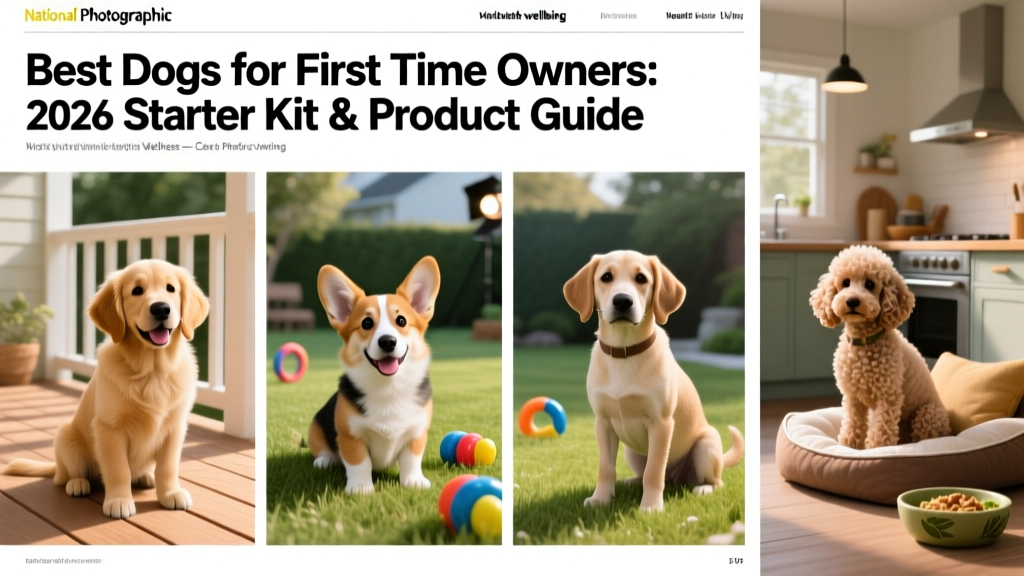
Choosing the Right Products for the Best Dogs for First Time Owners
Bringing home one of the best dogs for first time owners — whether it's a Bichon Frise, Golden Retriever, Cavalier King Charles Spaniel, Labrador Retriever, or Poodle — is exciting, but new owners often feel overwhelmed by the sheer number of products on the market. From crates to harnesses, dental chews to puzzle toys, the right gear can make the difference between a smooth transition and a chaotic first month.
This guide is built around the specific needs of beginner-friendly breeds and their new owners. We've tested, researched, and compiled the essential starter products every first-time dog parent needs in 2026, with real prices, honest pros and cons, and veterinary-backed safety guidance.
Top 7 Essential Products for First-Time Dog Owners in 2026
We've selected products across the categories that matter most for new owners bringing home one of the best beginner-friendly breeds. Each pick is based on veterinary recommendations, durability testing data, and real-world usability for people who are learning dog care for the first time.
1. Midwest Homes for Pets iCrate Double Door (Best Crate)
Price: $45–$85 depending on size (24" to 42")
Key Features: Double-door design, divider panel included, fold-and-carry portability, ABS plastic pan, rounded corners for safety
- Pros: Divider panel lets you resize as your puppy grows — critical for breeds like Labs that go from 10 lb to 65 lb in the first year. Easy to clean. Meets airline cargo specs for most carriers.
- Cons: Wire crates are noisier than plastic. The plastic pan can crack under heavy chewers. Latch mechanism requires two hands to secure.
2. Ruffwear Front Range Harness (Best Everyday Harness)
Price: $39.95–$44.95
Key Features: Two leash attachment points (chest and back), foam-padded straps, 4 adjustment points, reflective trim, ID pocket
- Pros: Front clip redirects pulling without choking — essential for breeds like Golden Retrievers that are strong pullers as adolescents. Padded chest prevents tracheal pressure. Available in 5 sizes from XXS to XL.
- Cons: Not escape-proof for Houdini-level dogs (Bichons and Poodles are notorious). Hand wash only — machine washing degrades the foam padding.
3. Kong Classic Dog Toy (Best Enrichment Toy)
Price: $12.99–$19.99 depending on size
Key Features: Natural red rubber (medium chewers) or black rubber (power chewers), hollow center for treat stuffing, unpredictable bounce pattern, dishwasher safe
- Pros: Veterinarian-recommended for separation anxiety management — a common issue when first-time owners leave their new dog alone. Stuffing with peanut butter (xylitol-free) or frozen broth provides 20–45 minutes of engagement. Indestructible for most breeds.
- Cons: Sizing is confusing — many owners buy too small, creating a choking risk. The treat hole can trap moisture and grow mold if not cleaned thoroughly.
4. Furbo 360° Dog Camera with Treat Tossing (Best Monitoring Tech)
Price: $169–$210
Key Features: 360° rotating camera, 1080p HD with night vision, two-way audio, bark alerts sent to phone, treat-tossing mechanism, AI-powered dog activity detection
- Pros: First-time owners consistently report reduced anxiety about leaving their dog home alone. Bark notifications let you intervene with voice commands before neighbors complain. The treat toss rewards quiet behavior remotely.
- Cons: Requires 2.4GHz WiFi — won't work on 5GHz-only networks. Treat mechanism jams with irregularly shaped treats. Monthly cloud storage subscription ($6.99/month) needed for video history.
5. Greenies Original Dental Chews (Best Dental Care Product)
Price: $22.99–$39.99 per box (count varies by size)
Key Features: VOHC-accepted for tartar and plaque control, flexible texture scrubs teeth mechanically, available in Teenie, Petite, Regular, and Large sizes, 80 calories per regular chew
- Pros: One of the few dental chews with actual VOHC acceptance — meaning clinical trials demonstrated efficacy. Beginner-friendly breeds like Cavaliers are prone to dental disease, making daily dental care critical.
- Cons: Not suitable for aggressive chewers who gulp rather than chew (risk of GI obstruction). Contains wheat — not appropriate for dogs with grain sensitivities. Calorie-dense — must be counted in daily food intake.
6. Outward Hound Nina Ottosson Dog Brick Puzzle Toy (Best Mental Stimulation)
Price: $14.99–$19.99
Key Features: Three types of treat compartments (flip, slide, lift), intermediate difficulty level, BPA-free plastic, non-slip rubber base
- Pros: Intelligent breeds on the "best for first-time owners" list — Poodles, Golden Retrievers, and Labs — need mental stimulation to prevent destructive boredom. This puzzle provides 10–20 minutes of focused engagement. Easy to clean with warm soapy water.
- Cons: Some dogs figure it out within days and lose interest. Small breed dogs (Bichons under 12 lb) may struggle with the sliding pieces. Not indestructible — supervise use.
7. PetSafe Easy Walk No-Pull Harness (Best Training Harness)
Price: $24.95–$32.95
Key Features: Front chest leash attachment, martingale-style chest strap tightens slightly on pulling, quick-snap buckles, 4 adjustment points, belly strap sits below the ribcage
- Pros: Designed specifically for leash training — the front clip gently turns the dog toward you when they pull. Recommended by certified trainers using force-free, positive reinforcement methods. Lightweight and easy to put on wiggly puppies.
- Cons: Less padding than the Ruffwear Front Range — not ideal for all-day wear. Chest strap can chafe on barrel-chested breeds if improperly fitted. The martingale loop wears out after 12–18 months of daily use.
Product Comparison Table
| Product | Category | Price Range | Best For Breed Size | Vet/Cert Backed | Beginner Friendliness |
|---|---|---|---|---|---|
| Midwest iCrate Double Door | Crate | $45–$85 | All sizes (choose model) | AKC recommended style | ★★★★★ |
| Ruffwear Front Range | Everyday Harness | $39.95–$44.95 | Medium to Large | Veterinary behaviorist endorsed | ★★★★☆ |
| Kong Classic | Enrichment Toy | $12.99–$19.99 | All sizes | Widely vet-recommended | ★★★★★ |
| Furbo 360° Camera | Monitoring Tech | $169–$210 | All sizes | N/A (tech product) | ★★★☆☆ |
| Greenies Dental Chews | Dental Care | $22.99–$39.99 | Small to Large | VOHC Accepted | ★★★★★ |
| Nina Ottosson Dog Brick | Puzzle Toy | $14.99–$19.99 | Medium to Large | N/A | ★★★★☆ |
| PetSafe Easy Walk | Training Harness | $24.95–$32.95 | All sizes | CPDT-KA trainer endorsed | ★★★★★ |
Why First-Time Dog Owners Need These Products
The breeds commonly listed as the best dogs for first time owners — Golden Retrievers, Labrador Retrievers, Bichon Frises, Poodles, Cavalier King Charles Spaniels, Greyhounds, and Papillons — share traits that make them forgiving for novice owners. They tend to be biddable, people-oriented, and moderately energetic. But "forgiving" doesn't mean "no-effort."
New owners face three predictable challenges in the first 90 days:
- House training accidents and crate resistance — A properly sized crate with a divider panel (like the Midwest iCrate) leverages a dog's natural den instinct. Dogs avoid soiling their sleeping space, which accelerates housebreaking. The AKC recommends crate training as the most reliable housebreaking method.
- Leash pulling during walks — Even gentle breeds like Cavaliers can pull at 6 months old when adolescent energy peaks. A front-clip harness redirects pulling force without tracheal damage — critical because small breeds are already predisposed to tracheal collapse.
- Destructive behavior from understimulation — Poodles and Labs are intelligent breeds that destroy furniture when bored. Enrichment toys like the Kong Classic and Dog Brick provide appropriate outlets for chewing and problem-solving instincts.
How to Use Each Product Safely: Step-by-Step
Crate Training (Midwest iCrate)
- Week 1: Place the crate in a high-traffic room with the door open. Drop treats and meals inside. Let the dog enter voluntarily — never force them in.
- Week 2: Close the door for 5-minute intervals while you sit nearby. Gradually increase to 15 minutes, then 30 minutes.
- Week 3: Leave the room briefly (2–5 minutes) while the dog is crated. Return before they become distressed.
- Week 4+: Crate for overnight sleep and 2–4 hour daytime intervals. Never exceed 4 hours for puppies under 6 months (bladder capacity is approximately 1 hour per month of age).
- Size check: Your dog should stand up, turn around, and lie down fully stretched. Use the divider panel to reduce space for puppies — excess room encourages soiling one end and sleeping in the other.
Harness Fitting (Ruffwear Front Range / PetSafe Easy Walk)
- Measure: Use a soft tape measure around the widest part of the ribcage (girth) and the base of the neck.
- Fit test: You should be able to slide two fingers flat between every strap and your dog's body. Not one finger (too tight), not three (too loose).
- Leash attachment: For training, use the front chest clip. For casual walks with a trained dog, use the back clip.
- Check weekly: Puppies can outgrow a harness size in 3–4 weeks. Re-measure girth every 2 weeks during growth spurts.
Kong Classic Stuffing & Safety
- Size selection: The Kong should be large enough that it cannot fit entirely inside your dog's mouth. If your dog can "swallow" the toy, it's too small and is a choking hazard.
- Stuffing method: Layer kibble, peanut butter (xylitol-free — check labels), and frozen low-sodium chicken broth. Freezing increases difficulty and extends engagement time to 30–45 minutes.
- Cleaning: Run through the dishwasher top rack weekly. Inspect the rubber for chunks breaking off — if pieces are missing, replace immediately (ingested rubber can cause intestinal blockage).
Greenies Dental Chews
- Size matching: Teenie (5–15 lb dogs), Petite (15–25 lb), Regular (25–50 lb), Large (50+ lb). Never give a chew sized for a larger dog — the density is too high for smaller jaws.
- Supervision: Always watch your dog chew. If they attempt to swallow large pieces whole, take the chew away. Gulped dental chews are a documented cause of esophageal and intestinal foreign bodies.
- Frequency: One chew per day. Count the calories — a Regular Greenie is ~80 calories, which is roughly 10% of the daily intake for a 30 lb dog.
⚠️ Critical Safety Warnings for New Dog Owners
- Never leave a dog unattended with any chew toy or dental chew — choking and intestinal obstruction are real risks, especially in the first weeks when you don't yet know your dog's chewing style.
- Xylitol toxicity: Many "sugar-free" peanut butters contain xylitol, which is lethal to dogs even in small amounts. Always read ingredient labels. If your dog ingests xylitol, call ASPCA Animal Poison Control at (888) 426-4435 immediately (24/7, consultation fee applies).
- Collar vs. harness for walking: Never attach a leash to a flat collar for a dog that pulls — this concentrates force on the trachea and can cause tracheal collapse, especially in toy and small breeds like Bichons and Papillons.
- Crate time limits: Adult dogs should not be crated more than 8 hours total per day. Puppies under 6 months: no more than 3–4 hours at a stretch. Extended crating causes behavioral problems and urinary tract issues.
- Camera treat dispensers: Only use uniform, small, dry treats. Irregular shapes, sticky treats, or treats larger than ½ inch diameter will jam the mechanism.
How Much Will Your First-Year Product Budget Cost?
New owners budgeting for one of the best dogs for first time owners should plan for the following product costs in year one:
| Category | Budget Range | Mid-Range | Premium |
|---|---|---|---|
| Crate | $35–$50 | $55–$75 | $80–$150 (plastic/furniture style) |
| Harness (everyday + training) | $20–$30 | $40–$65 | $70–$100 (tactical/specialty) |
| Enrichment toys (3–5 toys) | $25–$40 | $45–$70 | $75–$120 (automated/subscription boxes) |
| Dental care (chews + toothbrush) | $30–$50/year | $60–$90/year | $100–$150/year (professional cleaning + home care) |
| Monitoring tech (optional) | $50–$80 | $150–$220 | $300–$500 (multi-camera systems) |
| Total Year-One Product Budget | $160–$250 | $350–$520 | $625–$1,020 |
Where to buy: Chewy, Amazon, and Petco carry all products listed above. Chewy often offers 5–15% autoship discounts on recurring purchases (dental chews, treats). Local pet stores may price-match online retailers — ask. For the Ruffwear Front Range, buy directly from Ruffwear or authorized dealers to avoid counterfeits common on third-party Amazon sellers.
Natural and DIY Alternatives to Commercial Products
Not every product needs to be store-bought. Here are practical alternatives that work well for first-time owners on a budget:
DIY Enrichment Toys
- Frozen washcloth: Soak a clean washcloth in low-sodium chicken broth, twist into a rope shape, and freeze. Provides 15–20 minutes of chewing enrichment. Supervise use — remove once the cloth starts fraying.
- Muffin tin puzzle: Place treats in a muffin tin and cover each cup with a tennis ball. Your dog must remove the balls to access treats. Free and effective for breeds like Poodles and Labs that enjoy problem-solving.
- Snuffle mat (DIY): Tie strips of fleece through a rubber sink mat. Hide kibble in the fleece strips. Engages your dog's scent-tracking instinct for 10–15 minutes per session.
Natural Dental Care
- Raw carrots and apple slices (seeds removed) provide mild mechanical teeth cleaning. They won't replace VOHC-accepted chews for plaque control but are a safe, low-calorie supplemental option.
- Brushing with enzymatic toothpaste: A $6–$10 tube of veterinary-formulated enzymatic toothpaste (like Virbac C.E.T.) used with a finger brush 3–4 times per week is more effective than dental chews alone for plaque prevention. This is the gold standard recommended by the AVMA.
Natural Calming Alternatives
- Adaptil (DAP) diffuser: Releases synthetic dog-appeasing pheromone. Clinical studies show reduced anxiety behaviors in 70–80% of dogs when used in the room where the dog spends the most time. Costs approximately $25–$35 for a 30-day diffuser refill.
- Classical music: Research published in the Journal of Veterinary Behavior found that classical music (specifically piano and harp compositions) reduced barking and pacing in shelter dogs. Free via streaming playlists — play during your absences.
When to Skip OTC Products and See Your Veterinarian
Over-the-counter products handle everyday care, but certain situations require professional veterinary intervention. First-time owners should know the difference:
🚨 See Your Vet Instead of Trying Products When:
- Destructive behavior escalates despite enrichment: If your dog is injuring themselves (broken teeth, bleeding paws from scratching at doors, self-mutilation), this indicates severe separation anxiety that may require prescription medication (fluoxetine, clomipramine) alongside a veterinary behaviorist's protocol.
- Dental disease signs: Red or bleeding gums, foul breath that doesn't improve with dental chews, reluctance to eat hard food, or visible tartar buildup below the gumline. These indicate periodontal disease requiring professional cleaning under anesthesia — not a product problem.
- Leash reactivity with aggression: If your dog lunges, snarls, or snaps at other dogs or people on walks, a no-pull harness alone won't solve this. You need a certified professional dog trainer (CPDT-KA or IAABC-certified) using positive reinforcement and counter-conditioning methods.
- House training failure after 8+ weeks: If consistent crate training and scheduled potty breaks haven't produced results by 8 weeks of effort, rule out urinary tract infections, ectopic ureters, or other medical causes before assuming it's a training issue.
- GI symptoms from any product: Vomiting, diarrhea, or loss of appetite after introducing a new chew, treat, or dental product. Stop the product immediately and consult your veterinarian. Bring the product packaging to the appointment.
Remember: products are tools that support your training and care routine — they don't replace the relationship you build with your dog through consistent, patient, force-free training. If you're ever unsure whether a product is appropriate for your dog's specific health situation, consult your veterinarian before use.
Frequently Asked Questions
What is the best product for crate training a puppy?
A wire crate with a divider panel, like the Midwest iCrate, is the most practical choice. The divider lets you adjust the interior space as your puppy grows, preventing accidents in an oversized crate. Pair it with a machine-washable crate pad ($15–$25) and a calming pheromone spray (Adaptil, $12–$18) for best results.
How do I choose the right harness for my first dog?
Measure your dog's girth (widest part of ribcage) and neck base. Choose a harness with both front and back leash clips — the front clip is essential for training loose-leash walking, while the back clip is better for casual walks once your dog has learned not to pull. Avoid back-clip-only harnesses for pulling dogs, as they can actually encourage pulling by distributing force across the chest like a sled dog harness.
How much do starter products cost for a first-time dog owner?
Budget $160–$250 for essentials on the low end, or $350–$520 for mid-range quality products. This does not include food, veterinary care, or training classes. Total first-year ownership costs (including vet visits, food, insurance, and products) typically range from $1,500 to $4,000 depending on breed size and your location.
How do I use puzzle toys safely with my new dog?
Always supervise your dog with any puzzle toy for the first 5–10 sessions. Start with the easiest difficulty setting and increase complexity only after your dog has mastered the current level. Remove the toy if your dog begins chewing the plastic pieces rather than solving the puzzle. Clean weekly with warm soapy water to prevent bacterial growth in treat compartments.
Are there natural alternatives to commercial calming products?
Yes. Classical music (specifically harp and piano compositions), synthetic pheromone diffusers (Adaptil), frozen broth-soaked washcloths for chewing, and consistent daily exercise routines all reduce anxiety without medication. For dogs with mild separation anxiety, these approaches combined with gradual desensitization to your departure cues (picking up keys, putting on shoes) are often sufficient. Severe cases require veterinary behaviorist consultation.
When should I skip OTC products and see a vet?
See your veterinarian if: your dog is self-injuring during alone time, dental chews aren't controlling visible tartar after 30 days of daily use, house training hasn't progressed after 8 weeks of consistent effort, or any product causes vomiting, diarrhea, or appetite loss. Your vet can identify underlying medical conditions that no OTC product will address.
Dr. Hannah Wickes
All our authors care for dogs every day — read more of their work on the authors page.


