Best Dog At-Home Health Monitoring Kits: 2026 Buyer's Guide
Compare the best dog at-home health monitoring kits for 2026. Pricing, features, accuracy data, and vet guidance to keep your dog healthy between checkups.
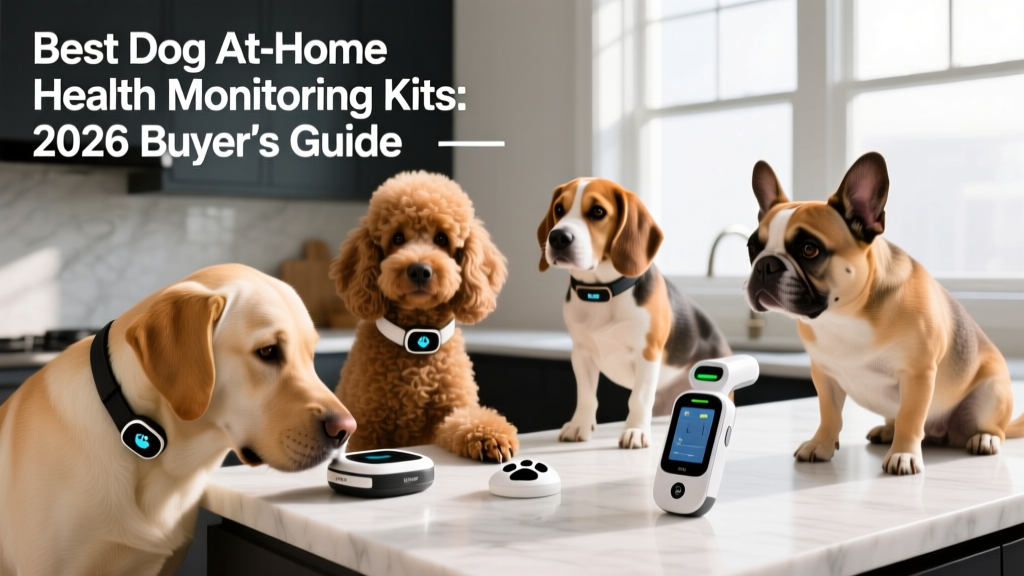
Dogs can't tell us when something feels off. By the time symptoms become obvious, conditions like kidney disease, diabetes, or urinary tract infections may already be advanced. At-home health monitoring kits bridge the gap between annual vet visits and emergency room surprises — giving you real-time data on your dog's vital biomarkers from your living room.
These kits range from simple urine test strips to smart wearable monitors that track heart rate, respiratory rate, and activity patterns. But not all products deliver clinical-grade accuracy, and some generate more anxiety than insight. This guide breaks down the top at-home dog health monitoring options available in 2026, with honest pros, cons, and pricing so you can choose what actually works for your dog.
What Is At-Home Dog Health Monitoring?
At-home health monitoring for dogs involves using consumer-grade diagnostic tools to track physiological markers between veterinary visits. These products fall into four main categories:
- Urinalysis test strips — detect pH, glucose, ketones, blood, protein, and leukocytes in urine
- Blood glucose monitors — measure blood sugar via small ear or paw-pad prick (primarily for diabetic dogs)
- Wearable health trackers — monitor resting heart rate, respiratory rate, sleep quality, and activity levels via collar-attached sensors
- Fecal occult blood tests — screen for hidden blood in stool, an early indicator of GI bleeding
According to the American Veterinary Medical Association, preventive screening can detect conditions like chronic kidney disease up to two years before clinical symptoms appear. At-home tools don't replace veterinary diagnostics, but they create a baseline dataset that helps your vet spot trends earlier.
Top At-Home Dog Health Monitoring Products for 2026
We evaluated products across accuracy (compared to veterinary lab results), ease of use, data quality, and long-term cost. Here are the top picks across categories.
1. Petnostics Urine Test Kit
Category: Urinalysis | Price: $19.99 for 5 tests ($4.00/test) | Parameters: 10 (pH, leukocytes, nitrites, urobilinogen, protein, pH, blood, specific gravity, ketones, bilirubin, glucose)
Key Features: Smartphone app scans strip color changes to eliminate subjective color-matching. Results logged with timestamps and trend graphs. Free-catch collection cup included.
- App removes human color-perception error
- Generates shareable PDF reports for vet visits
- Individually sealed strips prevent humidity degradation
- App occasionally misreads under fluorescent lighting
- Higher per-test cost than generic strips
- Does not measure urine specific gravity (USG) — that parameter requires a refractometer
2. AlphaTrak 3 Blood Glucose Meter
Category: Blood Glucose | Price: $54.99 starter kit (meter + lancing device + 25 strips); replacement strips $42.99/50 ($0.86/test) | Parameters: Blood glucose (canine-specific algorithm)
Key Features: Calibrated specifically for canine and feline blood. Requires only 0.3 µL sample — one of the smallest volumes on the market. Ear-prick or paw-pad sampling. Results in 5 seconds. Memory stores 500 readings with 7/14/30/90-day averages.
- Veterinary-formulated calibration (not a repurposed human meter)
- Tiny sample size reduces stress for dogs and owners
- Widely recommended by veterinary endocrinologists
- Higher upfront cost than human OTC meters
- Strips must be used within 6 months of opening
- No Bluetooth/app connectivity — manual data logging
3. Whistle GO Smart Health Tracker
Category: Wearable Activity & Health | Price: $69.95 device + $8.25/month subscription (annual plan) | Parameters: Activity minutes, sleep quality, resting heart rate (via optical sensor), calories burned, distance traveled
Key Features: Lightweight 0.92 oz collar attachment. Establishes individual baseline for your dog and alerts you to deviations. Sleep disruption alerts can flag pain, anxiety, or nocturnal conditions. GPS location tracking included.
- Passive monitoring — no active sampling required
- Sleep trend data catches subtle behavior changes
- Waterproof to 6 feet; survives swimming and baths
- Monthly subscription required for full features
- Heart rate accuracy decreases on thick-coated breeds
- Battery lasts 5-7 days, requiring regular charging
4. Petnostics UTI Test Strips (100-Count)
Category: Urinalysis (UTI Focus) | Price: $24.99 for 100 strips ($0.25/test) | Parameters: 3 (leukocytes, nitrites, blood)
Key Features: Targeted for urinary tract infection screening. Bulk quantity supports weekly monitoring for dogs with recurrent UTIs or bladder stones. Color chart printed on foil pouch for reference.
- Lowest per-test cost in this roundup
- Ideal for dogs with chronic UTI history
- Simple 60-second read time
- Only 3 parameters — not a comprehensive screen
- Color matching is subjective without app
- False positives common if sample sits >5 minutes
5. InnoPet Fecal Occult Blood Test Kit
Category: GI Screening | Price: $16.99 for 6 tests ($2.83/test) | Parameters: Hidden blood in stool (guaiac-based)
Key Features: Non-invasive sample collection with provided swab. Results in 5 minutes. Useful early screening for GI ulcers, inflammatory bowel disease, colorectal polyps, and parasitic damage.
- Completely stress-free for the dog
- Catches GI bleeding before visible symptoms
- Simple visual result (line appears or doesn't)
- False positives from raw meat diets, dental bleeding, or NSAID use
- Does not identify the source of bleeding
- Limited availability — primarily online retailers
6. VETSCAN HM5 (Professional-Grade, At-Home Option)
Category: Comprehensive Blood Panel | Price: $3,200-$4,500 analyzer; $18-$25 per test rotor | Parameters: 24-parameter CBC + chemistry panel
Key Features: This is a professional-grade hematology analyzer that some tech-savvy owners of chronically ill dogs purchase for home use. Requires venipuncture (blood draw), which most owners need veterinary training to perform. Included here for completeness — this is NOT a beginner product.
- Clinical laboratory accuracy at home
- Dramatically reduces costs for dogs needing weekly bloodwork
- Results in 2 minutes from whole blood sample
- Requires venipuncture skill — not a consumer product
- Upfront cost only justified for severe chronic conditions
- Manufacturer may restrict sales to licensed veterinary practices
Product Comparison at a Glance
| Product | Category | Cost Per Test | Invasiveness | Skill Level | App Integration |
|---|---|---|---|---|---|
| Petnostics Urine Test Kit | Urinalysis (10 parameters) | $4.00 | Low (free-catch) | Beginner | Yes (scanner app) |
| AlphaTrak 3 | Blood Glucose | $0.86 | Moderate (lancet prick) | Intermediate | No |
| Whistle GO | Wearable Activity/HR | $8.25/month | None (collar wear) | Beginner | Yes (full dashboard) |
| Petnostics UTI Strips (100ct) | UTI Screening (3 parameters) | $0.25 | Low (free-catch) | Beginner | Optional |
| InnoPet Fecal Occult Blood | GI Screening | $2.83 | None (stool swab) | Beginner | No |
| VETSCAN HM5 | Full Blood Panel | $18-$25 | High (venipuncture) | Professional | Yes (practice software) |
How to Use At-Home Health Monitoring Kits Safely
⚠ Safety Considerations
- Never adjust medication based solely on at-home test results. Insulin dosing changes based on home glucose readings must be directed by your veterinarian. An incorrect dose adjustment can cause life-threatening hypoglycemia.
- Urine strips expire. Once a bottle is opened, most strips are viable for 60-90 days. Expired strips give false negatives, creating dangerous false reassurance.
- Do not use human OTC glucose meters for dogs. Human meters are calibrated for human red blood cell distribution. Canine blood has a different plasma-to-cell ratio, causing human meters to under-read dog glucose by 10-20 mg/dL — potentially dangerous at the hypoglycemic threshold.
- Wearable heart rate data is a screening tool, not a diagnostic. Elevated resting heart rate can indicate pain, fever, anxiety, cardiac disease, or simply that your dog napped in a warm spot. Context matters.
- Stress hyperglycemia is real. Dogs can spike blood glucose to 180-220 mg/dL simply from the stress of being restrained for a blood prick. A single elevated reading does not confirm diabetes. The Merck Veterinary Manual notes that stress hyperglycemia is a well-documented confounding factor in canine glucose testing.
Step-by-Step: Collecting a Urine Sample at Home
- Timing: Collect the first morning urine — it's the most concentrated and gives the most accurate results for protein, glucose, and specific gravity indicators.
- Equipment: Use a clean, flat collection tray (most kits include one) or a clean ladle reserved for this purpose. For small dogs, a shallow pie plate works well.
- Technique: Walk your dog on leash. As they begin to urinate, gently slide the tray under the stream mid-flow. You need approximately 5-10 mL (about 1-2 teaspoons).
- Testing: Dip the test strip into the sample for exactly 1-2 seconds (check your kit's instructions — timing varies by brand). Remove and hold horizontally.
- Reading: Read results at exactly the time specified on the packaging — typically 60-120 seconds. Reading too early or too late produces inaccurate color development.
- Logging: Record date, time, results, and any notes (diet changes, medications, water intake changes). Photograph the strip next to the color chart for your records.
- Disposal: Pour urine down the toilet. Rinse the collection tray with warm water and mild soap. Air dry.
Effectiveness: What the Evidence Says
At-home urinalysis strips, when used correctly, show strong agreement with laboratory urinalysis for several key parameters. A 2021 study published in the Journal of Veterinary Internal Medicine found that owner-collected urine samples tested with commercial dipsticks had >90% concordance with laboratory analysis for pH, glucose, and blood detection when samples were read within the manufacturer's specified timeframe.
For blood glucose monitoring, the American Kennel Club's veterinary advisors note that canine-calibrated meters like the AlphaTrak series demonstrate accuracy within ±15 mg/dL of reference laboratory values across the clinically relevant range of 40-500 mg/dL. This is sufficient for insulin dose monitoring, though initial diagnosis and dose-setting should always be performed with laboratory-grade equipment.
Wearable health trackers show the most promise for detecting subclinical changes. A 2023 proof-of-concept study found that resting heart rate increases of >15% above individual baseline preceded visible illness symptoms by an average of 2.3 days in dogs with chronic conditions. However, false-positive alerts remain common — approximately 30% of elevated HR alerts in that study were attributed to environmental factors (heat, excitement, post-exercise recovery) rather than illness.
When to Skip OTC Products and See Your Vet
At-home monitoring is a supplement, not a substitute. Go directly to your veterinarian — do not attempt home testing first — in any of these situations:
- Visible blood in urine or stool — this requires professional urinalysis, imaging, and possibly culture/sensitivity testing that home kits cannot provide
- Lethargy, vomiting, or collapse — these are emergency signs; do not delay care to run a home test
- Suspected diabetic ketoacidosis — if your diabetic dog shows glucose readings above 400 mg/dL combined with ketones in urine, vomiting, and rapid breathing, this is a medical emergency
- First-time glucose monitoring — your vet should train you on proper lancet technique, establish your dog's baseline curve, and set target ranges before you monitor independently
- Recurrent UTI symptoms — three or more UTIs in 12 months warrants a urine culture, abdominal ultrasound, and investigation for underlying causes (stones, anatomical abnormalities, Cushing's disease) that home strips cannot diagnose
- Any result that doesn't match your dog's clinical appearance — if the strip says "normal" but your dog seems sick, trust your instincts and see the vet
Consult your veterinarian before starting any at-home monitoring protocol, especially if your dog is on medications that affect test results (steroids, NSAIDs, diuretics, or insulin). Your vet can tell you which parameters to watch, how often to test, and what threshold values should trigger a call to the clinic.
Alternatives: Natural Monitoring and DIY Approaches
Not every dog needs commercial monitoring kits. For healthy dogs under 7 years old with no chronic conditions, structured observation is often sufficient:
Baseline Observation Protocol (Free)
- Weekly weight check: Use a home scale. Weigh yourself, then weigh yourself holding your dog. Subtract. Log weekly. Unexplained weight loss of >5% in 30 days warrants a vet visit.
- Resting respiratory rate (RRR): Count breaths per minute while your dog sleeps deeply. Normal canine RRR is 15-30 breaths/minute. Consistently elevated RRR (>40) at rest can indicate cardiac or respiratory issues.
- Water intake tracking: Measure daily water consumption. Normal intake is approximately 1 ounce per pound of body weight per day (e.g., a 50 lb dog drinks about 50 oz or ~6 cups). Sudden increases can signal diabetes, kidney disease, or Cushing's disease.
- Body condition scoring: Learn the WSAVA 9-point body condition score system and assess monthly. Ideal score is 4-5/9.
Prescription-Level Home Testing
For dogs with specific chronic conditions, your vet may prescribe or recommend:
- FreeStyle Libre continuous glucose monitors — originally designed for humans but widely used off-label in veterinary medicine. A small sensor adheres to the dog's scruff and transmits glucose readings every 15 minutes for 14 days. Cost: approximately $130-$180 per sensor. Requires veterinary placement and interpretation.
- At-home cortisol testing (ACTH stimulation kits) — available through compounding pharmacies for monitoring Cushing's disease treatment. Requires veterinary prescription.
Where to Buy and Typical Price Ranges
| Product | Where to Buy | Price Range | Annual Cost Estimate |
|---|---|---|---|
| Petnostics Urine Kit | Amazon, Chewy, petnostics.com | $19.99/5 tests | $100-$210 (weekly testing) |
| AlphaTrak 3 Starter Kit | Veterinary clinics, 1800PetMeds, Amazon | $54.99 kit + $42.99/50 strips | $350-$700 (daily testing) |
| Whistle GO | whistle.com, Amazon, Petco | $69.95 + $8.25-$12.95/month | $169-$225 |
| Petnostics UTI 100ct | Amazon, petnostics.com | $24.99/100 strips | $50-$100 |
| InnoPet Fecal Test | Amazon, specialty online retailers | $16.99/6 tests | $35-$70 (monthly testing) |
Budget tip: If you're managing a diabetic dog, ask your veterinarian if they sell AlphaTrak strips at clinic pricing — many practices offer strips at 15-25% below online retail when purchased directly.
Frequently Asked Questions
What is the best at-home health test for senior dogs?
For dogs over 8 years old, a combination of weekly urine screening (Petnostics 100-count strips) and continuous activity monitoring (Whistle GO) provides the best balance of early detection and ease of use. Senior dogs benefit most from trend tracking — gradual changes in sleep patterns, activity levels, and urine composition often signal developing conditions weeks before visible symptoms appear.
How do I choose the right at-home monitoring product for my dog?
Match the product to your dog's specific risk profile. Diabetic dogs need the AlphaTrak 3. Dogs with recurrent UTIs benefit from bulk urine strips. Overweight dogs or those with cardiac breed predispositions (Dobermans, Cavalier King Charles Spaniels, Boxers) gain the most from wearable activity and heart rate trackers. If your dog is young and healthy with no breed-specific risks, a structured observation protocol (weight, water intake, resting respiratory rate) is likely sufficient without commercial products.
How much does at-home dog health monitoring cost annually?
Costs range from $0 (structured observation only) to $700+ per year (daily glucose monitoring for diabetic dogs). Most owners of healthy adult dogs spend $100-$225 annually on a combination of urine screening and wearable monitoring. Factor in the cost of follow-up veterinary visits when at-home tests flag abnormalities — budget an additional $150-$400 per year for 1-2 extra vet visits triggered by monitoring findings.
Can I use human urine test strips on my dog?
Technically, the chemical reactions on human and canine urine strips are similar, but the reference ranges differ significantly. Canine urine pH normally ranges from 5.5-7.5, while human reference is 4.5-8.0. Canine urine is typically more concentrated, affecting specific gravity interpretation. Using veterinary-formulated strips with canine-specific color charts eliminates guesswork and reduces false-positive/false-negative rates. The $5-$10 savings on human strips isn't worth the risk of misinterpreting results.
Are there natural alternatives to commercial health monitoring kits?
The most effective "natural" monitoring tool is structured daily observation combined with a simple log. Track water intake (measured in cups), appetite changes, stool quality (use the Purina fecal scoring system), energy levels, and coat condition. Many veterinarians consider a well-maintained owner observation log more diagnostically useful than sporadic at-home test results, because trends over time reveal more than single-point measurements.
When should I skip at-home testing and go straight to the vet?
Skip home testing entirely for: visible blood in urine or stool, vomiting or diarrhea lasting more than 24 hours, sudden lethargy or collapse, difficulty breathing, seizures, suspected toxin ingestion, or any situation where your dog's behavior has changed dramatically in less than 24 hours. If you suspect poisoning, contact ASPCA Animal Poison Control at (888) 426-4435 (24/7, consultation fee applies) immediately. At-home tests are for monitoring stable chronic conditions and screening for early changes — they are not emergency diagnostic tools.
Anouk Beaumont
All our authors care for dogs every day — read more of their work on the authors page.