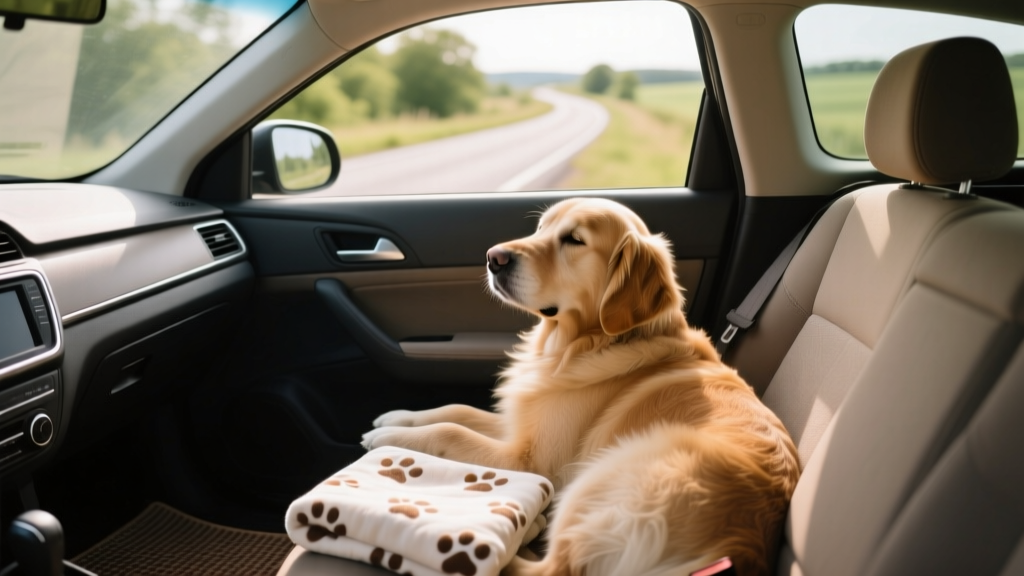
Are Dogs Color Blind? The Science Behind Canine Vision
Are dogs color blind? Science reveals how canine vision really works, from dichromatic color perception to common eye diseases that threaten your dog's sight.

You've probably heard the old claim that dogs see the world in black and white. But modern veterinary ophthalmology tells a very different story. Dogs are not completely color blind — they simply see a more limited color spectrum than humans do. Understanding the science behind canine color vision isn't just an interesting trivia fact; it has real implications for how you train, play with, and protect your dog's eye health throughout their life.
This guide breaks down the peer-reviewed science of how dogs perceive color, then pivots to the vision disorders and eye diseases that can compromise your dog's sight — because knowing what's normal helps you spot what's not.
The Science of Canine Color Vision: Dichromatic, Not Monochromatic
Humans with typical vision are trichromatic, meaning we have three types of cone photoreceptor cells in our retinas, each sensitive to different wavelengths of light (red, green, and blue). Dogs, by contrast, are dichromatic — they possess only two types of cones. Research published in the journal Applied Animal Behaviour Science confirms that canine cones are sensitive to blue-violet (peak ~429-435 nm) and yellow-green (peak ~555 nm) wavelengths.
What does this mean in practical terms?
- Dogs can see: Blues, yellows, and grays in various shades
- Dogs struggle to distinguish: Red from green, orange from yellow-green, and purple from blue
- Dogs cannot see: The full red-green spectrum that humans perceive
Think of canine color vision as similar to a human with deuteranopia (red-green color blindness). A bright red ball on green grass looks to your dog like a dark yellowish-brown object on a similarly toned background — which explains why your dog sometimes has trouble finding that "obvious" red toy.
Beyond Color: How Dog Vision Differs From Human Vision
Color perception is only one dimension of vision. Canine eyes have evolved with different priorities than ours, trading color acuity for performance in other areas:
| Vision Attribute | Dogs | Humans |
|---|---|---|
| Cone types (color) | 2 (dichromatic) | 3 (trichromatic) |
| Rod density (low-light) | Very high | Moderate |
| Visual acuity (20/XX) | 20/75 to 20/100 | 20/20 (typical) |
| Flicker fusion rate | ~75 Hz | ~60 Hz |
| Field of view | ~240-270° | ~180° |
| Tapetum lucidum | Present (night vision boost) | Absent |
| Night vision | Superior | Inferior |
Your dog's 20/75 visual acuity means they see at 20 feet what a human with normal vision sees at 75 feet. Objects appear blurrier at distance. However, their superior motion detection and low-light sensitivity make them exceptional at spotting moving targets in dim conditions — an evolutionary holdover from their crepuscular hunting ancestors.
The tapetum lucidum, a reflective layer behind the retina, bounces light back through the photoreceptors for a second chance at detection. This is what causes the characteristic "eye shine" in flash photographs and gives dogs roughly 5x better light sensitivity than humans.
When Vision Goes Wrong: Common Canine Eye Diseases
Understanding normal canine vision is only half the picture. Eye diseases are surprisingly common in dogs, and early detection can mean the difference between preserving sight and permanent blindness. According to the Merck Veterinary Manual, certain breeds carry significantly elevated risk for inherited and acquired ophthalmic conditions.
Below are the most prevalent vision-threatening conditions every dog owner should know.
Symptom Checklist: Is Your Dog's Vision Changing?
| Severity | Symptom | What It May Indicate |
|---|---|---|
| ⚠️ Early | Bumping into furniture in dim light | Progressive retinal atrophy (PRA), early cataracts |
| ⚠️ Early | Reluctance to go down stairs | Reduced depth perception, vision loss |
| ⚠️ Early | Cloudy or bluish haze in the eye | Lenticular sclerosis (normal aging) or cataracts |
| ⚠️ Early | Squinting or excessive blinking | Corneal ulcer, glaucoma, uveitis |
| 🔴 Moderate | Visible white opacity in the pupil | Mature cataract |
| 🔴 Moderate | Red, bloodshot eyes with discharge | Conjunctivitis, uveitis, glaucoma |
| 🔴 Moderate | Pawing at the eye or face rubbing | Pain — corneal injury, glaucoma, foreign body |
| 🔴 Moderate | Dilated pupil that doesn't constrict in light | Glaucoma, optic nerve damage, retinal detachment |
| 🚨 Severe | Sudden blindness (within hours/days) | SARDS, acute glaucoma, retinal detachment |
| 🚨 Severe | Visible bulging of the eye | Advanced glaucoma, orbital tumor, proptosis |
| 🚨 Severe | Eye appears sunken or shrunken | Phthisis bulbi (end-stage eye disease) |
Key Eye Diseases: Definitions, Causes, and Breed Risks
Cataracts
A cataract is an opacity of the lens that blocks light from reaching the retina. While nuclear sclerosis (lenticular sclerosis) is a normal age-related bluish haze that does not significantly impair vision, true cataracts progressively block sight. Hereditary cataracts can appear in dogs as young as 6 months. Diabetes mellitus is a major acquired cause — diabetic dogs have an estimated 80% chance of developing cataracts within 16 months of diagnosis.
Progressive Retinal Atrophy (PRA)
PRA is a group of inherited degenerative diseases that cause the photoreceptor cells (rods first, then cones) to deteriorate over months to years. Dogs typically lose night vision first, then peripheral vision, then central vision. There is no cure. PRA is caused by identified genetic mutations in over 50 breeds.
Glaucoma
Glaucoma occurs when intraocular pressure (IOP) rises above normal (normal canine IOP: 10-25 mmHg). Primary glaucoma is inherited; secondary glaucoma results from injury, inflammation, or lens luxation. Pressures above 30-40 mmHg cause rapid, irreversible optic nerve damage. Acute glaucoma is a veterinary emergency — permanent vision loss can occur within 24-48 hours.
Sudden Acquired Retinal Degeneration Syndrome (SARDS)
SARDS causes rapid, irreversible blindness in previously sighted dogs, typically over days to weeks. The exact cause remains idiopathic (unknown). It predominantly affects middle-aged to older dogs (average onset: 8-9 years). There is no proven treatment, though some veterinary ophthalmologists trial immunosuppressive therapy.
- Cataracts: Boston Terrier, Cocker Spaniel, Siberian Husky, Golden Retriever, Poodle, Labrador Retriever
- PRA: Miniature Schnauzer, Labrador Retriever, Golden Retriever, Irish Setter, English Springer Spaniel, Tibetan Terrier, Cardigan Welsh Corgi
- Glaucoma: Cocker Spaniel, Basset Hound, Samoyed, Siberian Husky, Shih Tzu, Chow Chow, Shar-Pei
- SARDS: No strong breed predisposition identified; Dachshunds and Miniature Poodles may be slightly overrepresented
- Dry Eye (KCS): Cavalier King Charles Spaniel, English Bulldog, West Highland White Terrier, Pug, Shih Tzu
How Eye Diseases Are Diagnosed: What to Expect at the Vet
If you notice any vision changes, a veterinary ophthalmic exam goes well beyond "looking in the eyes." Here's the typical diagnostic workflow and what each test costs:
| Diagnostic Test | What It Evaluates | Typical Cost Range (USD) |
|---|---|---|
| Schirmer Tear Test (STT) | Tear production volume (KCS/dry eye screening) | $15-$30 |
| Fluorescein Staining | Corneal ulcers, abrasions, foreign bodies | $20-$40 |
| Tonometry (IOP measurement) | Intraocular pressure — screens for glaucoma | $25-$50 |
| Slit-Lamp Biomicroscopy | Anterior chamber, lens, iris detail | $50-$100 (specialist) |
| Indirect Ophthalmoscopy | Retina, optic nerve, posterior segment | $50-$100 (specialist) |
| Electroretinography (ERG) | Retinal electrical function — confirms PRA/SARDS | $200-$500 |
| Gonioscopy | Iridocorneal drainage angle — glaucoma risk | $75-$150 (specialist) |
| Ocular Ultrasound | Internal eye structures, tumors, retinal detachment | $150-$350 |
| Genetic Testing (DNA panel) | PRA carrier/affected status — specific mutations | $65-$200 (e.g., Optigen, Embark) |
A general practice veterinary eye exam typically runs $80-$200. A board-certified veterinary ophthalmologist consultation with full diagnostics usually ranges from $300-$800 for the initial visit. Your general vet can refer you to a specialist through the American College of Veterinary Ophthalmologists (ACVO).
Treatment Options: Medical, Surgical, and Supportive Care
| Condition | Treatment Type | Procedure/Medication | Success Rate / Outcome | Estimated Cost |
|---|---|---|---|---|
| Cataracts | Surgical | Phacoemulsification with IOL implant | ~90-95% success in restoring functional vision | $2,500-$5,000 per eye |
| Glaucoma (early) | Medical | Topical dorzolamide, latanoprost, oral carbonic anhydrase inhibitors | Slows progression; does not cure; vision preservation varies | $30-$80/month ongoing |
| Glaucoma (end-stage) | Surgical | Enucleation (eye removal) or intrascleral prosthesis | Eliminates pain; cosmetic prosthesis option available | $800-$2,500 |
| PRA | Supportive | No cure; antioxidant supplements (Ocu-GLO); environmental adaptation | Does not halt progression; supports remaining function | $25-$50/month supplements |
| SARDS | Supportive | Immunosuppressive trial (some ophthalmologists); environmental adaptation | Vision recovery extremely rare; most dogs adapt well | $100-$400 trial therapy |
| Corneal Ulcers | Medical | Antibiotic drops, atropine, Elizabethan collar | Superficial: heals in 5-7 days; deep: may need surgery | $100-$500 (medical); $1,500-$3,000 (surgical graft) |
| KCS (Dry Eye) | Medical | Cyclosporine (Optimmune) or tacrolimus drops lifelong | Most dogs respond well; lifelong management required | $40-$80/month |
Prognosis and Life Expectancy With Eye Disease
Most eye diseases do not shorten a dog's lifespan — they affect quality of life and functional vision. Dogs are remarkably adaptable, and even fully blind dogs can thrive with proper management.
| Condition | Vision Prognosis | Life Expectancy Impact | Quality of Life Notes |
|---|---|---|---|
| Cataracts (surgically treated) | Excellent — most regain functional vision | None | Normal life post-recovery (6-8 weeks) |
| Cataracts (untreated) | Progressive to complete blindness in affected eyes | None directly; underlying diabetes affects lifespan | Dogs adapt well; risk of secondary glaucoma/uveitis |
| PRA | Inevitable progression to complete blindness (months to years) | None | Most blind dogs maintain excellent quality of life |
| Glaucoma (managed) | Guarded — vision loss often occurs despite treatment | None | Pain management critical; enucleation relieves chronic pain |
| SARDS | Poor — permanent blindness in most cases | None | Dogs typically adjust within 2-4 weeks; maintain routines |
Home Care and Living With a Vision-Impaired Dog
Whether your dog has been diagnosed with a progressive condition or has already lost vision, these management strategies make daily life safer and less stressful:
- Keep furniture in place. Blind and visually impaired dogs build mental maps of their environment. Rearranging furniture forces them to re-learn their space and increases anxiety and injury risk.
- Use scent markers. Apply a consistent scent (a dab of vanilla extract or a specific essential oil — diluted and safe) at the top and bottom of stairs, near doorways, and at their bed/water bowl locations.
- Use verbal cues consistently. "Step up," "step down," "wait," and "left/right" can be trained with positive reinforcement to help your dog navigate.
- Protect from hazards. Use baby gates at stairs, cover sharp furniture corners with foam bumpers, and block access to pools or ponds.
- Maintain routine. Feed, walk, and play on consistent schedules. Predictability reduces stress for vision-impaired dogs.
- Harness over collar. A well-fitted harness gives you better guidance control without neck pressure, especially for dogs that startle easily.
- Blue and yellow toys. For dogs with partial vision, high-contrast toys in blue or yellow remain visible longer than red or green ones.
Prevention and Early Detection Strategies
Not all eye diseases are preventable, but early detection dramatically improves outcomes:
- Annual veterinary eye exams: Ask your vet to include tonometry (IOP check) and ophthalmoscopy in your dog's annual wellness visit, especially for predisposed breeds. Cost: often included in a $50-$80 wellness exam or available as a $25-$50 add-on.
- CERF/OFA eye certification: If you're purchasing a puppy from a breed at risk for hereditary eye disease, ask the breeder for OFA Companion Animal Eye Registry (CAER) certification for both parents. This confirms the breeding dogs were examined by a veterinary ophthalmologist and found free of heritable eye disease.
- Genetic testing: DNA tests for PRA mutations (available through Optigen, Embark, and others) can identify carriers before breeding or confirm diagnosis in symptomatic dogs. Cost: $65-$200.
- UV and trauma protection: For active outdoor dogs, consider canine protective eyewear (e.g., Rex Specs or Doggles) to shield against UV damage, debris, and brush trauma. Cost: $60-$130.
- Manage diabetes aggressively: If your dog is diabetic, tight blood glucose regulation delays (though does not always prevent) cataract formation. Work closely with your veterinarian on insulin protocols.
- Antioxidant supplementation: Products like Ocu-GLO (containing grape seed extract, lutein, and omega-3s) may support retinal health. While evidence is limited, veterinary ophthalmologists sometimes recommend them as adjunctive support. Cost: $25-$50/month.
Do not wait for your next scheduled appointment if your dog shows any of these red-flag symptoms:
- Sudden blindness — inability to navigate familiar spaces, bumping into walls, inability to find food/water bowls (onset within hours to days)
- Severe eye pain — persistent squinting, pawing at the eye, vocalizing when the eye area is touched
- Visible bulging of the eyeball — may indicate advanced glaucoma, orbital abscess, or tumor
- Blood inside the eye (hyphema) — the front chamber appears red or dark instead of clear
- Eye trauma — hit by a ball, scratched by a cat, chemical exposure, or any penetrating injury
- Dilated pupil that won't constrict in bright light — possible acute glaucoma or neurological emergency
Acute glaucoma and corneal perforation can cause permanent, irreversible vision loss within 24-48 hours. If your regular vet is closed, go to the nearest emergency veterinary hospital.
How Much Does Canine Eye Disease Treatment Cost?
Budgeting for eye care depends heavily on the condition and whether a specialist is involved:
| Scenario | Cost Range (USD) |
|---|---|
| Routine eye exam (general practice) | $50-$150 |
| Specialist ophthalmology consultation + diagnostics | $300-$800 |
| Cataract surgery (one eye, with IOL) | $2,500-$5,000 |
| Cataract surgery (both eyes, staged or simultaneous) | $4,000-$8,000 |
| Glaucoma management (annual medication) | $400-$1,000/year |
| Enucleation (eye removal) | $800-$2,500 |
| Corneal ulcer — medical management | $100-$500 |
| Corneal graft surgery (deep/refractory ulcer) | $1,500-$3,500 |
| PRA/SARDS — supportive care (supplements, environmental) | $300-$600/year |
| Genetic testing (PRA panels) | $65-$200 |
Pet insurance can offset significant costs for eye conditions, but pre-existing conditions are universally excluded. If your dog is young and healthy, enrolling now provides coverage for future ophthalmic diagnoses. Most comprehensive plans cover 70-90% of specialist visits and surgeries after deductible, with annual maximums ranging from $5,000 to unlimited.
Frequently Asked Questions
Can dogs see any colors at all?
Yes. Dogs see a limited but real color spectrum — primarily blues, yellows, and grays. The outdated "black and white" myth was based on limited 1960s-era assumptions. Modern electroretinography and behavioral studies confirm functional dichromatic color vision.
Why does my dog have trouble finding a red toy on green grass?
Red and green wavelengths fall in a range where canine cone sensitivity overlaps poorly. To your dog, a red toy on green grass looks like a muted brownish-yellow object against a similarly muted background — very low contrast. Switch to blue or yellow toys for dramatically better visibility.
At what age do dogs start losing their vision?
It varies widely by condition and breed. Hereditary cataracts can appear as early as 6-18 months. PRA onset ranges from puppyhood (early-onset forms in Irish Setters, Cardigan Welsh Corgis) to middle age (8-10 years in Miniature Poodles). Nuclear sclerosis, the benign age-related lens haze, typically appears around 7-8 years and does not cause significant vision loss.
Can blind dogs still have a good quality of life?
Absolutely. Dogs rely far more on their sense of smell and hearing than humans do. Most blind dogs adapt within 2-4 weeks and continue to enjoy walks, play, training, and social interaction. The key is maintaining consistent routines, using positive reinforcement training for navigation cues, and dog-proofing your home.
Is there a genetic test for PRA?
Yes — for many breeds. Labs like Optigen and Embark offer DNA tests that identify specific PRA-causing mutations (e.g., prcd-PRA, rcd1, rcd3, CNGA1). These tests can determine if a dog is clear, a carrier, or affected. However, not all PRA forms have identified mutations yet, so a clear test doesn't guarantee a dog will never develop retinal disease. Consult your veterinarian or a veterinary geneticist for breed-appropriate testing recommendations.
Do blue-eyed dogs have more vision problems?
Blue eyes themselves don't cause vision problems, but the genes that produce blue eyes in certain breeds (particularly the merle gene in Australian Shepherds and the piebald/white spotting gene in Dalmatians and Boxers) can be associated with deafness and, in double-merle dogs, significant ocular abnormalities including microphthalmia and retinal dysplasia. Responsible breeders avoid merle-to-merle pairings for this reason.
Anouk Beaumont
All our authors care for dogs every day — read more of their work on the authors page.