Apple Cider Vinegar in Dog's Food
Is apple cider vinegar in dog's food safe? Learn evidence-based dosing by weight, real benefits, risks for sensitive dogs, and how to pair it with a complete diet.
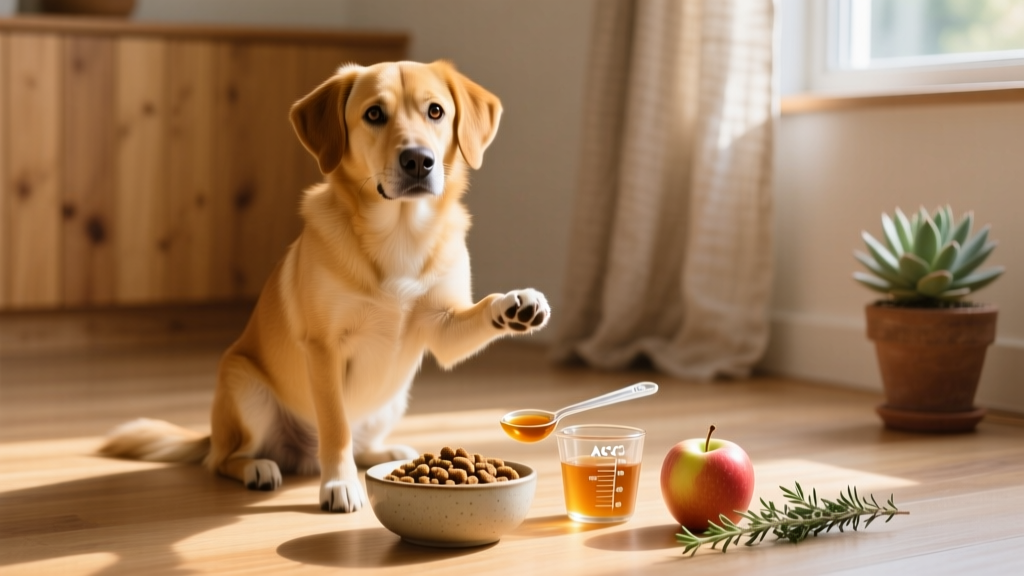
You've probably seen the claims: a splash of apple cider vinegar (ACV) in your dog's bowl can fix everything from itchy skin to bad breath. But as someone who has fielded hundreds of nutrition questions from worried dog owners, I can tell you the reality is more nuanced. Apple cider vinegar in dog's food isn't a cure-all — and done wrong, it can actually cause harm. This guide breaks down exactly what the evidence supports, how to dose it safely by your dog's weight, and what to look for in the rest of your dog's diet to make ACV a sensible addition rather than a risky experiment.
What Apple Cider Vinegar Actually Does (and Doesn't Do) for Dogs
Apple cider vinegar is fermented apple juice containing acetic acid (typically 4-6% concentration), trace minerals, and — in raw, unfiltered versions — a cloudy sediment called "the mother" that contains beneficial bacteria and enzymes. Here's what the science actually supports versus what remains anecdotal:
- Mild antimicrobial properties: Acetic acid has demonstrated antibacterial and antifungal effects in laboratory settings, though concentrations needed often exceed what's safe for canine ingestion.
- Appetite stimulation: The tart flavor can encourage picky eaters to consume their meals, particularly senior dogs with diminished appetite.
- Urinary pH modification: Small amounts may slightly acidify urine, which some veterinarians recommend for dogs prone to struvite crystals (but this must be monitored — see risks below).
- Flea and tick repellent effects when applied topically or ingested
- Curing allergies or hot spots
- Preventing cancer or detoxifying organs
- Dissolving existing bladder stones
The Merck Veterinary Manual does not list apple cider vinegar as a recognized therapeutic agent, which means any use should be supplemental — never a replacement for veterinary-prescribed treatments.
Safe Dosage of Apple Cider Vinegar in Dog's Food by Weight
The most common mistake I see is owners pouring ACV like salad dressing. The safe threshold is approximately 1 teaspoon per 25 pounds of body weight per day, and even that should be introduced gradually. Here's the precise breakdown:
| Dog Weight | Starting Dose (Week 1) | Maintenance Dose | Maximum Daily Limit |
|---|---|---|---|
| 5-15 lb (2-7 kg) | ⅛ tsp diluted in water | ¼ tsp once daily | ½ tsp/day |
| 16-30 lb (7-14 kg) | ¼ tsp diluted in water | ½ tsp once daily | 1 tsp/day |
| 31-60 lb (14-27 kg) | ½ tsp diluted in water | 1 tsp once daily | 2 tsp/day |
| 61-100 lb (27-45 kg) | 1 tsp diluted in water | 1½-2 tsp once daily | 3 tsp/day |
| 100+ lb (45+ kg) | 1 tsp diluted in water | 2 tsp once daily | 4 tsp/day |
Critical preparation rule: Always dilute ACV in at least 2 tablespoons of water or mix it thoroughly into wet food before serving. Never pour undiluted vinegar directly onto dry kibble and serve — the concentrated acid can irritate your dog's esophagus and stomach lining.
When Apple Cider Vinegar Can Harm Your Dog
Not every dog is a candidate for ACV supplementation. I've seen several cases where well-meaning owners made existing conditions worse. Here are the specific contraindications:
- Kidney disease (CKD): Acidifying the blood forces compromised kidneys to work harder. Dogs with Stage 2+ kidney disease need alkalizing diets, not acid supplements.
- Calcium oxalate bladder stones: While ACV may help prevent struvite crystals (which form in alkaline urine), it can actually promote calcium oxalate stone formation by increasing urine acidity. If your dog has a history of oxalate stones, avoid ACV entirely.
- Acid reflux or chronic vomiting: Adding acid to an already irritated GI tract worsens symptoms. Watch for lip-licking, gulping, and regurgitation after meals.
- Gastric ulcers: Acetic acid directly irritates ulcerated stomach tissue.
- Dental enamel erosion: Dogs with existing dental disease or thin enamel can suffer further damage from regular acid exposure.
If your dog falls into any of these categories, consult your veterinarian before introducing any acidic supplement.
Pairing ACV With a Complete, Balanced Diet
Apple cider vinegar is a supplement — not a meal. It adds virtually zero nutritional value (no meaningful protein, fat, vitamins, or calories). That means the food you're mixing it into needs to carry 100% of your dog's nutritional load. Here's what a complete diet must provide:
Nutritional Requirements by Life Stage
| Nutrient | Adult Maintenance | Growth/Puppy | Senior (Low-Activity) |
|---|---|---|---|
| Crude Protein (min) | 18% DM | 22.5% DM | 20-25% DM |
| Crude Fat (min) | 5.5% DM | 8.5% DM | 8-12% DM |
| Calcium (min) | 0.5% DM | 1.2% DM | 0.5-0.7% DM |
| Calories (daily, 30 lb dog) | ~650 kcal | ~900 kcal | ~550 kcal |
| Calories (daily, 60 lb dog) | ~1,050 kcal | ~1,500 kcal | ~900 kcal |
What to look for on the label: Every commercial food should carry an AAFCO statement of nutritional adequacy — either "formulated to meet nutrient profiles" or "animal feeding tests using AAFCO procedures." If a food lacks this statement, it is not a complete diet regardless of marketing claims. The first ingredient should be a named animal protein (chicken, lamb, salmon — not "meat meal" or "animal by-products" as the sole protein). Ingredients are listed by weight, so the first five items tell you most of what's in the bowl.
Recommended Complete Foods to Pair With ACV
These are foods I've consistently seen produce good stool quality, healthy coats, and stable body condition scores in dogs that also receive ACV supplementation. Prices reflect 2025-2026 retail averages for a 25-30 lb bag:
Protein: 26% | Fat: 16% | Calories: 373 kcal/cup
Price: $48-58 (35 lb bag) | AAFCO: Adult Maintenance
Why it works: Named chicken as first ingredient, widely available, consistent quality control. Good baseline for dogs receiving ACV since the moderate protein won't compound with acid load on kidneys.
Protein: 20.5% | Fat: 13.5% | Calories: 394 kcal/cup
Price: $65-78 (30 lb bag) | AAFCO: Adult Maintenance
Why it works: Specifically designed for GI-sensitive dogs — the same dogs most likely to react poorly to ACV. Starting with a gentle base food lets you test ACV tolerance without confounding variables.
Protein: 23% | Fat: 14% | Calories: 377 kcal/cup
Price: $58-72 (30 lb bag) | AAFCO: Adult Maintenance
Why it works: Formulated for dogs 23-55 lb (the weight range where ACV dosing is most straightforward). Consistent kibble size and palatability.
Protein: 38% | Fat: 18% | Calories: 449 kcal/cup
Price: $85-105 (25 lb bag) | AAFCO: All Life Stages
Why it works: High-protein option for active dogs. Note: this protein level combined with ACV means higher acid load — only appropriate for healthy adult dogs with normal kidney function. Not for seniors with early CKD.
Protein: 34% | Fat: 15% | Calories: 417 kcal/cup
Price: $62-80 (26 lb bag) | AAFCO: All Life Stages
Why it works: Grain-free option for dogs with confirmed grain allergies (not general "grain sensitivity" — consult your vet for allergy testing first). Deboned turkey first ingredient.
Protein: 24% | Fat: 14% | Calories: 378 kcal/cup
Price: $44-56 (30 lb bag) | AAFCO: Adult Maintenance
Why it works: Budget-friendly complete option with deboned chicken first. Includes their "LifeSource Bits" antioxidant blend. Good entry point if you're testing ACV and want a moderate-cost base food.
Foods and Ingredients to Avoid
Some foods compound the problems ACV can cause or create dangerous interactions:
- High-acid commercial diets (some prescription urinary diets like Hill's c/d already acidify urine — adding ACV on top risks calcium oxalate crystal formation)
- Foods with unspecified "meat meal" as first ingredient — you can't assess protein quality or phosphorus load
- Raw diets without veterinary nutritionist formulation — the combination of potential bacterial contamination from raw meat plus ACV's unreliable antimicrobial effect creates false safety confidence
- Any food containing xylitol, grapes/raisins, onions, garlic, or macadamia nuts — these are toxic regardless of ACV use. If ingestion is suspected, contact ASPCA Animal Poison Control at (888) 426-4435 immediately (24/7, consultation fee applies).
- Expired or improperly stored foods — rancid fats in oxidized kibble cause GI inflammation that ACV will worsen
Homemade Diets and ACV: What You Must Know
Some owners add ACV to homemade meals assuming the vinegar "balances" a DIY recipe. It doesn't. The most common nutritional gaps in homemade dog diets are calcium, vitamin D, zinc, copper, and essential fatty acids — none of which ACV provides in meaningful amounts.
If you're committed to a homemade diet, here are the non-negotiable requirements:
- Work with a board-certified veterinary nutritionist (DACVN) or use recipes from Balance IT, a tool developed by veterinary nutritionists that formulates complete recipes.
- Include a calcium source — typically 800-1200 mg calcium per 1000 kcal of food. Ground eggshell (½ tsp per pound of meat) or calcium carbonate supplements are standard.
- Add an omega-3 source — fish oil at 20-55 mg combined EPA/DHA per kg body weight daily.
- Use a comprehensive vitamin-mineral supplement like Balance IT Canine or a veterinary-formulated premix.
- Run quarterly blood panels to catch deficiencies before they become clinical problems.
- 6 oz cooked chicken breast (shredded)
- 1 cup cooked long-grain white rice
- ½ cup steamed broccoli (chopped)
- 1 tsp sunflower oil
- ½ tsp Balance IT Canine supplement (or equivalent per product directions)
- ¼ tsp apple cider vinegar (diluted, added at serving — optional)
This is a framework, not a prescription. Your veterinary nutritionist will adjust ratios based on your dog's bloodwork, body condition, and health status.
Feeding Amounts and How to Adjust for Your Dog
The feeding guide on the bag is a starting point — not a rule. Individual dogs of the same weight can need 20-30% more or fewer calories based on metabolism, activity level, age, and reproductive status. Here's a more precise calculator:
| Dog Weight | Base (Neutered Adult) | Intact Adult (+10%) | Active/Sport (+25-50%) | Senior/Sedentary (-15%) | Weight Loss (-25%) |
|---|---|---|---|---|---|
| 10 lb (4.5 kg) | 275 kcal | 303 kcal | 344-413 kcal | 234 kcal | 206 kcal |
| 25 lb (11 kg) | 540 kcal | 594 kcal | 675-810 kcal | 459 kcal | 405 kcal |
| 50 lb (23 kg) | 890 kcal | 979 kcal | 1,113-1,335 kcal | 757 kcal | 668 kcal |
| 75 lb (34 kg) | 1,200 kcal | 1,320 kcal | 1,500-1,800 kcal | 1,020 kcal | 900 kcal |
| 100 lb (45 kg) | 1,480 kcal | 1,628 kcal | 1,850-2,220 kcal | 1,258 kcal | 1,110 kcal |
How to tell if you're feeding the right amount: Use a body condition score (BCS) assessment. On the 9-point scale, your dog should score a 4 or 5 — ribs palpable without pressing hard, visible waist from above, abdominal tuck from the side. If your dog scores 6+, reduce daily calories by 10% and reassess in 2 weeks. If scoring 3 or below, increase by 10%.
Transitioning Your Dog to a New Food (With ACV Introduction)
If you're switching foods and introducing ACV simultaneously, do one at a time. Change the food first over 7-10 days, then add ACV after the new food is fully established. This way, if your dog has GI upset, you know which variable caused it.
| Days | Old Food | New Food | ACV |
|---|---|---|---|
| 1-2 | 75% | 25% | None |
| 3-4 | 50% | 50% | None |
| 5-6 | 25% | 75% | None |
| 7-8 | 0% | 100% | None |
| 9-10 | 0% | 100% | Start at half-dose |
| 11+ | 0% | 100% | Full dose if tolerated |
Slow the transition if you see loose stools, increased gas, or food refusal. Extend each phase by 2-3 days. For dogs with a history of pancreatitis or IBD, a 14-21 day transition is safer.
Supplement Guidance: What ACV Doesn't Replace
Some owners treat ACV as a "natural supplement" that covers their dog's micronutrient needs. It doesn't. Here's what dogs actually need and whether supplementation makes sense:
- Omega-3 fatty acids (EPA/DHA): Most commercial diets are deficient relative to optimal levels. Add fish oil at 20-55 mg EPA+DHA per kg body weight daily. Brands: Nordic Naturals Omega-3 Pet ($18-24), Grizzly Salmon Oil ($16-22 for 16 oz).
- Probiotics: If you're giving ACV for gut health, a dedicated canine probiotic with documented strains (Enterococcus faecium SF68, Lactobacillus acidophilus) is far more effective. Purina FortiFlora ($28-35 for 30 packets) or Proviable-DC ($25-32) are veterinary-recommended options.
- Glucosamine/chondroitin (for joint health): ACV does not support joint health. For dogs over 7 years or large breeds over 4, consider Dasuquin Advanced ($45-60 for 84 tablets) or Cosequin DS ($30-42).
- Vitamin E: Dogs on fish oil supplementation need additional vitamin E to prevent oxidative damage — typically 2-5 IU per kg body weight daily.
Always discuss new supplements with your veterinarian, especially if your dog takes medications. ACV can interact with diuretics, insulin, and certain heart medications by altering potassium levels and gastric pH.
Monitoring Success: How to Know If ACV Is Helping or Hurting
Track these four indicators weekly for the first month after introducing ACV, then monthly ongoing:
- Firm, well-formed stools (score 2-3 on the Purina fecal scoring chart)
- Stable or improved appetite
- Shiny coat with minimal shedding beyond seasonal norms
- Normal energy levels for breed and age
- Clear, light-yellow urine color
- BCS holding steady at 4-5/9
- Loose stools or diarrhea lasting more than 48 hours
- Vomiting or regurgitation after meals
- Decreased water intake or signs of dehydration (tacky gums, skin tent)
- Excessive lip-licking or swallowing (acid reflux indicators)
- Tooth sensitivity or reluctance to chew hard kibble
- Dark or blood-tinged urine
- Lethargy or unusual behavior changes
Request a urinalysis from your vet at the 3-month mark if you're using ACV regularly. This will confirm whether urine pH is staying within the safe range of 6.0-7.0. Chronic pH below 6.0 significantly increases calcium oxalate stone risk.
Frequently Asked Questions
Can I give my puppy apple cider vinegar?
Not recommended. Puppies have developing GI tracts and more sensitive tooth enamel. Their nutritional needs are best met through a complete, AAFCO-approved puppy food without acidic supplements. Wait until at least 12 months (18 months for giant breeds) before considering ACV.
Does apple cider vinegar help with my dog's allergies?
No reliable evidence supports this. Canine allergies (atopic dermatitis, food allergies) require proper diagnosis through elimination diets or intradermal testing, followed by targeted treatment. Using ACV instead of veterinary allergy management often delays effective care and allows secondary skin infections to develop.
What type of ACV should I buy for my dog?
Choose raw, unfiltered ACV with "the mother" (such as Bragg Organic or Spectrum Naturals). Avoid ACV products with added flavors, sweeteners, or xylitol (which is highly toxic to dogs). The organic distinction matters less than the absence of additives.
Can I put ACV in my dog's water bowl instead of food?
This is not ideal. Many dogs will refuse to drink acidified water, leading to decreased hydration — which is far more dangerous than any benefit ACV provides. If you use ACV, mix it into food where the flavor is masked by other ingredients.
How long before I see results from ACV?
For appetite stimulation, effects are immediate. For any other claimed benefit, there is no established timeline because most benefits lack clinical evidence. If you don't observe a noticeable positive change within 4 weeks, ACV likely isn't providing meaningful benefit for your individual dog.
Is apple cider vinegar safe for dogs with kidney disease?
Generally no. Dogs with chronic kidney disease (CKD) benefit from diets that reduce acid load on the kidneys. Adding an acid supplement works against this goal. If your dog has CKD, discuss all supplements with your veterinarian before introducing them.
Aaron Whyte
All our authors care for dogs every day — read more of their work on the authors page.