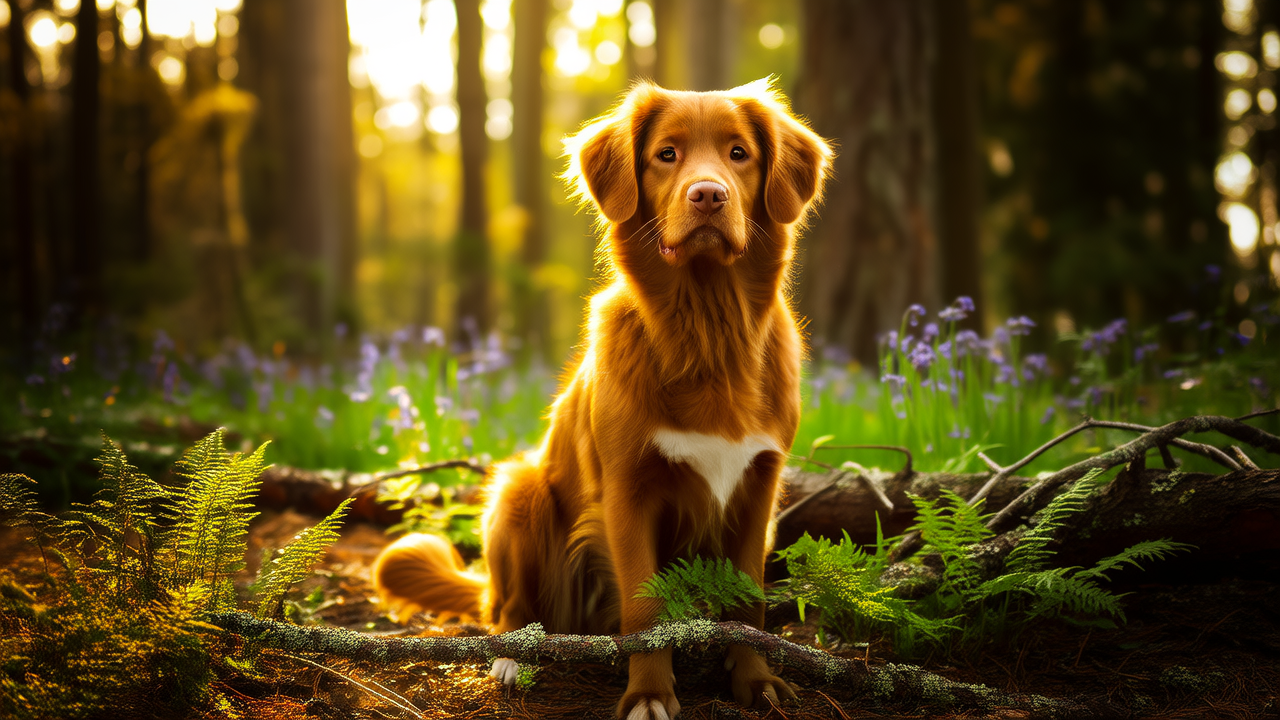
150 Best Dog Names for Female Dogs: Meanings, Trends & Picks for 2026
Explore 150+ curated dog names for female dogs with meanings, popularity rankings, naming science, and tips for renaming adopted dogs.

How to Choose the Perfect Name for Your Female Dog
Naming your dog is one of the first real decisions you make as an owner — and it sticks for 10 to 15 years. The science of canine cognition actually gives us solid guidance on what makes a name functional, not just cute. Dogs process sound differently than humans, and the right name can shave weeks off recall training.
The Science of a Good Dog Name
- Two syllables is the sweet spot. Single-syllable names ("Belle") get lost in background noise. Three-plus syllables ("Cordelia") take too long in an emergency recall. Two syllables ("Bella," "Luna") hit the canine auditory processing window perfectly.
- Lead with a hard consonant. Dogs hear high-frequency sounds best. Names starting with hard consonants — K, T, D, B, P — create a sharp acoustic onset that cuts through environmental noise. "Kira" registers faster than "Mia."
- End with a vowel. Vowel endings ("-a," "-ie," "-y") carry pitch variation that dogs distinguish easily. This is why "Sadie" works better than "Sade."
- Avoid command-soundalikes. "Kit" sounds like "sit." "Bo" sounds like "no." "Ray" sounds like "stay." These create training confusion, especially in the first critical 6-12 months. If you love a name that's close to a command, use a distinct nickname for training contexts.
- Test the "back door" rule. Stand at your back door and call the name three times at full volume. If it feels awkward or you stumble, it won't work at the dog park at 7 AM.
According to the American Kennel Club, the most successful dog names share these phonetic traits, and certified trainers consistently report faster name recognition when owners follow these guidelines.
The Most Popular Female Dog Names in 2026
Rover's annual name database and AKC registration data show consistent trends over the past three years. Luna has held the number-one spot for female dogs since 2020, and 2025-2026 data suggests it isn't moving anytime soon. Here's what's trending:
| Rank | Name | Origin/Meaning | Trend Direction |
|---|---|---|---|
| 1 | Luna | Latin — "moon" | Holding steady (#1 since 2020) |
| 2 | Bella | Italian — "beautiful" | Slight decline (was #1 in 2018) |
| 3 | Daisy | Old English — "day's eye" (flower) | Stable top-5 |
| 4 | Lucy | Latin — "light" | Stable |
| 5 | Charlie | Old German — "free man" (unisex) | Rising for females |
| 6 | Sadie | Hebrew — "princess" | Stable top-10 |
| 7 | Molly | Irish — "star of the sea" | Slow decline |
| 8 | Lola | Spanish — "sorrows" (short for Dolores) | Rising |
| 9 | Sophie | Greek — "wisdom" | Stable |
| 10 | Chloe | Greek — "blooming" | Slight decline |
Pop culture continues to drive naming cycles. Names like "Arya" spiked after Game of Thrones (2011-2019) and have settled into mid-tier popularity. "Barbie" saw a 340% increase in 2023 following the film release and has maintained moderate usage. If you want a name that won't date your dog, lean toward nature names, classic human names, or mythological references rather than current media.
150+ Dog Names for Female Dogs, Organized by Theme
Every name below was selected based on three criteria: (1) phonetic suitability for canine recall (two syllables preferred, hard consonant onset where possible), (2) clear meaning or cultural origin documented, and (3) not a close soundalike to standard obedience commands (sit, stay, come, down, heel, no, leave it). Names that border on command-similarity are flagged with a ⚠️ note.
Nature & Botanical Names
| Name | Origin/Meaning | Notes |
|---|---|---|
| Willow | Old English — the willow tree; symbol of grace | Top-20 nationally; soft sound but distinct two syllables |
| Ivy | Old English — the climbing vine; fidelity | Short but the hard "V" onset carries well |
| Maple | Old English — the maple tree | Rising in Pacific Northwest states |
| Hazel | Old English — the hazelnut tree; protection | Top-30; warm, vintage feel |
| Sage | Latin — "wise"; also the herb | Unisex; ⚠️ one syllable — pair with a two-syllable nickname like "Sagey" |
| Flora | Latin — "flower"; Roman goddess of spring | Classic, underused |
| Clover | Old English — the meadow plant; luck | Distinctive hard "C" onset |
| Poppy | Old English — the red flower; remembrance | Top-15 in UK; rising in US |
| Fern | Old English — the shade plant | ⚠️ One syllable; consider "Fernie" |
| Juniper | Latin — the evergreen shrub | Three syllables; nickname "June" works for recall |
| River | Old French — flowing water | Unisex; strong "R" onset |
| Rain | Old English — rainfall | ⚠️ One syllable and close to "rein"; use "Rainie" for training |
Mythological & Literary Names
| Name | Origin/Meaning | Notes |
|---|---|---|
| Athena | Greek — goddess of wisdom and war | Top-25 for large-breed females (German Shepherds, Dobermans) |
| Freya | Norse — goddess of love and beauty | Rising fast since 2022; popular in Scandinavian-heritage areas |
| Hera | Greek — queen of the gods | Two syllables, strong "H" onset |
| Daphne | Greek — "laurel"; nymph in mythology | Sophisticated; nickname "Daph" for quick recall |
| Iris | Greek — goddess of the rainbow | ⚠️ Close to "sit" ending; works better for experienced dogs |
| Nova | Latin — "new"; astronomical term | Top-20; hard "N" onset, clean vowel ending |
| Aurora | Latin — "dawn"; Roman goddess | Three syllables; "Rory" makes a great recall nickname |
| Calliope | Greek — "beautiful voice"; muse of epic poetry | Four syllables — use "Callie" as everyday name |
| Artemis | Greek — goddess of the hunt | Popular with sporting breed owners (Pointers, Vizslas) |
| Valkyrie | Norse — "chooser of the slain" | Bold choice; nickname "Val" simplifies recall |
| Scout | Old French — "to listen"; also To Kill a Mockingbird | Top-30; one syllable but distinct "Sk" onset |
| Piper | Old English — pipe player | Top-25; hard "P" onset, excellent recall name |
Classic & Vintage Human Names
| Name | Origin/Meaning | Notes |
|---|---|---|
| Mabel | Latin — "lovable" | Vintage revival; trending up since 2023 |
| Olive | Latin — the olive tree; peace | Distinct two syllables; "Ollie" nickname |
| Stella | Latin — "star" | Top-15; crisp "St" onset |
| Ruby | Latin — "red"; the gemstone | Top-10; hard "R" and "B" consonants |
| Pearl | Latin — the gem; purity | ⚠️ One syllable; "Pearlie" solves this |
| Winnie | Welsh — "fair one"; short for Winifred | Friendly, two syllables, clear vowel ending |
| Maggie | Greek — "pearl"; diminutive of Margaret | Top-20; hard "M" and "G" bookends |
| Bessie | Hebrew — "pledged to God"; diminutive of Elizabeth | Farm-dog classic making a comeback |
| Dottie | Greek — "gift of God"; also "spotted" | Ideal for Dalmatians, speckled Aussies |
| Tillie | German — "mighty in battle"; short for Matilda | Upbeat, two syllables, great for terriers |
| Frankie | Latin — "free one"; feminine of Frances | Top-30; unisex appeal, hard "F" and "K" sounds |
| Millie | German — "gentle strength"; short for Millicent | Top-25; sweet but phonetically clear |
Food & Drink-Inspired Names
| Name | Origin/Meaning | Notes |
|---|---|---|
| Mochi | Japanese — sweet rice cake | Top-10 for Asian breeds (Shiba Inus, Akitas); two syllables, clear onset |
| Peanut | English — the legume | Classic small-dog name; two syllables |
| Cocoa | Spanish — from cacao; chocolate drink | Ideal for brown-coated dogs; hard "K" sounds |
| Olive | (see Classic section) | Crosses over to food theme naturally |
| Pepper | Latin — the spice | Top-20; hard "P" doubled; great for black/white dogs |
| Ginger | Sanskrit — the root spice | Top-30 for red-coated breeds (Setters, Goldens) |
| Biscuit | Old French — "twice-cooked" | Two syllables; popular for cream/tan dogs |
| Noodle | German origin — the pasta | Playful; great for long-bodied breeds (Dachshunds, Corgis) |
| Chai | Hindi — spiced tea | ⚠️ One syllable and close to "chi" breeds; use "Chai-Chai" or "Chai Latte" |
| Waffles | Dutch — the breakfast food | Two syllables; fun for fluffy breeds |
| Berry | Old English — the fruit | Simple, sweet; pair as "Blueberry" for full name |
| Taffy | Welsh origin — the chewy candy | Hard "T" and "F" sounds; great recall name |
Strong & Bold Names (Best for Large Breeds & Working Dogs)
| Name | Origin/Meaning | Notes |
|---|---|---|
| Kira | Persian — "sun"; also Russian — "throne" | Hard "K" onset; top choice for Rottweilers, Malinois |
| Zara | Arabic — "blooming flower"; Hebrew — "princess" | Sharp "Z" onset cuts through noise |
| Nyx | Greek — goddess of night | ⚠️ One syllable; use "Nyxie" for recall training |
| Brunhilde | Old German — "armored warrior" | Three syllables; "Bruni" or "Hilde" for everyday |
| Elektra | Greek — "shining, bright" | Vowel onset but distinctive three syllables |
| Rogue | Old French — "arrogant"; also X-Men character | One syllable but unique enough; popular with Boxer owners |
| Xena | Greek — "guest, stranger"; pop culture warrior | Two syllables, sharp "Z" sound (pronounced ZEE-na) |
| Titan | Greek — the primordial giants | Unisex; hard "T" doubled; popular for Great Danes, Mastiffs |
| Blaze | Old French — "fire" | ⚠️ One syllable; use "Blazie" for training contexts |
| Juno | Latin — queen of gods; Roman goddess | Top-40; two syllables, hard "J" onset |
| Diva | Latin — "goddess"; also "celebrated singer" | Bold two syllables; great for dramatic breeds like Huskies |
| Storm | Old English — tempest | ⚠️ One syllable; "Stormy" is the practical choice |
Regional & Cultural Favorites
Naming patterns vary significantly by region. Here's what data from veterinary clinic registrations and AKC records shows:
| Name | Origin/Cultural Context | Regional Popularity |
|---|---|---|
| Sakura | Japanese — "cherry blossom" | Top-10 for dogs in Hawaii and West Coast; rising nationally |
| Frida | German/Norse — "peace"; associated with Frida Kahlo | Popular in Southwest US and among art-loving households |
| Nala | Swahili — "gift"; also The Lion King | Top-15 nationally; especially popular in Southeast US |
| Dulce | Spanish — "sweet" | Common in Texas, California, Florida Hispanic communities |
| Kona | Hawaiian — the coffee-growing region | Top-10 in Hawaii; top-50 on West Coast |
| Tundra | Russian/Scandinavian — frozen plain | Popular in Alaska, Montana, Minnesota for Northern breeds |
| Bonnie | Scottish — "pretty, charming" | Top-20 in Scotland; consistent mid-tier in US |
| Mei | Chinese — "beautiful" | Rising in urban areas with high Asian-American populations |
| Sienna | Italian — the earthy pigment; Tuscan city | Popular in Northeast US; sophisticated, two syllables |
| Pippa | British English — short for Philippa; "lover of horses" | Top-20 in UK; rising in US since 2023 |
Legal & Registration Considerations for Purebred Dogs
If your female dog is AKC-registerable, her official registered name follows specific rules that differ from her everyday "call name." The AKC naming guidelines specify:
- Registered name limit: 50 characters including spaces and punctuation.
- Kennel name prefix: Many breeders include their kennel name as a prefix (e.g., "Rosewood's Midnight Luna"). You can add your kennel name with AKC approval.
- Restricted words: AKC registered names cannot include certain breed names, numbers, abbreviations, titles, or offensive terms.
- Call name vs. registered name: Your dog's registered name might be "Hillcrest's Autumn Serenade" while her call name is simply "Sadie." The registered name appears on certificates and in show catalogs; the call name is what you use daily.
- UKC and other registries: The United Kennel Club has similar but slightly less restrictive rules. If you plan to compete in UKC events, check their specific naming requirements.
For non-competition pet dogs, there are no legal restrictions on naming in any US state. You can name your dog anything you like on veterinary records, microchip registrations, and city license tags.
How to Rename an Adopted or Rescue Dog
Roughly 23% of dogs in US shelters arrive with names, and most new owners wonder: Can I rename my adopted dog? The answer is yes — and canine behaviorists broadly agree it's fine to do so. Dogs don't have an identity attachment to names the way humans do. They associate the sound with attention, treats, and positive outcomes.
Step-by-Step Name Change Protocol (7-14 Days)
- Days 1-3: Pair the old and new names. Say "[Old Name], [New Name]" together, followed by a high-value treat (freeze-dried liver, small cheese pieces). Do this 5-8 times per session, 3 sessions per day.
- Days 4-7: Lead with the new name. Switch to "[New Name], [Old Name]" order. Reward any attention response — ear flick, head turn, eye contact.
- Days 8-10: New name only. Use only the new name. Pair with the same high-value reward. If your dog doesn't respond, go back to step 2 for another 2-3 days.
- Days 11-14: Fade the treats. Switch to intermittent reinforcement — reward every 2nd or 3rd response. Add praise and play as secondary rewards.
- Week 3+: Generalize. Practice in new environments (yard, park, pet store). Dogs learn context-specifically, so your dog may respond to "Luna" in the living room but need retraining in the backyard.
Special case — senior dogs: Dogs over 7 years old may take 3-4 weeks to fully adopt a new name. Be patient. For senior dogs with hearing loss, pair the new name with a hand signal (open palm toward your face) and a gentle vibration collar cue.
When NOT to rename: If your adopted dog already responds reliably to their shelter name and you don't have a strong reason to change it, keeping the name is perfectly fine and avoids unnecessary transition stress.
Frequently Asked Questions
What are good names for small female dogs?
Small breeds benefit from short, bright names with clear consonant sounds. Top picks include Pixie, Tinker, Dot, Pip, Mochi, Cleo, and Taffy. Avoid long, soft names that get lost when you're calling across a room. Two-syllable names ending in "-ie" or "-y" (Tilly, Rosie, Maddie) work especially well for toy and small breeds.
What does the name "Luna" mean, and why is it so popular?
Luna means "moon" in Latin. It was the name of the Roman moon goddess. Its popularity surged after 2017, driven by its appearance in the Harry Potter series (Luna Lovegood), its two-syllable structure, the clear "L" onset, and the open "-a" vowel ending — all of which make it acoustically ideal for dog recall. It has been the #1 female dog name in the US since approximately 2020.
How do I choose a dog name that works for training?
Prioritize phonetics over sentiment. Choose a two-syllable name starting with a hard consonant (K, T, B, D, P) and ending in a vowel. Avoid names that rhyme with commands (Kit/sit, Ray/stay, Bo/no). Test the name by calling it loudly five times — if it feels natural, it'll work in real-world training scenarios. You can always choose a meaningful name as the "formal" name and use a phonetically optimized nickname for training.
What are the most popular dog names this year?
For 2025-2026, the top female dog names based on veterinary clinic registrations, Rover data, and AKC records are Luna, Bella, Daisy, Lucy, Charlie, Sadie, Molly, Lola, Sophie, and Chloe. Rising names to watch include Freya, Mabel, Juno, and Maple. Male dog name trends tend to favor Milo, Charlie, Cooper, and Buddy.
Can I rename my adopted dog?
Yes. Dogs associate their name with positive outcomes (attention, food, walks), not with identity. A structured 7-14 day name-change protocol — gradually pairing the old name with the new one and using high-value rewards — works for the vast majority of dogs. Senior dogs and dogs with trauma histories may need 3-4 weeks. See the step-by-step protocol above for the full method recommended by positive reinforcement trainers.
Are there any names I should avoid?
Avoid names that sound like standard commands (Kit ≈ sit, Bo ≈ no, Ray ≈ stay, Kit ≈ sit, May ≈ stay). Avoid names with negative cultural associations if you frequent dog parks or group training classes. And while trademarked character names (Elsa, Barbie, Harley Quinn) aren't legally restricted for pet use, be aware that they may date your dog's name to a specific cultural moment. For purebred dogs intended for AKC competition, avoid registered names that include breed names, kennel names you don't own, or restricted terms per AKC rules.
Robin Maitland
All our authors care for dogs every day — read more of their work on the authors page.