Is Your Dog Name Common? 75+ Popular Picks Ranked & Explained
Discover if your dog name is common with 75+ popular picks ranked by category, meanings, and 2026 trends. Includes naming science and rename protocols.

Why Some Dog Names Dominate the Pack
Walk into any dog park in America and call out "Bella" or "Max" — chances are, at least two heads will turn. According to the American Kennel Club's annual naming surveys, the top 10 dog names have remained remarkably stable for over a decade, with Bella, Luna, Max, and Charlie consistently occupying the top spots. But what makes a dog name common, and should that influence your choice?
The answer lies at the intersection of canine cognition, cultural trends, and pure human psychology. Research published in the journal Applied Animal Behaviour Science suggests dogs respond best to names with one to two syllables and hard consonant sounds (like K, T, D, and B) because these phonemes are easier for canine ears to distinguish from background noise. That's why short, punchy names dominate popularity charts worldwide — they're not just trendy, they're functional.
- 1–2 syllables: Dogs process short words faster. "Cooper" beats "Bartholomew" every time.
- Hard consonants: K, T, D, B, and P sounds cut through ambient noise. "Duke" is clearer than "Milo" in a busy park.
- Avoid command overlap: "Kit" sounds like "sit," "Bo" sounds like "no," and "Ray" can confuse with "stay." Choose names that don't rhyme with common cues.
- Long vowel endings: Names ending in a drawn-out vowel (like "Bailey" or "Molly") let you modulate tone for recall training.
- The nickname test: You'll inevitably shorten the name. Make sure "Isabella" → "Izzy" still works as a recall cue.
75+ Common Dog Names Ranked by Category
Below is a curated list of the most common dog names across multiple categories. Popularity rankings reference AKC and Rover.com survey data through 2025, with projected 2026 trends noted where applicable.
Top 20 Most Common Dog Names (All Genders)
| Name | Origin / Meaning | Popularity Rank | Gender |
|---|---|---|---|
| Bella | Italian/Latin — "Beautiful" | #1 female (2019–2025) | Female |
| Luna | Latin — "Moon" | #1 female (2022–2025), rising | Female |
| Max | Latin — "Greatest" (short for Maximilian) | #1 male (2010–2023) | Male |
| Charlie | English/German — "Free man" | Top 3 male (2015–2025) | Unisex |
| Lucy | Latin — "Light" | Top 5 female (2010–2025) | Female |
| Cooper | English — "Barrel maker" | Top 5 male (2015–2025) | Male |
| Daisy | English — "Day's eye" (flower) | Top 10 female (2010–2025) | Female |
| Buddy | English — "Friend/companion" | Top 10 male (2010–2025) | Male |
| Sadie | Hebrew — "Princess" | Top 10 female (2015–2025) | Female |
| Rocky | Italian/English — "Rock; resting place" | Top 10 male (2010–2025) | Male |
| Molly | Irish — "Star of the sea" | Top 15 female (2010–2025) | Female |
| Bear | English — "Bear" (nature name) | Top 15 male (2018–2025), rising | Male |
| Bailey | English — "Berry clearing; bailiff" | Top 15 unisex (2010–2025) | Unisex |
| Tucker | English — "Cloth softener" | Top 20 male (2015–2025) | Male |
| Coco | French/Spanish — "Chocolate bean" | Top 20 female (2018–2025) | Female |
| Duke | Latin/English — "Leader; nobleman" | Top 20 male (2010–2025) | Male |
| Lola | Spanish — "Sorrows" (from Dolores) | Top 20 female (2015–2025) | Female |
| Jack | English — "God is gracious" | Top 20 male (2010–2025) | Male |
| Milo | Germanic/Latin — "Soldier; gracious" | Top 20 male (2018–2025), rising fast | Male |
| Stella | Latin — "Star" | Top 25 female (2015–2025) | Female |
Nature & Adventure-Inspired Names
Outdoor-themed names have surged since 2020, driven by pandemic-era adoption booms among hiking and camping enthusiasts.
| Name | Origin / Meaning | Trend Direction | Gender |
|---|---|---|---|
| Willow | English — "Willow tree; graceful" | Rising since 2019 | Female |
| River | English — "Flowing body of water" | Steady top 30 | Unisex |
| Aspen | English — "Quaking tree" | Rising in Western US | Unisex |
| Scout | French — "To listen; explorer" | Stable top 40 | Unisex |
| Hazel | English — "Hazel tree; wise" | Rising since 2021 | Female |
| Atlas | Greek — "Bearer of the heavens" | Fast-rising since 2020 | Male |
| Maple | English — "Maple tree" | Niche but growing | Female |
| Ridge | English — "Mountain ridge" | Stable in mountain states | Male |
| Ivy | English/Greek — "Climbing vine; fidelity" | Rising since 2022 | Female |
| Sage | Latin — "Wise; herb" | Slow rise | Unisex |
Food & Drink-Inspired Names
Food names are the breakout trend of 2024–2026. Rover.com data shows a 34% increase in food-themed dog names between 2022 and 2025.
| Name | Origin / Meaning | Trend Direction | Gender |
|---|---|---|---|
| Mochi | Japanese — "Rice cake" | Fast-rising, especially small breeds | Unisex |
| Olive | Latin — "Olive tree; peace" | Rising top 40 | Female |
| Whiskey | Gaelic — "Water of life" | Stable in Southern US | Male |
| Pepper | English — "Spice; pepper" | Stable top 30 | Female |
| Biscuit | French — "Twice-baked" | Niche, beloved for golden retrievers | Unisex |
| Ginger | English/Sanskrit — "Spice root" | Classic, stable | Female |
| Nacho | Spanish — "Short for Ignacio; snack" | Rising among millennials | Male |
| Peanut | English — "Small legume" | Stable for toy breeds | Unisex |
| Espresso | Italian — "Pressed out (coffee)" | Niche, dark-coated dogs | Male |
| Honey | English — "Sweet; nectar" | Stable classic | Female |
Mythology & History-Inspired Names
| Name | Origin / Meaning | Trend Direction | Gender |
|---|---|---|---|
| Thor | Norse — "Thunder god" | Stable top 30 male | Male |
| Athena | Greek — "Goddess of wisdom and war" | Rising since 2020 | Female |
| Loki | Norse — "Trickster god" | Rising (Marvel effect) | Male |
| Freya | Norse — "Goddess of love and beauty" | Fast-rising 2023–2026 | Female |
| Zeus | Greek — "Sky father; supreme god" | Stable top 30 male | Male |
| Cleopatra | Greek — "Glory of the father" | Niche (nickname "Cleo" common) | Female |
| Apollo | Greek — "God of sun and music" | Rising top 35 | Male |
| Nala | African/Sanskrit — "Gift; beloved" | Stable (Lion King legacy) | Female |
| Odin | Norse — "All-father; fury/inspiration" | Rising since 2021 | Male |
| Artemis | Greek — "Goddess of the hunt" | Slow rise, hunting breeds | Female |
Human Names That Crossed Over
The "humanization" trend continues to grow. These are real human names that have become extremely common for dogs in the US.
| Name | Origin / Meaning | Trend Direction | Gender |
|---|---|---|---|
| Oliver | Latin/French — "Olive tree; peace" | Top 10 male 2020–2025 | Male |
| Sophie | Greek — "Wisdom" | Stable top 25 female | Female |
| Henry | German — "Ruler of the home" | Rising since 2022 | Male |
| Rosie | Latin — "Rose" | Rising top 30 | Female |
| Oscar | Irish/Gaelic — "Deer friend; divine spear" | Stable top 30 | Male |
| Maggie | Greek — "Pearl" | Stable classic | Female |
| Finn | Irish — "Fair; white" | Rising fast 2023–2026 | Male |
| Ruby | Latin — "Red gemstone" | Rising top 20 | Female |
| Teddy | English — "Divine gift" (from Theodore) | Rising (doodle breeds) | Male |
| Winnie | Welsh — "Fair one; blessed peacemaking" | Niche rise | Female |
Breed-Specific Favorites
Certain names cluster around specific breeds based on appearance, origin, or personality stereotypes:
- German Shepherds: Rex, Kaiser, Diesel, Koda, Athena
- Golden Retrievers: Sunny, Goldie, Biscuit, Marley, Honey
- French Bulldogs: Mochi, Frenchie, Pierre, Baguette, Croissant
- Labrador Retrievers: Hunter, Buddy, Duke, Sadie, River
- Chihuahuas: Taco, Churro, Peanut, Coco, Chico
- Huskies: Ghost, Luna, Yukon, Storm, Koda
- Dachshunds: Wiener, Oscar, Peanut, Noodle, Fritz
- Standard Poodles: Bijou, Chanel, Pierre, Duchess, Beau
How to Choose a Dog Name: A Decision Framework
Selecting a name isn't just about personal taste — it's about functional communication. Here's the decision framework I recommend to every new puppy owner:
- Start with sound. Test names by calling them across a room. Does "Buster" carry better than "Sebastian"? (It does.)
- Check the command conflict list. Write down your planned training cues (sit, stay, come, down, leave it, heel). Cross out any name that rhymes or starts with the same sound. "Sid" conflicts with "sit." "Joe" can confuse with "no."
- Run the vet office test. Imagine a receptionist calling this name in a crowded waiting room. "Mr. Fluffernutter von Schnitzel" might get a laugh — or a misheard callback.
- Consider the lifespan. Your puppy will be a 12-year-old dog. "Tiny" is adorable for a 4-pound Chihuahua puppy but ironic for a 15-pound adult. "Puppy" isn't a name — it's a life stage.
- Say it 50 times. You'll repeat this name thousands of times. If you're already tired of saying "Bark Twain" after a week, pick something else.
These common names can interfere with training cues:
- Bo / Beau → sounds like "No"
- Kit / Kitt → sounds like "Sit"
- Ray / Rae → sounds like "Stay"
- Joe → sounds like "No" in some dialects
- Clyde → starts like "Quiet" or "Come"
- May / Mae → sounds like "Stay"
- Bit / Britt → sounds like "Sit"
If you love one of these names, consider a two-syllable variant: "Beau" becomes "Bowen," "Kit" becomes "Kitty" or "Kipling."
Legal & Registration Considerations for Purebred Dogs
If you're registering a purebred dog with the American Kennel Club, understand the difference between a registered name and a call name:
- Registered name: This is the formal name that appears on pedigree certificates and show records. AKC rules allow up to 36 characters (including spaces) and typically follow the format "Kennel Prefix + Given Name" (e.g., "Silverbrook's Maximilian Thunder"). The AKC rejects names that are offensive, duplicate an existing dog in the same breed, or use certain restricted kennel prefixes without permission.
- Call name: This is what you actually call your dog at home — "Max" in the example above. The call name has no restrictions and doesn't need to match the registered name at all.
Registration fees for individual dogs are $35–$50 depending on the package (basic registration vs. silver/gold/platinum with extras like lost pet recovery enrollment). Name changes after registration require a $25 processing fee and written consent from the breeder if the dog was sold with a co-ownership agreement.
For UKC (United Kennel Club) registration, the rules are similar but allow 30 characters maximum. FCI (Fédération Cynologique Internationale) rules vary by member country, but most European registries require the registered name to start with a specific letter assigned to the birth year.
Name Change Protocol for Adopted & Rescued Dogs
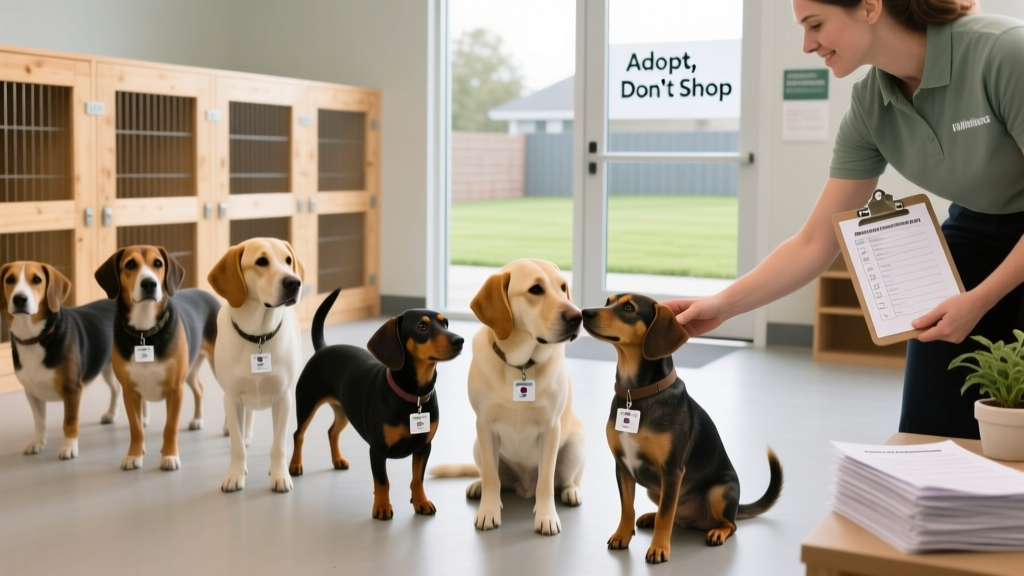
Can you rename an adopted dog? Absolutely — and canine behavior science supports it. Dogs don't have an identity attachment to their names the way humans do. A name is simply a sound that predicts attention, treats, or activity. Here's the protocol I recommend based on positive reinforcement methods:
- Days 1–2: Pair old and new. Say the old name, then immediately say the new name, then reward. "Buddy... Archer! *treat*" Do this 10–15 times per session, 3 sessions per day.
- Days 3–4: Lead with new, follow with old. "Archer... Buddy! *treat*" This reverses the association priority.
- Days 5–6: New name only, high-value rewards. Use chicken, cheese, or whatever your dog loves most. Every correct response to the new name earns a jackpot reward.
- Day 7: New name only, variable reinforcement. Start rewarding intermittently (every 2nd or 3rd response) to build reliability.
- Week 2: Generalize. Practice the new name in different rooms, outside, at the park, and with distractions present.
Timeline note: Most dogs reliably respond to a new name within 5–10 days. Senior dogs or dogs with hearing impairment may take 2–3 weeks. Dogs with trauma histories may need counter-conditioning alongside the name change — consult a certified positive-reinforcement trainer if your dog shows fear responses.
One important note: if your adopted dog's microchip is registered under the old name, contact the microchip registry (HomeAgain, 24PetWatch, AKC Reunite, etc.) to update both the pet name and your contact information. Most registries allow free updates online. You'll need the microchip number, which your vet can scan in about 10 seconds if you don't have it on your adoption paperwork.
Regional & Cultural Naming Trends (2024–2026)
Dog naming isn't uniform across the US — regional culture strongly influences what's common:
| Region | Popular Names | Cultural Influence |
|---|---|---|
| Southeast US | Magnolia, Hank, Jolene, Whiskey, Dixie | Country music, Southern heritage |
| Pacific Northwest | Rainier, Cedar, Fern, Portland, Sasquatch | Nature/outdoor culture |
| Northeast US | Fenway, Bagel, Liberty, Hudson, Knickerbocker | Sports teams, local landmarks |
| Southwest US | Sedona, Churro, Tequila, Cactus, Mesa | Desert landscape, Mexican heritage |
| Midwest | Lakers, Bucky, Cornfield, Chief, Prairie | Sports loyalty, agricultural roots |
| California | Surf, Avocado, Malibu, Sequoia, Venice | Beach culture, foodie trends |
Internationally, naming patterns diverge sharply. In Japan, Mame (bean), Hana (flower), and Sora (sky) dominate. In Germany, short Germanic names like Hans, Gretl, and Blitz remain popular. In Brazil, Thor, Mel, and Luna mirror global trends but with Portuguese-influenced names like Paçoca (a peanut candy) rising quickly.
Frequently Asked Questions
What are the most popular dog names this year?
Based on aggregated data from AKC and Rover.com surveys through 2025, the top 5 female names are Luna, Bella, Daisy, Lucy, and Willow. The top 5 male names are Max, Charlie, Cooper, Milo, and Buddy. The biggest risers entering 2026 are Freya (female) and Finn (male), both gaining 15–20% year-over-year.
What does the name Luna mean?
Luna comes from Latin and means "moon." It's been the #1 or #2 female dog name in the US since 2022, overtaking Bella which held the top spot for most of the 2010s. The name's popularity is partly attributed to the Harry Potter character Luna Lovegood and the general trend toward celestial-themed names.
Can I rename my adopted dog?
Yes. Dogs learn their name as a conditioned sound — they don't have an emotional identity tied to it. Most dogs adapt to a new name within 5–10 days using the pairing protocol outlined above. The only administrative steps are updating the microchip registry and any local licensing records. If your city requires dog licensing (most do, typically $10–$25 annually for spayed/neutered dogs), update the name on that record too.
How do I choose a dog name that's not too common?
If you want to avoid the "three dogs turn around at the park" problem, look beyond the top 50 lists. Consider: (1) names from your family heritage or native language, (2) lesser-known mythological figures (Eos, Bragi, Morrigan), (3) specific place names meaningful to you (your favorite trail, a childhood street), or (4) compound names like "Blue Ridge" or "Sweet Tea" that are virtually unique. Test your choice by searching it on Rover.com's name database — if it returns thousands of results, it's common.
Are there names I should avoid entirely?
Avoid names that sound like common commands (see the warning box above), names that are offensive or could embarrass you at the vet's office, and trademarked character names used commercially (e.g., calling your dog "Scooby-Doo" is fine at home, but using it in any commercial context could raise trademark issues with Warner Bros.). Also consider: naming your dog after a real person in your life can create awkward social situations if the relationship sours.
What are good names for large breed dogs?
Large breeds often suit strong, one-to-two-syllable names with hard consonants: Titan, Atlas, Bear, Magnus, Stella, Nova, Koda, and Thor all work well. Avoid overly "cute" names unless you enjoy calling "Peanut!" across a field as a 120-pound Great Dane barrels toward you. For breed-specific inspiration, check the breed-specific favorites section above.
What are good names for small breed dogs?
Small breeds carry shorter, punchier names well: Mochi, Pip, Taco, Pixie, Noodle, Biscuit, Bean, and Churro are all popular. However, don't feel limited to "cute" names — plenty of Chihuahua owners successfully pull off names like Diesel or Thor, and the contrast can be delightful.
Bottom line: Whether your dog name is common or completely unique, what matters most is consistency, positive association, and a sound your dog can easily distinguish. The best name is one you'll enjoy saying for the next 10–15 years — and one your dog will reliably come running to.
Marcus Aldridge
All our authors care for dogs every day — read more of their work on the authors page.