Dog ACL Surgery Cost & Complete First-Year Ownership Budget
Explore dog ACL surgery cost, first-year expenses, monthly budgets, insurance options, and breed-specific pricing to plan your dog ownership finances.

Understanding Dog ACL Surgery Cost and Why It Matters for Your Budget
When your dog tears their cranial cruciate ligament (CCL) — the canine equivalent of a human ACL — the repair bill can eclipse many owners' entire first-year dog budget. According to AVMA resources on canine orthopedic care, dog ACL surgery cost typically ranges from $1,500 to $5,000+ per knee in 2026, depending on the procedure type, geographic region, and your dog's size.
- TPLO (Tibial Plateau Leveling Osteotomy): $3,500–$5,000 — gold standard for large breeds
- TTA (Tibial Tuberosity Advancement): $3,000–$4,500 — alternative for medium-large dogs
- Lateral Suture (Extracapsular Repair): $1,500–$2,500 — common for small breeds under 50 lb
Most dogs with CCL tears are between 4–10 years old, but the financial impact hits hardest when it happens in year one — before you've built an emergency fund. This guide breaks down every cost category so you're never blindsided.
First-Year Dog Ownership: Total Cost Summary
| Expense Category | Low Estimate | Medium Estimate | High Estimate |
|---|---|---|---|
| Acquisition (adoption/purchase) | $50–$250 | $800–$2,000 | $3,000–$8,000+ |
| Initial veterinary setup | $200–$400 | $500–$800 | $1,000–$2,000 |
| Supplies & gear | $150–$300 | $400–$700 | $800–$1,500 |
| Monthly recurring (×12) | $600–$1,200 | $1,200–$2,400 | $2,400–$4,800 |
| Training & socialization | $100–$250 | $400–$800 | $1,200–$3,000 |
| Unexpected/emergency care | $0–$500 | $500–$2,000 | $2,000–$10,000+ |
| TOTAL FIRST YEAR | $1,100–$2,900 | $3,800–$8,700 | $10,400–$29,300+ |
The wide range reflects acquisition method (shelter vs. breeder), breed size, location, and whether emergencies strike. A shelter-adopted Chihuahua in rural Tennessee might cost $1,100 in year one; a breeder-purchased Bernese Mountain Dog in Manhattan could exceed $15,000 before any major health issues.
Initial Costs Breakdown: Before You Bring Your Dog Home
Acquisition Price
- Shelter/rescue adoption: $50–$500 (often includes spay/neuter, first vaccines, microchip)
- Reputable breeder (companion breeds): $1,500–$4,000
- Reputable breeder (working/rare breeds): $2,500–$8,000
- Designer breeds (doodles, etc.): $2,000–$6,000
Initial Veterinary Setup
| Service | Cost Range | Notes |
|---|---|---|
| Wellness exam | $60–$150 | Required within first week |
| Spay/neuter | $200–$800 | Size-dependent; often included in adoption |
| DHPP + rabies vaccines | $75–$200 | Puppies need 3–4 rounds |
| Bordetella (kennel cough) | $25–$50 | Required for daycare/grooming |
| Microchip + registration | $25–$75 | Lifetime identification |
| Fecal exam + deworming | $40–$100 | Common in puppies |
| Heartworm test | $35–$75 | Before starting prevention |
Essential Supplies
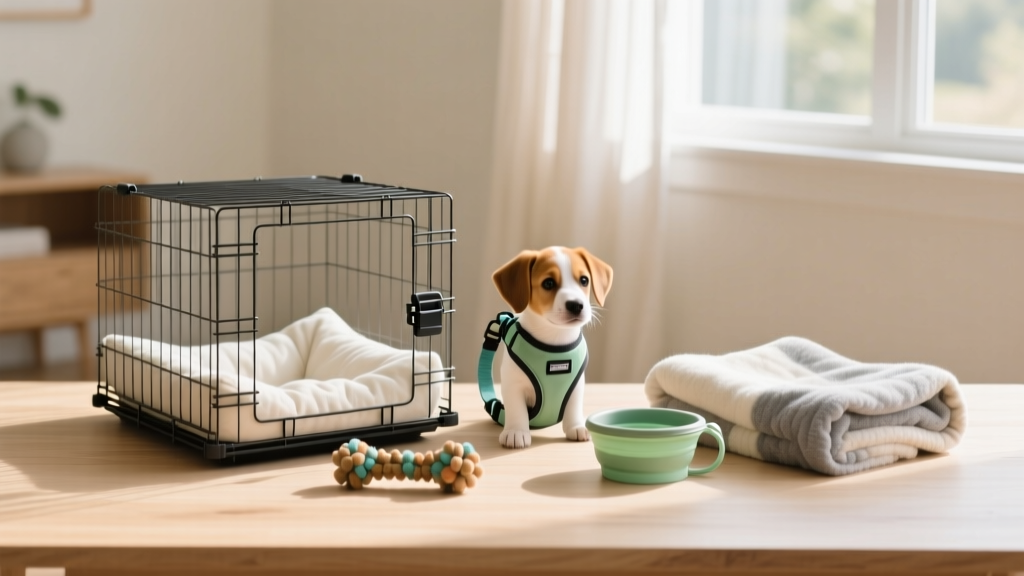
- Crate (size-appropriate): $40–$150
- Bed: $30–$120
- Collar + leash + harness: $25–$100
- Food/water bowls: $15–$50
- Puppy pads or enzymatic cleaner: $20–$40
- Grooming basics (brush, nail clippers, shampoo): $30–$80
- Toys and enrichment items: $30–$100
Ongoing Monthly Costs: Your Recurring Dog Budget
| Category | Monthly Cost |
|---|---|
| Food (quality kibble or balanced diet) | $50–$120 |
| Treats and chews | $15–$40 |
| Flea/tick + heartworm prevention | $20–$50 |
| Pet insurance premium | $30–$80 |
| Grooming (if professional needed) | $0–$80 |
| Toys and enrichment rotation | $10–$30 |
| Poop bags, cleaning supplies | $10–$20 |
| TOTAL MONTHLY | $135–$420 |
Breed Size Impact on Monthly Costs
| Size Category | Weight Range | Food | Preventive Meds | Total Monthly |
|---|---|---|---|---|
| Toy (Chihuahua, Yorkie) | 4–15 lb / 2–7 kg | $25–$50 | $12–$25 | $90–$220 |
| Small (Beagle, Corgi) | 15–30 lb / 7–14 kg | $35–$70 | $15–$35 | $110–$280 |
| Medium (Border Collie) | 30–60 lb / 14–27 kg | $50–$100 | $20–$45 | $135–$350 |
| Large (Lab, GSD) | 60–100 lb / 27–45 kg | $75–$150 | $30–$60 | $175–$450 |
| Giant (Great Dane, Mastiff) | 100–200 lb / 45–90 kg | $120–$250 | $45–$90 | $250–$600 |
Annual Costs: Yearly Expenses You Can Plan For
- Annual wellness exam: $60–$200
- Vaccine boosters (rabies, DHPP): $50–$150 every 1–3 years
- Dog license: $10–$50 (varies by municipality; often discounted for altered dogs)
- Dental cleaning (recommended annually after age 3): $300–$800 under anesthesia
- Ongoing training/classes: $150–$500/year for group classes
- Boarding/pet sitting: $30–$80/night × vacation days
Emergency Fund: How Much Should You Budget?
According to ASPCA guidance on pet care costs, emergency veterinary visits are the single biggest financial shock for dog owners. Here's what common emergencies cost in 2026:
| Emergency Scenario | Typical Cost |
|---|---|
| Urgent care visit (ear infection, minor injury) | $150–$400 |
| Toxin ingestion (chocolate, xylitol) | $500–$2,500 |
| Foreign body surgery (swallowed toy/sock) | $2,000–$6,000 |
| Bloat/GDV emergency surgery | $3,000–$8,000 |
| Hip dysplasia surgery (total hip replacement) | $4,000–$7,000 per hip |
| Dog ACL surgery (CCL repair) | $1,500–$5,000 per knee |
| IVDD spinal surgery (dachshunds, Frenchies) | $3,500–$8,000 |
| Cancer treatment (surgery + chemo) | $5,000–$15,000+ |
Recommended emergency fund: $2,000–$5,000 minimum, ideally $5,000–$10,000 for large or predisposed breeds.
When to Call the Vet Now vs. Monitor
Call immediately (emergency): Difficulty breathing, collapse, seizures, uncontrolled bleeding, suspected bloat (distended abdomen + retching), inability to urinate, toxin ingestion, hit by car, severe trauma.
Schedule within 24–48 hours: Limping lasting more than a day, decreased appetite for 48+ hours, vomiting/diarrhea with lethargy, excessive scratching or skin changes, behavioral changes.
Pet Insurance Analysis: Is It Worth the Premium?
| Provider | Monthly Premium (Medium Dog) | Reimbursement | Deductible | Key Feature |
|---|---|---|---|---|
| Trupanion | $50–$90 | 90% | $250–$1,000 | Direct vet pay, no payout limits |
| Healthy Paws | $35–$70 | 70–90% | $250–$500 | Unlimited annual caps available |
| Embrace | $40–$80 | 70–90% | $200–$1,000 | Diminishing deductible, wellness add-on |
| Lemonade | $25–$55 | 70–90% | $100–$500 | AI-driven fast claims, lower premiums |
| Figo | $30–$65 | 70–100% | $100–$750 | 100% reimbursement option, live vet chat |
Insurance Math: When It Pays Off
Consider this real scenario: You pay $60/month ($720/year) in premiums. Your Labrador tears his CCL at age 4 — that's $4,500 for TPLO surgery. Over 4 years, you paid $2,880 in premiums and received $3,600+ in reimbursement (after deductible). Net savings: $720+.
Insurance makes the most sense when:
- You enroll your dog as a puppy (pre-existing conditions are excluded)
- You choose a policy with no annual or lifetime caps
- Your breed has known hereditary conditions (hip dysplasia, IVDD, heart disease)
- You cannot comfortably absorb a $5,000+ emergency bill
Insurance may not be worth it if:
- You can self-insure with a dedicated $10,000+ emergency fund
- Your dog is already senior with multiple pre-existing conditions
- You're unwilling to file claims and manage paperwork
Breed-Specific Cost Variations: Which Dogs Cost Most to Own?
| Breed | Acquisition | Annual Care | Health Risks | Estimated Lifetime Total |
|---|---|---|---|---|
| Chihuahua | $300–$1,500 | $1,200–$2,000 | Dental disease, luxating patella | $15,000–$28,000 |
| Labrador Retriever | $1,000–$2,500 | $2,000–$3,500 | Hip dysplasia, obesity, CCL tears | $25,000–$48,000 |
| French Bulldog | $2,500–$5,000 | $2,500–$5,000 | BOAS, IVDD, skin allergies, C-sections | $35,000–$70,000 |
| German Shepherd | $1,500–$3,500 | $2,200–$4,000 | Hip/elbow dysplasia, degenerative myelopathy | $28,000–$55,000 |
| Great Dane | $1,500–$3,000 | $3,500–$6,000 | Bloat, cardiomyopathy, osteosarcoma | $30,000–$55,000 |
| Greyhound (retired racer) | $200–$500 | $1,500–$2,500 | Generally healthy, dental issues | $18,000–$33,000 |
Brachycephalic breeds (French Bulldogs, Pugs, English Bulldogs) and giant breeds (Great Danes, Mastiffs) consistently rank as the most expensive to own due to high rates of breed-specific conditions and elevated food/medication costs.
Hidden Costs New Owners Consistently Miss
- Dog walking services: $15–$30/walk; $200–$600/month if you work long hours
- Doggy daycare: $25–$50/day; $500–$1,000/month for full-time
- Home damage (puppy phase): Chewed furniture, scratched doors, carpet stains — $200–$2,000 in replacements
- Yard fencing: $1,500–$5,000 for installation if not already present
- Pet deposits/rent increases: $200–$500 deposit + $25–$75/month pet rent for renters
- Replacement supplies: Beds, leashes, and toys wear out; budget $100–$300/year for replacements
- Travel complications: Pet-friendly hotels charge $25–$100/night extra; airline pet fees run $125–$200 each way
- End-of-life care: Euthanasia ($150–$400), cremation ($100–$350), grief counseling
Regional Cost Variations: Urban vs. Rural, US vs. International
Veterinary costs vary dramatically by geography. A routine spay in rural Mississippi might cost $200, while the same procedure in Manhattan or San Francisco can exceed $800. Emergency care shows even wider gaps:
- High-cost metros (NYC, SF, LA, Boston): Emergency visits $300–$600+; ACL surgery $4,000–$7,000
- Mid-range cities (Denver, Austin, Charlotte): Emergency visits $150–$400; ACL surgery $2,500–$5,000
- Rural areas (Southeast, Midwest): Emergency visits $100–$300; ACL surgery $1,500–$3,500
International comparisons (for context):
- UK: ACL surgery £1,500–£3,500 ($1,900–$4,400); insurance more common
- Canada: Similar to US pricing, slightly lower in rural provinces
- Australia: ACL surgery AUD $2,500–$5,500 ($1,600–$3,500 USD)
Money-Saving Strategies Without Compromising Care
- Buy food in bulk from Chewy or Costco — saves 15–25% vs. pet stores. Look for AAFCO complete-and-balanced statements.
- Use veterinary schools for complex procedures — university teaching hospitals often charge 20–40% less than specialty clinics while providing cutting-edge care.
- Ask about multi-pet discounts — many insurers and vets offer 5–10% off for households with 2+ pets.
- DIY grooming between professional sessions — learn nail trimming ($15–$30 saved per visit) and basic brushing routines.
- Buy preventive medications through online pharmacies — Chewy Pharmacy, PetMeds often 20–40% cheaper than clinic markup. Always verify VIPPS accreditation.
- Enroll in pet insurance as a puppy — premiums are lowest at 8–16 weeks and no pre-existing conditions exist.
- Use community training resources — many shelters offer low-cost group classes ($100–$200 for 6 weeks) using positive reinforcement methods.
- Maintain dental health proactively — daily brushing can delay or prevent $300–$800 anesthesia cleanings.
- Spay/neuter at the right time — low-cost clinics (ASPCA, local shelters) offer $50–$150 procedures vs. $400–$800 at private practices.
- Build relationships with your vet — loyal clients often receive courtesy discounts or payment plans during emergencies.
Consult Your Veterinarian: The Best Financial Decision
Preventive care is the single most effective cost-saving strategy. Regular wellness exams catch conditions early — a $150 checkup that identifies early kidney disease saves thousands in crisis treatment later. Always consult your veterinarian before making decisions about your dog's diet, exercise, or medical care. They can help you prioritize spending based on your dog's specific breed risks and life stage.
FAQ: Dog Ownership Costs
How much does it cost to own a dog?
Annual dog ownership costs range from $1,500 for a small, healthy dog in a low-cost area to $6,000+ for large breeds in expensive metros. The first year typically costs 2–3× more due to acquisition and initial setup expenses.
How much does a dog cost in the first year?
First-year costs range from $1,100–$2,900 (shelter adoption, small dog, minimal emergencies) to $10,000–$29,000+ (breeder purchase, large breed, health complications). Most owners should budget $3,000–$8,000 for a realistic first year.
What are the ongoing monthly costs of a dog?
Monthly costs range from $90–$220 for toy breeds to $250–$600 for giant breeds, covering food, preventive medications, insurance, grooming, and supplies. The average medium-sized dog costs $135–$420/month.
Is pet insurance worth it?
Pet insurance pays off when your dog experiences a major health event (ACL surgery, cancer, emergency surgery) and you enrolled early. For a $60/month premium, you might save $1,000–$5,000+ over your dog's lifetime. It's less valuable for senior dogs with pre-existing conditions or owners who can self-insure $10,000+.
How much should I budget for emergencies?
Minimum $2,000–$5,000 in a dedicated pet emergency fund. Ideal target: $5,000–$10,000, especially for large breeds prone to bloat, hip dysplasia, or CCL tears. Pair with pet insurance for maximum protection.
Which dog breeds cost the most to own?
French Bulldogs, English Bulldogs, Great Danes, and Bernese Mountain Dogs rank highest in lifetime costs due to expensive acquisition, high health risks (BOAS, bloat, cancer), and elevated food/medication needs. Mixed-breed dogs and retired racing Greyhounds often cost least.
What is dog ACL surgery cost, and can insurance cover it?
Dog ACL surgery (CCL repair) costs $1,500–$5,000 per knee depending on procedure type (TPLO, TTA, or lateral suture). Most pet insurance policies cover 70–90% of the cost if the injury occurs after enrollment and the waiting period has passed. This single procedure often justifies years of insurance premiums.
Robin Maitland
All our authors care for dogs every day — read more of their work on the authors page.