Classic Dog Names: Timeless Picks, Meanings & How to Choose
Explore 75+ classic dog names with meanings, origins, and popularity data. Learn expert tips on choosing a name that works for training and registration.

Some dog names never go out of style. While trendy monikers come and go with pop culture, classic dog names endure across generations — and for good reason. They're easy to call across a dog park, they age well from puppyhood through senior years, and they carry a weight and warmth that fad names simply can't match.
Whether you're naming a new puppy from a responsible breeder or renaming a rescue, this guide gives you 75+ curated classic dog names with origins, meanings, gender associations, and practical training considerations — plus the science-backed criteria that make a name actually work.
What Makes a Classic Dog Name "Classic"?
A classic dog name isn't just old — it meets specific functional and cultural criteria. After working with hundreds of dog owners and reviewing naming data from the American Kennel Club and rover.com annual surveys, I've identified five traits that separate truly classic names from merely common ones:
- Longevity: The name has appeared consistently in dog naming data for 20+ years (not a one-decade trend)
- Phonetic clarity: Contains at least one hard consonant (B, D, K, T, hard G) that dogs can distinguish from background noise
- Training-safe: Does not phonetically overlap with common commands (sit, stay, come, down, no, heel)
- Cross-breed versatility: Works for a Chihuahua and a Great Dane alike
- Cultural recognition: Widely understood across English-speaking regions without negative connotations
The Science of a Good Dog Name
Canine cognition research tells us that dogs process the sound of their name differently than other words. A study published in Animal Cognition found that dogs respond fastest to names with two syllables and a stressed first syllable. Here's what the science says matters:
- Ideal length: 1–2 syllables. Three syllables work if the dog's name is shortened in daily use (e.g., "Penelope" → "Penny").
- Hard consonants win: Names beginning with B, D, K, or T produce sharper acoustic onsets that cut through ambient noise. Dogs hear these consonants more distinctly than soft sounds like S, F, or M.
- End on a vowel or hard stop: "Bailey" and "Jack" both register clearly. Names trailing off in soft consonants ("James") can be harder for dogs to parse at a distance.
- Avoid command overlap: "Bo" sounds too close to "No." "Kit" mimics "Sit." "Ray" overlaps with "Stay." Always say the name aloud alongside your five core commands before committing.
- The "back door" test: Stand at your back door and call the name three times at full volume. If it feels awkward or you stumble over it, try a different option. You'll use this name thousands of times — it needs to roll off your tongue.
75+ Classic Dog Names by Category
Timeless Male Classic Dog Names
| Name | Origin / Meaning | Gender | Popularity Notes |
|---|---|---|---|
| Max | Latin — "greatest" | Male | #1 male name on AKC and Rover lists for over a decade |
| Buddy | English — "friend, companion" | Male | Consistent top-10 since the 1990s |
| Charlie | Germanic — "free man" | Male | Top 5 male name across US, UK, and Australia |
| Jack | Hebrew/English — "God is gracious" | Male | Top 10 US; perennial favorite in UK |
| Cooper | English occupational — "barrel maker" | Male | Rose to top 5 in the 2010s; still top 10 in 2025–2026 |
| Duke | Latin — "leader" | Male | Classic since the 1950s; slight decline but still top 20 |
| Rocky | English/Italian — "rock, rest" | Male | Surged post-1976 (film); now a stable classic |
| Bear | English — the animal | Male | Top 15 since 2015; popular for large breeds |
| Tucker | English occupational — "cloth softener" | Male | Top 10 in US; less common in UK/Europe |
| Oscar | Irish/Gaelic — "deer lover" or "divine spear" | Male | Top 10 UK; top 20 US; popular with terriers |
| Buster | English — "one who breaks" | Male | Classic since early 1900s; steady mid-tier popularity |
| Toby | Hebrew (via Greek) — "God is good" | Male | Consistent top 20 across English-speaking countries |
| Riley | Irish — "courageous, valiant" | Unisex (leans male) | Top 15 in US; gender-neutral usage growing |
| Jake | Hebrew — "supplanter" (diminutive of Jacob) | Male | Top 20 for 25+ years |
| Sam | Hebrew — "heard by God" | Male | Enduring classic; often short for Samson or Samuel |
Timeless Female Classic Dog Names
| Name | Origin / Meaning | Gender | Popularity Notes |
|---|---|---|---|
| Bella | Italian/Latin — "beautiful" | Female | #1 female name on Rover and AKC for 10+ consecutive years |
| Lucy | Latin — "light" | Female | Top 3 female name since the early 2000s |
| Daisy | English — the flower ("day's eye") | Female | Top 5; especially popular with spaniels and retrievers |
| Sadie | Hebrew — "princess" (diminutive of Sarah) | Female | Top 10 US; strong Southern US regional preference |
| Molly | Irish — "star of the sea" (diminutive of Mary) | Female | Top 10 for two decades; classic family-dog name |
| Maggie | Greek — "pearl" (diminutive of Margaret) | Female | Top 15; common with Golden Retrievers and Labs |
| Lola | Spanish — "sorrows" (diminutive of Dolores) | Female | Top 15 US; strong in Southwest and urban areas |
| Sophie | Greek — "wisdom" | Female | Top 10 US and UK; elegant classic |
| Chloe | Greek — "blooming, fertility" | Female | Top 10 since 2005; crossover from human naming trends |
| Roxy | Persian — "dawn, light" (diminutive of Roxanne) | Female | Top 20; popular with boxers and pit bull-type breeds |
| Zoe | Greek — "life" | Female | Top 15; two syllables, ends on vowel — ideal phonetics |
| Coco | French — nickname origin (possibly "chocolate") | Female | Top 20; especially popular for small breeds and poodles |
| Penny | Greek — "weaver" (diminutive of Penelope) | Female | Top 20; sweet, approachable classic |
| Ruby | Latin — "red" (the gemstone) | Female | Top 10 in UK and Australia; top 15 US |
| Abby | Hebrew — "father's joy" (diminutive of Abigail) | Female | Top 15; reliable, warm-toned classic |
Gender-Neutral Classic Dog Names
| Name | Origin / Meaning | Gender | Popularity Notes |
|---|---|---|---|
| Bailey | English occupational — "bailiff, steward" | Unisex | Top 15 overall; used roughly 50/50 across genders |
| Scout | French/English — "to listen, observe" | Unisex | Rose to top 20 in 2010s; literary association (To Kill a Mockingbird) |
| Pepper | English — the spice | Unisex | Classic since mid-1900s; popular for black/white/grey coats |
| Lucky | English — "fortunate" | Unisex | Timeless; especially common for adopted/rescue dogs |
| Ginger | English — the spice/root; also a color | Unisex (leans female) | Classic for red-coated dogs (Irish Setters, Vizslas) |
| Shadow | English — "shade, follower" | Unisex (leans male) | Perennial favorite for black-coated dogs and velcro breeds |
| Snowball | English — compound descriptive | Unisex | Classic for white dogs; especially Bichons, Samoyeds, Great Pyrenees |
| Sandy | English — "sandy-colored" or diminutive of Alexander/Sandra | Unisex | Mid-century classic; steady use for tan/blonde coats |
| Blue | English — the color | Unisex | Classic for blue/grey-coated breeds (Blue Heelers, Weimaraners, Great Danes) |
| Storm | English — "tempest" | Unisex | Classic; used for high-energy or grey-coated dogs |
Literary, Historical & Mythological Classics
| Name | Origin / Meaning | Gender | Popularity Notes |
|---|---|---|---|
| Apollo | Greek — god of sun, music, healing | Male | Top 20; popular for large, noble-looking breeds |
| Zeus | Greek — king of the gods | Male | Top 15; especially popular with German Shepherds and mastiff breeds |
| Atlas | Greek — "bearer" (the Titan) | Male | Rising fast since 2018; top 30 in 2025–2026 |
| Luna | Latin — "moon" (Roman goddess) | Female | Top 5 female since 2019; crossover from human baby name trends |
| Dexter | Latin — "right-handed, skillful" | Male | Steady top 30; literary and pop-culture resonance |
| Winston | English — "joy stone" or "friend's town" | Male | Classic; Churchill association; popular with bulldogs |
| Tess | Greek — "to reap" (literary: Hardy's Tess) | Female | Underused classic; strong, simple, two-syllable |
| Jasper | Persian — "treasurer" | Male | Top 25; literary classic gaining momentum |
| Archie | Germanic — "truly bold" (diminutive of Archibald) | Male | Top 20 UK; boosted by royal association |
| Stella | Latin — "star" | Female | Top 15; literary (Tennessee Williams) and universally recognized |
Regional & Cultural Classics
| Name | Origin / Meaning | Region | Notes |
|---|---|---|---|
| Rex | Latin — "king" | US/Europe | Mid-century icon; less common now but instantly recognized |
| Fido | Latin — "faithful" | US/Europe | The archetypal dog name; rarely used today but culturally embedded |
| Lassie | Scottish — "young girl" | UK/US | Iconic since 1940s media; strongly associated with Collies |
| Koda | Sioux (Lakota) — "friend" | North America | Top 25; popular for huskies, Malamutes, and nature-oriented families |
| Diego | Spanish — "supplanter" (variant of James) | Latin America/US Southwest | Growing in US; classic in Spanish-speaking communities |
| Nala | Swahili — "gift" (also Sanskrit roots) | Global (African origin) | Top 20 female; boosted by The Lion King but rooted in real linguistic tradition |
| Hachi | Japanese — "eight" (Hachikō, the loyal Akita) | Japan/Global | Classic homage to canine loyalty; popular for Akitas and Shiba Inus |
| Bruno | Germanic — "brown" | Europe (Germany, Italy, France) | Top 20 in continental Europe; rising in US for brown-coated breeds |
| Bandit | English/Italian — "outlaw" | US (especially South/West) | Classic for dogs with mask-like facial markings |
| Chester | Latin — "camp, fortress" (the city) | UK/US Northeast | Vintage classic making a comeback; popular with small terriers |
Classic Dog Name Popularity Trends
Dog naming trends shift more slowly than human baby names, but data from Rover's annual surveys and AKC registration records reveal clear patterns over the past decade:
| Year Range | Top Male Names | Top Female Names | Notable Trends |
|---|---|---|---|
| 2010–2015 | Max, Buddy, Jake, Charlie, Rocky | Bella, Daisy, Lucy, Molly, Maggie | Human name crossover begins; Bella surges |
| 2016–2020 | Charlie, Cooper, Max, Buddy, Bear | Bella, Luna, Lucy, Daisy, Lola | Luna enters top 5; mythological names rise |
| 2021–2026 | Charlie, Cooper, Max, Milo, Bear | Bella, Luna, Daisy, Lucy, Coco | Milo surges; Coco climbs; shorter names preferred |
Regional variations persist: "Sadie" and "Bubba" remain disproportionately popular in the US South, while "Archie" and "Poppy" dominate in the UK. In the US Southwest, Spanish-origin names like "Diego," "Lola," and "Paco" appear at higher rates than the national average.
Registering a Classic Name for Your Purebred Dog
If you've purchased a purebred puppy from a responsible breeder and plan to participate in AKC events, you'll need to understand the difference between a call name and a registered name.
- Call name: The everyday name you use at home and in training. This is what your dog responds to. Keep it short (1–2 syllables).
- Registered name: The formal name on your dog's AKC registration certificate. It often includes the breeder's kennel name (prefix or suffix) and can be up to 50 characters including spaces.
For example, your dog's registered name might be "Maplewood's Maximilian Duke" while you call him "Max" every day. The AKC registration process allows creative registered names as long as they don't include titles you haven't earned, offensive language, or certain restricted terms. According to AKC rules, a registered name cannot exceed 50 characters (including spaces and punctuation), and the AKC reserves the right to refuse names it deems inappropriate.
Practical tip: Many breeders include their kennel prefix in the litter's registered names. Ask your breeder about their naming convention before you submit paperwork — some breeders handle registration themselves and will file the name on your behalf.
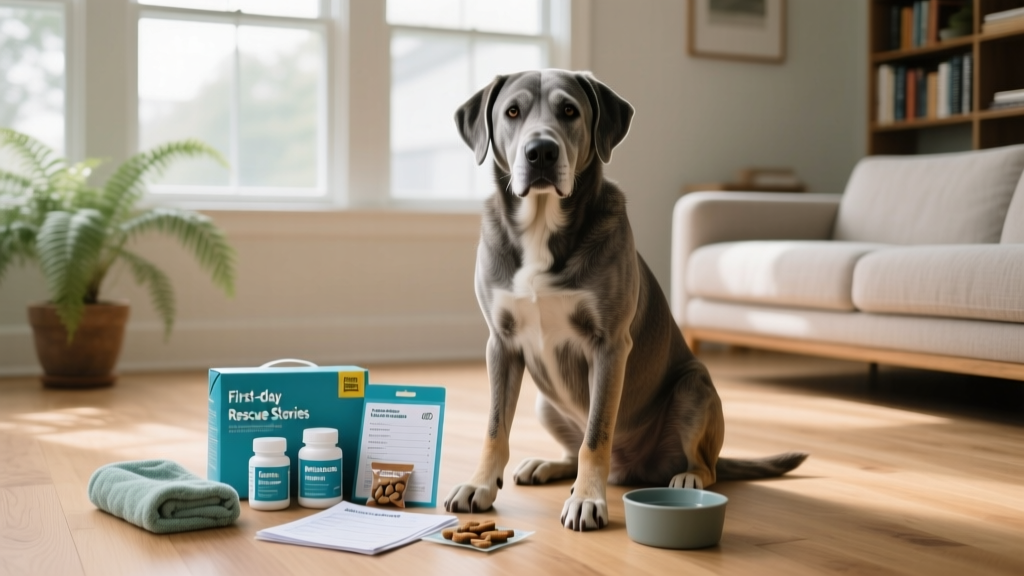
Renaming an Adopted or Rescue Dog
One of the most common questions I hear from adopters: "Can I change my rescue dog's name?" The short answer is yes — and in many cases, it's beneficial.
Dogs don't have a conceptual attachment to their name the way humans do. They associate their name with attention, treats, and interaction. If those associations were negative (or inconsistent) in a previous home, a new name can actually serve as a fresh start.
- Days 1–3 (Transition): Use the old name paired with the new name together: "[Old Name], [New Name]!" followed by a high-value treat. Repeat 10–15 times per session, 3–4 sessions daily.
- Days 4–7 (Fade): Begin using only the new name, but continue pairing every call with a treat or positive interaction. Your dog should start orienting toward you when they hear the new name by day 5–6.
- Week 2 (Reinforce): Use the new name exclusively in all contexts — meals, walks, play, training. If your dog doesn't respond, go back to pairing with the old name for another 2–3 days.
- Week 3+ (Solidify): Practice recall with the new name in low-distraction environments, then gradually add distractions. Most dogs fully respond to a new name within 2–4 weeks using positive reinforcement methods.
Important: Never use your dog's new name in a scolding context during the transition period. You want the new name to predict only good things.
Command-Similar Names to Avoid (or Use With Caution)
Before finalizing any classic dog name, run it through the "command check." Say the name aloud alongside your core commands. If a guest or family member might confuse the two, pick a different name.
| Classic Name | Similar Command | Risk Level | Safer Alternative |
|---|---|---|---|
| Bo | "No" | High | Beau, Bowie |
| Kit | "Sit" | High | Kip, Kirby |
| Ray | "Stay" | Moderate | Remy, Ranger |
| Joe | "No" (softened) | Low–Moderate | Joey, Jonas |
| Mae | "Stay" (rhymes) | Low–Moderate | Mabel, Maisie |
| Cole | "No" (softened C) / "Go" | Low | Colton, Cooper |
Frequently Asked Questions
What are good names for large breed dogs?
Classic names that suit large breeds include Duke, Bear, Apollo, Zeus, Bruno, Winston, and Shadow. These names carry a sense of strength and gravitas that matches a big dog's presence. Avoid diminutive-sounding names unless you enjoy the irony — a 150-pound Great Dane named "Peanut" is charming, but a name like "Duke" or "Atlas" will feel more natural when you're calling across a field.
What does the name "Bella" mean?
Bella is Italian and Latin for "beautiful." It has been the #1 or #2 female dog name in the United States for over a decade, according to both AKC and Rover data. Its two-syllable structure and clear "B" onset make it phonetically excellent for training — dogs hear the hard "B" consonant distinctly.
How do I choose a dog name that I won't regret?
Follow this decision framework: (1) Create a shortlist of 5–8 names. (2) Run each through the back-door test — call it aloud at full volume three times. (3) Check each against your five core commands for phonetic overlap. (4) Say each name paired with your last name (as if calling from the vet's office). (5) Sleep on your top 2 for 48 hours. The one that still feels right is your winner. Most owners who rush the process regret it; those who take a week rarely do.
What are the most popular dog names in 2025–2026?
Based on aggregated data from Rover surveys and AKC registration trends, the most popular dog names in 2025–2026 are: Male — Charlie, Cooper, Max, Milo, Bear. Female — Bella, Luna, Daisy, Lucy, Coco. Gender-neutral names like Scout and Bailey continue to rise in usage across all breeds.
Can I rename my adopted dog?
Yes. Dogs form associations with their name based on what happens after they hear it — not from any intrinsic identity attachment. Using the step-by-step name change protocol above (pairing old and new names, then fading the old name over 2–3 weeks with positive reinforcement), most dogs fully respond to a new name within one month. Senior dogs may take slightly longer (3–4 weeks) but adapt just as reliably.
Should my dog's name match their breed?
It's optional but can be fun. Classic pairings include Lassie for Collies, Hachi for Akitas, and Ginger for Irish Setters. However, a classic name like "Max" or "Bella" works beautifully for any breed — from a Pomeranian to a Bernese Mountain Dog. Don't feel pressured to pick a breed-themed name unless it genuinely resonates with you.
For more on choosing the right dog for your lifestyle, see our breed profiles and puppy care guides. If you have questions about your dog's health or behavior during the adjustment period after adoption, always consult your veterinarian for personalized guidance.
Marcus Aldridge
All our authors care for dogs every day — read more of their work on the authors page.