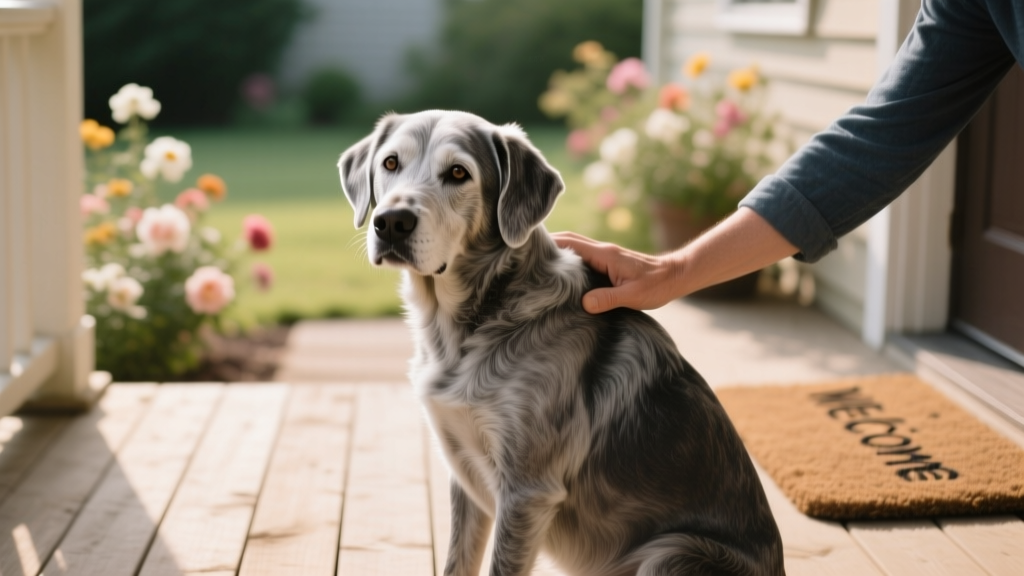
The Bridget Shelter Dog Story: First-Year Dog Ownership...
Follow the Bridget shelter dog story as we break down real first-year dog ownership costs, from adoption fees to emergency funds, with 2026 pricing data.

When I first met Bridget at the county shelter, she was a scruffy 40-pound mixed breed curled up in the corner of kennel #17. Her intake notes read "owner surrender — financial hardship." That single line captures a reality I've seen play out hundreds of times: families who fall in love with a dog without fully understanding the financial commitment. Bridget's previous owners weren't careless — they were caught off guard by costs they never anticipated.
This is the Bridget shelter dog story reframed as a financial roadmap. Below, you'll find every dollar figure you need to plan responsibly for your first year of dog ownership, based on 2026 veterinary pricing, current product costs, and real data from shelters and clinics across the US.
The Real Price Tag: How Much Does a Dog Cost in the First Year?
The ASPCA estimates that first-year dog ownership costs range from approximately $1,500 to over $5,000 depending on breed size, location, and the services you choose. Bridget's first year with her new family landed at roughly $3,200 — solidly in the middle of that range for a medium-sized mixed breed in a mid-sized US city.
That number surprises most people. The adoption fee was only $175. The gap between that initial transaction and the true first-year total is where unprepared owners get into trouble.
| Cost Category | Low Estimate | Medium Estimate | High Estimate |
|---|---|---|---|
| Acquisition (adoption/purchase) | $50–$200 | $500–$1,500 | $2,000–$5,000+ |
| Initial veterinary setup | $200–$350 | $400–$700 | $700–$1,200 |
| Supplies & gear | $150–$250 | $300–$500 | $500–$1,000 |
| Food (12 months) | $240–$480 | $480–$840 | $840–$1,800 |
| Preventive medications | $180–$300 | $300–$500 | $500–$800 |
| Training | $0 (DIY) | $200–$500 | $500–$1,500 |
| Pet insurance (annual premium) | $360–$480 | $480–$720 | $720–$1,200 |
| Licensing & microchip | $20–$50 | $50–$80 | $80–$120 |
| Grooming | $0 (home) | $300–$600 | $600–$1,500 |
| Emergency/urgent care reserve | $0 | $300–$800 | $800–$3,000+ |
| Total First Year | $1,200–$2,310 | $3,010–$5,820 | $7,240–$16,120+ |
Initial Costs Breakdown: What You Pay Before Bringing Your Dog Home
Bridget's adoption fee of $175 covered her spay surgery, DHPP and rabies vaccines, a microchip, and a basic health exam — a package that would cost $600–$900 if purchased separately at a private veterinary clinic. This is one of the genuine financial advantages of shelter adoption.
Adoption vs. Purchase Pricing
Shelter adoption fees in 2026 typically range from $50 to $350 for adult dogs and $150 to $500 for puppies. These fees almost always include spay/neuter, initial vaccines, microchip, and sometimes a starter bag of food. Responsible breeders, by contrast, price puppies between $1,200 and $4,000 for most AKC-recognized breeds, with popular breeds like French Bulldogs and Cavalier King Charles Spaniels commanding $3,000–$6,000. Those breeder prices rarely include spay/neuter, meaning you'll add $300–$800 for that procedure later.
The Initial Veterinary Visit
Even if your shelter dog arrives with vaccines and a microchip, budget $150–$350 for a comprehensive first exam. This should include:
- Full physical examination ($60–$120 exam fee)
- Fecal parasite panel ($35–$65) — shelter dogs frequently carry giardia, coccidia, or roundworms
- Heartworm antigen test ($35–$55) — essential if the dog's preventive history is unknown
- Baseline bloodwork for dogs over age 5 ($120–$200)
- Any booster vaccines not covered by the shelter ($25–$45 per vaccine)
Essential Supplies: The Real Starter Kit
New owners often underestimate supply costs. Here's what Bridget's family actually spent on day-one essentials:
- Crate (wire, 36-inch): $55–$90 (MidWest iCrate or Frisco brand)
- Stainless steel food and water bowls (set): $15–$30
- Flat buckle collar + 6-foot nylon leash: $20–$40
- Front-clip harness (for loose-leash training): $25–$50 (Rabbitgoo or Kurgo Tru-Fit)
- Bed (chew-resistant): $30–$70
- Poop bags (bulk, 6-month supply): $15–$25
- Enzymatic cleaner (Nature's Miracle, 32 oz): $12–$18
- Chew toys (Kong Classic, Benebone, bully sticks): $30–$60
- Grooming basics (brush, nail clippers, shampoo): $25–$55
- Total starter supplies: $227–$438
The mistake I see repeatedly: buying cheap gear and replacing it within months. A $25 harness that frays and a $15 bed that gets destroyed cost more long-term than investing in quality items upfront.
Ongoing Monthly Costs: What Your Budget Needs Every 30 Days
After the initial setup, Bridget's monthly carrying cost settled at approximately $210–$340. Here's how that breaks down for a medium-sized dog in 2026:
| Expense | Monthly Cost | Notes |
|---|---|---|
| Food (quality kibble) | $40–$70 | Based on 3–4 cups/day; brands like Purina Pro Plan, Taste of the Wild |
| Treats & chews | $15–$30 | Training treats, dental chews, long-lasting chews |
| Heartworm/flea/tick preventive | $15–$45 | Simparica Trio, Interceptor Plus, or equivalent; varies by weight |
| Pet insurance premium | $30–$60 | Accident + illness plan; varies by breed, age, deductible |
| Grooming | $0–$50 | $0 for short-coat breeds; $50+ for professional grooming of long/double coats |
| Toy rotation & replacements | $10–$20 | Dogs destroy toys; budget for monthly replacement |
| Poop bags, cleaning supplies | $5–$10 | Ongoing consumables |
| Monthly Total | $115–$285 | Excludes dog walking, daycare, boarding |
Size Matters: Breed-Size Cost Variations
This is where generic budget guides fail. A 7-pound Chihuahua and a 150-pound Great Dane have dramatically different ongoing costs, and the difference isn't just food.
| Expense Category | Toy (under 15 lb) | Medium (30–60 lb) | Giant (over 100 lb) |
|---|---|---|---|
| Food (annual) | $200–$360 | $480–$840 | $900–$1,800 |
| Preventive medications | $180–$300 | $240–$420 | $360–$600 |
| Spay/neuter surgery | $250–$450 | $350–$650 | $500–$900 |
| Medication (antibiotics, pain meds — per course) | $20–$60 | $40–$120 | $60–$200 |
| Boarding (per night) | $35–$55 | $45–$75 | $55–$95 |
| Crate, bed, harness sizes | Lower (small sizes cheaper) | Moderate | Higher (XL/XXL premium pricing) |
Veterinary drug dosages are weight-based (mg/kg), which means every prescription costs more for larger dogs. A course of carprofen (generic Rimadyl) for post-surgical pain might cost $25 for a Chihuahua but $85 for a Mastiff. Preventive medications like Simparica Trio are tiered by weight class, with the largest-dog tier costing 2–3x the smallest.
Annual Costs: The Yearly Recurring Expenses
Beyond monthly costs, several expenses hit once or twice a year. Bridget's family tracked these annual line items:
- Annual wellness exam: $60–$120 (exam fee only)
- Vaccine boosters: $50–$150 depending on which vaccines your vet recommends (rabies is legally required in most states; bordetella and leptospirosis depend on lifestyle)
- Heartworm test (annual): $35–$55
- Dog license: $10–$30 (required in most US municipalities; often discounted for spayed/neutered dogs)
- Professional training (group classes): $150–$350 for a 6–8 week course; private sessions run $75–$150/hour
- Boarding/pet sitting: $400–$1,200 annually for typical vacation schedules (2–3 trips, 4–7 days each)
Training deserves special attention. Bridget came from the shelter with leash reactivity — she barked and lunged at other dogs on walks. Her family invested in a 6-week positive reinforcement group class ($220) and three private sessions with a certified trainer ($375 total). That $595 investment prevented what could have become a lifelong behavioral problem and potential liability.
The Emergency Fund: What Happens When Something Goes Wrong
Six months after adoption, Bridget swallowed a sock. The emergency vet visit, abdominal X-rays, and endoscopic retrieval cost $2,400. Her family had an emergency fund. Many families don't.
Common Emergency Costs (2026 Pricing)
| Emergency Scenario | Estimated Cost Range | Timeframe |
|---|---|---|
| Foreign body ingestion (endoscopic removal) | $1,500–$3,500 | Same-day |
| Foreign body (surgical removal) | $3,000–$7,000 | Same-day |
| GDV/bloat surgery | $4,000–$10,000 | Immediate — life-threatening |
| Hit-by-car trauma (stabilization + surgery) | $3,000–$8,000+ | Immediate |
| Toxin ingestion (treatment + monitoring) | $1,000–$4,000 | Same-day; call ASPCA Poison Control: (888) 426-4435 |
| Emergency exam fee alone | $100–$250 | Before any diagnostics |
| Seizure workup (bloodwork, neurology consult) | $800–$2,500 | 1–3 days |
According to AVMA data on pet care costs, approximately 1 in 3 dogs will require emergency veterinary care in a given year. The median emergency bill falls between $800 and $1,500, but complex cases involving surgery or overnight hospitalization routinely exceed $5,000.
Pet Insurance Analysis: Is It Worth the Premium?
This is the question I get asked most often, and the honest answer is: it depends on your risk tolerance and financial cushion. Here's how the math works in 2026.
| Provider | Monthly Premium (Medium Dog, Mixed Breed, Age 2) | Annual Deductible | Reimbursement Rate | Annual Max Payout |
|---|---|---|---|---|
| Trupanion | $55–$85 | $250–$1,000 | 90% | Unlimited |
| Healthy Paws | $40–$65 | $250–$500 | 70–90% | Unlimited |
| Lemonade | $30–$55 | $100–$500 | 70–90% | $5,000–$100,000 |
| Fetch (formerly Petplan) | $45–$75 | $250–$1,000 | 70–90% | $10,000–unlimited |
| Embrace | $35–$60 | $200–$1,000 | 70–90% | $5,000–$30,000 |
When insurance pays for itself: If your dog develops a chronic condition (allergies requiring ongoing Apoquel at $60–$90/month, hip dysplasia surgery at $3,500–$7,000 per hip, or cancer treatment at $5,000–$15,000), insurance premiums of $500–$700/year look like a bargain. Bridget's sock incident would have been reimbursed at roughly $2,160 on a 90% plan with a $250 deductible.
When it doesn't: If your dog stays healthy and you maintain a solid emergency fund, you'll pay $5,000–$8,000 in premiums over a 10-year lifespan with nothing to show for it. Pre-existing conditions are universally excluded, so insurance only works if you enroll early — ideally before your dog's first birthday.
My practical recommendation: Enroll in a high-deductible, high-reimbursement plan (e.g., $500 deductible, 90% reimbursement) while your dog is young and healthy. This keeps premiums lower ($30–$45/month) while protecting against catastrophic costs. Pair it with a $2,000 emergency savings account for the deductible and non-covered expenses.
Hidden Costs That Catch New Owners Off Guard
Bridget's family budgeted carefully for the obvious expenses. What they didn't anticipate were these budget-breakers that I see trip up new owners constantly:
Services You Didn't Know You'd Need
- Dog walking: $15–$30 per walk; if you work long hours, budget $200–$500/month
- Doggy daycare: $25–$50/day; 2–3 days/week adds $250–$600/month
- Professional grooming (if needed): $50–$100 per session every 6–8 weeks for breeds like Poodles, Shih Tzus, and Doodles — that's $400–$800/year
- Behaviorist consultation: $150–$300 per session for issues like separation anxiety or resource guarding that group classes can't address
Home and Property Costs
- Chewed furniture, shoes, electronics: Bridget destroyed a $180 pair of headphones and a $60 dog bed in her first month. Budget $100–$300 in first-year replacement costs for damaged items.
- Fencing: If your yard isn't securely fenced, installation runs $1,500–$5,000 for a typical suburban lot. Even a single missing fence panel can mean a lost dog and an emergency shelter reclaim fee.
- Pet deposits and rent premiums: Rental properties charge $200–$500 in non-refundable pet deposits plus $25–$75/month in pet rent. Over a 12-month lease, that's $500–$1,400 in housing-related pet costs.
- Carpet cleaning and damage: Professional cleaning after house-training accidents: $150–$300 per room.
Replacement Supplies
Leashes fray. Beds get chewed. Bowls crack. Harnesses wear out. Budget $100–$200/year for gear replacement — more if you have a destructive chewer.
Money-Saving Strategies Without Compromising Care
Cutting corners on veterinary care or nutrition will cost you more in the long run. But there are legitimate ways to reduce expenses without risking your dog's health:
- Buy preventive medications from verified online pharmacies (Chewy, 1-800-PetMeds) — typically 15–30% cheaper than clinic markup. Ensure the pharmacy is FDA-verified.
- Use low-cost vaccine clinics offered by shelters, Tractor Supply, and mobile vet services for annual boosters — saves $50–$100/year versus clinic pricing.
- Buy food in bulk (30 lb bags versus 5 lb bags) and store in airtight containers. Subscribe-and-save programs on Chewy or Amazon save 5–10%.
- Learn basic grooming maintenance — nail trimming, ear cleaning, and brushing at home reduces professional grooming frequency.
- Invest in quality gear once. A $60 Kurgo Tru-Fit harness lasts years; a $15 generic harness lasts weeks.
- Ask your vet about generic medications. Generic carprofen, cephalexin, and trazodone cost 40–60% less than name brands.
- Consider pet-sitting exchanges with trusted dog-owning friends instead of boarding — saves $400–$800/year.
What not to cut: preventive medications (heartworm treatment costs $1,000–$3,000 versus $60–$150/year in prevention), quality food (cheap fillers lead to skin issues, GI problems, and obesity), and positive reinforcement training (behavioral euthanasia is a leading cause of death in dogs under age 3).
Regional Cost Variations: Where You Live Changes Everything
Bridget's story unfolded in a mid-sized Midwestern city, where veterinary costs sit near the national median. Had she been adopted in Manhattan or San Francisco, her family's first-year costs would have been 40–70% higher.
- Urban (NYC, SF, LA, Boston): Vet exam fees $100–$200; boarding $60–$100/night; dog walking $20–$35/walk; pet rent $50–$100/month. First-year total for a medium dog: $4,500–$8,000+.
- Suburban (most US metro suburbs): Near national median. First-year total: $2,800–$5,000.
- Rural (small towns, agricultural areas): Lower vet fees ($40–$80 exams), but fewer specialty/emergency options — you may drive 1–2 hours for emergency care, adding transport time and cost. First-year total: $2,000–$4,000.
International comparison: Dog ownership costs in the UK are roughly comparable to US suburban pricing, while Canada runs 10–20% higher due to medication pricing. Australia is 15–30% higher due to import costs on food and medications.
Which Dog Breeds Cost the Most and Least to Own?
If budget is a primary concern, breed selection matters enormously — not just in purchase price, but in lifetime healthcare costs.
Least Expensive Breeds to Own
- Mixed-breed shelter dogs (medium-sized): Low acquisition cost, hybrid vigor reduces breed-specific disease risk. Annual health costs often stay under $500–$800 with good preventive care.
- Greyhounds (retired racers): Adoption fees $200–$400; generally healthy with low grooming needs. Prone to dental disease and osteosarcoma later in life.
- Beagles: Hardy, low grooming needs, moderate food costs. Watch for ear infections ($80–$150 per episode) and obesity.
Most Expensive Breeds to Own
- French Bulldogs: Purchase $3,000–$6,000; brachycephalic obstructive airway syndrome (BOAS) surgery $3,000–$8,000; chronic skin/allergy management $500–$1,500/year; high pet insurance premiums due to breed risk.
- Great Danes: Purchase $1,500–$3,000; food $1,200–$1,800/year; cardiac screening and cardiomyopathy treatment $2,000–$8,000; lifespan only 7–10 years.
- Bernese Mountain Dogs: Purchase $2,000–$4,000; high cancer predisposition (histiocytic sarcoma treatment $5,000–$15,000); hip dysplasia surgery $3,500–$7,000 per hip; lifespan 6–8 years.
Consult your veterinarian about breed-specific health screening when selecting a dog. Responsible breeders should provide OFA (Orthopedic Foundation for Animals) certifications and genetic health test results.
Frequently Asked Questions
How much does it cost to own a dog over its lifetime?
The AKC estimates lifetime dog ownership costs between $15,000 and $90,000 depending on breed, size, and health. A healthy medium-sized mixed breed living 12–14 years typically costs $25,000–$40,000 total. Giant breeds with shorter lifespans and higher medical costs can reach $50,000–$70,000 despite fewer years.
How much should I budget for dog emergencies?
Maintain $1,000–$3,000 in a dedicated savings account at all times. If you carry pet insurance with a $250–$500 deductible, $1,000 is usually sufficient for your out-of-pocket share of most emergencies. Without insurance, aim for $3,000–$5,000.
Is pet insurance worth it for a shelter dog?
Yes, if you enroll within the first few weeks of adoption before any conditions are documented in your dog's medical record. Shelter dogs may have unknown genetic backgrounds, making insurance a reasonable hedge. The key is enrolling before your vet documents any symptoms — once something is in the medical record, it's considered pre-existing and won't be covered.
What are the most commonly overlooked costs of dog ownership?
Dog walking and daycare (if you work away from home), pet rent and deposits for renters, emergency boarding when you travel unexpectedly, dental cleanings ($300–$800 under anesthesia every 1–3 years), and the replacement cycle for chewed or worn-out gear.
Can I reduce costs by skipping annual vet visits?
No. Annual wellness exams catch conditions like kidney disease, dental infections, and heart murmurs at early, treatable stages. A $90 exam fee can prevent a $3,000 emergency later. The AVMA recommends annual wellness exams as a baseline, with semi-annual visits for dogs over age 7.
Bridget is thriving today. Her family budgeted honestly, enrolled her in insurance during that first month, and built an emergency fund before they needed it. The shelter dog story doesn't have to end in another surrender due to financial shock — it just requires doing the math before you sign the adoption papers.
Aaron Whyte
All our authors care for dogs every day — read more of their work on the authors page.