Alaskan Eskimo Dog Price & First-Year Ownership Cost Guide
Discover the true Alaskan Eskimo dog price plus full first-year ownership costs. Breakdowns for food, vet care, insurance, and hidden expenses in 2026.

What Is the Real Alaskan Eskimo Dog Price in 2026?
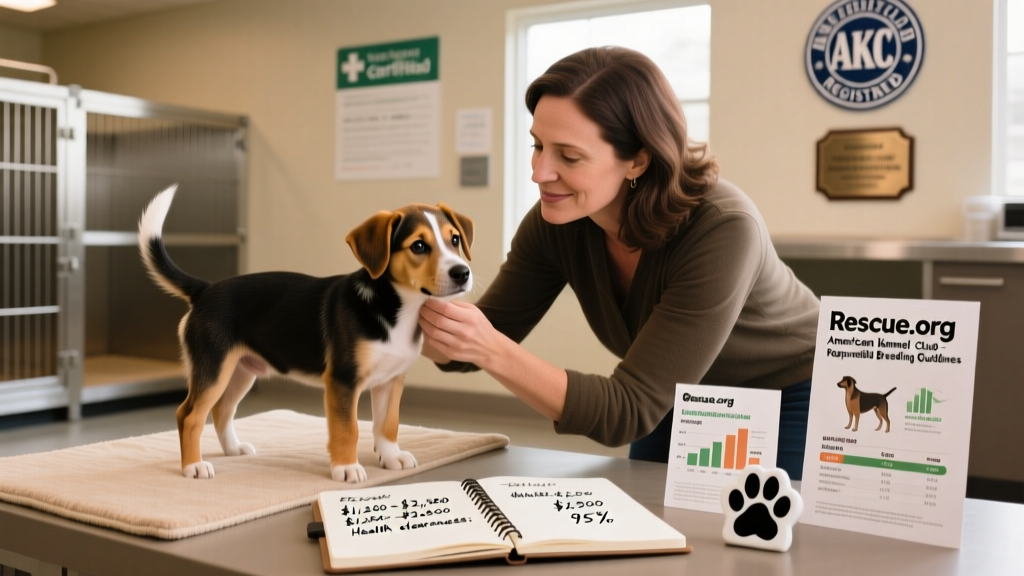
If you've been researching the Alaskan Eskimo dog price, you've likely noticed a frustrating pattern: breeders rarely list costs upfront, and the purchase price is only the beginning. The American Eskimo Dog (the AKC-recognized breed often colloquially called the "Alaskan Eskimo Dog") typically costs between $1,000 and $3,500 from a reputable breeder, with show-line puppies commanding $4,000 or more. Rescue organizations may place Eskies for $200–$600, though availability is limited.
But here's what most cost guides miss: the purchase price represents roughly 20–30% of your actual first-year spending. Between veterinary setup, supplies, preventive care, and the surprises nobody warns you about, first-year ownership of a medium-sized breed like the American Eskimo Dog (15–35 lb / 7–16 kg depending on size variety) typically runs $3,200–$7,800. Let's break that down with real numbers.
Initial Costs: Beyond the Purchase Price
Before your Eskie even steps through your front door, you'll face a stack of startup expenses. Here's what new owners actually spend in the first 30 days:
| Expense | Low Estimate | Medium Estimate | High Estimate | Notes |
|---|---|---|---|---|
| Purchase price (breeder) | $1,000 | $2,200 | $4,500 | AKC-registered, health-tested parents |
| Adoption fee (rescue) | $200 | $400 | $600 | Often includes spay/neuter + vaccines |
| Spay/neuter | $250 | $500 | $800 | Varies by clinic and dog size |
| Initial vet exam | $65 | $120 | $200 | Comprehensive physical + fecal test |
| Core vaccine series (DHPP, rabies) | $120 | $200 | $350 | Puppies need 3 rounds, 3-4 weeks apart |
| Non-core vaccines (bordetella, leptospirosis) | $40 | $90 | $150 | Recommended if socializing or boarding |
| Microchip + registration | $35 | $50 | $75 | Often included with adoption |
| Crate (wire or plastic, medium) | $45 | $80 | $150 | MidWest iCrate or Ruff Land Performance |
| Collar, leash, ID tags | $25 | $55 | $100 | 6-ft leash recommended for training |
| Food and water bowls | $15 | $30 | $60 | Stainless steel or ceramic preferred |
| Bed | $30 | $60 | $120 | Eskies love to burrow — consider a bolster bed |
| Grooming supplies (brush, comb, nail clippers) | $25 | $50 | $90 | Undercoat rake essential for double coat |
| Puppy-proofing supplies | $20 | $50 | $100 | Baby gates, cord protectors, bitter spray |
| Toys (chew, puzzle, plush) | $30 | $60 | $120 | Kong Classic + West Paw Toppl are durable picks |
Initial cost range: $1,940–$3,495 (adoption route) or $2,740–$7,865 (breeder route) depending on choices above.
Monthly Costs: Your Recurring Budget
The American Eskimo Dog is a small-to-medium breed, which keeps food costs moderate compared to larger breeds. But their luxurious double coat and active temperament create recurring expenses that surprise many first-time owners.
| Category | Low | Medium | High | Details |
|---|---|---|---|---|
| Food (quality kibble or balanced diet) | $35 | $60 | $110 | 1–1.5 cups/day for 20-30 lb dog; AAFCO complete & balanced |
| Treats | $10 | $20 | $40 | Training treats + dental chews |
| Flea/tick prevention | $15 | $25 | $45 | NexGard, Simparica Trio, or Bravecto (prescription) |
| Heartworm prevention | $8 | $15 | $25 | Heartgard Plus or Interceptor Plus |
| Pet insurance | $30 | $50 | $85 | Accident + illness plan; varies by deductible |
| Grooming (professional) | $0 | $40 | $80 | Eskies don't need haircuts, but some owners pay for bath/blowout |
| Dog walking / daycare | $0 | $80 | $300 | Only if you work long hours |
| Toys / enrichment replacement | $10 | $20 | $40 | Eskies are intelligent — puzzle toys wear out |
Monthly range: $108–$340 without daycare, or $108–$640 with regular dog walking/daycare services.
Annual Expenses: The Costs That Sneak Up on You
Beyond monthly recurring costs, several expenses hit once or twice a year. These are the line items most first-year budgets forget:
- Annual vet checkup + bloodwork: $150–$350 (senior dogs need more extensive panels)
- Vaccine boosters: $40–$120/year (rabies every 1-3 years depending on local law; DHPP every 1-3 years)
- Dog license: $10–$50/year (required in most US jurisdictions; often discounted for spayed/neutered dogs)
- Training classes: $150–$400 for a 6-8 week group course (essential for Eskies — they're smart and will train you if you don't establish structure). Private sessions run $75–$150/hour.
- Boarding / pet sitting: $40–$85/night for kennel boarding, $50–$100/night for in-home pet sitting. Budget $200–$600/year if you travel 1-2 times.
- Dental cleaning (professional): $300–$800 (typically needed every 1-3 years; small breeds are prone to dental disease)
First-Year Cost Summary: The Complete Picture
Combining initial setup, monthly costs, and annual expenses, here's what your first year with an American Eskimo Dog actually costs:
| Category | Low Estimate | Medium Estimate | High Estimate |
|---|---|---|---|
| Dog acquisition (breeder) | $1,000 | $2,200 | $4,500 |
| Initial vet + vaccines + microchip | $260 | $460 | $775 |
| Spay/neuter | $250 | $500 | $800 |
| Supplies (crate, bed, bowls, gear) | $170 | $325 | $640 |
| Food + treats (12 months) | $540 | $960 | $1,800 |
| Preventive medications (12 months) | $276 | $480 | $840 |
| Pet insurance (12 months) | $360 | $600 | $1,020 |
| Grooming (professional, 12 months) | $0 | $480 | $960 |
| Training classes | $0 | $250 | $600 |
| License + annual vet | $160 | $270 | $470 |
| Boarding / pet sitting | $0 | $300 | $600 |
| Emergency fund contribution | $500 | $1,000 | $2,000 |
| TOTAL (breeder route) | $3,516 | $7,825 | $15,005 |
| TOTAL (adoption route) | $2,716 | $6,025 | $11,105 |
The ASPCA's financial planning guide recommends budgeting toward the medium-to-high end for your first year, as puppies invariably generate unexpected costs — from ruined shoes to emergency vet visits for swallowed objects.
Hidden Costs New Owners Consistently Miss
After years of helping dog owners plan their budgets, I've noticed the same five expenses catch people off guard every time:
1. Property Damage and Replacement
Puppies chew. Eskie puppies, with their high intelligence and energy, chew strategically. Budget $100–$500 in the first year for replaced items: shoes, cords, furniture legs, baseboards. One owner I worked with lost a $200 area rug in the first week.
2. Emergency Vet Visits
Puppies eat things they shouldn't. A single emergency visit for foreign body ingestion can cost $500–$2,000 for diagnostics (X-rays, ultrasound) or $3,000–$7,000 if surgery is needed. According to AVMA data on pet ownership costs, roughly 1 in 3 dogs will need emergency veterinary care in their lifetime.
3. Increased Home Insurance or Renters Adjustments
Some insurers adjust premiums when you add a dog, particularly breeds on restricted lists. While American Eskimo Dogs are rarely restricted, it's worth checking your policy. Renters may face pet deposits of $200–$500 and monthly pet rent of $25–$75.
4. Seasonal Gear
Despite their fluffy coat, Eskies in warm climates need cooling mats ($20–$50), and those in rainy regions need raincoats ($25–$60) and paw wax ($12–$25) for winter salt protection. These small purchases add up.
5. Dog Walker or Daycare When Life Changes
You may not need a dog walker now, but a new job, illness, or schedule change can make one essential overnight. Rover and Wag sitters charge $15–$30 per 30-minute walk; daycare runs $25–$55/day.
Breed Size Matters: How Your Dog's Weight Affects Every Cost
The American Eskimo Dog comes in three sizes — Toy (6–10 lb / 3–5 kg), Miniature (10–20 lb / 5–9 kg), and Standard (25–35 lb / 11–16 kg). Your choice directly impacts recurring costs:
| Expense Category | Toy (6-10 lb) | Miniature (10-20 lb) | Standard (25-35 lb) |
|---|---|---|---|
| Monthly food | $20–$35 | $35–$55 | $55–$90 |
| Spay/neuter | $200–$400 | $300–$550 | $400–$700 |
| Preventive medications | $12–$20/month | $18–$30/month | $25–$45/month |
| Crate size | Small ($35–$55) | Medium ($45–$80) | Large ($60–$120) |
| Boarding rate | $35–$55/night | $40–$65/night | $50–$85/night |
| Dental cleaning | $300–$600 | $350–$700 | $400–$800 |
For comparison, if you were looking at a giant breed like a Great Dane (120–175 lb), you'd multiply food costs by 4–5x and medication costs by 3–4x. The Eskie's moderate size is genuinely budget-friendly in this regard. Giant breeds can push first-year costs above $8,000–$12,000 easily, while toy breeds can sometimes stay under $3,000 if no complications arise.
Pet Insurance Analysis: Is It Worth It for an Eskie?
American Eskimo Dogs are generally healthy, but they carry breed-specific risks that make insurance worth serious consideration: hip dysplasia, progressive retinal atrophy (PRA), and patellar luxation are documented concerns. Treatment for hip dysplasia surgery alone runs $3,500–$7,000 per hip.
| Provider | Monthly Premium (Medium Dog) | Deductible Options | Reimbursement | Annual Payout Cap | Wellness Add-On |
|---|---|---|---|---|---|
| Trupanion | $55–$95 | $0–$1,000 | 90% | Unlimited | No (separate product) |
| Healthy Paws | $40–$75 | $100–$500 | 70–90% | Unlimited | No |
| Lemonade | $30–$65 | $100–$500 | 70–90% | $5,000–Unlimited | Yes ($15–$25/month) |
| Figo | $35–$70 | $100–$750 | 70–100% | $5,000–Unlimited | Yes |
| Embrace | $40–$80 | $200–$1,000 | 70–90% | $5,000–$30,000 | Yes ($18–$30/month) |
The math on insurance: If you pay $50/month ($600/year) for 10 years, you'll spend $6,000 in premiums. A single emergency surgery ($5,000) or chronic condition diagnosis (cancer treatment: $5,000–$15,000) would have made it worthwhile. If your Eskie stays healthy, you've paid for peace of mind.
My recommendation: Enroll your Eskie as a puppy before any conditions are documented as pre-existing. Most insurers won't cover conditions that appeared before enrollment. A $250 annual deductible with 90% reimbursement at $45–$55/month is the sweet spot for most Eskie owners.
Building Your Emergency Fund: How Much Is Enough?
Even with insurance, you'll face upfront costs before reimbursement kicks in (most plans require you to pay the vet, then file a claim). Here's what common emergencies actually cost:
- Toxic ingestion treatment: $500–$3,000
- Foreign body surgery (swallowed toy, sock): $3,000–$7,000
- Bloat/GDV emergency surgery: $5,000–$10,000+
- Hit-by-car trauma: $2,000–$8,000
- Severe allergic reaction: $300–$1,500
- Emergency dental extraction: $500–$2,000
Recommended emergency fund: $1,500–$3,000 set aside in a separate savings account. If you have pet insurance, $1,000 is usually sufficient to cover deductibles and co-pays while waiting for reimbursement.
For toxic ingestion emergencies, contact the ASPCA Animal Poison Control Center at (888) 426-4435 (24/7, consultation fee applies) immediately — they can advise your vet on treatment protocols and may prevent an unnecessary ER visit.
Regional Cost Variations: Where You Live Changes Everything
Dog ownership costs vary dramatically by location. Here's how the same Eskie budget shifts across different US regions:
- Major metros (NYC, San Francisco, Seattle): Add 30–50% to veterinary costs, 40–80% to boarding/daycare, and expect pet rent of $50–$100/month. Vet exams run $120–$250. Dog walkers charge $25–$40 per walk.
- Mid-tier cities (Austin, Denver, Charlotte): Costs align with the medium estimates in this guide. Competitive vet market keeps prices moderate.
- Rural areas (Midwest, rural South): Veterinary costs can be 20–35% lower, but emergency/specialty care may require driving 1-2 hours, adding stress and transport costs. Boarding options are limited.
- International (UK, Canada, Australia): Purchase prices are often higher (CAD $2,500–$5,000 in Canada, £1,500–£3,000 in UK), but universal healthcare systems don't extend to pets. Insurance penetration is higher in the UK (estimated 25–30% of dogs insured vs. ~4% in the US).
Money-Saving Strategies That Don't Compromise Care
Cutting corners on veterinary care or nutrition will cost you more in the long run. But these strategies genuinely reduce expenses without risking your Eskie's health:
- Buy supplies in the off-season. Crates, beds, and gear go on sale during Black Friday, Prime Day, and post-holiday clearances. A $120 crate often drops to $65–$80.
- Use Chewy Autosave or Amazon Subscribe & Save for food and preventives — typically 5–10% discount per shipment.
- Learn home grooming basics. An undercoat rake ($15–$25), slicker brush ($12–$20), and high-velocity dryer ($80–$150) pay for themselves within 3-4 professional grooming sessions. Eskies don't need haircuts — they need thorough brushing and occasional blowouts.
- Consider low-cost vaccine clinics for boosters after the initial puppy series. Many shelters and pet stores host monthly clinics where rabies and DHPP boosters cost $15–$25 each vs. $35–$60 at a private practice.
- DIY enrichment. Frozen Kongs, snuffle mats (make one from a rubber sink mat and fleece strips), and training sessions cost nothing but time. Eskies need mental stimulation more than expensive gadgets.
- Ask about multi-pet discounts on insurance — many providers offer 5–10% off for each additional pet.
- Use veterinary schools for complex diagnostics. University teaching hospitals often charge 20–40% less for imaging and lab work, though wait times may be longer.
Which Dog Breeds Cost the Most and Least to Own?
For context on where the American Eskimo Dog falls in the broader cost landscape:
Highest-cost breeds to own (first year):
- English Bulldog: $5,500–$12,000+ (high purchase price + chronic health issues + C-section births drive up breeder costs)
- Great Dane: $4,000–$9,000 (massive food bills, giant-breed medication dosing, shorter lifespan means faster senior care)
- Cavalier King Charles Spaniel: $4,500–$10,000 (high demand, mitral valve disease screening, frequent cardiac care)
Lowest-cost breeds to own (first year):
- Mixed-breed / shelter dog: $1,800–$4,500 (lower acquisition cost, potential hybrid vigor reducing health expenses)
- Chihuahua: $2,200–$5,000 (tiny food bills, small medication doses, generally long-lived)
- Beagle: $2,500–$5,500 (moderate size, generally robust health, widely available in rescue)
The American Eskimo Dog lands solidly in the moderate cost range — more expensive than a shelter mix but far less costly than brachycephalic or giant breeds. Their general hardiness, moderate size, and relatively low breed-specific health burden make them a reasonable choice for budget-conscious owners who want a purebred companion.
Frequently Asked Questions
How much does it cost to own a dog per year after the first year?
After the initial setup year, expect $1,800–$4,500 annually for an American Eskimo Dog. This covers food ($420–$1,080), preventives ($276–$540), insurance ($360–$1,020), annual vet visits ($150–$350), grooming ($0–$960), and miscellaneous expenses. Costs rise as dogs age and need more frequent veterinary monitoring.
How much does a dog cost in the first year?
First-year dog ownership costs range from $2,500–$15,000 depending on breed, acquisition method, location, and whether complications arise. For the American Eskimo Dog specifically, budget $3,500–$8,000 for a realistic first year that includes an emergency fund contribution.
Is pet insurance worth it for an American Eskimo Dog?
Yes, if you enroll early. Eskies are prone to hip dysplasia, patellar luxation, and eye conditions — all of which can generate $2,000–$7,000+ bills. Insurance at $45–$55/month with a $250 deductible provides strong financial protection. The key is enrolling before any symptoms appear, as pre-existing conditions are universally excluded.
How much should I budget for dog emergencies?
Keep $1,500–$3,000 in a dedicated emergency fund. If you carry pet insurance, $1,000 is usually adequate since insurance reimburses 70–90% of covered expenses after your deductible. Without insurance, a single emergency surgery can exceed $7,000.
Can I feed my Eskie a homemade diet to save money?
Homemade diets are rarely cheaper than quality kibble once you account for protein, supplements, and veterinary nutritionist consultations ($150–$300) needed to ensure nutritional completeness. The Merck Veterinary Manual warns that improperly balanced homemade diets can cause serious nutritional deficiencies. If you want to explore homemade feeding, consult a board-certified veterinary nutritionist first.
Are American Eskimo Dogs expensive to groom?
Compared to breeds requiring regular haircuts (Poodles, Shih Tzus), no. Eskies have a self-maintaining double coat that doesn't mat easily with regular brushing. Professional bath-and-brush services run $50–$80 per session if desired, but many owners handle grooming entirely at home with a $40 tool investment. Never shave an Eskie — the double coat regulates temperature and shaving can cause permanent coat damage.
Always consult your veterinarian for personalized advice on your dog's health, nutrition, and preventive care needs. Costs mentioned in this guide are estimates based on 2026 US market averages and may vary by region, provider, and individual circumstances.
Priya Sutaria
All our authors care for dogs every day — read more of their work on the authors page.