Why Is My Dog Licking the Air? Science Behind the Behavior
Why is my dog licking the air? Explore the canine science behind air licking, from flehmen responses to nausea signals, and learn when to see a vet.
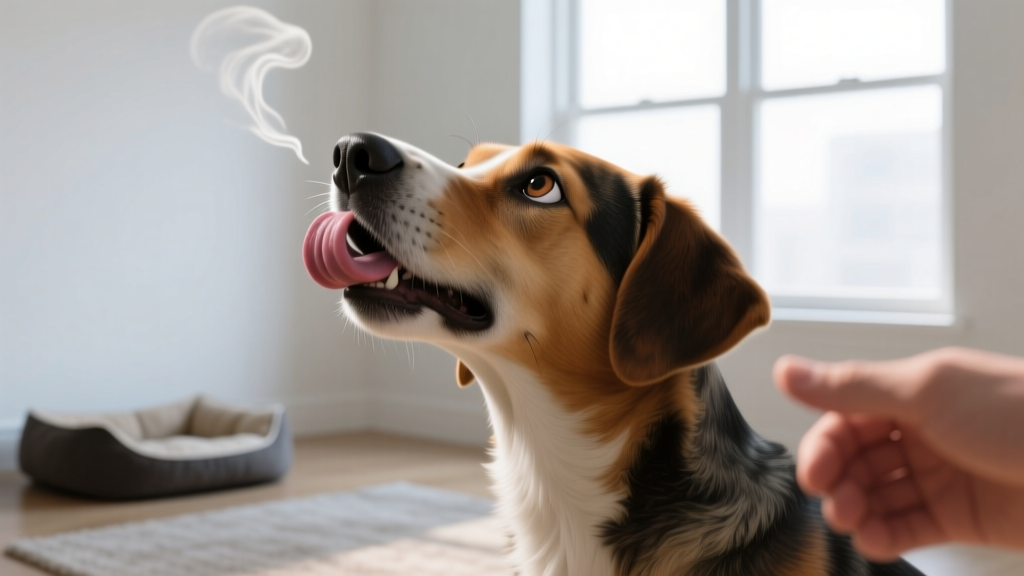
The Quick Answer: Why Dogs Lick the Air
Direct Answer: Dogs lick the air for several scientifically documented reasons — most commonly to enhance their sense of smell via the vomeronasal (Jacobson's) organ, to taste particles suspended in the air, or as a displacement/calming behavior rooted in ancestral wolf communication. However, persistent or repetitive air licking can also signal nausea, dental pain, gastrointestinal distress, or canine cognitive dysfunction. The context, frequency, and accompanying body language determine whether the behavior is normal exploration or a symptom requiring veterinary attention.
If you've watched your dog suddenly stop, lift their muzzle, and rhythmically flick their tongue at nothing visible, you've witnessed one of canine behavior's most misunderstood actions. Unlike licking a surface or a person — which has obvious targets — air licking looks purposeless to human observers. It isn't. Veterinary behaviorists and ethologists have identified at least seven distinct triggers for this behavior, ranging from benign sensory processing to medical conditions that need intervention.
Understanding which category your dog's air licking falls into requires looking at the evolutionary, neurological, and physiological mechanisms at play. Let's break down the science.
The Science of Air Licking: Sensory Processing and the Vomeronasal Organ
How Dogs Process Airborne Chemical Signals
Dogs possess approximately 300 million olfactory receptors (compared to roughly 6 million in humans), and a dedicated secondary olfactory system called the vomeronasal organ (VNO), also known as Jacobson's organ. This paired structure sits in the roof of the mouth, between the hard palate and the nasal cavity, and connects to the accessory olfactory bulb in the brain.
When a dog licks the air, they are often performing a behavior that transfers airborne chemical particles — pheromones, volatile organic compounds, and trace scent molecules — to the VNO. The tongue acts as a physical transfer mechanism, collecting particles from the air and depositing them on the incisive papilla (a small bump behind the upper front teeth), where ducts lead directly into the VNO.
Research published in Applied Animal Behaviour Science has documented that dogs increase tongue-flicking and air-licking frequency when exposed to novel olfactory stimuli, particularly social odors from other dogs or unfamiliar environments. This is not random — it's a deliberate chemosensory sampling strategy.
The VNO is especially sensitive to:
- Pheromones from other dogs (estrus signals, territorial markers, stress hormones)
- Volatile food compounds — dogs can detect trace food odors at concentrations as low as parts per trillion
- Human emotional chemosignals — studies from the University of Naples (2018) demonstrated dogs can detect human fear and stress through airborne sweat compounds
How Is This Different from Humans?
Humans have a vestigial VNO that is non-functional in adults. We rely almost entirely on our main olfactory epithelium for smell and have no equivalent tongue-transfer mechanism. When your dog licks the air, they are engaging a sensory pathway that humans simply do not possess. This is why the behavior looks inexplicable — we literally cannot perceive what they're detecting.
Evolutionary Context: Why Ancestral Canids Developed This Trait
From Wolf to Dog: Air licking and the associated flehmen response (curling the upper lip to direct scent molecules into the VNO) are shared across canid species. In gray wolves (Canis lupus), this behavior serves critical survival and social functions:
- Territory assessment: Wolves sample air near boundary markings to detect intruders or rival pack members
- Reproductive signaling: Males detect female estrus pheromones at distances up to 2 miles under favorable wind conditions
- Prey detection: Airborne scent sampling helps locate prey herds beyond visual range
- Social hierarchy maintenance: Subordinate wolves lick the air and muzzle area near dominant pack members — a calming/appeasement gesture that reduces aggression
Domestic dogs retain all of these ancestral neural circuits. When your Golden Retriever licks the air after another dog passes your yard, they're running the same chemosensory analysis software their wolf ancestors used to assess territorial boundaries. When they lick the air while you're stressed, they may be detecting cortisol-related chemosignals — a trait that likely co-evolved with domestication over the past 15,000–30,000 years.
Physiological Mechanisms: What's Happening Inside Your Dog's Body
Understanding air licking requires looking at three overlapping physiological systems:
1. The Olfactory-Transfer Mechanism
The tongue extends, collects airborne particles on its moist surface, then retracts. Particles dissolve in saliva and contact the incisive papilla. From there, molecules travel through the nasopalatine ducts into the VNO, where specialized receptor neurons (expressing V1R and V2R gene families) transmit signals to the accessory olfactory bulb and then to the amygdala and hypothalamus — brain regions governing emotional and hormonal responses.
This entire cycle can occur in as little as 0.3–0.8 seconds per lick, and dogs may perform 5–15 rapid tongue flicks in a single sampling bout.
2. The Nausea-Response Pathway
Air licking is a well-documented prodromal nausea sign in dogs. When the chemoreceptor trigger zone (CTZ) in the brainstem detects emetogenic substances in the blood — toxins, metabolic imbalances, certain medications — it activates the vomiting center. Before actual vomiting occurs, dogs frequently exhibit:
- Excessive lip licking and air licking
- Hypersalivation (drooling)
- Repeated swallowing
- Restlessness or pacing
This is a physiological reflex, not a voluntary behavior. The licking stimulates saliva production, which may help buffer stomach acid in preparation for vomiting — a protective mechanism for the esophageal lining.
3. The Stress-Displacement Circuit
In canine ethology, air licking is classified as a calming signal (a term popularized by Norwegian dog trainer Turid Rugaas) or, more precisely in scientific literature, a displacement behavior. When a dog experiences conflicting motivations — for example, wanting to approach something but also feeling cautious — the brain resolves this conflict by triggering a seemingly out-of-context motor pattern. Licking releases endorphins and activates the parasympathetic nervous system, producing a genuine self-soothing effect.
What Does It Mean When My Dog Licks the Air? A Decision Framework
Not all air licking is the same. Use this diagnostic framework to categorize what you're observing:
| Context | Accompanying Signs | Likely Cause | Action |
|---|---|---|---|
| After encountering a new smell, dog, or person | Alert ears, sniffing, focused attention | VNO scent sampling (normal) | No action needed — let them process |
| During or after meals | Lip smacking, swallowing, possible retching | Nausea / GI upset / acid reflux | Monitor; see vet if persistent (>2 episodes/week) |
| In stressful situations (vet visits, thunderstorms, new environments) | Whale eye, lowered body, tucked tail, yawning | Displacement/calming behavior | Remove stressor or use counter-conditioning |
| Repetitive, rhythmic, no apparent trigger | Fixed gaze, unresponsive to interruption, occurs during rest | Compulsive disorder or partial seizure activity | Record video and consult veterinarian promptly |
| Older dog (8+ years), new onset | Confusion, disrupted sleep, house-soiling | Canine cognitive dysfunction (CCD) | Senior vet exam; discuss cognitive support options |
| After eating specific foods or treats | Pawing at mouth, drooling, head shaking | Dental pain, oral foreign body, food allergy | Check mouth; schedule dental exam |
Common Misconceptions About Air Licking
| Myth | Scientific Fact |
|---|---|
| "My dog is just being weird/random" | Air licking is a purposeful behavior with identifiable neurological and sensory drivers. It is never truly random. |
| "Dogs lick the air when they're hungry" | While hunger can increase general oral behaviors, air licking is more closely linked to olfactory sampling or nausea than to hunger signaling. |
| "It's just a habit — nothing to worry about" | Repetitive, triggerless air licking can indicate compulsive behavioral disorders, focal seizures (particularly in breeds predisposed to epilepsy), or chronic GI disease. Context matters enormously. |
| "My dog is tasting the food I'm eating" | While dogs can detect food volatiles in the air, the licking itself is a scent-transfer mechanism, not a taste response. They're gathering information, not savoring flavor. |
| "All dogs do this equally" | Breed variation is significant. Brachycephalic breeds (Pugs, Bulldogs) show different air-licking frequencies than dolichocephalic breeds (Greyhounds, Collies) due to anatomical differences in VNO access and oral structure. |
Breed Variations and Related Behaviors
Breeds With Higher Air-Licking Frequency
While any dog can exhibit air licking, certain breeds and breed groups show higher baseline frequencies:
- Scent hounds (Beagles, Basset Hounds, Bloodhounds): Bred for intensive olfactory work, these breeds have larger vomeronasal organs relative to skull size and show more frequent air-sampling behaviors.
- Herding breeds (Border Collies, Australian Shepherds): Higher rates of displacement behaviors under stress, including air licking, due to selection for environmental sensitivity.
- Brachycephalic breeds (French Bulldogs, Pugs): May show altered air-licking patterns due to brachycephalic obstructive airway syndrome (BOAS). The shortened maxilla changes the geometry of the incisive papilla and VNO ducts, sometimes making the behavior more pronounced or mechanically different.
Related Behaviors to Watch For
Air licking rarely occurs in isolation. Related canine behaviors that share similar neurological or sensory pathways include:
- Flehmen response: Upper lip curl with open mouth, often following air licking — direct VNO engagement
- Tongue flicking: Rapid, brief tongue extensions — often a calming signal or stress indicator
- Excessive licking of surfaces: Can indicate the same GI or behavioral drivers as air licking but with a physical target
- Chattering teeth: Often accompanies intense VNO sampling, especially in intact males detecting estrus pheromones
- Sneeze-signaling: A "play sneeze" that serves a similar communicative function to calming-signal air licking
When Air Licking Signals a Problem: Red Flags
Consult your veterinarian if your dog's air licking is accompanied by any of the following:
- Vomiting or regurgitation — especially if occurring more than twice in 24 hours
- Weight loss or appetite changes — unexplained weight loss of >5% body weight
- Behavioral changes — new confusion, disorientation, or disrupted sleep-wake cycles in senior dogs
- Repetitive episodes that cannot be interrupted — may indicate focal (partial) seizures, particularly if the dog appears "absent" or unresponsive during the episode
- Oral signs — blood in saliva, broken teeth, visible oral masses, or foul breath
- Onset after starting new medication — certain drugs (metronidazole, NSAIDs, some antibiotics) can cause nausea-driven air licking as a side effect
Record a 30-second video of the behavior to show your vet — this is often more diagnostically useful than a verbal description. Note the time of day, what happened immediately before, and how long the episode lasted.
Diagnostic Tests Your Vet May Recommend
If your veterinarian suspects an underlying medical cause, expect some combination of the following:
- Complete blood count (CBC) and chemistry panel ($150–$300): Screens for metabolic causes of nausea, liver/kidney dysfunction, and electrolyte imbalances
- Abdominal ultrasound ($350–$600): Evaluates GI motility, identifies foreign bodies, masses, or inflammatory bowel disease
- Dental examination under sedation ($200–$500): Rules out oral pain, periodontal disease, tooth root abscesses, or oral tumors
- Neurological evaluation / MRI ($1,500–$3,000+): If focal seizures or brain lesions are suspected, particularly in breeds predisposed to epilepsy (Belgian Tervuren, Labrador Retriever, German Shepherd)
- Canine Cognitive Dysfunction assessment: Typically a structured behavioral questionnaire combined with senior bloodwork; treatment may include selegiline (Anipryl®) at 0.5–1.0 mg/kg daily, as referenced in the Merck Veterinary Manual
Practical Takeaways for Dog Owners
What You Can Do Today
- Start a behavior log. For one week, note every air-licking episode: time, duration (use your phone timer), preceding events, and your dog's body language. Patterns emerge quickly — you may discover it only happens after walks past a specific neighbor's dog, or 30 minutes after eating a particular food.
- Test the interruption hypothesis. When your dog licks the air, calmly call their name or offer a low-value treat. If they stop immediately and engage with you normally, the behavior is likely voluntary (scent sampling or mild displacement). If they seem "stuck" and cannot redirect, this is a red flag for compulsive or neurological origin.
- Evaluate environmental stressors. Air licking as a calming signal often correlates with identifiable stress triggers. Common culprits: construction noise, new household members, changes in routine, or proximity to unfamiliar dogs. Use positive reinforcement and counter-conditioning to address identified stressors — never punishment, which increases displacement behaviors.
- Review diet and medications. If air licking clusters around mealtimes, consider a veterinary nutrition consultation. Acid reflux in dogs is often managed with famotidine (0.5 mg/kg twice daily, as directed by your vet) or a transition to smaller, more frequent meals. For dogs on chronic medications, ask your vet whether nausea is a known side effect.
- Schedule a dental exam. Oral pain is one of the most underdiagnosed causes of air licking in dogs over age 5. According to the AVMA, over 80% of dogs show signs of periodontal disease by age three. A professional dental cleaning ($300–$800 depending on your region and whether extractions are needed) can eliminate this cause entirely.
Frequently Asked Questions
Is air licking normal in dogs?
Yes — occasional air licking in response to novel smells, social stimuli, or mild stress is entirely normal and is documented across all canid species. It becomes concerning only when it is repetitive, cannot be interrupted, occurs without any identifiable trigger, or is accompanied by other clinical signs like vomiting, weight loss, or behavioral changes.
Can dogs actually taste things in the air?
Not exactly. Dogs are transferring airborne chemical particles to their vomeronasal organ for analysis, which is more accurately described as chemosensory sampling than tasting. However, because the VNO processes compounds that overlap with what we consider "taste" and "smell," the distinction is somewhat academic from the dog's perspective. Their experience is a unified chemical perception that has no direct human equivalent.
Why does my dog lick the air when I pet them?
Air licking during petting is typically a calming signal or appeasement gesture. In wolf social behavior, subordinate pack members lick the muzzle area of dominant members as a deference display. Your dog may be communicating that they recognize your social position, or they may be mildly overstimulated and using licking to self-regulate arousal. If the licking is accompanied by relaxed body posture and soft eyes, it's positive communication. If the dog is tense, looking away, or trying to move away, they may be signaling discomfort with the interaction.
My dog licks the air constantly — should I be worried?
Constant or near-constant air licking (multiple episodes per hour, occurring throughout the day) warrants a veterinary evaluation. The most common medical causes of chronic air licking are gastrointestinal disease (inflammatory bowel disease, food-responsive enteropathy, chronic gastritis), dental/oral pain, and compulsive behavioral disorders. Your vet will likely start with bloodwork and a thorough oral exam before moving to advanced imaging or behavioral referral.
How do dogs sense pheromones through air licking?
The tongue collects pheromone molecules from the air and deposits them on the incisive papilla behind the upper incisors. From there, the molecules travel through the nasopalatine ducts into the vomeronasal organ, where specialized receptor cells (expressing V1R and V2R gene families — dogs have at least 9 functional V1R genes) bind to specific pheromone compounds. Signals travel to the accessory olfactory bulb, then to the amygdala and hypothalamus, triggering emotional, hormonal, and behavioral responses — all within fractions of a second.
What's the difference between air licking and the flehmen response?
Air licking is the active collection phase — the tongue extends and retracts, gathering particles. The flehmen response is the processing phase — the dog curls the upper lip, closes the nostrils, and holds the head still while the VNO analyzes the collected compounds. You'll often see them in sequence: lick-lick-lick, then a freeze with the lip curled. Both are normal chemosensory behaviors.
Research References
- Horowitz, A. (2017). "Dog Sense: The Science Behind How Dogs Perceive the World." Basic Books.
- D'Aniello, B. et al. (2018). "Smelling your emotions: Dogs' behavioral and cardiac responses to human emotional odors." University of Naples Federico II.
- Overall, K.L. (2013). Clinical Behavioral Medicine for Small Animals. Elsevier — Chapter 9: Repetitive and Compulsive Behaviors in Dogs.
- American Kennel Club: Why Do Dogs Lick the Air?
- Merck Veterinary Manual: Compulsive Behavior in Dogs
Anouk Beaumont
All our authors care for dogs every day — read more of their work on the authors page.


