Why Do Dogs Sit on Your Feet? The Canine Science Behind This Behavior
Discover why dogs sit on your feet — from evolutionary pack instincts to oxytocin-driven bonding. Expert canine science breakdown with practical tips.
The Short Answer
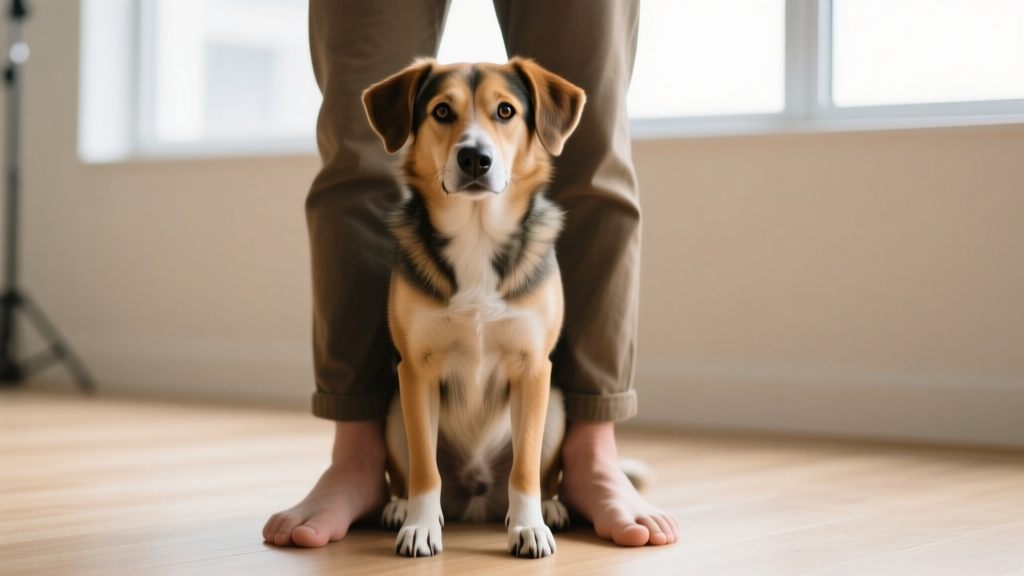
Dogs sit on your feet primarily as a contact-seeking bonding behavior rooted in their evolutionary history as pack animals. This behavior serves multiple functions simultaneously: maintaining proximity to a bonded social partner, gathering scent and thermal information, and reinforcing social attachment through physical touch. Research published in the journal Science (Nagasawa et al., 2015) demonstrated that mutual gaze and physical contact between dogs and owners triggers oxytocin release in both species — the same neurohormone that drives parent-infant bonding in humans. Your feet, being rich in apocrine sweat glands and carrying your concentrated scent signature, are an especially information-dense location for your dog.
The Evolutionary Roots: From Wolf Packs to Your Living Room
To understand why your dog gravitates toward your feet, we need to look at Canis lupus familiaris through the lens of 30,000+ years of domestication and the ancestral behaviors that preceded it.
🐺 Ancestral Behavior Pattern
Wild wolves and African wild dogs practice contact resting — sleeping and resting while physically touching pack members. This behavior serves three survival functions:
- Thermoregulation: Shared body heat reduces individual caloric expenditure by an estimated 15-25% in cold environments (referenced in Mech & Boitani's Wolves: Behavior, Ecology, and Conservation)
- Predator detection: A sleeping pack member who feels movement through physical contact gains a 2-4 second early warning advantage
- Social cohesion: Physical proximity reinforces pair bonds and pack hierarchy without energy-costly conflict
Your dog hasn't abandoned this program. When they settle on your feet, they're running ancestral software in a modern context — you are their pack, and your feet are the nearest contact point when you're seated.
Domestication didn't eliminate pack-oriented behavior; it redirected it. A 2023 study from the Oregon State University Human-Animal Interaction Lab found that shelter dogs formed secure attachment bonds to unfamiliar humans within minutes, demonstrating that the drive for proximity-seeking is deeply hardwired — not merely learned from a single owner.
The Neurochemistry: What Happens Inside Your Dog's Brain
🧠 The Oxytocin Feedback Loop
The landmark 2015 study by Takefumi Kikusui's team at Azabu University (published in Science, Vol. 348, Issue 6232) measured urinary oxytocin levels in dogs and owners before and after 30-minute interaction sessions. Key findings:
- Owners' oxytocin increased by an average of 300% after mutual gaze and petting interactions
- Dogs' oxytocin increased by approximately 130% under the same conditions
- When oxytocin nasal spray was administered to dogs, they spent significantly more time in close physical proximity to their owners
- This reciprocal oxytocin loop does not exist between wolves and humans — it evolved specifically during domestication
When your dog sits on your feet, they are actively engaging this neurochemical reward system. The physical contact triggers oxytocin release, which feels good, which reinforces the behavior, which creates more contact. It's a self-sustaining positive feedback loop.
Beyond oxytocin, several other physiological mechanisms are at play:
Cortisol reduction: A 2018 study published in Behavioural Processes (Pendry et al., Washington State University) found that just 10 minutes of human-animal interaction significantly reduced salivary cortisol levels in both species. Your dog sitting on your feet may be self-medicating against stress — and helping you do the same.
Serotonin and dopamine pathways: Sustained gentle pressure (like a dog's weight on your feet) activates mechanoreceptors that signal the parasympathetic nervous system. This is the same mechanism behind weighted blankets for humans, and it likely explains why many dogs seek the proprioceptive input of pressing against a solid object (your leg, your foot, a wall).
How Dogs Process Your Feet: A Sensory Goldmine
Your feet are, from your dog's perspective, an extraordinarily rich data source. Here's why dogs find feet specifically interesting:
| Sensory Channel | What Your Dog Detects | Biological Mechanism |
|---|---|---|
| Olfaction | Individual identity, emotional state, health status, where you've been | Feet contain ~250,000 apocrine sweat glands; dogs have up to 300 million olfactory receptors (vs. ~6 million in humans) |
| Thermal sensing | Your body temperature, circadian rhythm cues, fever detection | Dogs detect infrared radiation via the rhinarium (nose leather) and facial pit-like structures identified in 2020 Lund University research |
| Vibration/mechanoreception | Movement intentions (you're about to stand), gait changes, restlessness | Pacinian corpuscles in dog paw pads detect vibrations as subtle as 1mm displacement |
| Proprioceptive pressure | Physical anchoring, spatial awareness of your position | Deep pressure stimulation activates parasympathetic (calming) nervous system pathways |
The Merck Veterinary Manual notes that canine olfactory capability allows dogs to detect volatile organic compounds at concentrations as low as parts per trillion. Your feet, confined in shoes for hours, concentrate these chemical signatures in ways your dog finds highly informative — essentially, your feet tell your dog a story about your day.
Breed Variations: Which Dogs Are Most Likely to Sit on Your Feet?
While foot-sitting crosses all breeds and mixes, certain genetic lineages show stronger proximity-seeking tendencies due to their breeding history:
| Breed Group | Representative Breeds | Contact-Seeking Intensity | Why |
|---|---|---|---|
| Companion/Toy | Cavalier King Charles Spaniel, Pug, Havanese, Bichon Frise | ⬛⬛⬛⬛⬛ Very High | Bred specifically for lap contact; strong selection for attachment behavior |
| Herding | Border Collie, Australian Shepherd, German Shepherd | ⬛⬛⬛⬛⬜ High | Bred to maintain visual/physical proximity to handler; "velcro dog" tendency |
| Sporting/Gun Dogs | Golden Retriever, Labrador Retriever, Vizsla | ⬛⬛⬛⬜⬜ Moderate-High | Bred for cooperative work alongside humans; strong social bonding drive |
| Working/Guardian | Great Pyrenees, Anatolian Shepherd, Mastiff breeds | ⬛⬛⬜⬜⬜ Moderate | More independent by selection; may lean/press rather than sit directly on feet |
| Sighthounds/Primitive | Greyhound, Basenji, Shiba Inu, Afghan Hound | ⬛⬜⬜⬜⬜ Low-Moderate | More cat-like independence; may choose proximity without direct contact |
These are population-level tendencies, not guarantees. Individual personality, early socialization history, and the specific bond with a given owner often override breed generalizations. A well-socialized Shiba Inu may be more foot-oriented than an anxious Border Collie who paces instead of settling.
Myth vs. Fact: Debunking Common Misconceptions
| ❌ Common Myth | ✅ What Science Says |
|---|---|
| "My dog sits on my feet to dominate me." | Dominance theory has been thoroughly debunked in dog-human relationships. A 2009 study by Bradshaw et al. (University of Bristol) demonstrated that dogs do not form dominance hierarchies with humans. Foot-sitting is affiliative (bonding) behavior, not a power play. |
| "My dog is trying to trap me so I can't leave." | While dogs with separation anxiety may show heightened proximity-seeking, sitting on feet is not a calculated containment strategy. Dogs live in the moment — they seek contact because it feels good now, not to prevent a hypothetical future departure. |
| "Only needy or insecure dogs do this." | Confident, well-adjusted dogs seek physical contact just as frequently. The behavior indicates a secure attachment bond, not insecurity — similar to a securely attached child who checks in with a parent between play sessions. |
| "My dog sits on my feet because they're cold." | While warmth can be a secondary factor (especially in short-coated breeds in winter), dogs sit on feet in 90°F/32°C weather too. Thermal comfort is one of several contributing factors, not the primary driver. |
| "I should push my dog off to show I'm the alpha." | Forcefully removing a dog from a comfort-seeking position can damage the trust bond and increase anxiety. If the behavior is unwanted, use positive reinforcement to teach an alternative (like a nearby mat) — never physical punishment or intimidation. |
When Foot-Sitting Signals a Problem
In most cases, foot-sitting is completely normal and healthy. However, certain patterns warrant closer attention:
⚠️ When to Consult a Professional
- Sudden onset in a previously independent dog: If your dog has never been clingy and suddenly won't leave your side, this can signal pain, illness, or cognitive changes (especially in senior dogs). Schedule a veterinary exam to rule out medical causes before assuming it's behavioral.
- Accompanied by distress signals: Panting, trembling, whining, or inability to settle even when you're stationary suggests anxiety rather than relaxed bonding. Consult a certified veterinary behaviorist or a fear-free certified trainer.
- Resource guarding YOUR feet: If your dog growls, snaps, or stiffens when other people or animals approach you while they're sitting on your feet, this is a form of owner-directed resource guarding. Work with a qualified positive-reinforcement trainer to address this safely.
- Preventing normal movement: If your dog's positioning physically impedes your ability to walk safely (especially relevant with large breeds on stairs or in kitchens with hot surfaces), this needs management for both your safety and theirs.
- Senior dog confusion: Dogs with canine cognitive dysfunction (CCD, analogous to dementia) may press against feet or walls as a disorientation response. If your senior dog seems "stuck" against your feet rather than choosing to rest there, consult your veterinarian about cognitive screening.
Practical Implications: Living With a Foot-Sitting Dog
Daily Life Strategies
If you enjoy the behavior: Lean into it. The oxytocin benefits flow both ways. Consider positioning your desk chair or favorite seat so your dog has a comfortable spot at your feet — a low-profile orthopedic pad (like the $25-40 Furhaven or Big Barker paw-print mat) gives them a designated surface while maintaining contact proximity.
If the behavior is problematic (large dog on a small person's feet, tripping hazard, or interfering with work):
- Teach a "place" cue targeting a mat or bed positioned within 2-3 feet of your usual seat. Reward heavily (high-value treats like freeze-dried liver, approximately 1-2 treats per minute during initial training sessions of 3-5 minutes).
- Use a physical cue — place the mat, tap it, reward your dog for moving to it. Gradually increase duration before reward delivery (start with 2-second sits, build to 30+ seconds over 2-3 weeks).
- Maintain proximity: The mat should be close enough that your dog still feels socially connected. A mat 8-10 feet away will fail because it doesn't satisfy the proximity drive.
- Never punish the behavior. Pushing, scolding, or startling your dog off your feet teaches them that seeking closeness results in negative outcomes. Redirect to the mat with positive reinforcement instead.
For separation anxiety-prone dogs: Foot-sitting alone doesn't indicate separation anxiety, but if your dog also exhibits destructive behavior, vocalization, or elimination when left alone, the foot-sitting may be part of a broader anxiety pattern. A 2024 systematic review in Applied Animal Behaviour Science found that approximately 14-20% of pet dogs show clinically significant separation-related behaviors. Consult your veterinarian — treatment may include behavior modification protocols, environmental enrichment, and in some cases, anti-anxiety medication (SSRIs like fluoxetine, typically dosed at 1-2 mg/kg once daily under veterinary supervision).
Related Behaviors: The Bigger Picture of Canine Contact-Seeking
Foot-sitting doesn't exist in isolation. It's part of a broader behavioral cluster that includes:
- Leaning against legs: Same proximity drive, expressed while standing. Common in large breeds (Great Danes, Boxers, Newfoundlands) who may find sitting on feet physically awkward.
- "Velcro dog" following: Room-to-room tracking behavior driven by the same attachment system. Particularly pronounced in herding breeds selected for constant handler proximity.
- Bed/couch claiming: Seeking your sleeping spot immediately after you leave it — driven by scent attraction (your concentrated scent on bedding) and residual warmth.
- Head-on-lap or paw-on-arm: More active contact-seeking that serves as an attention bid and oxytocin trigger. Dogs learn this quickly because humans almost always respond with petting.
- Nesting in worn clothing: Dogs who burrow into laundry piles or sleep on your hoodie are using the same olfactory comfort mechanism. Your scent is a security signal.
Frequently Asked Questions
Is it normal for my dog to sit on my feet all the time?
Yes — frequent foot-sitting is a normal affiliative behavior. As long as your dog can also settle independently in other locations, shows no signs of distress when separated briefly, and is otherwise healthy, this is simply their preferred way of maintaining social contact. Most behaviorists consider it a sign of secure attachment.
Can dogs sense when I'm about to get up by feeling my feet?
Yes. Dogs detect pre-movement muscle tension shifts through their paw pads and body contact. The subtle weight redistribution that precedes standing (shifting from seated to forward-leaning posture, foot repositioning) generates vibrations and pressure changes your dog can feel. This is why many dogs appear to "anticipate" your movements — they're reading biomechanical cues through direct contact.
How is this behavior different from how humans show affection?
Humans primarily bond through visual engagement (eye contact, facial expressions) and verbal communication. Dogs bond through proximity, scent exchange, and tactile contact. While humans might find foot-sitting odd, for a dog it's as natural and meaningful as a hug is for us. The oxytocin research confirms that the neurochemical reward is comparable — the behavioral expression simply differs by species.
What does it mean when my dog sits on my feet but faces away from me?
This is actually a strong trust signal. In canine body language, turning their back to someone indicates they feel safe — they're not positioning themselves to monitor you as a potential threat. They're using you as a secure base (like a wall at their back) while watching the environment. It's a compliment, not a snub.
Why does my dog sit on my feet more when guests are over?
Novel social situations elevate mild arousal in most dogs. Sitting on your feet in these contexts serves a dual function: gathering reassurance through contact with their bonded person, and maintaining a position from which they can monitor newcomers. This is normal social referencing behavior — your dog is using you as an emotional anchor while assessing the unfamiliar situation.
Should I be concerned if my dog suddenly stops sitting on my feet?
A sudden change in established behavior patterns always warrants attention. If your dog previously sought foot contact and abruptly stops, consider: Are they showing signs of pain (reluctance to lie down, stiffness, limping)? Has the household changed (new pet, schedule disruption)? Are they seeking a different location (which might indicate a temperature preference shift or avoidance of a new floor surface)? If the change persists more than 3-5 days or is accompanied by other behavioral shifts, schedule a veterinary exam.
📚 Key Research References
- Nagasawa, M. et al. (2015). "Oxytocin-gaze positive loop and the coevolution of human-dog bonds." Science, 348(6232), 333-336.
- Pendry, P. et al. (2018). "Interaction with therapy dogs and effects on cortisol levels." Behavioural Processes, Washington State University.
- Bradshaw, J.W.S. et al. (2009). "Dominance in domestic dogs — useful construct or bad habit?" Journal of Veterinary Behavior, 4(3), 136-144.
- Mech, L.D. & Boitani, L. (2003). Wolves: Behavior, Ecology, and Conservation. University of Chicago Press.
- Topál, J. et al. (1998). "Attachment to humans: a comparative study on hand-reared wolves and differently socialized dog puppies." Animal Behaviour, 56(6), 1371-1379.
For general canine behavior questions, the AKC Training Resources and the AVMA Dog Care guidelines provide reliable, science-based guidance. Always consult your veterinarian or a certified applied animal behaviorist for persistent behavioral concerns.
Dr. Hannah Wickes
All our authors care for dogs every day — read more of their work on the authors page.


