What Does It Mean When Your Dog Licks Your Face? The
What does it mean when your dog licks your face? Explore the evolutionary, physiological, and behavioral science behind face-licking in dogs.
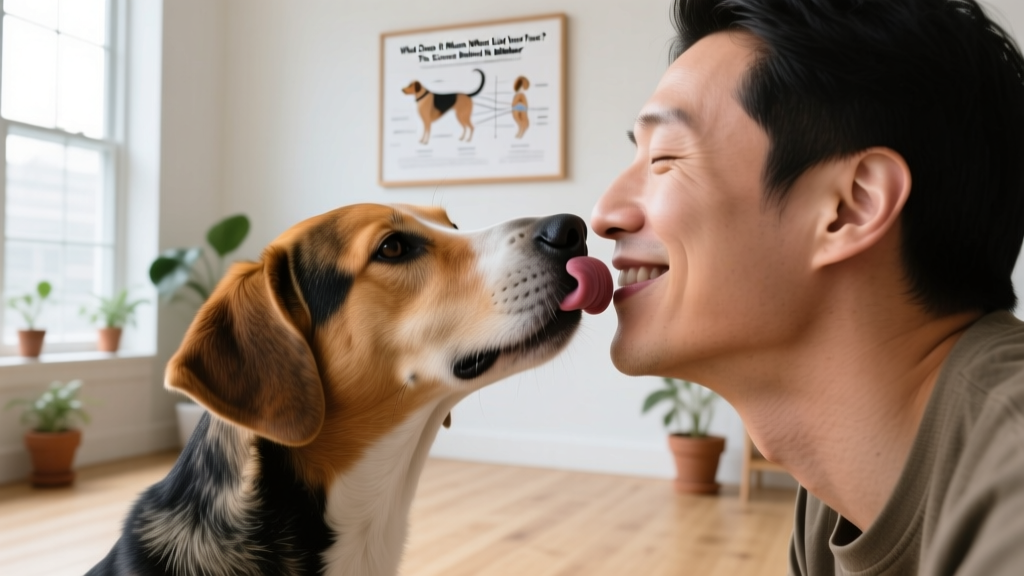
The Quick Answer: What Does It Mean When Your Dog Licks Your Face?
When your dog licks your face, they are engaging in a deeply rooted social behavior that serves multiple functions: affiliative bonding (strengthening social attachment), information gathering (tasting chemical residues on your skin), and attention-seeking (learned behavior reinforced by your response). In puppies, face-licking originates from wolf pup begging behavior — licking the muzzle of adults to solicit regurgitated food. In adult domestic dogs, this behavior has been retained through neoteny (the preservation of juvenile traits) and redirected toward human caregivers as a greeting and bonding ritual. It is overwhelmingly normal, though excessive or compulsive licking can signal anxiety, gastrointestinal discomfort, or allergic skin disease.
The Evolutionary Origin: From Wolf Pups to Your Living Room
🐺 Ancestral Behavior: Regurgitation Solicitation
In wild wolf populations (Canis lupus), weaned pups between 3 and 12 weeks of age engage in intense muzzle-licking of returning adult pack members. This behavior stimulates the adult to regurgitate partially digested food — a critical nutritional bridge between nursing and independent hunting. Research documented by the Merck Veterinary Manual confirms that this muzzle-licking is a hard-wired canid behavior observed across wolf, coyote, and wild dog species.
As dogs (Canis familiaris) diverged from wolves approximately 15,000–40,000 years ago, the domestication process selected for neotenous traits — dogs that retained juvenile behaviors into adulthood were more successful in human environments. Face-licking persisted not because humans regurgitate food for puppies, but because it functioned as an effective appeasement and bonding signal that strengthened the human-dog relationship.
A 2016 study published in Biology Letters by researchers at Eötvös Loránd University demonstrated that dogs use face-licking as a referential communicative act — they lick more when their owner's face is visible compared to when it is turned away, indicating the behavior is directed specifically at the face as a social target, not merely random grooming.
The Physiology: What Happens in Your Dog's Brain and Body
The Neurochemistry of Licking
When your dog licks your face, a cascade of neurochemical events occurs:
- Endorphin release: Repetitive licking stimulates the dog's own opioid system, producing a calming, self-soothing effect. This is why anxious dogs often lick excessively — it literally makes them feel better.
- Oxytocin loop: A landmark 2015 study by Nagasawa et al. (published in Science) showed that mutual gaze between dogs and owners increases oxytocin in both species. Licking, as a close-proximity affiliative behavior, activates this same oxytocin-mediated bonding pathway. Your dog licks you, you respond positively, oxytocin rises in both of you, and the behavior is reinforced.
- Vomeronasal organ activation: Your dog's tongue collects chemical particles from your skin — salt, sweat residue, food traces, hormonal metabolites — and transfers them to the Jacobson's organ (vomeronasal organ) located on the roof of the mouth. This organ processes pheromonal and chemical information that your dog's primary olfactory system cannot detect.
- Dopaminergic reward: When licking produces a desired outcome (your attention, petting, verbal response), dopamine release in the nucleus accumbens reinforces the behavior, making it more likely to recur.
How Dogs Taste Your Face (Yes, They're Tasting You)
Dogs possess approximately 1,700 taste buds (compared to roughly 9,000 in humans), but their taste receptors are strategically tuned to detect compounds relevant to their evolutionary diet: amino acids (umami), sugars, and sodium chloride. When your dog licks your face after you've eaten, they are detecting food residue at a molecular level. After exercise, they're tasting salt and electrolyte concentrations in your sweat. This is information-gathering behavior — your dog is literally reading a chemical report of where you've been and what you've done.
The tongue's papillae (small projections on the surface) also function as mechanical sensors, allowing dogs to detect texture and temperature differences on your skin. This tactile feedback contributes to the social-bonding function of licking, similar to allogrooming (social grooming) observed in primate species.
Why Do Dogs Lick Your Face? The Five Functional Explanations
| Function | Scientific Basis | When You'll See It Most |
|---|---|---|
| Affiliative bonding | Oxytocin-mediated attachment behavior; evolved from pack social maintenance | Morning greetings, reunion after separation, quiet bonding moments |
| Appeasement/submission | Juvenile signaling retained via neoteny; communicates non-threatening intent | After being scolded, meeting new people, stressful situations |
| Information gathering | Vomeronasal organ sampling; taste receptor detection of food/hormone residues | After you've eaten, exercised, or applied lotions/medications |
| Attention-seeking (operant) | Dopamine-reinforced learned behavior; owner response serves as positive reinforcement | When you're distracted (on phone, working), during quiet inactivity |
| Self-soothing | Endogenous opioid release through repetitive motor pattern | During thunderstorms, fireworks, vet visits, separation anxiety episodes |
Common Myths About Dog Face-Licking — Debunked
| Myth | Fact (Science-Based) |
|---|---|
| "Dogs lick your face because they think you're dirty and need grooming." | Dogs do not perceive human hygiene the way they perceive pack-member grooming needs. Face-licking directed at humans is social communication, not hygiene behavior. Allogrooming in dogs targets areas the other animal cannot reach (ears, neck), not the face. |
| "A dog licking your face means they're trying to dominate you." | Dominance theory applied to dog-human relationships has been thoroughly debunked by veterinary behaviorists. The American Veterinary Society of Animal Behavior (AVSAB) explicitly states that dominance-based explanations for dog behavior are not supported by current science. Face-licking is affiliative, not a power play. |
| "Dog mouths are cleaner than human mouths, so face-licking is safe." | Dog mouths harbor different bacterial populations than human mouths — not fewer. Dogs carry Capnocytophaga canimorsus, Pasteurella, and various gram-negative bacteria. For immunocompromised individuals, open wounds, or mucous membrane contact, face-licking carries genuine infection risk. |
| "If a dog licks your face, it means they love you." | While affiliative licking can indicate social bonding, it can equally signal anxiety, stress appeasement, or simply that you taste like the sandwich you just ate. Context matters — body language (tail position, ear set, body tension) must be read alongside licking to interpret emotional state accurately. |
Breed Variations: Which Dogs Lick More?
While face-licking is a universal canid behavior, breed groups show measurable variation in licking frequency and intensity:
- Retrievers (Golden, Labrador, Chesapeake): Bred for "soft mouth" carrying and close human cooperation, retrievers tend to be high-frequency face-lickers. Their selection for human-directed affiliative behavior makes them among the most enthusiastic lickers.
- Herding breeds (Border Collie, Australian Shepherd): These dogs often lick as part of their attention-oriented behavioral repertoire. Their breeding for responsiveness to human direction means they use licking as an operant behavior to elicit engagement.
- Companion/toy breeds (Cavalier King Charles Spaniel, Bichon Frise, Havanese): Bred explicitly for close physical proximity to humans, these breeds show high rates of affiliative face-licking, particularly during lap-sitting and greeting contexts.
- Sighthounds (Greyhound, Whippet, Afghan Hound): Tend to be less face-oriented in their affiliative behavior, often preferring physical proximity (leaning, pressing) over active licking. This reflects their more independent working style.
- Brachycephalic breeds (Pug, French Bulldog, Shih Tzu): Their shortened muzzle anatomy can make sustained licking mechanically awkward, though they compensate with increased nudging and face-pressing behavior.
How Is Dog Face-Licking Different From Human Kissing?
It's tempting to equate dog face-licking with human kissing, but the two behaviors have entirely different evolutionary origins and neurobiological functions:
- Origin: Human romantic kissing evolved from infant feeding and pair-bonding behaviors in primates. Dog face-licking evolved from juvenile food-solicitation behavior in canids. They are convergent social behaviors, not homologous ones.
- Sensory function: Human kissing involves olfactory assessment of MHC (major histocompatibility complex) compatibility. Dog face-licking involves vomeronasal sampling of chemical residues — it is more analogous to a chemical analysis than a romantic gesture.
- Reciprocity: Human kissing is typically mutual and reciprocal. Dog face-licking is almost entirely unidirectional — dogs do not expect or require you to lick them back. In fact, putting your face close to a dog's face and making direct eye contact can be perceived as threatening by dogs unfamiliar with the gesture.
- Emotional valence: While both behaviors trigger oxytocin release, human kissing is primarily pair-bonding and sexual-selection behavior. Dog face-licking is primarily attachment-maintenance and appeasement behavior — closer to a child hugging a parent than a romantic partner kissing.
When Face-Licking Signals a Problem
⚠️ Red Flags: When Licking Becomes Concerning
While normal face-licking is healthy social behavior, certain patterns warrant veterinary evaluation:
- Compulsive licking: If your dog licks your face (or surfaces, their own body, the air) for prolonged periods (>5 minutes continuously) and is difficult to interrupt, this may indicate compulsive disorder — the canine equivalent of obsessive-compulsive disorder. A veterinary behaviorist can assess and may recommend SSRIs such as fluoxetine (typical dose: 1–2 mg/kg once daily, prescribed by your vet).
- Sudden increase in licking: A dog that previously licked occasionally and suddenly becomes obsessive may be experiencing gastrointestinal nausea. Studies show that excessive licking ("lip licking" and air licking) correlates with GI discomfort, acid reflux, or dental pain.
- Licking combined with avoidance: If your dog licks your face while simultaneously turning their head away, tucking their tail, or showing whale eye (whites of eyes visible), they may be using licking as a stress-displacement behavior rather than affiliative communication.
- Licking at wounds or topical medications: If you have open skin, recently applied topical medications (retinoids, chemotherapy creams like 5-fluorouracil, hormone replacement gels), or cosmetic products, dog licking can expose them to toxic substances and expose you to infection. The ASPCA Animal Poison Control Center (888-426-4435) reports cases of dogs ingesting toxic topical medications from owner skin contact annually.
Is Face-Licking Normal? Absolutely — With Context
For the vast majority of dogs, face-licking during greetings, play, and quiet bonding is entirely normal behavior. According to the American Kennel Club, approximately 80–90% of dogs engage in some form of human-directed face or hand licking as part of their normal social repertoire. The behavior becomes "abnormal" only when it is compulsive, interferes with the dog's other activities, or causes distress to the dog or owner.
Practical Takeaways: What This Means for Your Daily Life
Managing Face-Licking in Real Life
- If you enjoy it: Allow licking on intact skin (cheeks, chin) but redirect away from your mouth, nose, and eyes — mucous membranes are more susceptible to bacterial transfer. Wash your face after enthusiastic greeting sessions, especially if you have acne, eczema, or any skin breaks.
- If you want less of it: Use positive reinforcement to teach an incompatible behavior. When your dog approaches to lick, cue "sit" or "touch" (hand target) and reward with a treat or petting. You are not punishing licking — you are offering an alternative that earns the same social reward. A certified force-free trainer (CPDT-KA or IAABC credential) can help design a protocol.
- If it's compulsive: Consult your veterinarian first to rule out GI disease, dental pain, or neurological causes. If medical causes are excluded, a veterinary behaviorist (DACVB or CAAB credential) can develop a behavior modification plan that may include environmental enrichment, structured routine, and in some cases, medication.
- For households with immunocompromised members: Redirect face-licking to hand-licking or simply close physical contact without licking. Immunocompromised individuals, newborns, and elderly family members with fragile skin should avoid direct face contact with dog saliva.
- After applying topical products: Wait until any skincare products, medications, or sunscreens have fully absorbed (typically 20–30 minutes) before allowing face-licking. Some products, like topical minoxidil or estrogen gels, are toxic to dogs even in small quantities.
Related Behaviors: What Else Is Your Dog Communicating?
Face-licking rarely occurs in isolation. Understanding the broader behavioral context helps you read your dog more accurately:
- Nudging with the nose: Often accompanies licking as part of a greeting sequence. Your dog is combining tactile contact (nose push) with chemical sampling (lick) to gather maximum information.
- Leaning against you: A body-pressure behavior that signals trust and affiliative bonding. Dogs that lean and lick simultaneously are expressing high social attachment.
- Bringing toys: Resource-offering behavior that signals your dog views you as a social partner for play. Combined with licking, it's a greeting-plus-invitation sequence.
- Yawning and lip-licking (without face contact): When your dog licks their own lips or yawns during a social interaction, these are calming signals — stress indicators that signal internal tension. This is different from licking your face, which is outwardly directed social behavior.
- Pawing at your face: An escalation of attention-seeking when licking alone hasn't produced the desired response. This is operant behavior that has been reinforced by prior owner reactions.
Frequently Asked Questions
Can dogs detect illness by licking your face?
Dogs can detect certain disease markers through scent — studies have demonstrated canine detection of some cancers, hypoglycemia, and seizure onset through olfactory cues. However, face-licking is not a diagnostic behavior. If your dog suddenly becomes fixated on licking a specific area of your body, it could indicate they're detecting a chemical change, but this should not replace medical evaluation. There is no peer-reviewed evidence that dogs lick faces specifically to "diagnose" human illness.
How do dogs process the taste of human skin?
Dogs have taste receptors for sweet, salty, sour, bitter, and umami (amino acid) compounds, distributed across approximately 1,700 taste buds. When they lick your skin, they detect sodium from sweat, amino acid residues from food handling, and lipid-soluble compounds from lotions or medications. The information is processed by the gustatory cortex and cross-referenced with olfactory input from the vomeronasal organ, creating a multi-sensory chemical profile of your skin.
Is it safe to let my dog lick my baby's face?
Pediatricians and veterinary behaviorists generally recommend against allowing dogs to lick infants' faces. Newborns have immature immune systems, and dog saliva can transmit bacteria like Capnocytophaga and Pasteurella multocida. Additionally, close face-to-face contact between dogs and infants increases the risk of bite incidents, even in well-socialized dogs. Supervised, indirect contact (dog sniffing the baby's feet while the baby is held) is a safer introduction protocol.
Why does my dog lick my face more than other family members?
Dogs often direct more affiliative behavior toward the person who provides the most consistent social reinforcement. If you respond to licking with petting, verbal praise, or eye contact, your dog has learned that you are the most "rewarding" licking target. Differences in skin chemistry (salt concentration, lotion use, diet-influenced sweat composition) may also make certain family members more interesting to lick.
What does it mean when my dog licks my face and then sneezes?
Sneezing after licking is typically a mechanical response — your dog inhaled a small particle (skin cell, hair, dust) during the licking process, triggering a nasal reflex. It is not typically a sign of illness or allergy unless it occurs repeatedly and is accompanied by nasal discharge, pawing at the nose, or respiratory noise.
Research References:
- Nagasawa, M. et al. (2015). "Oxytocin-gaze positive loop and the coevolution of human-dog bonds." Science, 348(6232), 333-336.
- Custance, D. & Mayer, J. (2012). "Empathetic-like responding by domestic dogs to distress in humans." Animal Cognition, 15(5), 851-859.
- Miklósi, Á. et al. (2003). "A simple reason for a big difference: Wolves do not look back at humans." Current Biology, 13(9), 763-766.
This article provides educational information about canine behavior. If your dog's licking behavior is sudden, excessive, or accompanied by other symptoms, consult your veterinarian for a professional evaluation.
Anouk Beaumont
All our authors care for dogs every day — read more of their work on the authors page.


