Why Dogs Destroy Christmas Ornaments: The Science Behind the Behavior
Discover the canine science behind why dogs are drawn to Christmas ornaments — from prey drive and scent attraction to shiny object fascination and prevention tips.
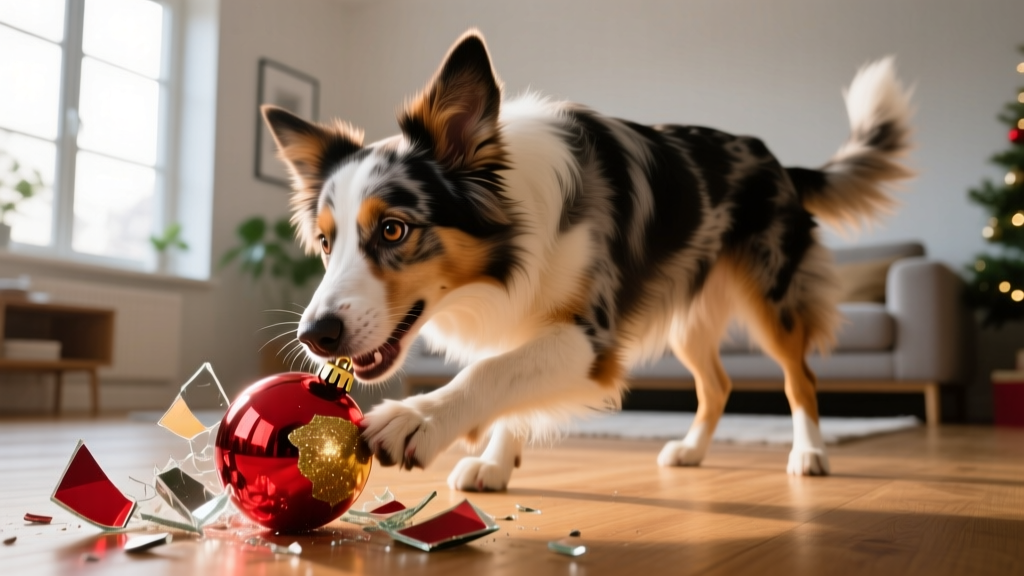
Every December, veterinary clinics see a predictable spike in emergency visits related to holiday decorations. The ASPCA lists Christmas tree needles, tinsel, and ornament hooks among the top seasonal hazards for dogs. But understanding why your dog targets those glass baubles requires looking past the surface behavior into canine sensory biology, evolutionary psychology, and neurochemistry.
This article breaks down the science behind your dog's obsession with dog Christmas ornaments — whether they're delicate glass heirlooms, shatterproof pet-safe alternatives, or the personalized photo ornaments you spent $18 each on at Etsy. Understanding the mechanism helps you protect both your dog and your holiday decorations with evidence-based strategies rather than frustration.
The Canine Visual System: Why Shiny Ornaments Are Irresistible
How Dogs Process Visual Stimuli Differently From Humans
Dogs possess a visual system optimized for motion detection rather than color discrimination or fine detail. Research published in the Journal of Experimental Biology confirms that canine retinas contain approximately 85% rod photoreceptors compared to roughly 60% in humans. Rods excel at detecting movement and functioning in low-light conditions but provide limited color information.
This means a reflective glass ornament catching light from your tree's LED strands creates a motion-rich visual stimulus even when the ornament is technically stationary. Micro-vibrations from air currents, HVAC systems, or foot traffic cause ornaments to sway slightly — and a dog's rod-dominant retina registers this as meaningful movement worth investigating.
The canine tapetum lucidum — the reflective layer behind the retina that causes eye-shine in flash photos — amplifies available light by an estimated 40-50% compared to human eyes, according to veterinary ophthalmology references in the Merck Veterinary Manual. This means your dog literally sees more light play on ornament surfaces than you do.
Can Dogs Distinguish Ornament Colors?
Dogs have dichromatic vision, meaning they perceive primarily blue and yellow wavelengths. Red and green ornaments — the most common Christmas colors — appear as muted browns or grays to dogs. However, blue, silver, gold, and white ornaments create stronger visual contrast against a green tree, making them more visually salient. If you've noticed your dog seems particularly fixated on silver or blue decorations, there's a physiological reason for that preference.
Evolutionary Context: Wolves, Prey Drive, and Hanging Objects
In the wild, canids frequently encounter prey items that are suspended or partially hidden — nestlings in low branches, small rodents in tall grass that move when disturbed, or cached food items hung by other predators. The evolutionary advantage of being attracted to small, dangling, moving objects is clear: it directed ancestral dogs toward high-calorie food sources.
Modern Christmas trees inadvertently recreate this environment with striking precision:
- Size match: Most standard ornaments (2.5-3 inches / 6-8 cm diameter) approximate the size of small prey items like rodents or birds
- Movement match: Hanging ornaments sway with air currents, mimicking prey motion
- Height match: Lower branches place ornaments directly within a dog's natural investigation zone (ground level to 3 feet / 90 cm for most breeds)
- Texture match: Glass and metallic surfaces produce sounds when contacted that can trigger further predatory interest
Breed Variations in Ornament Attraction
| Breed Group | Prey Drive Level | Ornament Risk | Primary Trigger |
|---|---|---|---|
| Terriers (Jack Russell, Rat Terrier, Fox Terrier) | Very High | Extreme — likely to grab and shake | Movement + grab-bite instinct |
| Sighthounds (Greyhound, Whippet, Afghan Hound) | High | High — chase and catch likely | Motion-triggered pursuit |
| Herding (Border Collie, Australian Shepherd) | Moderate-High | Moderate — may nip or herd ornaments | Movement monitoring + nipping |
| Retrievers (Labrador, Golden Retriever) | Moderate | Moderate — mouth carry behavior | Oral exploration + retrieve drive |
| Scent Hounds (Beagle, Basset Hound) | Moderate | Moderate — sniffing and licking | Scent investigation of tree + ornaments |
| Toy Breeds (Cavalier, Pug, Shih Tzu) | Low-Moderate | Lower — but small size increases ingestion risk | Neophilia + oral exploration |
| Livestock Guardians (Great Pyrenees, Anatolian) | Low | Lower — but size means tree tipping risk | Novelty investigation |
The Neurochemistry of Novelty: Why New Decorations Trigger Obsession
When your dog encounters Christmas ornaments for the first time each year, their brain activates what behavioral scientists call the novelty response. The mesolimbic dopamine pathway — the same reward circuit active during food discovery and play — fires when canids encounter unfamiliar objects in their territory.
A 2018 study in Applied Animal Behaviour Science demonstrated that dogs show significantly more investigative behavior (sniffing duration, pawing, mouthing) toward novel objects compared to familiar ones, with investigation time averaging 3-5x longer for new items. Your ornaments, stored in a box for 11 months, are essentially brand-new stimuli every December.
How Dogs Process the Scent of Christmas Ornaments
A dog's olfactory system contains approximately 300 million olfactory receptors (compared to roughly 6 million in humans), and the olfactory cortex occupies about 40 times more brain space proportionally than in people. When you bring ornaments out of storage, they carry a complex scent profile:
- Packaging residues: Cardboard, tissue paper, plastic wrap — all carry distinct volatile organic compounds
- Storage environment: Attic dust, basement humidity, garage chemicals absorbed over months
- Previous year's tree: Residual pine sap, artificial snow spray, or cinnamon-scented ornament treatments
- Human handling: Your skin oils, lotion residues, and food-prep scents transferred during decorating
Each ornament is essentially a scent puzzle that demands investigation. For scent-hound breeds like Beagles or Bloodhounds, this olfactory richness can be more compelling than the visual appeal of shiny surfaces.
Practical Implications: Protecting Your Dog and Your Decorations
Evidence-Based Ornament Safety Strategies
1. Create a Physical Buffer Zone
Use a pet gate or exercise pen to maintain at least a 3-foot (90 cm) clearance around the tree base. For dogs under 25 lb (11 kg), a 24-inch tall gate is usually sufficient. For athletic breeds capable of vertical leaps (Border Collies, Vizslas), use a 36-inch gate or a full exercise pen configuration.
2. Strategic Ornament Placement by Height
Keep all breakable, metallic, or small ornaments above 4 feet (122 cm) — the maximum reach height for most dogs standing on hind legs. Reserve the bottom 2 feet (60 cm) of tree for soft, fabric-based dog-safe decorations or leave it bare.
3. Provide Competing Enrichment
Dogs investigate ornaments partly from boredom. Provide 15-20 minutes of structured enrichment daily during the holiday season: snuffle mats, frozen Kong toys (filled with plain pumpkin and peanut butter — xylitol-free), or scent-discrimination games using treats hidden around the room away from the tree.
4. Counter-Conditioning Protocol
Teach a "leave it" cue using positive reinforcement well before decorating season. Start with low-value objects on the floor, reward with high-value treats (boiled chicken, freeze-dried liver) for disengagement, and gradually increase difficulty over 4-6 weeks of daily 5-minute sessions.
5. Choose Dog-Safe Ornament Materials
Shatterproof ornaments made from PET plastic or fabric cost approximately $12-25 for a set of 12-24 on retail sites in 2026. Wooden ornaments with non-toxic, water-based finishes are another option ($15-35 for handmade sets). Avoid ornaments with small detachable parts, metallic tinsel, or hooks — use ribbon loops or plastic C-hooks instead of metal wire hooks.
Cost of Ornament-Related Vet Visits
| Injury Type | Typical Treatment | Estimated Cost Range (2026) |
|---|---|---|
| Oral laceration from glass shard | Sedation + wound closure + antibiotics | $350 - $800 |
| GI foreign body (ingested ornament piece) | Endoscopic or surgical removal | $1,500 - $5,000+ |
| Paw pad puncture from hook | Cleaning, bandaging, pain management | $150 - $400 |
| Tinsel linear foreign body | Emergency surgery (life-threatening) | $2,500 - $7,000+ |
| Tree water ingestion (bacteria/fertilizer) | Supportive care, anti-emetics | $200 - $600 |
For context, a set of 24 shatterproof ornaments costs roughly $15-25 — a fraction of even the least expensive emergency visit. Pet insurance plans with accident coverage (averaging $30-50/month in 2026) typically cover foreign body surgeries after deductible.
Common Misconceptions Debunked
| Myth | Scientific Fact |
|---|---|
| "My dog destroys ornaments out of spite or to punish me for being busy during the holidays." | Dogs lack the cognitive capacity for spite or revenge planning. Ornament destruction is driven by instinct (prey drive, oral exploration) and opportunity. The timing correlation with holiday stress is coincidental from the dog's perspective. |
| "If my dog ate one ornament and seemed fine, they can handle them." | GI foreign bodies can cause delayed obstruction. Symptoms (vomiting, lethargy, anorexia) may not appear for 24-72 hours after ingestion. A single successful passage does not predict future outcomes — size, shape, and material all matter. |
| "Older dogs won't bother with ornaments — they know better." | While impulse control generally improves with age, canine cognitive dysfunction (CCD) affects an estimated 28% of dogs aged 11-12 years (per research in the Journal of Veterinary Behavior). Senior dogs with CCD may show increased compulsive or disoriented behavior around novel objects, including decorations. |
| "My dog only chews things when I'm not watching — they know it's wrong." | Dogs learn to avoid behaviors when the person who corrects them is present — this is stimulus discrimination, not moral understanding. The behavior isn't suppressed; it's simply expressed when the discriminative stimulus (you) is absent. |
When Ornament Obsession Signals a Problem
- Compulsive chewing or licking of non-food objects that persists beyond the novelty period (more than 2-3 weeks of daily fixation) — this may indicate pica, which can signal nutritional deficiency, GI disease, or anxiety disorder
- Sudden increase in destructive behavior in a previously calm adult dog — can indicate pain, cognitive decline, or endocrine disorders (hypothyroidism, Cushing's disease)
- Post-ingestion symptoms: vomiting, retching, drooling, abdominal pain, refusal to eat, black/tarry stools, or straining to defecate — seek emergency veterinary care immediately
- Resource guarding of stolen ornaments — growling, snapping, or stiffening when approached while holding an ornament requires professional behavior consultation using force-free methods
If your dog has ingested any ornament material, contact the ASPCA Animal Poison Control Center at (888) 426-4435 (24/7, consultation fee applies) or your emergency veterinary clinic immediately. Do not induce vomiting unless specifically instructed by a veterinary professional — glass shards or sharp plastic can cause additional damage during regurgitation.
Related Behaviors and Cross-References
Understanding ornament attraction connects to several other well-documented canine behaviors:
- Counter-surfing: Same neophilia + food-seeking drive applied to kitchen surfaces. Dogs explore elevated novel objects using identical motor patterns.
- Resource guarding: Once a dog claims an ornament, the item may trigger possessive behavior. This is a normal canine communication strategy, not "aggression" — address with counter-conditioning and trade-up protocols (offer high-value treat in exchange).
- Pica (non-food ingestion): When ornament chewing becomes compulsive rather than exploratory, it may cross into pica territory — requiring veterinary evaluation for underlying medical causes.
- Separation anxiety destruction: Dogs with separation anxiety often target items carrying owner scent. If ornaments were handled extensively during decorating, they may become targets specifically when you leave the house.
How Is This Different From Humans?
Humans appreciate ornaments primarily through a cognitive-emotional framework — nostalgia, aesthetics, cultural meaning. A glass bauble triggers memories of past holidays, artistic appreciation of color and form, and social bonding associations. Dogs lack this cognitive overlay entirely. Their engagement is purely sensory: what does it look like when it moves, what does it smell like, what happens if I put it in my mouth? This fundamental difference in processing is why reasoning with a dog about ornament value ("This was your grandmother's!") is neurologically impossible.
Frequently Asked Questions
Why do dogs eat Christmas tree needles?
Tree needles carry strong terpene scents (pine, fir, spruce oils) that activate a dog's olfactory investigation drive. The texture is also novel and crunchy, triggering oral exploration. While small quantities of fresh needles typically pass through the GI tract, large amounts can cause irritation, obstruction, or toxicity depending on tree species. Artificial tree needles made from PVC plastic pose a more serious obstruction risk if ingested. Ensure your tree skirt fully covers the base and fallen needles are vacuumed daily.
Can dogs see the lights on a Christmas tree?
Yes — dogs perceive Christmas lights, though differently than humans. Their rod-dominant vision makes them highly sensitive to the flicker and brightness of LED lights. Dogs can detect flicker rates up to approximately 75 Hz (compared to roughly 60 Hz in humans), meaning some LED strings may appear to visibly pulse to your dog even when they look steady to you. This flickering can be either fascinating or mildly stressful depending on the individual dog. If your dog seems anxious near the lit tree, try using steady-on (non-twinkling) bulbs and reducing overall brightness.
What does it mean when my dog barks at the Christmas tree?
Barking at the tree typically indicates alert behavior triggered by one of three factors: (1) visual detection of ornament movement, (2) novel scent from decorations or the tree itself, or (3) sounds from electrical components (some dogs hear the faint hum of LED transformers or timer mechanisms that are inaudible to humans). A few alert barks followed by disengagement is normal. Persistent barking sessions (more than 5 minutes of continuous fixation) suggest the dog is in a heightened arousal state and needs redirection through an incompatible behavior like a settle cue or a structured activity away from the tree.
Is it normal for my dog to pee on the Christmas tree?
Unfortunately, yes — particularly in intact male dogs and dogs with incomplete housetraining. A Christmas tree introduces a large, novel, scent-rich object into the home that resembles outdoor vegetation. The combination of new territory marker (tree scent) and an absorbent surface (tree skirt, fallen needles) creates an ideal trigger for marking behavior. Solutions include: thorough tree-skirt coverage with a waterproof barrier, maintaining your dog's regular outdoor elimination schedule, using enzymatic cleaner on any accidents immediately, and restricting unsupervised tree access. If marking persists, consult a certified force-free behavior professional — punishment-based approaches increase anxiety and worsen marking behavior.
Are personalized dog Christmas ornaments safe for my pet?
Personalized ornaments featuring your dog's photo or name are generally safe as decorations — but not as toys. Most custom ornaments sold on platforms like Etsy or Shutterfly in 2026 are made from ceramic, acrylic, or compressed wood with printed or laser-etched designs. These materials can shatter or splinter if chewed. Hang personalized ornaments above 4 feet (122 cm) and use ribbon loops instead of metal hooks. If you want a dog-safe "ornament" your pet can interact with, look for felt or fleece holiday toys designed for supervised play — typically priced at $8-15 each from pet retailers.
How do I stop my dog from jumping at ornaments?
Use a multi-step approach: (1) Manage the environment with physical barriers (exercise pen, baby gate) to prevent rehearsal of the jumping behavior — every successful jump reinforces the habit. (2) Teach an alternative behavior like "go to mat" or "sit" and reward heavily (3-5 treats per successful rep) when your dog chooses the alternative near the tree. (3) Ensure your dog receives adequate physical exercise (minimum 30-60 minutes of structured activity daily, breed-dependent) and mental enrichment to reduce overall arousal levels. Never use aversive methods like shock collars or spray bottles — these suppress behavior temporarily without addressing the underlying drive and can create fear associations with the holiday environment.
Key Takeaways for the Holiday Season
Your dog's attraction to Christmas ornaments is a predictable product of evolutionary biology, not willful misbehavior. The combination of movement-triggered prey drive, novelty-seeking dopamine release, and extraordinary olfactory curiosity makes decorated trees one of the most stimulating environments a domestic dog encounters all year.
The most effective protection strategy combines three elements: environmental management (barriers and strategic placement), behavioral enrichment (competing activities that satisfy the same drives), and material selection (shatterproof ornaments, ribbon loops, dog-safe alternatives). Budget approximately $15-30 for a set of pet-safe ornaments and $25-50 for a quality exercise pen — investments that cost a fraction of a single emergency veterinary visit.
If your dog does ingest ornament material, contact your veterinarian or the ASPCA Animal Poison Control at (888) 426-4435 immediately. Time is critical with GI foreign bodies — early intervention dramatically improves outcomes and reduces surgical costs.
Robin Maitland
All our authors care for dogs every day — read more of their work on the authors page.


