Why Do Dogs Beg When You Feed Them? The Science of
Why do dogs beg when you feed them? Explore the evolutionary, physiological, and behavioral science behind canine food-seeking — plus practical tips to manage it.
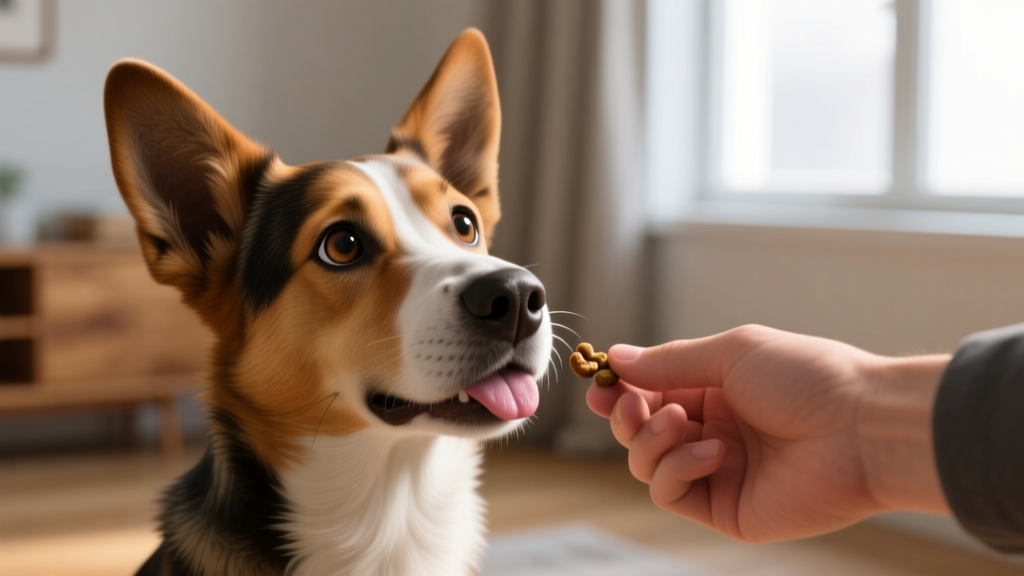
Quick Answer: Why Do Dogs Beg When You Feed Dogs?
Dogs beg when you eat or feed them because they evolved as opportunistic scavengers alongside humans for at least 15,000 years. Their brains release dopamine in anticipation of food rewards, and centuries of co-evolution have wired them to read human eating cues — eye contact, hand-to-mouth movements, food packaging sounds — with extraordinary precision. Begging is a normal, adaptive behavior, not a sign of disobedience or hunger. It persists because it works: even occasional reinforcement (one dropped scrap, one shared bite) keeps the behavior strong through a psychological mechanism called intermittent reinforcement.
If you've ever tried to eat a sandwich while your dog stares at you with laser-focused intensity, you've witnessed one of the most finely tuned food-detection systems in the animal kingdom. Understanding why dogs beg when you feed them — or simply prepare to eat — requires looking past the surface behavior into evolutionary history, neurochemistry, and the unique cognitive bond between dogs and humans.
The Evolutionary Origin: How Scavenging Shaped the Modern Dog
🐺 Ancestral Context
Before dogs were pets, they were village scavengers. The proto-dogs that first approached human settlements didn't hunt alongside people — they ate what people threw away.
The prevailing scientific model, supported by research published in journals like Nature Communications, suggests that dogs self-domesticated by scavenging near human campsites during the Late Pleistocene, roughly 15,000 to 40,000 years ago. The wolves that were least fearful of humans gained access to calorie-rich food waste — cooked meat scraps, bone marrow, starchy tubers — that gave them a survival advantage over their more skittish counterparts.
This created intense evolutionary pressure for two traits:
- Reduced flight distance: Dogs that could tolerate close proximity to humans eating and preparing food were rewarded with more calories.
- Enhanced social cognition: Dogs that could read human body language — particularly gaze direction, hand movements, and food-handling cues — could anticipate food availability before it was discarded.
Over thousands of generations, these traits became hardwired. Modern dogs didn't evolve to wait politely at a distance. They evolved to position themselves as close to human food activity as possible, making direct eye contact and using body language that humans find difficult to ignore. When your dog begs at the table, you're watching a 20,000-year-old survival strategy in action.
The Neuroscience: How Your Dog's Brain Processes Food Cues
🧠 The Canine Food-Reward Pathway
Dog begging is driven by a neurochemical loop involving dopamine, the caudate nucleus, and conditioned stimulus-response patterns that operate largely outside conscious control.
Functional MRI studies conducted at Emory University by neuroscientist Gregory Berns have shown that a dog's caudate nucleus — the brain region associated with reward anticipation — activates strongly in response to food-related cues, including the sight and smell of food, the sound of food preparation, and even the hand signals of a person who has previously given them treats.
Here's the physiological sequence when your dog detects that you're about to eat:
- Sensory detection (0–2 seconds): Your dog's olfactory system — equipped with up to 300 million scent receptors compared to a human's 6 million — detects volatile organic compounds from your food at concentrations as low as parts per trillion. Simultaneously, auditory cues (a microwave beep, a bag crinkling, a fridge opening) trigger associative memory.
- Dopamine release (2–5 seconds): The ventral tegmental area releases dopamine into the nucleus accumbens and caudate nucleus. This creates the anticipatory arousal you see as alertness, whining, or approaching behavior. Importantly, dopamine spikes during anticipation, not consumption — meaning your dog's brain is most activated before they get any food at all.
- Cortisol and arousal (5–30 seconds): If the food is high-value (meat, cheese, fat-rich items), cortisol levels rise, increasing alertness and persistence. This is why dogs beg more intensely for steak than for kibble.
- Operant behavior loop (ongoing): Your dog performs behaviors that have previously resulted in food — sitting close, making eye contact, pawing, whining. Each time any of these behaviors is reinforced (even accidentally), the neural pathway strengthens.
The critical insight for owners is that this system is not a choice your dog is making. It's an involuntary neurochemical cascade. Telling a dog to "stop begging" is like telling a person to stop salivating when they smell fresh bread. The behavior can be managed, but the underlying drive cannot be eliminated.
Intermittent Reinforcement: Why Begging Never Seems to Stop
One of the most counterintuitive aspects of canine food-seeking behavior is that begging persists longest when it's rarely rewarded. Behavioral psychologists call this the intermittent reinforcement effect, and it's the same mechanism that makes slot machines addictive in humans.
| Reinforcement Pattern | Example | Begging Intensity | Extinction Timeline |
|---|---|---|---|
| Continuous (every time) | Dog gets a scrap every meal | Moderate, predictable | 2–4 weeks if stopped |
| Fixed ratio (every Nth time) | Gets food every 3rd begging attempt | Moderate to high | 3–6 weeks |
| Variable/intermittent (unpredictable) | Gets food sometimes, not others — no pattern | Highest, most persistent | 6–12+ weeks; may never fully extinguish |
| Zero reinforcement (never) | Never receives human food at meals | Low; may never develop | N/A |
This is why the family rule of "we never feed the dog at the table" falls apart when one guest drops a piece of chicken, or when one family member sneaks a treat during dinner on a random Tuesday. That single unpredictable reward can sustain begging behavior for months.
How Dogs Read Human Eating Behavior Better Than Any Other Species
Research from the Merck Veterinary Manual and comparative cognition studies show that dogs outperform even chimpanzees in reading human communicative cues related to food. Specifically, dogs excel at:
- Gaze following: Dogs track where you're looking, and if you're looking at food, they infer food availability. A 2012 study in PLOS ONE found that dogs follow human gaze toward food containers more reliably than wolves do, suggesting this skill was amplified during domestication.
- Pointing comprehension: Dogs understand human pointing gestures as referential — meaning they know your pointed finger indicates something about the environment, not just a hand position. This ability emerges in puppies as young as 6 weeks without training.
- Facial expression reading: Dogs can distinguish between human facial expressions associated with eating (chewing, lip-licking) and neutral expressions, and they respond more intensely to the former.
- Temporal pattern recognition: Dogs develop circadian and event-based anticipation. If you eat dinner at 6:30 PM daily, your dog's begging will peak around 6:15 PM — driven by both internal clock mechanisms and environmental cue stacking (you walking toward the kitchen, the sound of plates being set out).
Breed Variations: Which Dogs Are Most Likely to Beg?
While all dogs can develop food-seeking behaviors, breed genetics influence baseline food motivation. This maps to the historical roles different breeds were selected for:
| Breed Group | Typical Food Drive | Examples | Why |
|---|---|---|---|
| Sporting / Retrievers | Very High | Labrador Retriever, Golden Retriever, Flat-Coated Retriever | Bred for tasks requiring sustained food-reward cooperation; Labradors carry a documented POMC gene mutation linked to food obsession |
| Hounds | Very High | Beagle, Basset Hound, Bloodhound | Olfactory-driven breeds with exceptional scent detection; food odors trigger intense tracking instinct |
| Working / Herding | Moderate to High | German Shepherd, Border Collie, Rottweiler | High trainability means they learn food-reward associations quickly; often less indiscriminate than retrievers |
| Terriers | Moderate | Jack Russell, Bull Terrier, Schnauzer | Independent problem-solvers; may steal food rather than beg for it |
| Primitive / Spitz | Low to Moderate | Shiba Inu, Basenji, Siberian Husky | Closer to wolf-like independence; often more selective eaters, less motivated by human food specifically |
A landmark 2016 study published in Biology Letters identified a mutation in the POMC (pro-opiomelanocortin) gene in Labrador Retrievers that is strongly associated with increased food motivation and obesity. Approximately 23% of Labradors carry this variant. If your Labrador seems pathologically obsessed with food compared to your friend's Greyhound, there's likely a genetic component — not just a training deficit.
Common Misconceptions About Dogs and Feeding Behavior
| Myth | Fact (Evidence-Based) |
|---|---|
| "My dog begs because he's not getting enough food." | Begging is driven by food opportunity, not caloric deficit. Even well-fed dogs on complete, balanced diets (meeting AAFCO nutritional standards) will beg if they've learned the behavior pays off. |
| "Dogs know they shouldn't beg — they look guilty." | The "guilty look" (averted eyes, lowered body, lip-licking) is an appeasement signal triggered by owner scolding, not self-awareness of wrongdoing. A 2009 Barnard College study confirmed dogs show this expression more when scolded, regardless of whether they actually did anything. |
| "If I feed my dog before I eat, they won't beg." | Pre-feeding reduces hunger-driven begging modestly, but doesn't eliminate opportunity-driven begging. A dog who just ate kibble will still beg for your pizza because novel, high-value foods trigger a separate motivational pathway. |
| "Begging means my dog is dominant or trying to be the alpha." | Dominance theory has been thoroughly debunked in modern canine science (see AVSAB position statements). Begging is operant behavior maintained by reinforcement, not a power play. |
| "Sharing human food is fine as long as it's not toxic." | Even non-toxic human foods are often too high in fat, sodium, or sugar for canine physiology. Chronic table scrap feeding is linked to pancreatitis, obesity, and gastrointestinal upset. See the ASPCA's food safety guide for specifics. |
Practical Implications: How to Manage Begging When You Feed Dogs
✅ What Actually Works (Evidence-Based Strategies)
Managing begging requires working with your dog's neurobiology, not against it. Here are strategies grounded in applied behavior analysis:
1. Establish a zero-reinforcement household policy. Every person who interacts with your dog must agree: no human food is given from the table, counter, or hand during meal times. One exception resets weeks of training. Write the rule down and share it with guests before they visit.
2. Teach an incompatible behavior. Train your dog to go to a specific mat or bed during meal times using positive reinforcement. The sequence: send to mat → dog lies down → reward with a long-lasting chew (bully stick, stuffed Kong frozen with peanut butter) on the mat. This gives your dog's food-seeking drive an appropriate outlet that's physically incompatible with begging at the table. Expect 3–6 weeks of consistent practice before this becomes reliable.
3. Manage the environment. Use baby gates, exercise pens, or closed doors to physically separate your dog from the eating area during meals. This isn't punishment — it's removing the opportunity for the behavior to be rehearsed and reinforced. Over time, the dog learns that mealtime means a different location with their own enrichment activity.
4. Desensitize food preparation cues. If your dog becomes intensely aroused when you open the fridge or pick up a cutting board, practice these actions without producing food. Open the fridge, close it, walk away. Pick up a knife, set it down, sit on the couch. After 50–100 repetitions spread over days, the predictive value of these cues weakens, and your dog's anticipatory arousal diminishes.
5. Feed a satiating diet. While hunger isn't the primary driver of begging, a dog on a calorie-restricted diet may show more intense food-seeking. Discuss with your veterinarian whether a higher-fiber, higher-protein diet could improve satiety. Prescription weight-management diets like Hill's Metabolic or Royal Canin Satiety are formulated to reduce begging behavior through nutritional composition — clinical trials show a measurable reduction in food-seeking within 4 weeks.
When Food-Seeking Behavior Signals a Medical Problem
⚠️ When to Consult Your Veterinarian
While most begging is behavioral, a sudden increase in food-seeking intensity — especially in a dog that was previously moderate in food drive — can signal an underlying medical condition. Consult your veterinarian if you notice:
- Polyphagia (excessive hunger) accompanied by weight loss — may indicate diabetes mellitus, exocrine pancreatic insufficiency (EPI), hyperadrenocorticism (Cushing's disease), or intestinal parasites
- Food stealing or counter-surfing that is new-onset in an adult dog previously uninterested in scavenging
- Coprophagia (eating feces) emerging alongside increased begging — can indicate malabsorption disorders
- Rapid weight gain despite measured feeding — may indicate hypothyroidism or Cushing's disease
- Aggression around food (growling, snapping, guarding) — requires professional behavior consultation with a certified applied animal behaviorist (CAAB) or veterinary behaviorist (DACVB), not punishment-based training
Diagnostic workup your vet may recommend: Complete blood count (CBC), serum chemistry panel, urinalysis, total T4 thyroid level, ACTH stimulation test (for Cushing's), and fecal flotation. Expect costs of $150–$400 for a standard panel depending on your region.
How Canine Food Behavior Differs From Humans
Understanding the physiological gap between how dogs and humans process food helps explain why strategies that work for human dieting don't translate to dogs:
- Taste receptors: Dogs have approximately 1,700 taste buds versus a human's 9,000. They rely far more on smell than taste to evaluate food. This is why dogs will eat things humans find repulsive — their evaluation criteria are fundamentally different.
- Digestive timing: A dog's food transit time is 8–10 hours (versus 24–72 hours in humans). This faster transit means dogs process meals more quickly and may experience hunger signals sooner, though this alone doesn't explain begging.
- Satiety signaling: Dogs have a less robust leptin-mediated satiety feedback loop than humans. Some breeds, particularly those with POMC mutations, have impaired satiety signaling, meaning they genuinely feel less "full" after eating the same caloric amount.
- Neophobia vs. neophilia: Unlike humans who often seek dietary variety, many dogs are mildly neophobic (wary of new foods) — yet they're intensely attracted to the novel foods their humans are eating. This apparent contradiction is explained by social facilitation: dogs are more willing to try foods they observe their social group consuming.
Frequently Asked Questions
Is it normal for my dog to stare at me while I eat?
Yes. Staring during human meals is one of the most common and well-documented canine behaviors. It's a food-anticipation behavior driven by dopamine release in the caudate nucleus. As long as the staring doesn't escalate to whining, pawing, or jumping, it's considered normal and doesn't require intervention unless it bothers you.
Can dogs sense when you're about to feed them before you even move?
Dogs are exceptionally good at detecting pre-feeding routines. They learn temporal patterns (you eat at 7 AM, so they become alert at 6:45 AM), environmental cue chains (the sound of a specific cabinet, the smell of coffee brewing), and even subtle changes in your breathing or movement patterns. A 2020 study in Scientific Reports showed dogs could anticipate routine events up to 30 minutes before they occurred based on environmental cue stacking alone.
What does it mean when my dog brings food to another room before eating?
This behavior, sometimes called "food caching" or "food carrying," is a vestigial behavior from ancestral dogs who moved food away from kill sites to eat in safety. In a multi-dog household, it can also signal resource guarding avoidance — the dog is seeking a location where they won't be challenged. It's generally normal unless accompanied by stress signals (whale eye, lip-licking, tense body).
How do dogs process the smell of food differently from humans?
Dogs have a secondary olfactory system — the vomeronasal (Jacobson's) organ — that detects pheromones and complex chemical signatures in food. They can decompose a mixed food odor into its individual components (identifying chicken, rice, and butter separately in a casserole) while humans perceive a blended smell. This is why dogs are often attracted to specific ingredients rather than "the meal" as a whole.
Is begging ever a sign my dog's diet is nutritionally deficient?
In rare cases, yes. Dogs fed homemade diets that are not formulated by a board-certified veterinary nutritionist may seek out specific foods to compensate for deficiencies — for example, a calcium-deficient dog may seek out cheese or bones. However, dogs on AAFCO-complete commercial diets are almost never begging due to nutritional gaps. If you suspect a deficiency, request a nutritional assessment from your vet rather than supplementing based on begging behavior.
📚 Sources Referenced
- Berns, G. et al. — Emory University canine fMRI studies on caudate activation and reward processing
- Raffan, E. et al. (2016). "A Deletion in the Canine POMC Gene Is Associated with Weight and Food Seeking in Multiple Breeds of Dog." Biology Letters, 12(5)
- Horowitz, A. (2009). "Disambiguating the 'Guilty Look': Salient Prompts Dominate Canine Behavior." Behavioural Processes, 81(3)
- ASPCA Animal Poison Control — Toxic and non-toxic food database
- AVSAB Position Statements — Dominance theory debunked; positive reinforcement guidance
Disclaimer: This article provides educational information based on current canine behavioral science. It is not a substitute for professional veterinary advice. If your dog's food-seeking behavior is sudden, intense, or accompanied by other symptoms, consult your veterinarian for a thorough evaluation.
Priya Sutaria
All our authors care for dogs every day — read more of their work on the authors page.


