What Is Dog Boarding? The Science of How Dogs Experience Kennel Stays
What is dog boarding and how do dogs process the experience?
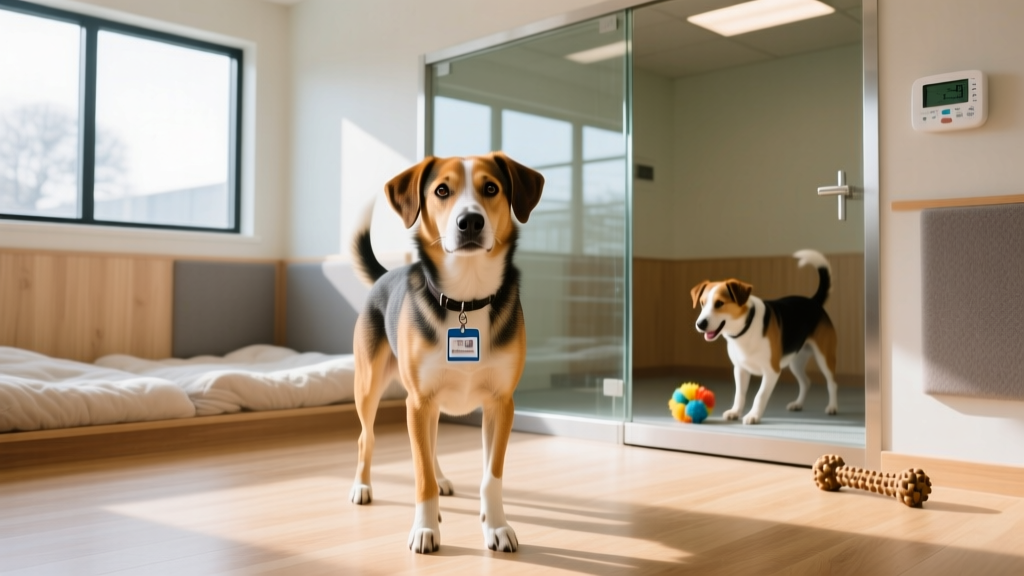
What Is Dog Boarding? — The Direct Answer
Dog boarding is a paid service where your dog stays overnight at a commercial facility — often called a kennel, pet hotel, or boarding center — while you are away. Boarding facilities provide shelter, scheduled meals, exercise, and supervised socialization (or solitary rest, depending on your dog's temperament). Stays typically range from a single night to several weeks, with nightly rates in 2026 averaging $40–$85 per night for standard kennels and $75–$150+ per night for luxury pet resorts.
From a canine science perspective, boarding represents a significant environmental disruption: your dog is relocated from a familiar territory to an unfamiliar space filled with novel sounds, scents, and strangers. Understanding how dogs process this experience — neurologically, hormonally, and behaviorally — is key to making boarding less stressful and more successful.
The Science Behind How Dogs Process Boarding Environments
Cortisol, the HPA Axis, and Kennel Stress
When a dog enters a boarding facility, the hypothalamic-pituitary-adrenal (HPA) axis activates — the same stress-response pathway found in all mammals. The hypothalamus signals the pituitary gland, which triggers the adrenal glands to release cortisol, the primary stress hormone.
A landmark study published in Applied Animal Behaviour Science (Hennessy et al.) found that dogs in novel kennel-like environments showed cortisol levels 2–3 times higher than baseline during the first 24–48 hours. By day three to five, most dogs' cortisol levels began trending downward — but not all dogs fully habituated within a standard week-long stay.
This means: the first 72 hours of any boarding stay are physiologically the hardest on your dog. Understanding this timeline is critical for setting realistic expectations and planning acclimation strategies.
Beyond cortisol, two other neurochemical systems shape the boarding experience:
- Oxytocin disruption: Dogs form secure attachment bonds with their primary caregivers. Research from Hormones and Behavior (Nagasawa et al., 2015) demonstrated that mutual gaze between dogs and owners triggers oxytocin release in both species — the same bonding hormone active in human parent-infant relationships. Boarding removes this oxytocin feedback loop abruptly.
- Dopamine and environmental novelty: Novel environments can trigger dopamine-driven exploration in confident dogs, but in anxious or under-socialized dogs, novelty activates the amygdala's threat-detection circuits, producing fear-based responses like pacing, whining, or refusal to eat.
Evolutionary Context: Why Boarding Conflicts with Canine Instincts
From Pack Territory to Kennel Run
Ancestral wolves and early domestic dogs were territorial animals. Their survival depended on intimate knowledge of a defined home range — where food was cached, where water sources lay, where shelter existed, and where threats emerged. Displacement from territory was rare and typically signaled catastrophic events (drought, rival pack invasion, human persecution).
Modern dogs retain this territorial attachment, though softened by 15,000–30,000 years of domestication. When you board your dog, you are — from their evolutionary perspective — displacing them from a known territory into an unknown one. This is why dogs often exhibit hyper-vigilance (constant scanning, alert barking, inability to settle) during the first days of boarding. They are doing what their ancestors did when entering unfamiliar terrain: mapping threats.
The social buffering effect — where the presence of familiar pack members reduces stress — is well-documented in canine science. In a boarding facility, your dog is surrounded by unfamiliar dogs whose vocalizations (barking, howling) may signal danger rather than companionship. This is fundamentally different from the social structure dogs evolved to rely on.
How Dogs Sense and Process a Boarding Facility
A boarding facility bombards a dog's sensory systems in ways most owners underestimate:
| Sensory System | What the Dog Experiences at a Kennel | Physiological Impact |
|---|---|---|
| Olfactory (12.5–300 million receptors, breed-dependent) | Hundreds of unfamiliar dog scents, cleaning chemicals (bleach, quaternary ammonium), food odors from other animals | Overstimulation of the olfactory bulb; scent-marking behavior increases as dog attempts to establish territorial markers |
| Auditory (hears frequencies up to 45–65 kHz) | Concrete-echoed barking (often 85–100+ dB in kennel runs), metal gate clangs, unfamiliar human voices | Chronic noise above 85 dB activates sustained fight-or-flight; sleep disruption common |
| Visual (dichromatic vision, motion-sensitive) | Dogs passing by kennel runs, fluorescent lighting, limited visual barriers | Barrier frustration and reactive barking; inability to control visual stimuli increases cortisol |
| Tactile | Unfamiliar bedding, concrete or sealed floors, metal or plastic crates | Reduced comfort-seeking behavior; some dogs refuse to lie down on unfamiliar surfaces |
According to the Merck Veterinary Manual, a dog's ability to habituate to novel environments depends heavily on early-life socialization (particularly the 3–14 week critical period) and ongoing exposure throughout adulthood. Dogs with limited environmental variety during puppyhood often struggle most with boarding.
Breed Variations in Boarding Tolerance
Not all dogs experience boarding equally. Breed genetics, individual temperament history, and attachment style all interact:
| Breed Category | Typical Boarding Response | Why |
|---|---|---|
| Velcro breeds (German Shepherd, Vizsla, Doberman, Labrador Retriever) | High initial stress; may refuse food, pace, vocalize excessively | Strong handler-bonding selected for working partnership; separation triggers acute attachment distress |
| Independent breeds (Shiba Inu, Chow Chow, Afghan Hound, Basenji) | Moderate stress; may appear aloof but exhibit subtle stress signals (lip licking, yawning, avoidance) | Less overtly handler-dependent, but still territorial; stress manifests as withdrawal rather than vocalization |
| Social/easy-going breeds (Golden Retriever, Beagle, Cavalier King Charles Spaniel, Bichon Frise) | Generally adapt faster; lower cortisol spikes, quicker return to normal eating | Bred for sociability and low reactivity; more likely to accept novel humans and environments |
| Guardian breeds (Great Pyrenees, Anatolian Shepherd, Rottweiler, Cane Corso) | May display barrier aggression, heightened alertness, difficulty settling | Territorial guarding instinct conflicts with confinement among strangers; perceived threat level elevated |
Important caveat: Individual variation within breeds is enormous. A well-socialized German Shepherd with positive boarding history may outperform a poorly socialized Golden Retriever. Breed tendencies are starting points for understanding, not deterministic predictions.
Common Misconceptions About Dog Boarding — Debunked
| Myth | Science-Based Fact |
|---|---|
| "Dogs think I abandoned them when I board them." | Dogs do not conceptualize abandonment in human terms. They experience separation distress and environmental stress, but research shows dogs re-bond quickly upon reunion — greeting behavior intensifies rather than showing avoidance or "grudge" responses (Konno et al., 2016). |
| "My dog loves other dogs, so boarding will be fun." | Enjoying familiar playmates at a dog park is neurologically different from forced proximity to strangers in a confined space. Barrier frustration and resource guarding often emerge in kennel settings even in dog-friendly dogs. |
| "Boarding is just like a vacation for dogs." | For most dogs, boarding is a stress event they tolerate — not enjoy. Cortisol data confirms physiological stress persists for days. Some dogs do habituate and even thrive, but this requires prior positive exposure, not assumption. |
| "If my dog eats well at the kennel, they're fine." | Appetite maintenance is a positive sign but not a comprehensive welfare indicator. Dogs may eat while still experiencing elevated cortisol, sleep fragmentation, and behavioral suppression (reduced play, increased stereotypic pacing). |
Practical Implications: Evidence-Based Boarding Preparation
What This Science Means for Your Boarding Plan
Based on the physiological and behavioral research, here are concrete steps ranked by impact:
- Do a trial stay (1–2 nights) at least 2–4 weeks before your real trip. This allows cortisol to spike and recover in a low-stakes context. Your dog builds a memory template of the facility as survivable. Cost: $40–$170 for the trial.
- Bring familiar scent items. A worn t-shirt (unwashed, 1–2 days of your body odor), your dog's regular bedding, and their usual food bowls leverage olfactory familiarity to reduce novelty stress. Research on scent-associated comfort in canines supports this approach.
- Request a quiet zone or visual barrier. If the facility offers it, a kennel run away from the main barking area or with a visual barrier reduces auditory and visual overstimulation. Some facilities charge $10–$25/night extra for premium "suites" — this is often worth it for noise-sensitive dogs.
- Maintain feeding schedule consistency. Provide exact feeding times and portion sizes. GI disruption (stress colitis, loose stool) is common in boarded dogs; keeping diet identical reduces compounding stressors.
- Use Adaptil (dog-appeasing pheromone) products. Synthetic DAP (dog appeasing pheromone) collars or sprays have shown modest stress-reduction effects in clinical settings. A collar costs approximately $25–$35 and lasts 30 days. Apply 2–3 days before drop-off.
- Exercise heavily on drop-off day. A 45–60 minute vigorous walk or play session before arrival depletes glycogen stores and promotes rest. Physical fatigue dampens the HPA axis activation somewhat.
When Boarding Might Signal a Deeper Problem
Some boarding responses go beyond normal stress and indicate clinical-level anxiety or medical issues:
- Self-injury: Bloody nails, broken teeth, or facial abrasions from attempting to escape a crate or kennel run — this indicates panic-level separation anxiety and requires veterinary behavioral intervention.
- Complete food refusal for 48+ hours: While reduced appetite on day one is normal, prolonged anorexia risks hepatic lipidosis (especially in small breeds) and requires immediate pickup or veterinary assessment.
- Post-boarding behavioral changes lasting 2+ weeks: Increased clinginess, house-soiling regression, new fear responses, or aggression may indicate the boarding experience triggered lasting anxiety. Consult a veterinarian or certified veterinary behaviorist (DACVB).
- Stereotypic behaviors: Repetitive spinning, flank sucking, or tail chasing that persists after returning home suggests chronic stress that has become compulsive.
If any of these occur, consult your veterinarian before attempting boarding again. Alternatives include in-home pet sitters ($25–$75/visit or $50–$100/night for overnight stays) or trusted friends/family.
How Dog Boarding Differs From Human "Staying in a Hotel"
Humans entering hotels rely on prefrontal cortex reasoning: "I chose this place, I know I'm leaving in three days, this is temporary." Dogs lack this cognitive framework. They cannot conceptualize the stay's duration or voluntariness. Their experience is governed by:
- Associative learning: If previous boarding was neutral or positive, the dog's amygdala response is dampened. If prior boarding was traumatic, anticipatory anxiety begins at the car ride.
- Present-moment processing: Dogs evaluate their environment moment-by-moment. A single negative event (aggressive dog next door, harsh handling by staff) can color the entire stay.
- Social referencing: Dogs look to familiar humans for emotional cues. A calm, confident drop-off (brief goodbye, no prolonged emotional farewells) sets a different tone than an anxious, tearful departure.
Related Canine Behaviors and Cross-References
Understanding boarding stress connects to several broader canine science topics:
- Separation anxiety: Dogs with clinical separation anxiety (estimated 20–40% of the canine population, per ASPCA) will experience amplified distress in boarding settings. Pre-treatment with behavioral modification and potentially anxiolytic medication (fluoxetine, trazodone — prescribed by your veterinarian) may be necessary.
- Barrier frustration / leash reactivity: Dogs who react to other dogs on leash often intensify this behavior in kennel runs where dogs pass constantly at close range.
- Noise sensitivity: Dogs with thunderstorm or fireworks phobia (estimated 30–50% prevalence in some breeds) may find kennel noise levels intolerable. Discuss noise management with your vet.
- Resource guarding: Boarding environments where food bowls, beds, or toys are shared spaces can trigger guarding behaviors not seen at home.
Frequently Asked Questions
Is boarding stressful for all dogs?
No. Approximately 30–40% of dogs habituate quickly (within 24–48 hours) and show minimal lasting stress markers. Another 40–50% experience moderate stress that resolves over 3–5 days. Roughly 10–20% show significant distress that may not fully resolve during a standard stay. Individual history, breed temperament, socialization quality, and facility environment all influence where your dog falls on this spectrum.
Can dogs tell how long I've been gone?
Not in human clock-time terms. Research suggests dogs can distinguish short absences (30 minutes) from longer ones (2–4 hours) based on scent decay and routine disruption, but they likely do not perceive the difference between 3 days and 7 days with precision. Greeting intensity upon reunion does increase with longer absences, suggesting some awareness of extended separation.
What does it mean when my dog seems "different" after boarding?
Post-boarding behavioral changes — clinginess, increased sleeping, temporary house-training regression, or unusual quietness — typically reflect decompression from sustained stress. Most dogs return to baseline within 3–7 days. Changes persisting beyond two weeks warrant a veterinary behavioral consultation.
Is in-home boarding or a pet sitter scientifically better than a kennel?
For stress-sensitive dogs, yes — remaining in a familiar environment eliminates the territorial displacement stressor entirely. However, in-home pet sitters introduce a stranger into the dog's territory, which can also trigger stress (though typically less than full relocation). Dogs with strong territorial guarding may actually be more stressed by a stranger in their home than by a kennel stay. The best option depends on your individual dog's profile.
How do I choose a boarding facility that minimizes stress?
Look for: (1) staff-to-dog ratios of at least 1:10, (2) mandatory temperament evaluations before admission, (3) separate areas for small and large dogs, (4) sound-dampening design (not bare concrete echo chambers), (5) webcam access so you can monitor your dog, and (6) willingness to accommodate your dog's specific routine. Tour the facility during active boarding hours — not just during a staged open house — to assess real noise levels and staff interaction quality.
Key References
- Hennessy, M.B. et al. — "Behavioral and hormonal responses to separation in dogs" (Applied Animal Behaviour Science)
- Nagasawa, M. et al. (2015) — "Oxytocin-gaze positive loop and the coevolution of human-dog bonds" (Science, 348:6232)
- Merck Veterinary Manual — Overview of Dog Behavior
- ASPCA — Separation Anxiety in Dogs
Always consult your veterinarian before making decisions about boarding a dog with known anxiety, medical conditions, or behavioral concerns. Your vet can recommend facility types, prescribe short-term anxiolytics if appropriate, and connect you with a certified veterinary behaviorist when needed.
Jonas Cole
All our authors care for dogs every day — read more of their work on the authors page.


