What Are the Smartest Dogs? The Science Behind Canine Intelligence
What are the smartest dogs? Explore the science of canine intelligence, from Stanley Coren's research to brain physiology, breed rankings, and practical training tips.
The Direct Answer: What Are the Smartest Dogs?
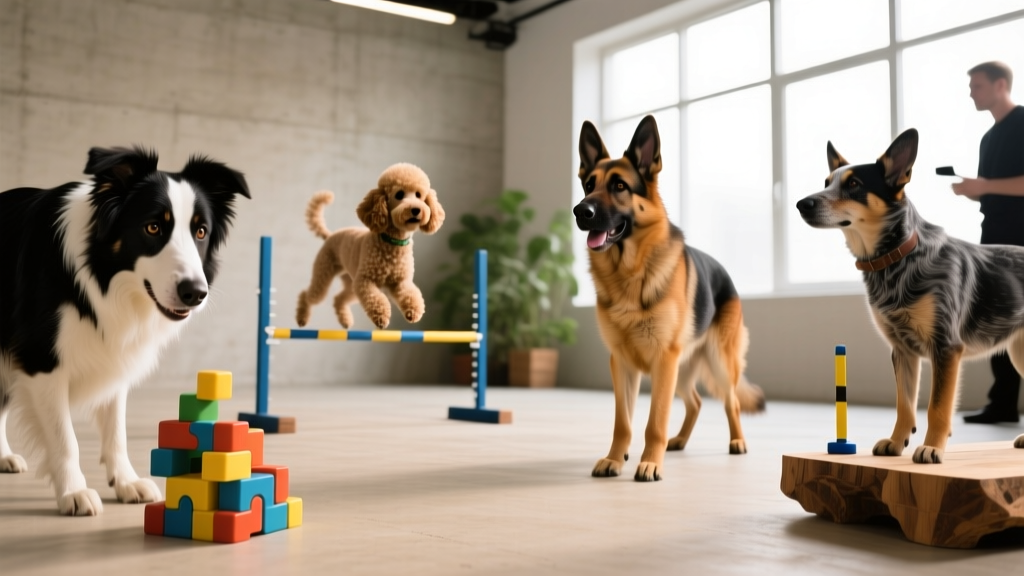
Based on neuropsychologist Stanley Coren's landmark research at the University of British Columbia, the Border Collie, Poodle, German Shepherd, Golden Retriever, and Doberman Pinscher consistently rank as the smartest dog breeds when measured by working and obedience intelligence — the ability to learn new commands in fewer than five repetitions and obey known commands on the first attempt 95% of the time or better. However, canine intelligence is multidimensional. A dog that excels at obedience may score poorly on independent problem-solving, and vice versa. Modern canine cognition research recognizes at least three distinct types of dog intelligence: instinctive (breed-purpose skills), adaptive (problem-solving), and working/obedience (trainability).
If you've ever watched a Border Collie figure out a latch in seconds while your Bulldog stares blankly at a treat puzzle, you've witnessed the real-world variation in canine intelligence. But ranking "the smartest dogs" is far more complex than a simple top-10 list. Decades of peer-reviewed research reveal that dog intelligence operates across multiple dimensions — and the breed that tops one category might rank average in another.
Understanding what the science actually says about canine cognition can transform how you train, enrich, and communicate with your dog. Let's break down the evidence.
The Three Types of Canine Intelligence
Coren's Intelligence Framework
In his 1994 book The Intelligence of Dogs (revised 2006), Dr. Stanley Coren surveyed 208 obedience trial judges across the United States and Canada to rank 138 breeds on three intelligence dimensions:
- Instinctive Intelligence: What the dog was bred to do — herding, pointing, retrieving, guarding. This is largely genetic and breed-specific.
- Adaptive Intelligence: How well the dog solves problems independently — figuring out how to open a gate, navigate an obstacle, or retrieve a hidden toy.
- Working/Obedience Intelligence: How quickly the dog learns commands from humans and how reliably it obeys. This is the dimension most people mean when they ask "what are the smartest dogs."
Coren's working/obedience rankings remain the most widely cited framework, but they have limitations. They measure trainability — willingness and speed of learning from humans — not raw cognitive capacity. A breed that's highly intelligent but independently minded (like an Afghan Hound) may score low on obedience not because it can't learn, but because it chooses not to comply.
| Rank | Breed | New Command Repetitions | First-Attempt Obedience | Primary Instinctive Skill |
|---|---|---|---|---|
| 1 | Border Collie | Fewer than 5 | 95%+ | Herding |
| 2 | Poodle (all sizes) | Fewer than 5 | 95%+ | Water retrieving |
| 3 | German Shepherd | Fewer than 5 | 95%+ | Herding/protection |
| 4 | Golden Retriever | Fewer than 5 | 95%+ | Retrieving |
| 5 | Doberman Pinscher | Fewer than 5 | 95%+ | Guarding |
| 6 | Shetland Sheepdog | Fewer than 5 | 95%+ | Herding |
| 7 | Labrador Retriever | Fewer than 5 | 95%+ | Retrieving |
| 8 | Papillon | Fewer than 5 | 95%+ | Companion |
| 9 | Rottweiler | Fewer than 5 | 95%+ | Driving/guarding |
| 10 | Australian Cattle Dog | Fewer than 5 | 95%+ | Herding cattle |
The Neuroscience: How Dog Brains Process Intelligence
Canine intelligence isn't just about breed rankings — it's rooted in measurable brain physiology. Understanding the neurological hardware helps explain why some dogs learn faster, remember longer, and solve problems more creatively.
Cerebral Cortex and Neuron Count
A 2017 study published in Frontiers in Neuroanatomy found that dogs possess approximately 530 million cortical neurons — roughly twice the number found in cats (250 million) and significantly more than raccoons (438 million), despite raccoons having similar brain sizes. Cortical neurons are the brain cells most directly associated with complex thought, planning, and problem-solving.
However, neuron count alone doesn't determine intelligence. Neural connectivity — how efficiently those neurons communicate — matters equally. Breeds selected for cooperative work with humans (herding dogs, retrievers) tend to have stronger neural pathways linking the prefrontal cortex (decision-making) with social cognition regions, which explains their superior responsiveness to human cues.
The Role of the Caudate Nucleus
Research using functional MRI (fMRI) on awake, unrestrained dogs — pioneered by neuroscientist Gregory Berns at Emory University — revealed that the caudate nucleus in dogs activates in response to their owner's scent and praise in ways similar to the human brain's reward processing. In high-ranking intelligent breeds, this region shows particularly strong activation during training sessions, suggesting these dogs find learning itself intrinsically rewarding, not just the food or toy reward that follows.
Brain Size vs. Intelligence
Here's where things get counterintuitive. Brain-to-body ratio (encephalization quotient, or EQ) doesn't predict dog intelligence the way it does across species. A Chihuahua has a higher brain-to-body ratio than a Great Dane, but Great Danes generally outperform Chihuahuas on working/obedience tasks. Within dogs, absolute brain size and cortical folding complexity correlate more closely with trainability than relative size. Larger breeds tend to have more cortical surface area, providing greater neural processing capacity.
Evolutionary Context: Why Intelligence Varies by Breed
Dog intelligence didn't emerge randomly — it was shaped by approximately 15,000-30,000 years of selective breeding from wolves. Early wolves that could read human gestures and cooperate during hunts had survival advantages near human settlements. Over millennia, this selected for dogs with enhanced social cognition.
But the real intelligence divergence happened in the last 200-300 years, when breed-specific selection intensified. Herding breeds like Border Collies were selected for dogs that could make independent decisions at a distance from their handler — reading livestock movement, anticipating flight patterns, and adjusting position without direct commands. This required a rare combination of independent problem-solving and responsiveness to human direction.
By contrast, livestock guardian breeds (Great Pyrenees, Anatolian Shepherd) were selected for independent judgment without human input — they needed to assess predator threats and respond autonomously. This produced high adaptive intelligence but lower working/obedience scores, because compliance with human commands wasn't part of the job description.
The takeaway: "smartest" depends entirely on what cognitive task you're measuring.
Can Dogs Think Abstractly? What Research Shows
One of the most compelling questions in canine cognition is whether dogs can think abstractly — or whether their behavior is purely stimulus-response conditioning. The evidence increasingly points to genuine cognitive abilities that go beyond simple training.
Word Learning and Fast Mapping
The most famous case is Chaser, a Border Collie studied by psychologist John Pilley at Wofford College, who learned to identify 1,022 individual objects by name. More remarkably, Chaser demonstrated fast mapping — the ability to infer the name of a novel object by exclusion. When asked to fetch a toy whose name she'd never heard, she correctly selected the one unfamiliar toy among familiar ones, then retained that new word-referent association.
This mirrors the language acquisition process in human toddlers aged 2-3 years. Not all dogs show this capacity — it appears most pronounced in herding and retrieving breeds with intense cooperative work histories.
Gesture Comprehension
Research from the American Kennel Club-referenced studies and independent labs confirms that dogs outperform both chimpanzees and wolves in following human pointing gestures. Even puppies as young as 6 weeks old, with minimal human exposure, can follow a human point to locate hidden food. This ability appears to be a domestication-derived trait — wolves raised identically to dogs do not show the same spontaneous comprehension of human communicative intent.
Episodic-Like Memory
A 2016 study published in Current Biology demonstrated that dogs possess episodic-like memory — the ability to recall specific past events, not just learned associations. Dogs in the study could imitate their owner's actions after delays of up to one hour, even when they hadn't been expecting to be tested. This suggests dogs encode and store memories of events in ways previously thought to be uniquely human.
Practical Implications: What Intelligence Means for Daily Life
Living With a Highly Intelligent Dog
If you own or are considering a breed from the top intelligence tiers, here's what the science translates to in practical terms:
- Mental stimulation is non-negotiable. High-intelligence breeds need 30-60 minutes of structured cognitive work daily — puzzle feeders, scent work, trick training, or agility. Without it, they create their own "entertainment," which usually means destructive behavior. A bored Border Collie will herd your children, chew through drywall, or develop compulsive behaviors like shadow-chasing.
- They learn bad habits as fast as good ones. A dog that picks up "sit" in two repetitions will also learn that jumping on the counter gets food in two repetitions. Consistency from day one is critical. Use positive reinforcement exclusively — force-free methods produce more reliable long-term compliance and avoid the anxiety that impairs cognitive function.
- Trainability ≠ automatic good behavior. Intelligent dogs still need thousands of repetitions across varied environments to generalize commands. Your Border Collie may perform a perfect recall in your living room but ignore you at the dog park. Plan for 6-12 months of structured proofing across environments.
- Invest in advanced enrichment. Budget $20-$60 per month for puzzle toys (Kong Wobbler, Outward Hound Nina Ottosson puzzles rated Level 3+), snuffle mats, and scent work supplies. Rotate toys weekly — intelligent dogs habituate quickly and lose interest in static puzzles.
- Consider dog sports. Agility, rally obedience, nose work, and herding trials channel intelligence into structured outlets. Entry-level competition costs approximately $30-$50 per trial, with training classes running $150-$300 for 6-8 week sessions.
Intelligence and Behavioral Problems
Highly intelligent dogs are paradoxically more prone to certain behavioral issues when understimulated. Stereotypic behaviors — repetitive, seemingly purposeless actions like flank-sucking (common in Dobermans), tail-chasing (Bull Terriers, German Shepherds), and fly-snapping — are often linked to chronic under-stimulation in intelligent breeds. These are not "quirks" — they signal neurological distress and warrant veterinary behavioral consultation.
If your intelligent dog develops compulsive behaviors, consult a veterinarian to rule out medical causes (neurological conditions, pain, thyroid dysfunction) before attributing it to boredom. A veterinary behaviorist can differentiate between stereotypic behavior and true compulsive disorder, which may require medication (typically fluoxetine or clomipramine at $20-$60/month) alongside environmental modification.
Common Misconceptions About Dog Intelligence
| Myth | Fact (What Research Shows) |
|---|---|
| "Low-ranked breeds are stupid." | Breeds ranking low on working/obedience (Afghan Hound, Basenji, Bulldog) often excel in adaptive intelligence or specialized instinctive tasks. A Basenji's "stubbornness" reflects independent decision-making — the same cognitive skill that makes it an effective solo hunter. Low obedience scores measure compliance, not capacity. |
| "Smart dogs are easier to own." | The opposite is often true. High-intelligence breeds require significantly more time, training investment, and mental enrichment. First-time owners frequently do better with mid-ranking breeds (Boxer, Cocker Spaniel, Miniature Schnauzer — ranks 31-45) that learn at a manageable pace and are less prone to boredom-driven destruction. |
| "Mixed breeds are less intelligent than purebreds." | No evidence supports this. Mixed-breed dogs inherit cognitive traits from their parent breeds. A Border Collie-Labrador mix may inherit high trainability from both parents. Hybrid vigor can also reduce neurological conditions (like degenerative myelopathy) that impair cognitive function in some purebred lines. |
| "You can't teach an old dog new tricks." | Senior dogs retain the ability to learn throughout life. A 2017 study from the Clever Dog Lab in Vienna showed that dogs aged 10+ could learn touchscreen-based discrimination tasks, though they required approximately 2-3x more repetitions than younger dogs. Age-related cognitive decline (canine cognitive dysfunction) affects about 28% of dogs aged 11-12, but this is a medical condition, not normal aging. |
| "Dogs have the intelligence of a 2-year-old child." | This popular claim oversimplifies. Dogs match human toddlers in some social cognition tasks (gesture following, word learning) but exceed them in others (olfactory discrimination, spatial navigation). Dogs also fall below toddler level in causal reasoning and tool use. A more accurate framing: dogs have a unique cognitive profile shaped by domestication, not a truncated version of human intelligence. |
How Canine Intelligence Differs From Human Intelligence
Understanding the differences prevents the most common mistake owners make: projecting human reasoning onto dog behavior.
- Dogs don't reason about the future. When your dog looks "guilty" after destroying a cushion, research from Barnard College (Dr. Alexandra Horowitz, 2009) shows this is an appeasement response to your body language, not evidence of moral reasoning or memory of the act. Dogs live primarily in associative memory, not episodic future planning.
- Dogs excel where humans cannot. A dog's olfactory system — with up to 300 million olfactory receptors (humans have 6 million) and a brain region devoted to smell that's proportionally 40x larger — gives them a form of environmental intelligence humans simply lack. Detection dogs can identify cancer biomarkers, predict seizures 15-45 minutes before onset, and track scent trails days old. This is a form of intelligence our species cannot replicate.
- Social intelligence is the real superpower. Dogs read human facial expressions, body language, and vocal tone with an accuracy that exceeds our closest primate relatives. fMRI studies show dog brains process human faces in a dedicated temporal cortex region, similar to how human brains process other human faces. This co-evolved social intelligence is what truly distinguishes canine cognition.
When Intelligence Signals a Problem
Sudden changes in your dog's cognitive performance warrant veterinary attention. If a previously sharp, responsive dog begins:
- Failing to respond to known commands they've obeyed reliably for years
- Getting "stuck" in corners or behind furniture (spatial disorientation)
- Staring at walls or into space for extended periods
- Wandering or pacing without apparent purpose, especially at night
- Showing decreased recognition of familiar people or places
These can indicate Canine Cognitive Dysfunction (CCD), the canine equivalent of Alzheimer's disease. CCD affects an estimated 14-35% of dogs over age 8, with prevalence increasing sharply after age 11. Consult your veterinarian for diagnosis — treatment options include selegiline (Anipryl), prescription therapeutic diets rich in medium-chain triglycerides (like Purina Pro Plan NeuroCare), and antioxidant supplementation. Early intervention significantly slows progression.
Important: Always consult your veterinarian if you notice sudden behavioral or cognitive changes. Many conditions — hypothyroidism, brain tumors, hepatic encephalopathy, and medication side effects — can mimic cognitive decline and require specific medical treatment.
Related Abilities and Cross-References
Canine intelligence intersects with several other behavioral and sensory abilities worth exploring:
- Scent work ability: Highly correlated with adaptive intelligence. Breeds with strong olfactory processing (Bloodhounds, Beagles, Basset Hounds) may rank lower on obedience scales but excel in detection and tracking tasks requiring independent problem-solving.
- Social referencing: The ability to look to a human for information about an uncertain situation. More pronounced in companion and herding breeds; less developed in primitive/spitz breeds. This skill directly impacts trainability.
- Emotional contagion: Dogs can "catch" emotional states from humans and other dogs. Research from the University of Vienna showed dogs can discriminate between happy and angry human faces and respond accordingly — a form of emotional intelligence distinct from obedience-based cognition.
- Spatial memory: Critical for herding and hunting breeds. Border Collies maintain mental maps of livestock positions across large areas, a cognitive skill requiring working memory capacity that rivals primates in specific contexts.
Frequently Asked Questions
Why do some dogs learn commands faster than others?
Learning speed is influenced by breed genetics (selection for cooperative work), individual neurochemistry (dopamine receptor density affecting reward sensitivity), early socialization (puppies exposed to varied stimuli between 3-14 weeks develop stronger neural pathways), and motivation. Breeds selected for tasks requiring real-time human communication — herding, retrieving — were genetically selected for fast associative learning. Individual variation within breeds is significant: even within Border Collies, some lines produce faster learners than others based on working vs. show breeding priorities.
Can dogs count or understand quantities?
Yes, to a limited degree. Research from the University of Padua (2009) demonstrated that dogs can distinguish between larger and smaller quantities, choosing the larger food pile when the ratio is at least 1:2 (e.g., 2 treats vs. 4 treats). This approximate number sense is similar to that of human infants and several other mammal species. However, dogs don't perform exact arithmetic — they operate on relative magnitude estimation.
How do dogs process human language?
fMRI research shows dogs process human speech using a two-pathway system: the left hemisphere processes word meaning (the phonetic content), while the right hemisphere processes intonation (emotional tone). Dogs show the strongest brain reward activation when both the word and the tone are positive — meaning they detect when praise words are delivered in a flat, insincere tone. This dual-processing system is similar to how human brains handle language, though dogs don't process grammar or syntax.
Is it normal for my smart dog to be destructive?
Destructive behavior in intelligent breeds is common but not "normal" in the sense of being healthy — it typically signals unmet cognitive needs. A Border Collie or Australian Shepherd needs 60-90 minutes of combined physical and mental exercise daily. If your intelligent dog is destroying furniture, digging, or exhibiting repetitive behaviors, increase structured enrichment before assuming it's a discipline problem. Puzzle feeders, frozen Kongs, 15-minute scent work sessions, and trick training burn mental energy more efficiently than physical exercise alone.
Are mixed breed dogs as intelligent as purebreds?
Intelligence in mixed breeds depends on their genetic composition, not their registration status. A Labrador-Poodle cross (Labradoodle) inherits cognitive traits from two top-10 intelligence breeds and often performs comparably. Mixed breeds may also benefit from hybrid vigor — reduced expression of breed-specific neurological conditions like degenerative myelopathy (common in German Shepherds) or neuronal ceroid lipofuscinosis (found in Border Collies). Individual assessment through structured training is the only reliable way to evaluate any dog's cognitive capacity.
What does it mean when my dog solves a puzzle toy instantly?
Rapid puzzle-solving indicates strong adaptive intelligence and spatial reasoning. It also means you need to increase difficulty — dogs habituate to static puzzles within 3-5 sessions. Progress through difficulty levels systematically: if your dog solves a Level 2 Nina Ottosson puzzle in under 30 seconds, move to Level 3. Combine puzzle feeders with scent work (hide the puzzle, then let the dog find it) to add cognitive layers. Budget approximately $15-$35 per puzzle toy and plan to maintain a rotation of 6-8 puzzles to prevent habituation.
Key Research References
- Coren, S. (2006). The Intelligence of Dogs (Revised Edition). Free Press.
- Jardim, J.C. et al. (2017). "Higher brain functions in dogs: neuron counts in the cerebral cortex." Frontiers in Neuroanatomy, 11:118.
- Berns, G. (2013). How Dogs Love Us. Houghton Mifflin Harcourt.
- Pilley, J.W. & Reid, A.K. (2011). "Border collie comprehends object names as verbal referents." Behavioural Processes, 86(2):184-195.
- Fugazza, C. & Miklósi, Á. (2014). "Deferred imitation and declarative memory in dogs." Current Biology, 26(14).
- Horowitz, A. (2009). "Disambiguating the 'guilty look': Salient prompts to a familiar anthromorphism." Behavioural Processes, 81(2):212-220.
Priya Sutaria
All our authors care for dogs every day — read more of their work on the authors page.